数据霸权

Search documents
全球TOP 10的顶级富豪,为什么一半都要“挤”在这个地方?
虎嗅APP· 2025-11-27 09:46
Core Insights - The article discusses the concentration of wealth among five tech billionaires residing in California's Midpeninsula, highlighting their combined wealth exceeding $1.1 trillion, which is comparable to the GDP of a medium-developed country [6][7]. Group 1: The Five Tech Billionaires - Larry Ellison (Oracle) represents the first wave of tech wealth, having built a strong foundation in enterprise software, which continues to generate stable cash flow despite challenges in the cloud era [9][10]. - Sergey Brin and Larry Page (Google/Alphabet) commercialized the search behavior through AdWords, establishing a significant revenue stream by organizing internet information [11][12]. - Mark Zuckerberg (Meta) capitalized on the human need for connection, transforming social networks into a lucrative "attention economy" through targeted advertising [13][14]. - Jensen Huang (Nvidia) exemplifies the AI revolution, with Nvidia's GPUs becoming essential for AI model training, leading to explosive wealth growth [14][15]. Group 2: Silicon Valley's Unique Ecosystem - Knowledge spillover effects from institutions like Stanford University create a seamless connection between research and industry, fostering continuous innovation [18][19]. - Venture capital in Silicon Valley provides not just funding but also strategic support, encouraging bold and disruptive innovations [20][21]. - The engineer culture in Silicon Valley promotes data-driven decision-making and challenges conventional norms, attracting top talent [23]. Group 3: Wealth Concentration and Social Impact - The concentration of wealth in Silicon Valley has led to significant social disparities, with the wealth gap expanding at twice the national average [33][35]. - The rising cost of living has made it difficult for low-income families to afford housing, with a family of four needing an annual income of $159,550 to be considered "low income" [37][39]. - The phenomenon of "Silicon Valley folding" illustrates the social divide, where the affluent and service workers coexist in stark contrast [41][42]. Group 4: Tech Philanthropy - Tech billionaires are increasingly engaging in "tech philanthropy," with initiatives like the Chan Zuckerberg Initiative aiming to address social issues through a business-like approach [49][50]. - Critics argue that this model allows wealthy individuals to influence public policy without democratic oversight, raising concerns about accountability [51][52]. - The article questions whether such philanthropy genuinely addresses the societal problems created by their business models, emphasizing the need for a more inclusive approach to wealth distribution [54].





全球TOP 10的顶级富豪,为什么一半都要“挤”在这个地方?
Sou Hu Cai Jing· 2025-11-27 07:44
Core Insights - The article discusses the concentration of immense wealth among a few tech billionaires residing in California's Midpeninsula, highlighting the socio-economic implications of this wealth concentration [5][24]. Group 1: Wealth Concentration - Half of the top ten billionaires globally reside in the Midpeninsula, with a combined wealth exceeding $1.1 trillion, comparable to the GDP of a medium-developed country [5][24]. - The wealth of these tech giants is rooted in their foundational companies, which have established significant market positions and revenue streams [5][11][12]. Group 2: Individual Billionaires - Larry Ellison (Oracle) represents the enterprise software revolution, maintaining a strong cash flow despite challenges in the cloud era [5][7]. - Larry Page and Sergey Brin (Google) commercialized the search behavior through AdWords, exemplifying the internet platform revolution [5][9]. - Mark Zuckerberg (Meta) capitalized on social connectivity, transforming user engagement into revenue through targeted advertising [5][11]. - Jensen Huang (Nvidia) has seen explosive wealth growth due to the AI revolution, positioning Nvidia as a key player in AI model training [5][12][18]. Group 3: Silicon Valley Ecosystem - The unique ecosystem of Silicon Valley fosters knowledge spillover, particularly through institutions like Stanford University, which connects academic research with industry needs [14][16]. - Venture capital in Silicon Valley is characterized by a willingness to take risks and provide smart money, supporting bold innovations [14][16]. - The engineering culture in Silicon Valley promotes data-driven decision-making and a rebellious spirit, attracting top talent [16][18]. Group 4: Socio-Economic Issues - The wealth concentration has led to a widening wealth gap, with the top 0.1% of families owning 71% of the wealth, exacerbating social inequalities [24][26]. - Rising living costs in Silicon Valley have made it increasingly difficult for lower-income families to afford housing, leading to a phenomenon termed "Silicon Valley folding" [24][26][29]. - The local government's financial struggles are partly due to Proposition 13, which limits property tax growth, affecting public services [31][32]. Group 5: Philanthropy and Social Responsibility - Tech billionaires are engaging in "tech philanthropy," using their wealth to address social issues through initiatives like the Chan Zuckerberg Initiative [37][39]. - Critics argue that this form of philanthropy allows a few wealthy individuals to influence public policy without democratic oversight, raising concerns about accountability [39][40]. - The article questions whether the innovations and wealth generated by these billionaires consider the external costs and contribute to a more equitable society [42][44].

中介信息铺网分析:联邦政府“停摆”的真相:美经济数据断供影响有多大?
Sou Hu Cai Jing· 2025-10-17 18:27
Group 1 - The government shutdown that began on October 1, 2025, is primarily due to the conflict between the Democratic Party's insistence on extending healthcare tax credits and the Republican Party's demand for cuts to clean energy project funding [1] - The shutdown has led to a complete halt in data release from key agencies such as the Bureau of Labor Statistics and the Bureau of Economic Analysis, which has significant implications for economic decision-making [1][2] - The absence of critical economic data, such as the Consumer Price Index (CPI) and non-farm payroll figures, has left the Federal Reserve in a position of uncertainty regarding interest rate decisions, with estimates suggesting a drop in the likelihood of a rate cut from 60% to 30% [2] Group 2 - The economic impact of the shutdown is severe, with the Treasury Department reporting daily losses of $15 billion, and each additional week of the shutdown potentially reducing annual GDP growth by 0.1 percentage points [2] - The lack of data is causing decision-making paralysis in the manufacturing sector and delaying agricultural activities, while small businesses face tighter lending conditions due to economic uncertainty [2] - Retailers like Walmart are experiencing a slowdown in same-store sales growth, which has decreased by 1.8 percentage points due to the effects of the shutdown [2] Group 3 - The disruption in U.S. data availability is causing global economic policy to become reactive rather than proactive, with countries like Japan and the Eurozone struggling to adjust their monetary policies without reliable U.S. data [3][4] - The volatility in financial markets is evident, with the yield on 10-year U.S. Treasury bonds experiencing increased fluctuations and the U.S. dollar index showing erratic movements due to uncertainty surrounding economic policies [3] - The credibility of the U.S. dollar is being undermined, as central banks are beginning to reconsider their dollar reserves in light of the reliability issues stemming from the data shutdown [4][5] Group 4 - The crisis highlights the systemic risks associated with global economic dependence on a single country's data supply, emphasizing the urgent need for a diversified data reference system and collaborative governance mechanisms [5][6] - If the U.S. continues to use data agencies as political bargaining chips, it risks losing not only short-term economic growth but also its long-term leadership in global economic governance [6]
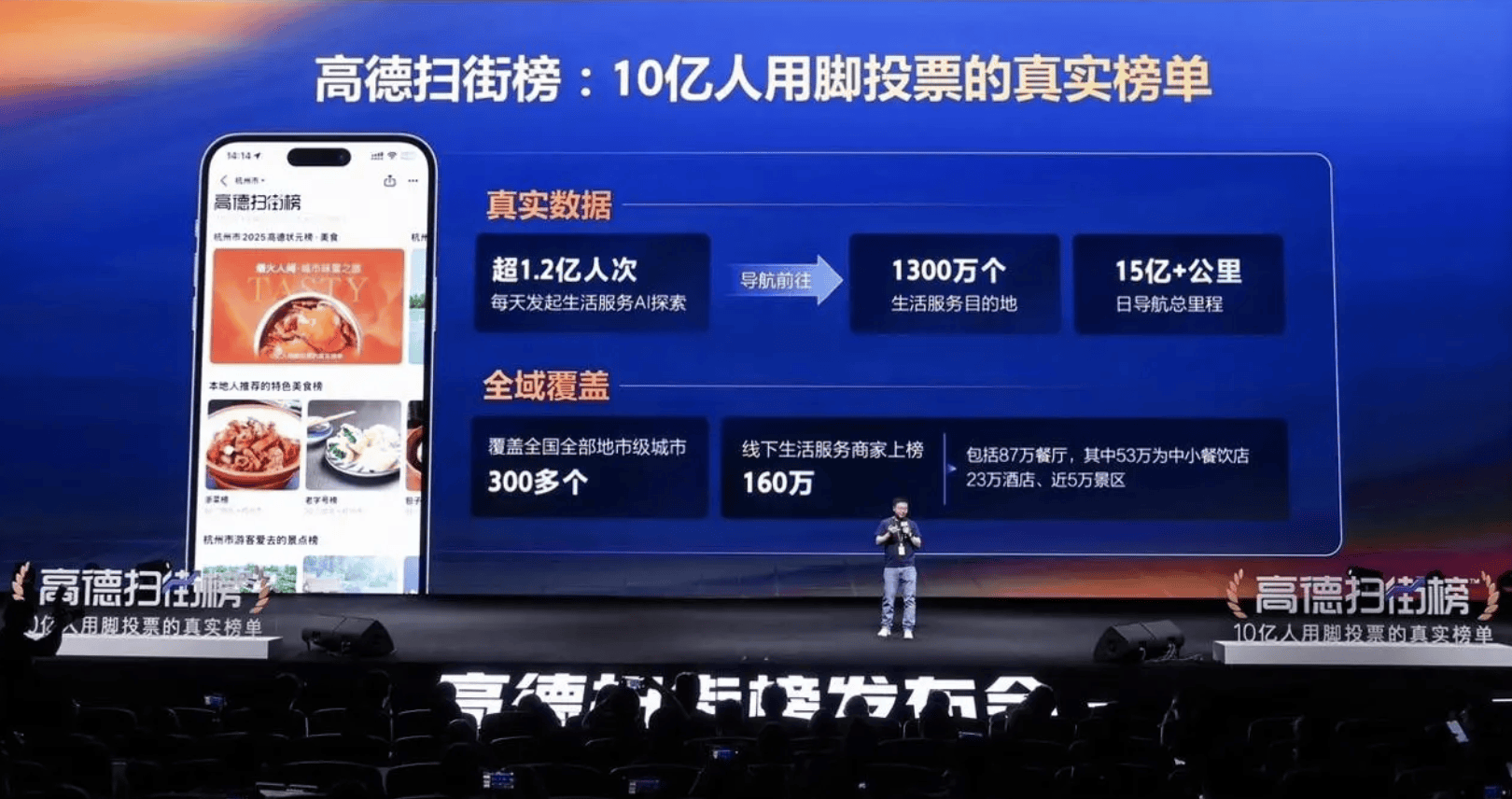
数据“霸权”Vs内容“霸权”,高德CEO的承诺可信吗丨正经深度
Sou Hu Cai Jing· 2025-09-23 02:15
Core Insights - The article discusses the competitive landscape in the local lifestyle service sector, focusing on the launch of Gaode Map's "Street Ranking" as a direct challenge to Dazhong Dianping's content-based evaluation system [1][3] - Gaode Map aims to redefine the offline service evaluation system using navigation behavior data, while Dazhong Dianping is enhancing its quality takeaway service through AI and real user reviews [3][4] Group 1: Competitive Dynamics - Gaode Map's "Street Ranking" is positioned as a data-driven approach that emphasizes user behavior, contrasting with Dazhong Dianping's reliance on user-generated content [3][4] - The fundamental difference lies in the organization and generation of information, leading to distinct user experiences and business models [4][6] - Users of Dazhong Dianping typically make decisions based on pre-existing information, while Gaode Map encourages spontaneous exploration based on real-time data [6][20] Group 2: Data Integrity and Challenges - Gaode Map claims that the core of its ranking system is "realness," aiming to eliminate issues like fake reviews and to create a healthier ecosystem [7][10] - The ranking mechanism combines behavior data with a credit scoring system, which may reduce the likelihood of manipulation compared to traditional review platforms [7][9] - However, concerns arise regarding data bias, fairness of credit weighting, and data security, particularly for users who may not utilize navigation services [10][12] Group 3: Commercial Viability - Gaode Map's CEO stated that the "Street Ranking" will never be commercialized, which raises questions about the sustainability of this model given the financial pressures faced by the company [13][15] - Despite achieving profitability for the first time in Q4 2024, Gaode Map has historically struggled with significant annual losses, estimated between 1-2 billion yuan [15][16] - The competitive landscape is highlighted by Meituan's strong performance in the local lifestyle sector, emphasizing the need for Gaode Map to find a clear monetization strategy [17][20]