
文化产业与科技融合

Search documents
百亿文投融资背后,湾区制造发展助力器如何成投资新宠?
Nan Fang Du Shi Bao· 2025-11-26 11:28
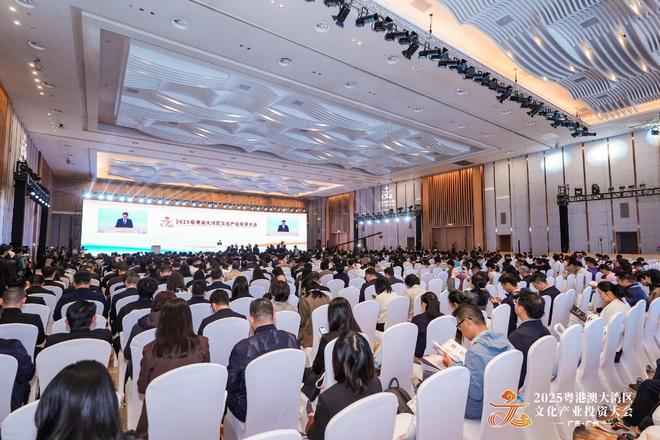
Core Insights - The 15th National Games opening ceremony showcased a blend of traditional cultural elements and cutting-edge technologies, highlighting Guangdong's strength in the tech and cultural industries [1] - The 2025 Guangdong-Hong Kong-Macao Greater Bay Area Cultural Industry Investment Conference aims to create a one-stop service platform for cultural project financing, attracting significant investment interest [1][3] Investment Conference Highlights - The conference attracted over 120 investment institutions and 336 cultural enterprises, with 14 institutions managing over 10 billion in assets [1][13] - Previous conferences facilitated nearly 10 billion in actual financing through project roadshows, with a conversion rate of about 50% [5][4] - The 2025 conference is expected to feature 40 project roadshows, doubling the number of cooperation projects and significantly increasing financing amounts [5][6] Cultural Industry Growth - Guangdong's cultural industry revenue reached 30,252.10 billion in 2024, growing by 9.9% year-on-year, outpacing the national average [6] - The cultural manufacturing sector generated 12,639.86 billion in revenue, accounting for 25.5% of the national total, maintaining its position as the largest in the country [6][7] Policy Support and Talent Development - The Guangdong government introduced a comprehensive "policy package" to accelerate cultural industry development, focusing on six key areas [10][11] - Talent attraction initiatives have successfully brought over 100,000 recent graduates to Guangdong, enhancing the local cultural workforce [12] Investment Trends and Focus Areas - Investment in the cultural sector is increasingly concentrated in leading regions, with a focus on long-term and early-stage investments [7][8] - Key investment areas include content creation, technology integration, and platform development, particularly in sectors like AI, AR/VR, and gaming [8][9]

加快发展文化产业
Jing Ji Ri Bao· 2025-11-21 22:38
Core Viewpoint - The development of the cultural industry is essential for cultural innovation and is a significant support for building a culturally strong nation, as emphasized in the "14th Five-Year Plan" which aims to accelerate the growth of the cultural industry [1] Market and Policy Synergy - The "14th Five-Year Plan" suggests stimulating national cultural innovation and promoting socialist culture through various dimensions, including enhancing the influence of Chinese civilization [1] - The cultural industry in China has seen substantial growth, with total assets reaching 34.4 trillion yuan, generating over 19 trillion yuan in revenue and approximately 1.8 trillion yuan in profit [1] - Structural issues such as insufficient high-quality cultural product supply and weak cultural business entities need to be addressed for high-quality development during the "14th Five-Year" period [1][2] Technology Empowering Industry Upgrade - The rapid development of global cutting-edge technology is transforming the cultural industry, enhancing production efficiency and international competitiveness through digitalization [3] - The integration of culture and technology is expected to deepen, with artificial intelligence playing a significant role in the gaming industry and related sectors [3][4] Digital Economy and Cultural Development - The "14th Five-Year" period will focus on leveraging digital economy advantages to enhance digital cultural initiatives and create a networked cultural content innovation system [4] - Artificial intelligence is increasingly involved in cultural production across various sectors, emphasizing the importance of maintaining cultural depth amidst technological advancements [4] Integration of Culture and Tourism - The integration of culture and tourism is a key focus, enhancing visitors' experiences and promoting cultural understanding [6] - The deep integration of cultural and tourism sectors is expected to stimulate economic growth and create new value across various industries [6][7] Future Directions - The "14th Five-Year" period will see a strong emphasis on cross-industry integration, with "culture + various industries" becoming a driving force for consumption development [7]
文投会北上“招亲”:共筑文化项目与资本“京湾之链”
2 1 Shi Ji Jing Ji Bao Dao· 2025-10-14 13:22
Core Insights - The development of the cultural sector relies heavily on capital support, with the 2025 Guangdong-Hong Kong-Macao Greater Bay Area Cultural Industry Investment Conference (2025 GBA Cultural Investment Conference) aiming to connect cultural projects with capital to foster a healthy ecosystem for cultural industry growth [1][4] - The conference is scheduled to take place from November 26 to 28, 2025, in Guangzhou, featuring a series of activities designed to empower high-quality development in the cultural industry [1][3] Group 1: Conference Overview - The 2025 GBA Cultural Investment Conference will include a "1+8+N" format, consisting of one main conference, eight investment project roadshows, and various investment service activities [1][3] - The conference aims to enhance understanding among cultural enterprises and investment institutions regarding project selection criteria and to promote interaction and cooperation within the cultural industry [1][2] Group 2: Cultural Industry Landscape - China's cultural industry has evolved from traditional sectors to a large cultural ecosystem characterized by digital technology, cross-industry integration, and user experience [3][4] - Guangdong Province is the largest cultural industry province in China, with a total revenue of 2.5 trillion yuan from large-scale cultural enterprises in 2024, accounting for approximately one-sixth of the national total [3][4] Group 3: Investment Opportunities - The 2025 GBA Cultural Investment Conference aims to create a platform for efficient investment and financing connections between cultural enterprises and investment institutions, focusing on new cultural business models that represent future lifestyles and production methods [4][6] - The conference has successfully hosted two previous editions, with a total of 250 billion yuan in cultural industry investment funds announced, and actual financing amounts reaching 15.1 billion yuan in 2023 and 63.87 billion yuan in 2024 [3][4] Group 4: Regional Collaboration - Beijing, as a cultural and financial center, is increasingly collaborating with Guangdong and the Greater Bay Area, with local investment institutions showing interest in participating in Guangdong's cultural industry chain [6][7] - The integration of cultural and technological sectors is accelerating, with significant investment opportunities emerging in areas such as AIGC, the metaverse, and digital content creation [7][8]
上海银行支持“文创上海”创新创业大赛, 培育创业企业“漫山遍野”
Quan Jing Wang· 2025-08-13 05:51
Group 1 - The "Cultural Innovation Shanghai" competition is focusing on potential innovative enterprises in Shanghai, with Shanghai Bank acting as a strategic partner to support the transformation of competition results into industry applications [1][2] - The competition emphasizes key sectors such as digital cultural innovation, content IP, cultural consumption, and fashion design, featuring four main tracks: "Intelligent Future+", "Original Content Production+", "Cultural Empowerment of Fashion Consumer Goods+", and "Music Innovation+" [2] - AI technology has emerged as a significant focus in this year's competition, with projects like "XR Comprehensive Experience Space" and "AI Pet" showcasing the integration of culture and technology, providing insights for Shanghai Bank to tailor financial services to innovative enterprises [3] Group 2 - A case study of a successful enterprise from previous competitions illustrates how Shanghai Bank provided tailored financial solutions, including settlement and credit products, leading to the company's angel round financing and establishment in Shanghai [5] - Shanghai Bank has developed a series of specialized financial products and service models to address the challenges faced by cultural enterprises, including short entrepreneurial timelines, small scales, and light assets, offering comprehensive financial services throughout the enterprise lifecycle [5] - The bank's support extends to commercial scene implementation, capital market planning, and ecological resource integration, providing a full-chain service to foster quality cultural and technological projects, transitioning from simple financing to comprehensive financial intelligence [5]

