
AI+文化

Search documents
2026出海人必备的一站式地图
3 6 Ke· 2026-02-27 10:56
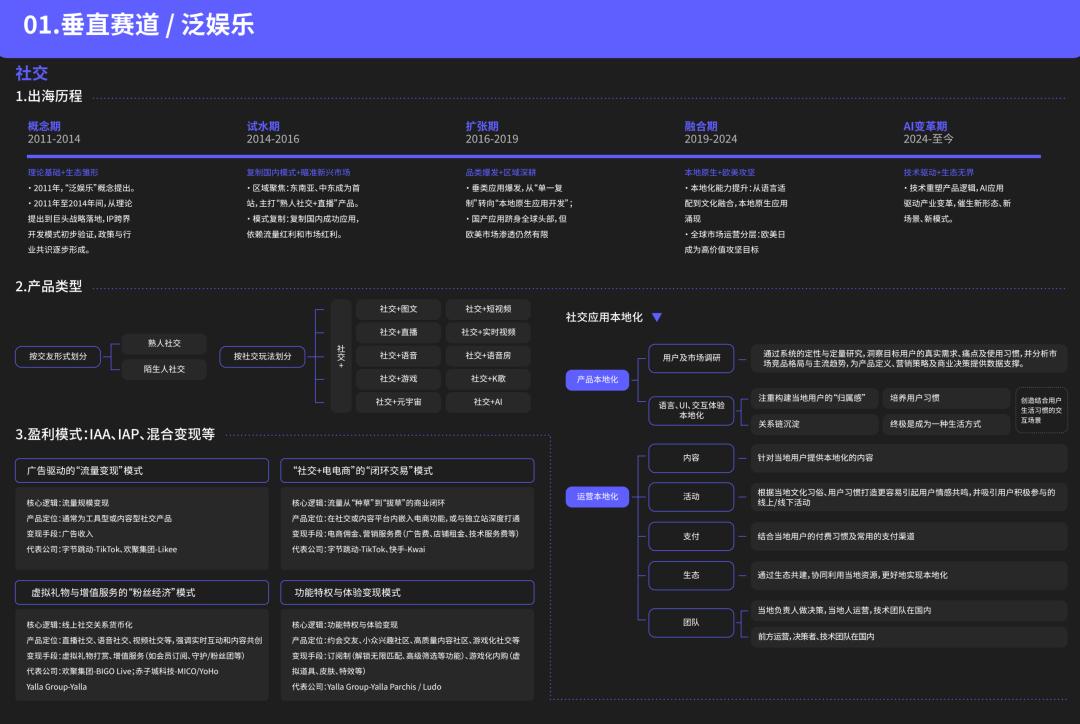
Core Insights - The global industrial system is undergoing reconstruction, and the map for Chinese companies going abroad is being redrawn, marking a significant shift in the global migration of "Chinese capabilities" [1] Industry Insights - The core driving force for the outbound entertainment industry has shifted from simple business model export to deep empowerment through "AI + culture," with the domestic market expected to reach 67.79 billion yuan by 2025, growing 34.4%, while the overseas market is projected to reach 21.07 billion USD, growing 145.7% [12] - In the cross-border e-commerce sector, the era of "barbaric growth" is ending, with a focus on localization and brand strength. By 2025, global e-commerce growth is expected to slow to 8.8%, prompting a shift towards "regional focus" and "brand cultivation" [15] - The artificial intelligence sector is characterized by a dual drive of "hardware-driven" and "application landing," with significant advancements in AI hardware and software leading to a rapid commercialization of AI applications [21] - The new energy sector is transitioning from "product output" to "ecological co-construction," with China's new energy vehicle exports expected to surge to 3.43 million units by 2025, a 70% year-on-year increase [28] Market Insights - North America remains a strategic high ground for outbound enterprises, characterized by high barriers and high returns, with a focus on compliance and localization due to ongoing tariff adjustments [29] - Europe presents a "quality competition arena" under green barriers, where compliance with stringent environmental regulations is essential for market entry [35] - Southeast Asia has evolved from simple trade to comprehensive investment and localized operations, becoming the largest destination for Chinese outbound investment [38] - The Middle East offers opportunities driven by economic diversification initiatives, with significant growth in exports of vehicles and electrical equipment from China [41] - Latin America is characterized by a demand for high-cost performance products, with a focus on affordable smart hardware and the rapid growth of e-commerce platforms [43] Strategy Insights - The approach to selecting target markets and entry paths is shifting from blind expansion to precise coupling, focusing on infrastructure capacity and user ecosystem maturity [45] - The product channel layout and marketing strategies are evolving towards "AI reconstruction and regional differentiation," emphasizing multi-channel integration and technology empowerment [48] - Compliance with regulations and risk avoidance is becoming critical, with a need for systematic compliance frameworks to navigate complex regulatory environments [53] - Organizational and talent development is essential for building agile global teams, with a focus on creating a unified global skills framework to address capability gaps [55] - The transformation of Chinese enterprises going abroad is moving from "product output" to "systemic rooting," emphasizing supply chain resilience and local integration [56]


光谷发布科技文化产业新政
Xin Lang Cai Jing· 2026-02-24 23:26
Core Viewpoint - The newly released measures aim to establish a national hub for the development of the technology and cultural industry in Wuhan's East Lake High-tech Zone, known as "Optics Valley" [1][2]. Group 1: Support Measures - The measures include financial incentives for original content creation, such as a maximum reward of 1 million yuan based on viewership and download metrics for original animations and games [1]. - A 50% subsidy on game license application fees is provided, with an annual cap of 200,000 yuan per company [1]. - Awards of up to 3 million yuan and 500,000 yuan are available for works that win major national or international awards, with a maximum annual reward of 6 million yuan for individual institutions [1]. Group 2: Technological Integration - The policy emphasizes support for "AI + culture" collaborative innovation platforms and AIGC application testing labs, offering a 30% subsidy on investments, capped at 10 million yuan [2]. - Projects receiving national-level platform construction funding will receive matching support [2]. Group 3: Industry Aggregation - The measures provide up to 2 million yuan annually for the operation of specialized parks in gaming, e-sports, and animation, with support lasting up to three years [2]. - Small and medium enterprises that upgrade for the first time can receive a reward of 200,000 yuan, while companies with increasing R&D expenses can receive up to 3 million yuan [2]. - E-sports clubs that establish themselves in the area can receive up to 200,000 yuan, and major events can receive up to 100,000 yuan in subsidies [2]. Group 4: Talent Development - The policy introduces a talent evaluation mechanism that aligns with the recently released talent policy, granting quality enterprises the right to recommend talent [2]. - Selected talents will receive comprehensive support in government services, education, healthcare, and housing [2]. Group 5: Market Expansion - The measures support the extension of quality IP into derivative products, smart cultural heritage, and immersive street areas to address monetization challenges [2]. - Companies with year-on-year growth in overseas revenue can receive rewards of up to 100,000 yuan, along with support for overseas exhibitions and copyright transactions [2]. Group 6: Industry Ecosystem Optimization - The policy focuses on soft environment construction, with industry associations eligible for annual operational rewards of up to 50,000 yuan to support research and investment attraction [3]. - Major industry events can receive a subsidy of 50% of actual expenditures, with a maximum subsidy of 300,000 yuan per event [3]. - Industry representatives believe the new policy addresses pain points and will help reduce operational costs and stimulate innovation [3].
2025年,微短剧精品化走到哪步了?
腾讯研究院· 2026-02-11 08:57
Core Insights - The micro-short drama market has rapidly expanded from 3.68 billion yuan in 2021 to 50.44 billion yuan in 2024, marking a growth of over 13 times [2] - By June 2025, the user base for micro-short dramas is expected to reach 696 million, accounting for nearly 70% of internet users [4] Group 1: Quality and Content Evolution - The production quality of micro-short dramas has shifted towards a more "cinematic" standard, moving away from the initial reliance on rapid production and traffic-driven models [4][5] - The average production cost for micro-short dramas has increased from 200,000-300,000 yuan to 400,000-700,000 yuan, with top productions reaching investment levels in the millions [5] - Notable directors and actors have entered the micro-short drama space, enhancing the artistic quality and depth of content [5] Group 2: Thematic and Narrative Development - Micro-short dramas are increasingly focusing on mainstream themes, with a push towards realism and relatable storytelling as guided by regulatory bodies [6] - Successful examples include "Home and Away," which combines historical context with personal stories, and "Parrot," which addresses themes of loyalty and national unity [6] Group 3: Market Diversification and Innovation - The industry has seen a diversification of formats, including horizontal and vertical screen dramas, as well as the integration of animation [7] - AI technology is being leveraged to enhance content creation, with significant growth in AI-generated short dramas, showing a compound annual growth rate of over 80% [12] Group 4: Platform Strategies and Business Models - Video platforms are adopting differentiated strategies to promote the quality of micro-short dramas, emphasizing a consensus that "quality is the lifeline" [9] - The commercial model is evolving, with platforms implementing revenue-sharing mechanisms to incentivize high-quality content production [11] - The rise of free short dramas is shifting the focus from mere viewership to creative content, fostering a healthier industry ecosystem [11] Group 5: Future Opportunities and Challenges - The integration of micro-short dramas with various sectors, such as tourism and sports, is seen as a potential growth area for service consumption [16] - The industry is encouraged to further explore the use of AI in content creation, aiming for a balance between efficiency and quality [17]

光谷发布科技文化产业新政 补贴最高达千万元
Zheng Quan Ri Bao Wang· 2026-01-29 11:09
Core Viewpoint - The Wuhan East Lake High-tech Zone has introduced measures to promote the development of the technology and cultural industry, aiming to establish itself as a national hub for this sector, despite existing challenges in the industry [1][2]. Group 1: Support Measures - The measures include financial incentives for original content creation, with rewards up to 1 million yuan based on viewership and download metrics, and a 50% subsidy on game license application fees, capped at 200,000 yuan per company annually [1][2]. - For projects that receive national platform funding, a matching support of 1:1 is provided, and subsidies of up to 1 million yuan are available for AI and cultural innovation platforms [1][2]. Group 2: Talent Development - The policy introduces a talent evaluation mechanism that allows high-quality companies to recommend talent, focusing on creative ability and industry contribution, with selected talents receiving comprehensive support in services, education, healthcare, and housing [2]. Group 3: Market Expansion - The measures support the extension of quality IP into derivative products and cultural tourism, addressing monetization challenges, and provide rewards of up to 100,000 yuan for companies with year-on-year growth in overseas revenue [2]. Group 4: Industry Ecosystem Optimization - The policy emphasizes the importance of a supportive environment, offering operational rewards of up to 50,000 yuan for industry associations to facilitate research and investment attraction, and subsidies for major industry events [2][3].
光谷发布科技文化产业新政:补贴最高达千万元
Jing Ji Guan Cha Bao· 2026-01-29 10:34
Core Viewpoint - Wuhan's East Lake High-tech Zone (Optics Valley) has introduced new measures to support the development of the technology and cultural industries, aiming to establish itself as a national hub for these sectors. Group 1: Support Measures - The new measures include financial incentives for original content creation, with rewards up to 1 million yuan based on viewership and downloads for original animations and games [1] - A 50% subsidy on game license application fees is available, with a cap of 200,000 yuan per company per year [1] - Awards of up to 3 million yuan for works that win significant national or international awards, with a maximum of 600,000 yuan per company annually [1] Group 2: Technological Integration - The policy emphasizes support for AI and cultural innovation platforms, offering a 30% subsidy on investments, capped at 10 million yuan [2] - Projects receiving national platform funding will receive matching support [2] Group 3: Industry Cluster Development - Annual operational subsidies of up to 2 million yuan will be provided for key industry parks in gaming, esports, and animation, for a maximum of three years [2] - Companies that upgrade their scale for the first time can receive a reward of 200,000 yuan, and those with increased R&D expenses can receive up to 3 million yuan [2] Group 4: Talent Development - The policy introduces a talent evaluation mechanism that aligns with the recently released talent policy, granting quality enterprises the right to recommend talent [2] - Selected talents will receive comprehensive support in government services, education, healthcare, and housing [2] Group 5: Market Expansion - The measures support the extension of quality IP into derivative products and cultural tourism, addressing monetization challenges [2] - Companies with year-on-year growth in overseas revenue can receive rewards of up to 100,000 yuan, along with support for overseas exhibitions and copyright transactions [2] Group 6: Industry Ecosystem Optimization - The policy focuses on improving the soft environment, with industry associations eligible for operational rewards of up to 500,000 yuan annually [3] - Major industry events can receive a subsidy of 50% of actual expenses, with a maximum of 300,000 yuan per event [3] Group 7: Implementation and Future Outlook - The East Lake High-tech Zone aims to quickly implement these policies, continuously optimizing the industry ecosystem and deepening the integration of technology and culture [4]
西湖区领跑“AI+文化” 产业新赛道
Hang Zhou Ri Bao· 2026-01-28 02:33
Group 1 - The core viewpoint of the news is the establishment of the AI + Cultural Industry Park in Xihu District, which aims to integrate AI with cultural industries and promote innovation through initiatives like the National AI Comic Drama Competition [1][2][3] - Xihu District has achieved significant results in cultural industries, with 71 large-scale enterprises generating revenue of 16.08 billion yuan, a growth of 10.4%, and cultural trade exports exceeding 219 million USD, a year-on-year increase of 147% [1] - The "Xihu New Wind" AI comic drama competition will utilize popular platforms like "Tomato Novel" to create a three-tier incubation system for creators, offering comprehensive support for the development of excellent comic drama IPs [2] Group 2 - Xihu District's entry into the AI comic drama industry is supported by a strong foundation in the integration of technology, cloud innovation, and cultural creativity, ranking fourth in the "2025 China Cultural Industry Competitiveness Index" [3] - The AI Cultural Industry Park in Xihu District is strategically located in the core of the Zijin Port Science City and aims to create a one-stop service ecosystem for "AI + Culture," attracting key enterprises in AI film and television technology [3][4] - The district has proposed an "AI + Culture" industry innovation action plan and established a cultural industry fund focused on "Culture + Technology," with a 700 million yuan fund to support innovation [4]
政策引路AI赋能 上市公司竞逐“文化+科技”赛道
Zheng Quan Ri Bao Wang· 2026-01-21 13:13
Core Insights - The article discusses the integration of artificial intelligence (AI) with cultural industries in Zhejiang, China, highlighting the establishment of key AI+Culture models and application scenarios to promote innovation and development in this sector [1] Group 1: AI and Cultural Integration - Zhejiang's provincial government has identified the first batch of key "AI+Culture" models and application scenarios to enhance the integration of AI and cultural industries [1] - The core competitive advantage for listed companies in the "AI+Culture" space should focus on three areas: enhancing AI technology development, expanding diverse application scenarios, and integrating the industry chain through mergers and strategic partnerships [1] Group 2: Content Production Efficiency - The maturity of generative AI technology is driving a shift from traditional content production to intelligent production, with significant growth in areas like AI-generated dramas and smart production [2] - The market for animated micro-dramas in China is projected to grow by 276.3% year-on-year by 2025, with AI tools significantly increasing content production capacity [2] - Zhejiang Huace Film & TV Co., Ltd.'s "Guose" model has been recognized for its capabilities in multi-modal tasks, achieving a 50% to 60% cost reduction in translation processes compared to traditional methods [2] Group 3: Digital Transformation of Traditional Cultural Enterprises - Zhejiang Publishing Media Co., Ltd. is collaborating with other firms to establish a venture capital fund focused on the "Culture+Technology" sector, with a total committed capital of 201 million yuan, aiming to invest in cultural productivity [3] Group 4: Commercialization of AI Applications - AI marketing is becoming a key avenue for monetization among listed companies, with significant growth in digital human business applications [4] - Zhejiang Wenlian Group's AI programmatic advertising tool has seen a fivefold increase in consumption, reaching over 250 million yuan in 2025 [4] - The digital content asset protection platform by Fubo Group integrates AI and blockchain technology to provide comprehensive services for content creators, enhancing the copyright economy [4] Group 5: Challenges and Compliance - The sustainability of profitability in AI marketing and digital copyright protection depends on the alignment of business practices with copyright compliance [5] - Companies must navigate challenges related to data security and copyright ownership as outlined in the revised Cybersecurity Law of the People's Republic of China [5][6]


业内热议:AI时代文化新图景
Zhong Guo Jing Ji Wang· 2026-01-15 06:28
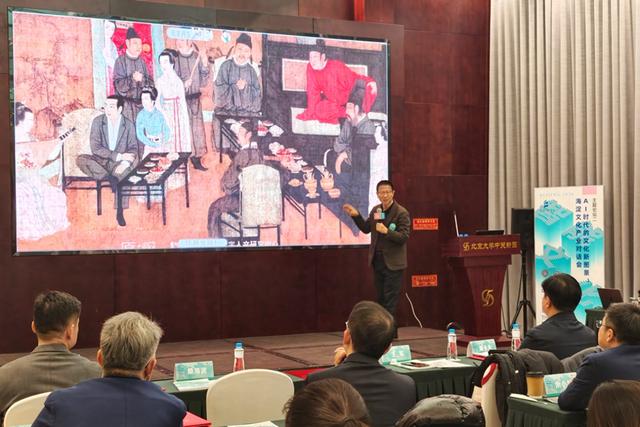
Core Insights - The forum focused on the theme "Open Collaboration: A New Cultural Landscape in the AI Era," emphasizing the integration of artificial intelligence in cultural innovation and high-quality development of the cultural industry [1][2] Group 1: AI and Cultural Innovation - AI technologies are reshaping the global cultural ecosystem, with Haidian District leveraging its full-stack industrial chain in AI to promote the synergy between technology and culture [1] - The "AI + Culture" development policy released in 2025 includes over thirty specific measures across nine key areas to accelerate the integration of technology and culture [1] Group 2: Expert Contributions - Experts from various fields discussed AI's role in cultural innovation, highlighting the transition of cultural heritage from static preservation to dynamic regeneration through immersive and interactive experiences [2][3] - The concept of "Humanities Intelligence" was introduced, showcasing how cultural computing can lead to knowledge discovery and value insights, thus driving a new path for understanding traditional culture [3] Group 3: Practical Applications of AI - Companies shared their experiences in applying AI within the cultural industry, emphasizing the need for technology to embody human values and responsibilities [4] - The "Chinese Fine Font Library Project" aims to digitize classical calligraphy, enhancing the efficiency and accuracy of traditional art forms through AI technologies [4][5] Group 4: Future Directions and Collaboration - The forum concluded with a roundtable discussion on the "Open Source Model" for cultural innovation, where participants emphasized the importance of deep integration between culture and technology to enhance overall quality and innovation capacity [6] - Haidian District is positioned as a unique area for exploring new paths in high-quality cultural industry development, with a commitment to demonstrating leadership in cultural innovation in the AI era [6]
共绘AI时代文化新图景,海淀文化产业对话会在北大举行
Xin Lang Cai Jing· 2026-01-10 13:17
Group 1 - The core theme of the event is the deep transformation of the global cultural ecology by new technologies such as artificial intelligence, as discussed at the "2026 23rd China Cultural Industry New Year Forum" held in Haidian District, Beijing [1][3] - Experts from universities, research institutions, and enterprises shared insights on how AI empowers cultural innovation, with presentations covering topics like AI-enabled smart cultural tourism experiences and the evolution of cultural computing from data to insights [3][5] - The Haidian District is leveraging its comprehensive AI industry chain to promote the integration of technology and culture, having released a "1+2" policy to support the development of "AI + culture," outlining over thirty specific measures across nine key areas [5][7] Group 2 - The district's ongoing efforts during the 14th Five-Year Plan period focus on deepening the integration of culture and technology, enhancing public cultural services, and optimizing cultural supply structures to stimulate cultural consumption potential [7]
海淀文化产业对话会在京举行
Bei Jing Shang Bao· 2026-01-10 11:36
Core Insights - The dialogue conference focused on "Open Collaboration: A New Cultural Landscape in the AI Era," emphasizing the integration of artificial intelligence in cultural innovation and high-quality development of the cultural industry [1][2] - Haidian District is leveraging its full-stack industrial chain in artificial intelligence to promote the synergy between technology and culture, aiming to build a strong cultural district [1] - The cultural industry in Haidian has maintained a high operational scale during the 14th Five-Year Plan period, with deepening integration of culture and technology, leading to the emergence of new business formats and models [1] Group 1 - The conference was organized by the Propaganda Department of the Haidian District Committee and the School of Arts at Peking University, with support from various cultural and research institutions [1] - Haidian District plans to continue promoting the deep integration of culture and technology during the 15th Five-Year Plan period, focusing on key areas such as "AI + Culture" [2] - The district aims to enhance public cultural services and optimize the cultural supply structure to stimulate cultural consumption potential [2]