
农业综合生产能力

Search documents
钟钰:为何强调毫不放松抓好粮食生产
Jing Ji Ri Bao· 2026-02-10 00:07
Core Insights - The central theme of the articles emphasizes the importance of food security and agricultural production in China, highlighting the need for continuous improvement in agricultural capabilities to ensure stable food supply and meet growing demand [1][4]. Group 1: Agricultural Production and Food Security - The 2026 Central Document No. 1 emphasizes the need to maintain food production and improve agricultural efficiency, with a target of achieving a historical high of 1.43 trillion jin in grain production by 2025 [1]. - China's grain production has consistently increased, reaching 1.4 trillion jin in 2024, with a focus on stabilizing grain and oil production [1]. - The demand for food, particularly high-nutrition products like meat and dairy, is expected to grow, necessitating a significant input of feed grains, which accounted for 53% of total grain consumption in 2023 [2]. Group 2: Resource Constraints and Agricultural Challenges - China faces significant resource constraints, with per capita arable land at less than 40% of the world average and severe water scarcity, particularly in northern regions [3]. - The agricultural sector must address the challenges of limited resources and the need for innovation to enhance production efficiency and quality [5]. Group 3: National Security and Agricultural Policy - Food security is deemed a critical aspect of national security, with the need for self-sufficiency in grain production highlighted as essential for maintaining national stability [4]. - The articles stress the importance of ensuring a stable supply of food and agricultural products as a top priority for modernizing the economy [4]. Group 4: Technological Innovation and Agricultural Development - The contribution of yield improvement to overall grain production is projected to exceed 90% by 2025, with a significant increase in grain yield from 616 million tons in 2016 to 715 million tons in 2025 [5]. - There is a call for comprehensive technological innovation across the agricultural sector, including the development of high-yield varieties and standardized techniques to enhance productivity [5]. - The establishment of a targeted subsidy mechanism and the promotion of high-efficiency agricultural practices are essential for achieving sustainable growth in grain production [5].
为何强调毫不放松抓好粮食生产
Xin Lang Cai Jing· 2026-02-09 22:25
Core Viewpoint - The central theme of the articles emphasizes the importance of food security and agricultural production in China, highlighting the need for continuous improvement in agricultural capabilities to ensure stable food supply and meet the growing demand for food products as the country progresses towards higher income levels [1][2][4]. Group 1: Agricultural Production and Food Security - The 2026 Central Document No. 1 emphasizes the need to maintain national food security and stabilize grain and oil production, with grain production expected to reach a historical high of 1.43 trillion jin in 2025 [1]. - Since the 18th National Congress, China's grain production has consistently increased, reaching 1.4 trillion jin in 2024, with a focus on enhancing agricultural production capacity and quality [1]. - In 2023, the proportion of feed grain in total grain consumption reached 53%, indicating a shift in consumption patterns towards higher nutritional value foods, necessitating increased grain production [2]. Group 2: Resource Constraints and Agricultural Challenges - China faces significant resource constraints, with per capita arable land at only 40% of the world average and severe water scarcity, as the per capita water resource is just one-fourth of the global average [3]. - The agricultural sector must address the challenges of limited land and water resources while enhancing production efficiency and quality [3]. Group 3: National Security and Agricultural Policy - Food security is deemed a critical component of national security, with the need for self-sufficiency in grain production highlighted by President Xi Jinping [4]. - The article cites that major agricultural countries maintain high self-sufficiency rates in grain production, underscoring the importance of stable food supply for national strength [4]. Group 4: Strategies for Enhancing Agricultural Productivity - The focus on increasing grain production must include innovations in agricultural practices, with over 90% of the increase in grain production by 2025 attributed to yield improvements [5]. - The average grain yield in 2024 is projected to be less than 400 kg per mu, indicating room for improvement in agricultural technology and practices [5]. - Strategies include promoting technological innovation, improving subsidy mechanisms, and widely disseminating high-yield agricultural techniques to enhance productivity [5].
2026年中央一号文件在农业领域的新提法与新任务:提升农业综合生产能力和质量效益
Xin Lang Cai Jing· 2026-02-08 08:12
Core Viewpoint - The 2026 Central Document emphasizes the importance of enhancing agricultural comprehensive production capacity and quality efficiency as a critical task for achieving agricultural modernization by 2035 [8] Group 1: Agricultural Production Goals - The document sets a target for grain production to stabilize around 1.4 trillion jin in 2026, following projected outputs of 1.41 trillion jin in 2024 and 1.49 trillion jin in 2025, aligning with national food security needs [2] - It emphasizes the integration of good farmland, good seeds, good machinery, and good practices to enhance grain yield through comprehensive measures [2] - The document highlights the need for optimizing agricultural production structure and regional layout based on geographical differences across the country [2] Group 2: "Vegetable Basket" Industry Focus - The document elevates the status of the "vegetable basket" industry to the second task after grain production, reflecting the central government's focus on increasing farmers' income and transforming urban and rural consumption structures [3] - It introduces measures to support the development of silage corn and alfalfa to promote the transformation of grassland animal husbandry [3] - The document expands support for vegetable production to include all regions, aiming for stable development without geographical restrictions [3] Group 3: Land Optimization and Quality - The document stresses the importance of optimizing agricultural land layout and improving land quality, including strict adherence to arable land protection and addressing issues related to abandoned and saline-alkali land [4] - It introduces the concept of coordinated optimization of agricultural land layout to enhance comprehensive production capacity [4] - The document emphasizes the need for high-standard farmland construction, focusing on soil productivity and the establishment of a management mechanism for permanent basic farmland [4] Group 4: Agricultural Technology Innovation - The document highlights the need to enhance the effectiveness of agricultural technology innovation, addressing low conversion rates of agricultural research results [5] - It calls for the development of suitable agricultural machinery and equipment to address shortages in hilly and mountainous areas [5] - The document emphasizes the reform of agricultural research institutions and the promotion of agricultural technology dissemination at the grassroots level [5] Group 5: Agricultural Trade and Coordination - The document outlines new tasks for agricultural trade, emphasizing the diversification of agricultural imports and the cultivation of internationally competitive agricultural enterprises [6] - It supports the expansion of exports of advantageous and characteristic agricultural products, contributing to the balance of agricultural trade [6] - The document encourages participation in international agricultural governance to improve the global agricultural trade environment [6] Group 6: Policy Support and Mechanism Innovation - The document outlines policy support for enhancing farmers' income through market-oriented purchasing and policy-based storage to maintain reasonable prices for important agricultural products [7] - It emphasizes the need for a comprehensive approach to developing technology-driven, green, quality, and brand agriculture to improve production quality and efficiency [7] - The document introduces a pilot program for extending land contracts for another 30 years, aiming to enhance the operational capacity of family farms and the quality of farmers' cooperatives [7]
我国肉类年产量首超1亿吨,原来我们吃了全球30%的肉
Sou Hu Cai Jing· 2026-02-08 00:56
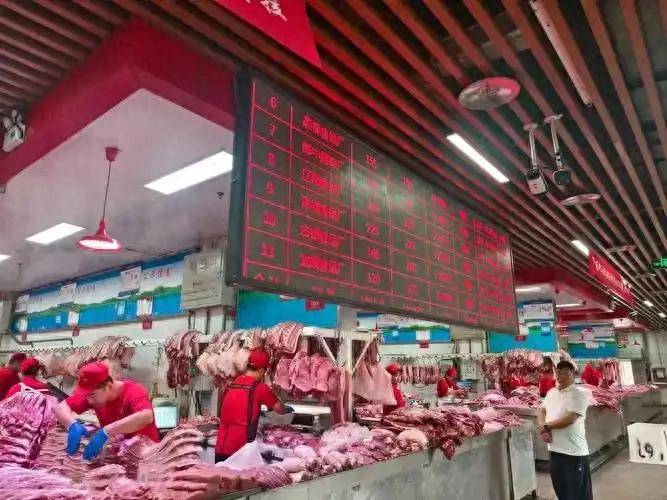
Group 1 - In 2025, China's meat production will exceed 100 million tons for the first time, reaching 100.72 million tons, a year-on-year increase of 4.2% [1][21] - Soybean production will remain stable above 20 million tons for four consecutive years, reaching 20.91 million tons in 2025, with a growth of 1.3% [1] - China's meat imports will be 6.09 million tons and exports approximately 1 million tons in 2025, indicating a significant domestic meat reserve of around 106 million tons [3][12] Group 2 - Pork will dominate meat production, with a projected output of 59.38 million tons in 2025, accounting for nearly 60% of total meat production [7] - Poultry meat production will reach 28.37 million tons, showing a year-on-year growth of 6.7%, equivalent to over 500 million birds processed daily [8] - Beef and mutton will serve as quality meat options, with beef production at 8.01 million tons (up 2.8%) and mutton at 4.96 million tons, maintaining stability [10] Group 3 - The trend of increasing self-sufficiency in meat production is evident, with pork imports decreasing by 5.52% in 2025, marking the fifth consecutive year of decline [14] - The export of 1 million tons of meat reflects China's ability to not only meet domestic demand but also to supply international markets with high-quality meat products [14] - China's meat consumption accounts for approximately one-third of global meat consumption, driven by a large population and rising living standards [15] Group 4 - The increase in meat production is linked to advancements in agricultural capabilities, ensuring stable meat prices and supply for the population [17][19] - China's meat industry development provides a model for sustainable practices in global meat production, with technologies like "grain-to-feed" being adopted in other countries [19][21] - The overall growth in meat production and consumption signifies improvements in agricultural development, public welfare, and China's international standing [21]

经济日报金观平:提升农业产能和质量效益
Jing Ji Ri Bao· 2026-02-05 00:56
Group 1 - The central government's primary focus this year is to enhance agricultural comprehensive production capacity and quality efficiency, balancing immediate supply stability with long-term agricultural development [1] - Food security is a critical national priority, with a target of achieving a grain output of 1.43 trillion jin by 2025, marking historical highs in total and per unit yield, while maintaining a per capita grain availability of 1000 jin [1] - Despite improvements, structural shortages in food supply remain a significant challenge, necessitating continuous vigilance in food security efforts [1] Group 2 - The strategy emphasizes stabilizing grain and oil production through area maintenance and yield improvement, ensuring grain output remains above 1.4 trillion jin [2] - There is a call for optimizing planting structures and expanding the production of diverse oilseeds, while also promoting a multi-faceted food supply system that includes agriculture, forestry, animal husbandry, and fishery [2] - The government aims to enhance agricultural production capacity through infrastructure improvements, technological advancements, and strict land use regulations [2] Group 3 - The focus is shifting from quantity to quality in agricultural production, ensuring that products are of high quality, well-marketed, and yield high returns [3] - There is an emphasis on adapting to consumer trends by improving product varieties, quality, branding, and standardization, while also ensuring food safety from farm to table [3] - The strategy includes promoting the export of competitive domestic agricultural products and managing imports of essential goods to stabilize the domestic market [3]
提升农业产能和质量效益
Jing Ji Ri Bao· 2026-02-04 22:17
Core Viewpoint - The central government emphasizes enhancing agricultural comprehensive production capacity and quality efficiency as a priority, aiming to ensure food security while promoting a shift from quantity to quality in agricultural production [1] Group 1: Food Security - Food security is a critical national priority, with a target of achieving a grain output of 1.43 trillion jin by 2025, setting historical highs in total output and yield per unit [1] - The balance between grain supply and demand remains tight, with structural shortages still prominent, necessitating continuous vigilance in food security [1] Group 2: Agricultural Production Strategy - The strategy focuses on stabilizing grain and oil production by maintaining acreage and increasing yield, ensuring grain output remains above 1.4 trillion jin [2] - There is an emphasis on optimizing planting structures and expanding the production of diverse oilseeds, while also promoting a multi-faceted food supply system that includes agriculture, forestry, animal husbandry, and fishery [2] - The government plans to implement a new round of actions to enhance grain production capacity, leveraging improved infrastructure, technology, and strict land use regulations [2] Group 3: Quality and Efficiency Enhancement - The shift towards quality enhancement in agriculture aims to ensure superior production, better sales, and higher profits, adapting to consumer trends [3] - There is a focus on improving product quality, brand development, and establishing a comprehensive quality safety traceability system from farm to table [3] - The strategy includes promoting the processing of agricultural products and enhancing the value chain, ensuring farmers benefit more from industry value addition [3] Group 4: Trade and Global Positioning - As a major agricultural product importer, the coordination between trade and production is crucial, with efforts to stabilize domestic production while promoting exports of competitive agricultural products [3] - The government aims to enhance the international competitiveness of agricultural enterprises and actively participate in global food governance to establish a fairer global food security system [3]
中央一号文件强调坚持产量产能、生产生态、增产增收一起抓
Xin Hua She· 2026-02-04 09:05
Group 1 - The core focus of the article is on the Chinese government's commitment to agricultural modernization and rural revitalization, emphasizing the importance of food security and agricultural productivity [2] - The central government's No. 1 document for this year highlights the need to simultaneously address production capacity, ecological sustainability, and income growth in agriculture [2] - The article outlines the government's strategy to enhance the overall production capacity and quality efficiency in agriculture [2]
“粮食生产滑坡容易上坡难”,中央农办:产需紧平衡、责任不放松
Nan Fang Nong Cun Bao· 2026-02-04 05:03
Core Viewpoint - The article emphasizes the importance of maintaining food security in China, highlighting the need for a balanced supply and demand in grain production, while also addressing the challenges posed by natural disasters and increasing consumption demands [8][18]. Group 1: Current Agricultural Situation - In the past year, China's agricultural sector has made progress despite facing significant natural disasters, with agricultural production capacity reaching new heights and grain output stabilizing at 1.4 trillion jin for two consecutive years [4][5]. - The production of soybeans has remained above 20 million tons for four years, and meat production has exceeded 100 million tons for the first time [6][5]. - The per capita grain availability in China is projected to reach 508.9 kg by 2025, indicating a stable supply of essential agricultural products [9]. Group 2: Challenges and Future Outlook - Despite the achievements, the overall supply-demand balance for grain remains tight, with increasing consumption of feed grains expected to continue [17][18]. - Historical trends indicate that while grain production can face declines, recovery is challenging, necessitating a continuous focus on food security [18][19]. Group 3: Policy Directions and Strategies - The central government's recent policy document emphasizes the need to safeguard national food security by focusing on production capacity, ecological sustainability, and increasing both yield and income [20][21]. - Key strategies include enhancing grain production through improved farming practices, optimizing crop structures, and ensuring stable grain output around 1.4 trillion jin [22][23]. - There is a strong emphasis on increasing production capacity by protecting arable land, implementing high-standard farmland construction, and leveraging agricultural technology innovations [26][28]. - Strengthening disaster prevention and mitigation is crucial, as natural disasters pose significant threats to grain production, with over 10 million hectares affected annually [30][31].

2025年我国粮食总产和单产均创历史新高
Xin Hua She· 2026-02-04 03:10
Core Viewpoint - China's agricultural comprehensive production capacity has reached a new level during the "14th Five-Year Plan" period, with significant increases in grain and meat production [1] Group 1: Grain Production - Grain output has remained stable at over 1.4 trillion jin (approximately 700 million tons) for two consecutive years, with a target of reaching 14,298 billion jin (approximately 714.9 million tons) by 2025, achieving historical highs in both total output and yield [1] - Soybean production has consistently exceeded 20 million tons for four consecutive years [1] Group 2: Meat Production - Meat production has surpassed 100 million tons for the first time [1]
一号文件正式发布,首提实施常态化精准帮扶,粮价近期也连续走高
Xuan Gu Bao· 2026-02-03 23:17
Industry Insights - The 2026 Central Document No. 1 emphasizes the implementation of normalized precise assistance for the first time, aiming to enhance the policy framework for assistance, improve monitoring precision and timeliness, and boost the effectiveness of industry and employment support, particularly for underdeveloped regions [1] - According to Pacific Securities, the national average purchase price of wheat reached 2529 yuan/ton, an increase of 4 yuan from the previous week, with a total increase of 14 yuan in the week prior. There is a strong expectation for rising international grain prices due to a loosening global liquidity environment and a global inventory reduction cycle, which may lead to domestic price increases [1] Company Developments - Suqian Agricultural Development reported that as of the summer sowing of 2025, the company managed approximately 1.358 million acres of farmland, an increase of 42,000 acres compared to the same period last year [2] - Top Cloud Agriculture has deployed a significant number of smart hardware devices in the application of IoT technology, establishing a comprehensive agricultural IoT system [3]