新瓦特时代

Search documents
野村东方国际 _ 全球进入新瓦特时代
野村· 2025-12-30 14:41
Investment Rating - The report indicates a positive outlook for the power equipment and renewable energy sector, highlighting significant growth opportunities driven by increasing electricity demand and technological advancements [2]. Core Insights - The global electricity demand is entering a super cycle, with substantial growth expected in the U.S. driven by AI data center construction and in Europe due to a resurgence in electricity demand [3][4][6]. - The Middle East is projected to see gas and solar power become the main contributors to future electricity increments [8]. - China is expected to maintain robust investment in its power grid, supporting its manufacturing base [11]. - The U.S. energy storage market is anticipated to experience unprecedented growth by 2026, driven by increasing demand from data centers and other sectors [13][25]. - The lithium carbonate market is expected to enter an upward price cycle due to supply constraints and increasing demand from electric vehicles and energy storage systems [39][48]. Summary by Sections Electricity Demand - U.S. electricity demand is forecasted to grow significantly, with peak demand predictions for 2030 being continuously revised upwards [5]. - European electricity demand growth is expected to accelerate to 2.4% from previous lower rates, with data centers contributing a compound annual growth rate of 20% [7]. - In the Middle East, the electricity generation mix is shifting towards gas and solar, with ambitious renewable energy targets set for 2030 [9]. Energy Storage - The U.S. energy storage market is projected to see a supply-demand imbalance in 2026-2027, with new installations expected to exceed 120 GWh [26]. - Companies are raising their forecasts for global and North American energy storage demand, predicting 510 GWh and 150 GWh respectively by 2028 [27]. - Tesla's energy storage business is showing strong growth, with significant increases in shipments and revenue [31]. Lithium Carbonate - The lithium carbonate market is expected to face upward price pressure due to supply shortages and increasing demand from the electric vehicle sector [39][48]. - Global lithium production is projected to grow, but demand is expected to outpace supply by 2026, leading to potential price increases [48]. Power Equipment - The U.S. transformer market is experiencing a shortage, with a significant portion of equipment needing replacement in the coming years [51]. - There is a positive outlook for Chinese power equipment exports to Europe and the Middle East, driven by increasing capital expenditures in these regions [55][56]. - Companies like Eaton and Hitachi are reporting strong order growth in their electrical businesses, indicating robust demand in the power equipment sector [66][69].
野村-全球进入新瓦特时代
野村· 2025-12-29 15:51
Investment Rating - The report indicates a positive outlook for the energy sector, particularly in the context of increasing electricity demand and the transition to renewable energy sources [1][3][20]. Core Insights - The global electricity demand is entering a super cycle driven by AI, industrialization, and electrification, with significant growth expected in the U.S., Europe, and the Middle East [3][4][5]. - The U.S. electricity consumption is projected to grow at a CAGR of 3.7%-4% from 2025 to 2030, primarily due to the return of manufacturing and the expansion of data centers [1][3]. - In Europe, electricity demand is expected to increase by 2.4% over the next five years, driven by industrialization and data center development [5]. - The Middle East has seen a threefold increase in electricity demand over the past 20 years, with further growth anticipated due to urbanization and industrial investments [6][7]. - China is one of the fastest-growing countries in terms of electricity demand, with a projected consumption of approximately 910 billion kWh in 2024, driven by industrial and export activities [8][9]. Summary by Sections U.S. Electricity Demand - U.S. peak load is expected to increase by 166 GW from 2026 to 2030, with data centers contributing 90 GW [4]. - Challenges in data center capacity growth include increased access difficulties and local opposition [11]. - Texas faces a potential electricity price increase due to rapid demand growth and weak grid support [13][14]. European Electricity Demand - European electricity demand is lagging behind the U.S. by 2-3 years, with a projected increase driven by industrialization and data centers [5]. - By 2030, data centers are expected to contribute 35 GW to electricity demand in Europe [5]. Middle East Electricity Demand - The Middle East's electricity demand is driven by urbanization and cooling needs, with a significant reliance on natural gas [6][7]. - Future growth in the region is expected to be fueled by infrastructure development and industrialization [7]. China Electricity Demand - China's electricity demand is expected to maintain steady growth, with industrial consumption accounting for 64% of total usage [8][9]. - The focus on enhancing the energy structure and grid investment is anticipated to support future demand [9]. Energy Storage Market - The U.S. energy storage market is experiencing strong demand, with optimistic growth projections for major companies like Tesla [19][20]. - The lithium carbonate market is expected to see a price increase due to tight supply and strong demand from the energy storage sector [21]. Investment Opportunities - Companies such as Canadian Solar (CSIQ) and others in the energy sector are viewed as having strong growth potential despite high valuations [29].
主题研究|电力设备2026:迎接新瓦特时代
野村东方国际证券· 2025-12-26 10:02
Core Viewpoint - The company is optimistic about AI, industrialization, and electrification driving a new upward trend in global electricity demand, projecting a total demand of 30,929 TWh in 2024, representing a 4% year-on-year increase [2]. Group 1: Regional Electricity Demand Projections - **United States**: The electricity load growth rate is expected to reach 2.8% in 2024, with a forecasted increase of 3.7% from 2025 to 2030. The summer peak load demand is projected to increase by 166 GW, primarily driven by data centers, which will account for 90 GW (55%) of this increase [5]. - **Europe**: With the rise in electric vehicle penetration and continued growth in new energy installations, the electricity demand outlook is positive. From 2023 to 2030, the compound growth rate in electricity demand across several European countries is expected to return to growth, contributing an increase of 294-461 TWh, driven by sectors such as data centers (70-91 TWh), green hydrogen (79-101 TWh), and transportation (70-128 TWh) [5]. - **Middle East**: The region is expected to maintain resilient growth in electricity demand, with a compound growth rate of 5% from 2000 to 2024. The electricity demand increase is projected to reach 184 GW from 2016 to 2035, primarily from natural gas (100 GW) and photovoltaics (62 GW) [5]. - **China**: Driven by economic growth, increased penetration of new energy vehicles, and the development of high-energy-consuming AI industries, China's electricity demand is projected to grow robustly, with a compound growth rate of 9% from 2000 to 2024 [5]. Group 2: Electricity Equipment Industry Demand Drivers - The demand for the electricity equipment industry is primarily driven by three factors: 1. The need for regional grid upgrades, with capital expenditures expected to continue steady growth through 2026 to meet the requirements of China's new electricity system and aging infrastructure abroad [6]. 2. The expansion of grid capacity due to increased penetration of new energy sources, with a differentiated growth outlook expected in 2026, particularly in China and emerging markets, while Europe may face challenges from negative pricing and temporary outages [6]. 3. The demand from AI data centers, which is anticipated to face bottlenecks in electricity access points in the U.S. by 2026, creating opportunities for companies that can provide power solutions [6]. Group 3: Investment Opportunities - The electricity equipment industry is expected to see significant investment opportunities in 2026, particularly in sectors such as gas turbines, solid oxide fuel cells (SOFC), small modular reactors (SMR), photovoltaics, wind power, and transformers, as the market transitions into a new wattage era [6].


世界进入新瓦特时代
虎嗅APP· 2025-11-07 10:16
Core Viewpoint - The article discusses the dual narratives of the current era, emphasizing the rise of AI and the critical importance of energy as a fundamental resource for sustaining AI technologies. It argues that the future of AI is not just about computational power but also about energy supply, leading to a new paradigm termed the "New Watt Era" [5][6][8]. Group 1: The Shift in Understanding Energy and AI - The concept of "computational power" is evolving from an asset to a liability, as the energy demands of AI systems grow exponentially [7][12]. - Data centers are transforming from mere storage facilities into "digital furnaces" that consume vast amounts of electricity to produce intelligence [11][12]. - The energy required for AI operations is becoming a critical factor for entry into the market, shifting from a cost to a capital requirement [15][19]. Group 2: The New Landscape of Energy Acquisition - The new competition among tech giants is focused on securing energy sources rather than proximity to users, leading to a "new land grab" for energy hubs [16][17]. - Power purchase agreements are evolving into "energy treaties," reflecting the strategic importance of securing energy supply for AI operations [18]. - The fear of "computational stranding" is emerging, where expensive AI infrastructure becomes worthless without access to energy [19][21]. Group 3: The Role of the Power Grid - The power grid is being redefined as the "sovereign artery" of AI civilization, essential for transporting energy to support AI systems [22][23]. - The aging infrastructure of the power grid poses a significant risk, as it struggles to meet the increasing demands of AI technologies [23][24]. - The mismatch in manufacturing cycles between GPUs and power transformers creates a bottleneck in energy supply for AI operations [26][27]. Group 4: The New Power Hierarchy - A new power hierarchy is forming, with energy and grid controllers at the top, followed by computational power providers and AI application developers [36][40]. - The dynamics of power are shifting, as AI sovereignty must now seek permission from energy authorities, highlighting the interdependence of energy and AI [40][41]. Group 5: Future Energy Strategies of Tech Giants - Major tech companies are investing heavily in green energy sources, not solely for sustainability but to secure political and energy quotas [44][46]. - The pursuit of nuclear fusion and small modular reactors (SMRs) indicates a strategic move towards energy independence, allowing companies to bypass traditional energy constraints [46][48]. - The vision of a self-sufficient AI ecosystem powered by private energy sources reflects a significant shift in how tech giants view their operational frameworks [49][50]. Group 6: Reevaluation of Physical Resources - The article calls for a reevaluation of the physical limitations that govern AI development, emphasizing that energy is becoming the most critical resource [55][56]. - The illusion of unlimited information is being challenged by the reality of finite physical resources, necessitating a new understanding of value in the AI landscape [52][53][58].
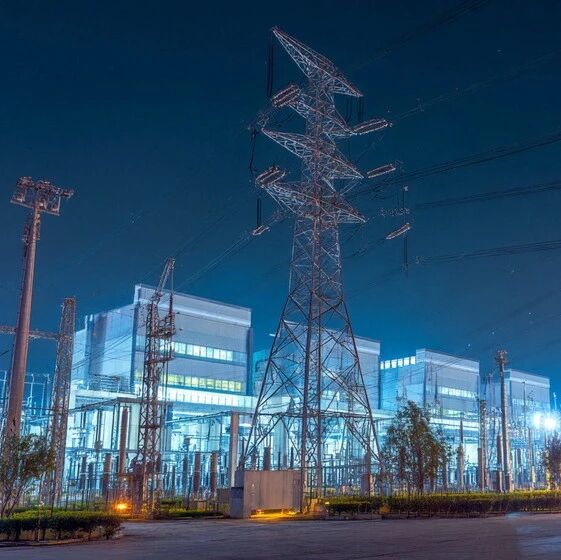
A股"带电风暴"!AI电荒引爆电力题材,科技行情下半场主力军?
Sou Hu Cai Jing· 2025-11-06 05:48
Group 1 - The A-share market has returned to 4000 points, with a rotation of market hotspots, particularly in the new energy sector, including energy storage, hydrogen energy, electricity, and charging piles [1] - Several stocks in the electric power and grid sector have seen significant gains, with companies like Hailu Heavy Industry and Moen Electric achieving consecutive trading limits [1] - The global AI wave is highlighting the urgent issue of power shortages, as tech leaders warn that electricity is becoming a critical constraint for AI development [2][3] Group 2 - Major investments in AI infrastructure are being made by tech giants in North America, driven by the ongoing electricity shortage [5] - Collaborations such as the $80 billion partnership between the U.S. and Westinghouse for nuclear reactors, and Google's construction of a 50 MW nuclear power plant, indicate a strong push towards enhancing power supply for data centers [6] - The aging U.S. power grid infrastructure requires significant upgrades, with 30% of power lines and transformers needing replacement in the next decade [7] Group 3 - Goldman Sachs reports that electricity supply is a major obstacle to AI development, predicting a 50-fold increase in power consumption by AI servers by 2027 compared to five years ago [8] - The International Energy Agency forecasts that global annual investment in power grids will rise to $500 billion by 2030, with a compound annual growth rate of 12.6% [8] - UBS anticipates a 10-year power supercycle in China, with electricity demand growth expected to double from previous estimates, driven by new energy vehicles and data centers [8] Group 4 - Domestic companies are expected to benefit from increased orders and export demands, with significant growth in transformer and switch exports reported [9] - CITIC Securities highlights a structural demand in the power transmission and transformation equipment sector, indicating a potential reversal in market conditions for high-voltage and smart grid segments [10]
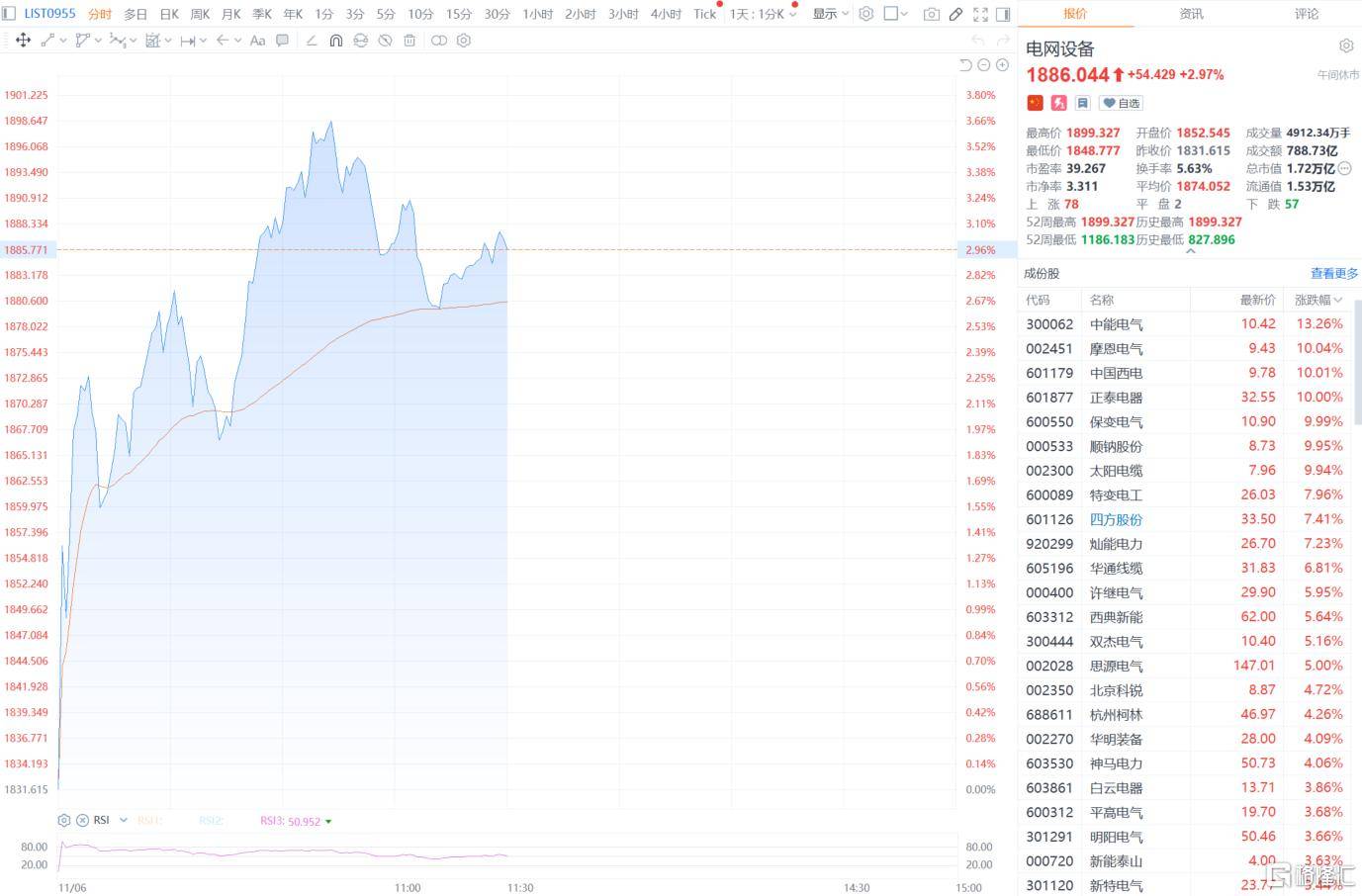
涨停股满屏都“带电”
财联社· 2025-11-05 08:33
Core Viewpoint - The article highlights a significant surge in the electric equipment sector, driven by the increasing demand for electricity to support AI infrastructure, with several stocks experiencing substantial gains [2][3]. Group 1: Electric Equipment Sector Performance - Electric equipment stocks, including companies like Shuangjie Electric and TBEA, saw collective surges, with many stocks containing the character "电" (electric) leading the gains [2]. - Specific stock performance includes N Xingbei with a 172.60% increase, and other notable mentions like Canchuang and Yichuang Electric with increases of 29.96% and 20.79% respectively [3]. Group 2: AI and Electricity Demand - Microsoft CEO Nadella and OpenAI CEO Altman indicated that the AI industry faces a power shortage rather than an excess of computing power, emphasizing the need for infrastructure close to power sources [4]. - The U.S. Department of Energy warned that if power suppliers cannot increase generation during peak demand, power outages could double in the next five years [4]. Group 3: Future Electricity Consumption Trends - The EIA predicts that U.S. electricity consumption will reach historical highs in 2025 and 2026, primarily driven by AI and data center expansions [4]. - Goldman Sachs forecasts that AI data centers will increase global electricity demand by 175% by 2030 compared to 2023 [4]. Group 4: Impact on Electricity Pricing - The imbalance between electricity supply and demand may lead to higher electricity prices, with reports indicating that U.S. power suppliers are seeking significant rate increases, totaling $29 billion in rate hikes approved for 2025 [4][5]. Group 5: Equipment Replacement and New Technologies - The U.S. is entering a "New Watt Era," with a significant portion of electrical grid equipment needing replacement, including 30% of power lines and transformers over the next decade [5]. - Companies like Eaton and Hitachi are experiencing growth in orders, particularly in the electrification sector, with Eaton reporting a 55% year-on-year increase in data center orders [5]. Group 6: Emerging Energy Solutions - New energy technologies such as fuel cells, solar storage, and nuclear power are expected to fill the electricity gap for data centers, with SOFCs projected to have an annual installation capacity of 0.5-1.25 GW in North America from 2026 to 2030 [6]. - Nuclear power is gaining attention from tech giants, with significant investments planned, including a $200 billion commitment in the U.S. for nuclear projects [6]. Group 7: Long-term Energy Strategy - Haitong Securities predicts that the AI narrative will accelerate U.S. electricity system construction, leading to a delay in coal power retirement and an increase in solar storage and SOFCs, with a long-term focus on nuclear power [7].