新能源产业出海

Search documents
海南省政协委员何逸舟:推动新能源产业出海
Sou Hu Cai Jing· 2026-01-29 09:07
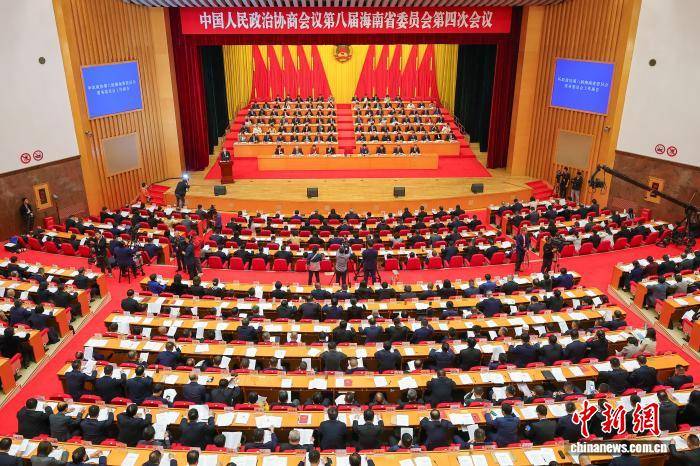
中新网海口1月29日电 (记者 符宇群)"当前,中国新能源产业正从以'产品贸易'和'项目建设'为主的传统 阶段向'系统化出海'的新阶段加速演进,而国际化竞争的重心也由单一的'制造能力'转向'体系能 力'和'服务能力'的整体比拼。"海南省政协委员、澳大利亚资本投资有限公司董事总经理兼大中华区首 席执行官何逸舟认为,这一趋势既是中国新能源产业迈向更高质量发展的内在要求,也是新质生产力参 与国际分工、拓展发展空间的重要路径。 "新能源走出去,表面上是产品和工程的竞争,实质上则是标准、规则和制度安排的竞争。"何逸舟认 为,把这些关键的要素和规则转化为企业可落地、可操作的出海方案,可为海南提升"两个基地""两个 枢纽"能级,服务国家战略提供一个务实的切口。 海南具备高温、高湿、强盐雾等热带海洋环境的条件,是开展新能源设备适应性测试和技术验证的理想 区域。何逸舟建议,依托海南自贸港政策与区位优势,联合国际权威机构,探索建设面向热带和海洋环 境的新能源测试与标准认证平台,推动技术规范、检测方法、认证结果进行国际互认;通过以真实场景 促进规则对接,以制度合作降低出海成本,把海南自贸港打造成新能源规则制定与衔接的全球支点。 图 ...

全球围剿中国锂电|独家
24潮· 2025-12-25 23:04
Core Viewpoint - The article highlights the increasing challenges faced by Chinese companies in the lithium battery sector due to aggressive trade policies and regulations from the US and Europe, which aim to curb China's competitive edge in the global market [3][14][27]. Group 1: Industry Challenges - Chinese battery manufacturers, including companies like CATL and Guoxuan High-Tech, are experiencing project suspensions in the US due to the "One Big Beautiful Bill" and other restrictive policies [3][22][25]. - The US has implemented the Inflation Reduction Act (IRA), which provides significant subsidies for domestic production while imposing strict requirements on foreign entities, particularly targeting Chinese companies [14][15][19]. - The European Union is also enacting measures to limit reliance on Chinese products, including tariffs on electric vehicles and stringent local content requirements for battery production [21][28]. Group 2: Market Position and Performance - By October 2025, Chinese companies are projected to hold six out of the top ten positions in the global power battery market, capturing 69% of the market share, with CATL alone accounting for 38% [8][9]. - The Chinese lithium battery industry has established a comprehensive supply chain, from raw materials to recycling, solidifying its dominant position globally [10][36]. - Despite facing external pressures, the growth of Chinese lithium battery exports has been significant, increasing from 35.9% in 2017 to an expected 54.9% by 2024 [34]. Group 3: Strategic Responses - In response to the restrictive policies, Chinese companies are exploring joint ventures and restructuring ownership to comply with US regulations, as seen with Canadian company Canadian Solar's strategy in the US [22][24]. - The article notes that the US's attempts to localize production and reduce dependency on Chinese technology may ultimately backfire, as American companies currently lack the capacity and technology to replace Chinese suppliers [28][37]. - The ongoing geopolitical tensions and trade barriers are likely to hinder the development of the US renewable energy sector, potentially diminishing its global competitive advantage [37].

协鑫科技胡泽义:中国新能源产业向产业链、生态圈出海进阶
2 1 Shi Ji Jing Ji Bao Dao· 2025-12-06 00:46
Core Insights - The forum focused on sustainable industrial paths in the AI era, highlighting the evolution of China's renewable energy industry from product export to a comprehensive approach involving industrial chains and ecosystems [1] Group 1: Company Strategy - GCL-Poly Energy, represented by its Executive Vice President Hu Zeyi, discussed the transition of the Chinese photovoltaic industry over the past 20 years, emphasizing the company's early involvement in raw material R&D and market application [2] - The company has entered a new phase of overseas expansion, focusing on technology export and integration, having previously acquired third-generation photovoltaic technology, which strengthens its competitive position in the global market [2] - GCL-Poly plans to establish a new operational framework overseas during the 14th Five-Year Plan, aiming for a dual circulation model that promotes domestic and international market synergy [2][3] Group 2: Supply Chain and Risk Management - GCL-Poly adopts a "multi-region, multi-node, localized" supply chain strategy to mitigate reliance on single markets, leveraging bilateral agreements with countries along the Belt and Road Initiative [3] - The company enhances local integration through community projects, such as the "Light Project" in Ethiopia, to create a stable operational environment [3] - Future strategies will focus on enhancing core competitiveness and brand influence while systematically addressing external risks to build a world-class international operational system [3]


协同破局 龙蟠科技赋能汽车产业链高质量出海
Zhong Guo Qi Che Bao Wang· 2025-12-02 09:04
Core Viewpoint - Longpan Technology is expanding its global footprint through its two core businesses: new energy materials and lubricants, effectively participating in the global competition of the Chinese automotive industry [1][2][14]. Group 1: New Energy Materials - Longpan Technology's subsidiary, Asia-Pacific Lithium Source, signed a long-term supply agreement with CATL to provide 157,500 tons of high-performance lithium iron phosphate cathode materials from Q2 2026 to 2031, ensuring capacity digestion and enhancing brand influence in overseas markets [2][3]. - The company has established the largest overseas lithium iron phosphate cathode materials factory in Indonesia, leveraging the region's rich lithium, nickel, and cobalt resources to meet the growing local supply demands [2][3]. - The Indonesian factory's output aligns with CATL's overseas bases, creating a cross-regional supply chain that reduces logistics costs and trade barriers, showcasing a unique advantage of China's new energy industry in global competition [3][14]. Group 2: Lubricants Business - Longpan's lubricants business serves as a stable foundation for its overseas expansion, with a market presence in over 20 countries, establishing a strong image for Chinese lubricant brands [4][8]. - The company tailors its lubricant products to meet local climate and operational conditions, such as producing high-performance lubricants for extreme temperatures in Kazakhstan and high-sulfur diesel environments in Zambia [8][9]. - In Southeast Asia, Longpan showcased its products at an automotive exhibition, emphasizing its adaptability to the region's high-temperature and high-humidity conditions, which garnered significant attention from local dealers and consumers [9][10]. Group 3: Industry Trends - The Chinese automotive industry is experiencing significant growth in exports, with a 15.7% year-on-year increase in total vehicle exports and a 90.4% surge in new energy vehicle exports in the first ten months of 2025 [11]. - The restructuring of global new energy trade dynamics presents historical opportunities for Chinese enterprises to shift from traditional export models to localized overseas operations, particularly in emerging markets like Southeast Asia [11][14]. - Longpan Technology's global strategy, termed "Very 7+1," focuses on building competitive advantages through market, capacity, talent, capital, vertical integration, product differentiation, and corporate culture, with ESG as a foundational support [13][14].


摩洛哥的中国电池产业链
鑫椤锂电· 2025-09-15 02:17
Core Viewpoint - The article highlights the rapid development of the lithium battery industry chain in Morocco, driven by Chinese companies, which is creating a new growth engine for the global renewable energy sector [1]. Industry Chain Core Projects - Guoxuan High-Tech is investing approximately $6.8 billion to build Africa's first electric vehicle battery super factory in Morocco, with a planned capacity of 100 GWh, starting with 20 GWh expected to be operational by 2026 [3]. - BTR New Materials Group is investing about $849 million in Tangier to establish a factory with an annual production capacity of 50,000 tons of positive materials and 36,000 tons of negative materials, capable of supplying around 500,000 electric vehicles [4]. - Sichuan Yahua is collaborating with LG Energy Solution to invest over $500 million in a lithium hydroxide refining plant, which is expected to create over 430 direct jobs and ensure high-value utilization of local lithium resources [5]. - Zhongwei Co., Ltd. is investing $2 billion in a joint venture with Al Mada to build an NMC, LFP, and battery recycling project in Jorf Lasfar, with an annual capacity to support over 1 million electric vehicles [6]. Strategic Advantages of Morocco - Morocco holds about 70% of the world's phosphate reserves, a key source for LFP battery materials, and benefits from a low-cost production environment, with battery production costs 36% lower than in other countries [8]. - The Moroccan government aims to increase annual automotive production capacity to 1.4 million vehicles by 2030, aligning with the investment plans of Chinese companies [8]. Global Market Layout Strategic Significance - Investments by Chinese companies in Morocco are part of a broader global market strategy, allowing them to bypass trade barriers and access the U.S. market through free trade agreements [10]. - The establishment of a complete battery industry chain in Morocco enables Chinese companies to serve global markets, creating a "Made in Morocco, Sold Globally" model [10]. Industry Chain Coordination Effects - The investments have created a "chain effect," integrating various components of the battery supply chain, which reduces production costs and enhances supply chain stability [12]. - The Moroccan government supports this industry chain development by providing financial backing and facilitating administrative processes, ensuring smooth project execution [12].