算电融合

Search documents
十五五规划的电碳绿能-煤与电行情的由点及面
2026-03-17 02:07
Summary of Conference Call Notes Industry Overview - The conference call discusses the energy sector, specifically focusing on coal and electricity markets in the context of the "14th Five-Year Plan" and the upcoming "15th Five-Year Plan" [1][2][3]. Key Points and Arguments 1. "15th Five-Year Plan" Goals - The plan shifts focus from energy consumption control to carbon emission control, with non-fossil energy consumption target set at 25%, up from 21.7% achieved during the "14th Five-Year Plan" [2][3]. - The target for unit GDP carbon emission intensity is a 17% reduction, consistent with the previous plan's performance [2]. - New capacity targets include pumped storage capacity doubling to 100 million kilowatts, offshore wind and nuclear power reaching 110 million kilowatts each, and increased west-to-east power transmission capacity to 420 million kilowatts [1][3]. 2. Investment Opportunities - The integration of computing power and electricity ("算电融合") is identified as a new growth area, potentially increasing ROE by 3-4 percentage points for green electricity projects combined with computing centers [1][4]. - The coal market is expected to show resilience, with fire power generation supporting coal demand, leading to potential upward revisions in coal company EPS and valuation recovery [1][6]. 3. Investment Strategy - Suggested investment focus includes: - Q1: Coal sector resilience - Earnings season: Fire power companies - Flood season: Hydropower - Second half: Green and nuclear power, particularly targeting central state-owned enterprises with a market cap of around 60 billion [1][6]. 4. Market Dynamics - The coal market is expected to maintain demand growth due to low base effects in the second industry and potential overseas electricity shortages [5][6]. - The investment logic for coal stocks hinges on coal price resilience, which could lead to EPS upgrades and valuation recovery [6]. 5. Price Mechanism and Policy Implementation - The plan emphasizes optimizing pricing mechanisms for water, electricity, and gas, encouraging flexible power sources to participate in pricing policies [3][4]. - Monitoring the progress of major energy base constructions and the migration of high-energy-consuming industries is crucial for understanding the energy structure and capacity layout [4]. Other Important Insights - The emotional drive from "算电融合" should be balanced with fundamental performance, particularly for fire power companies in Q1 2026 [5]. - The overall investment strategy remains unchanged despite the emotional drive, with a focus on capital management and potential dividend increases from state-owned enterprises [6][7]. - Specific companies to watch include Yanzhou Coal Mining Company, China Shenhua Energy, and State Power Investment Corporation among others [6][7].
公用事业行业周报:十五五规划的电碳绿能,煤与电行情的由点及面-20260315
SINOLINK SECURITIES· 2026-03-15 12:03
Investment Rating - The report suggests a focus on three key directions for investment opportunities in the energy sector, particularly in low-carbon and green energy initiatives [1] Core Insights - The 14th Five-Year Plan has been exceeded in terms of non-fossil energy share, and the 15th Five-Year Plan shifts focus from energy consumption control to carbon emission control and energy structure optimization [5][6] - The report emphasizes the importance of carbon peak goals and the integration of low-carbon strategies into various development plans, highlighting the need for policy expectations and price mechanisms [1] - The report identifies the trend of "算电融合" (computational electricity integration) as a catalyst for the electricity market, suggesting that regional power companies with low valuations should be closely monitored for project developments [1][2] Summary by Sections Section 1: Carbon Peak and Green Energy - The 15th Five-Year Plan introduces a chapter on achieving carbon peak, with five out of twenty main economic and social development goals focusing on green and low-carbon initiatives [1] - Key targets include a 17% reduction in carbon emissions per unit of GDP over five years and an increase in the share of non-fossil energy in total energy consumption to over 25% [6] Section 2: Electricity Market Dynamics - The report highlights the expected high growth in electricity demand in the first half of the year, driven by low base effects and increased reliance on thermal power [2] - It notes that coal prices are influenced by supply constraints and geopolitical tensions, with current prices for Q5500 thermal coal at 729 RMB/ton [2] Section 3: Investment Opportunities - The report outlines specific companies to watch based on their alignment with current market trends, including coal and thermal power companies like Yanzhou Coal Mining Company and Huaneng Power International [3] - It emphasizes the importance of monitoring performance metrics such as market transactions and capacity pricing in the thermal power sector [1][3]
行情由点及面,两会强调双碳
SINOLINK SECURITIES· 2026-03-08 10:38
Investment Rating - The industry investment rating is not explicitly stated in the provided documents, but it can be inferred that there is a positive outlook based on the focus on growth areas such as carbon reduction and renewable energy integration [7]. Core Insights - The government work report emphasizes the dual carbon goals, focusing on zero-carbon parks, computational power integration, and circular economy initiatives. By 2025, it aims for a 5% reduction in carbon emissions per unit of GDP and an increase of 370 million kilowatts in renewable energy installations, with non-fossil energy accounting for nearly 40% of total power generation [2]. - The electricity sector is experiencing a shift driven by three main factors: the integration of computational power by electricity companies, validation of energy security and dual carbon goals during the Two Sessions, and a market adjustment since November 2022 leading to low public holdings [3]. - The coal sector is expected to benefit from demand elasticity and supply constraints, with a projected increase in electricity consumption and coal demand due to geopolitical tensions and export restrictions [4]. Summary by Sections Government Policy and Goals - The report outlines specific targets for 2025 and 2026, including a 3% reduction in energy consumption per unit of GDP and a 3.8% reduction in carbon emissions per unit of GDP. It highlights the importance of pollution control and the development of a green low-carbon economy [2]. Electricity Sector Dynamics - The report identifies three driving factors for the electricity market: the strategic moves by power companies towards computational power, the reaffirmation of energy policies during the Two Sessions, and the current low valuation of the sector following a market adjustment [3]. Coal Market Outlook - The coal market is highlighted for its demand elasticity, with expectations of increased consumption driven by low base effects and geopolitical factors affecting supply. The report notes a recent price increase for thermal coal, indicating a potential upward trend in the market [4]. Investment Opportunities - The report suggests focusing on specific timelines for investment opportunities: current coal dynamics, upcoming quarterly reports for thermal power, and monitoring hydropower during the flood season. Key stocks to watch include Yanzhou Coal Mining, China Shenhua Energy, and Huaneng Power International [5].
公用事业行业研究:算电融合+两会临近+低配低估,电力行情超前演绎
SINOLINK SECURITIES· 2026-03-01 08:21
Investment Rating - The industry is rated as "Buy" with an expected increase of over 15% in the next 3-6 months [4]. Core Insights - The integration of computing power and electricity, the upcoming Two Sessions, and the low allocation and undervaluation of the sector are driving increased attention and investment momentum [1]. - The report outlines a three-phase investment rhythm: the current phase focusing on coal price increases driven by electricity demand elasticity, the second phase around the first quarter report focusing on stable performance in thermal power, and the third phase during the flood season from April to June focusing on hydropower [1]. - The report emphasizes that the performance of coal and thermal power companies will be the core driver of the sector, with a focus on earnings per share (EPS) upgrades and valuation increases during the rising coal price phase [1]. Summary by Sections Coal Sector - Emphasis on the elasticity of electricity demand and feedback on coal prices, with key companies including Yancoal Energy, China Shenhua, and Shaanxi Coal [3]. - The first half of the year is expected to see high growth in electricity demand due to a low base, particularly in energy-intensive manufacturing sectors [2]. - The report highlights the potential for coal power generation to exceed expectations due to low base effects and increased demand from overseas data centers [2]. Thermal Power Sector - Assessment of market-oriented trading and new capacity pricing policies impacting Q1 performance stability, with a focus on the public utility nature of thermal power [3]. - Companies such as Sheneng Shares, Huaneng International Power, and Guodian Power are highlighted for their stable dividend value despite current challenges [3]. Hydropower Sector - Monitoring of hydrological data improvements during the main flood season, which may elevate performance expectations, with companies like State Power Investment Corporation and Yangtze Power being of interest [3]. Central State-Owned Enterprises - Attention to the marginal changes in market value management and capital operations of large central state-owned enterprises, including Guiguan Power and Huadian International [3].
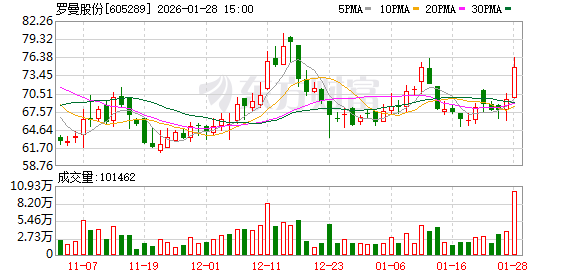
罗曼股份并购切入AI算力领域,订单与业绩成关键看点
Jing Ji Guan Cha Wang· 2026-02-14 01:59
Strategic Advancement - The company plans to acquire Wutongshu High-tech (AIDC computing power service provider) in 2025 and Holovitz (immersive experience design company) in 2024, creating a synergistic path of "computing power and electricity integration" and "lighting + experience design" [2] - The chairman, Sun Kaijun, stated in a January 2026 interview that the company will implement a full-chain layout through "computing power hardware + infrastructure + model ecology," deepening AI applications in safety and intelligent science, while exploring a "computing power as a service" model [2] - The initiative aims to combine new energy technology with computing center energy consumption management to create green data center solutions [2] Operational Status - Order Progress: Wutongshu High-tech signed computing power contracts totaling approximately 604 million yuan from December 2025 to January 2026, including a collaboration with China Merchants Intelligent Supply Chain worth about 933 million yuan [3] - These orders account for 82.5% of the company's revenue in the first three quarters of 2025, and successful execution will directly contribute to revenue [3] - Financial Improvement: The company expects a net profit of 50 to 60 million yuan in 2025, turning from loss to profit; revenue for the first three quarters of 2025 is 732 million yuan (a year-on-year increase of 63.10%), with a net profit attributable to shareholders of 21.09 million yuan (a year-on-year increase of 33.55%) [3] - However, the first quarter of 2025 saw revenue growth without profit growth (net profit decreased by 20.68% year-on-year), and operating cash flow was negative [3] Future Development - Integration Pressure: The cross-industry acquisition requires addressing technical, team, and cultural integration challenges, with the company setting a performance commitment of 400 million yuan for Wutongshu High-tech from 2025 to 2027, which carries a risk of not meeting targets [4] - Industry Competition: The computing power sector is driven by policy support (such as the national computing power interconnection node construction), but the market is highly competitive, and order execution may be affected by supply chain or demand fluctuations [4] - The company has quickly entered the computing power sector through acquisitions, with initial improvements in performance reflecting order landing and strategic synergy; however, sustainability depends on future integration efficiency, order conversion capability, and industry competition landscape [4]

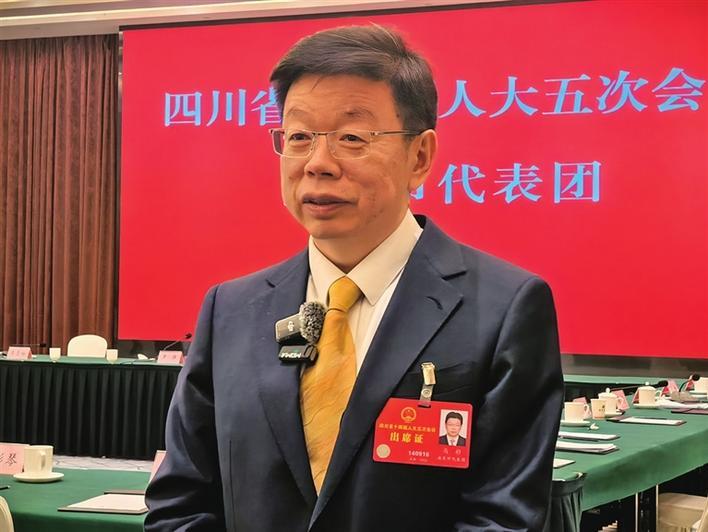
抢占人工智能和量子科技产业制高点 打造绿色算力新标杆
Xin Lang Cai Jing· 2026-02-07 20:46
Group 1 - The core viewpoint of the article emphasizes the acceleration of high-quality development in the digital economy and the promotion of the national digital economy innovation development pilot zone in Sichuan Province [3] - Sichuan Telecom has implemented the provincial government's strategic deployment to support the development of artificial intelligence and quantum technology industries by providing essential infrastructure [3][4] - The company launched the self-developed artificial intelligence platform, the Starry MaaS platform, which offers comprehensive services covering data, models, and applications [3] Group 2 - Sichuan Telecom has established a quantum metropolitan area network in Chengdu and Mianyang, successfully creating several demonstration projects, including the first international quantum 0TN dedicated line for major events and the first commercial quantum encryption line for finance [3] - The company has developed the first fully domestic "four-computing integration" super node in Western China, achieving deep integration of quantum computing with general computing, intelligent computing, and supercomputing [3] - The recent construction of the first distributed green computing cluster in a high-altitude area in Ganzi Prefecture demonstrates the effective utilization of local hydropower resources and natural geographical conditions, significantly reducing operational costs [5]


电网“十五五”五万亿浪潮中,威胜信息锚定“算电融合”新引擎
Xin Lang Cai Jing· 2026-02-06 11:20
Core Insights - The "14th Five-Year Plan" of the State Grid has set a fixed asset investment target of 4 trillion yuan, a 40% increase from the previous plan, establishing a new baseline for China's energy landscape [21] - The Southern Power Grid plans to invest 180 billion yuan by 2026, marking a record high for five consecutive years, with an estimated total investment of 1 trillion yuan during the "14th Five-Year Plan" [21] - The combined investment of 5 trillion yuan from these two major grid companies will directly stimulate the development of the entire smart grid industry chain, focusing on solving the "last mile" challenges such as distribution networks, microgrids, and new energy storage [21][22] Company Positioning - Weishen Information, a leader in the energy IoT sector, is strategically positioned to benefit from this industrial transformation, evolving from a mere equipment supplier to a provider of integrated solutions in the "computing and electricity fusion" era [21][22] - The company has consistently achieved revenue and net profit growth since its listing, maintaining a return on equity (ROE) above 20% and a total shareholder return (TSR) rate also exceeding 20% [22] Strategic Upgrades - The core change in Weishen Information's strategy is the transition from providing IoT connectivity to offering integrated services that encompass perception, computation, and decision-making [23] - The company has introduced a "full-spectrum surgical solution" to address the "last mile" issues in the power grid, including a representative product, the "Sensing and Computing Fusion SoC Chip," which integrates multi-dimensional sensing, high-speed communication, and edge computing capabilities [25][26] Market Opportunities - Weishen Information is targeting the AI computing infrastructure market, addressing energy consumption challenges in data centers, with a projected market size of 500 billion yuan based on customized solutions for 100,000 user scenarios [27][30] - The company is also expanding its reach into the "integrated space" by leveraging satellite remote sensing and communication solutions, thus extending IoT coverage to marine and remote areas [30] Global Expansion - The overseas market has become a significant growth driver for Weishen Information, with foreign revenue reaching 421 million yuan in 2024, a year-on-year increase of 85.4% [31] - The company is transitioning from a product export model to a comprehensive approach that includes solutions, localized services, and ecosystem collaboration [31][34] Conclusion - Weishen Information is positioned as an essential "digital enabler" in the construction of new power systems, with its value likely to be reassessed as it navigates the 5 trillion yuan investment wave directed at the "last mile" of the power grid [35]

打造“绿电+智算”定价中心和标准策源地
Xin Lang Cai Jing· 2026-02-01 22:24
Core Viewpoint - The article discusses the strategic development of Sichuan Province as a clean energy stronghold, emphasizing the need for a new power system to address the challenges of energy supply and demand balance amid increasing green electricity demand and the integration of artificial intelligence technology [1][2]. Current Status - Sichuan has transformed its energy structure from a reliance on hydropower to a diversified energy mix, with renewable energy capacity expected to exceed 32 million kilowatts by the end of 2025, increasing its share from 6% in 2021 to 20% [1]. - The total installed capacity of hydropower is projected to surpass 100 million kilowatts, with clean energy accounting for 87% of the province's total power capacity [1]. - The province's electricity demand is expected to grow, with an annual increase of 2 percentage points higher than the national average since the 14th Five-Year Plan [2]. Challenges - Structural imbalances in electricity supply and demand have led to instances of negative electricity prices, indicating a mismatch in the timing and capacity of energy supply [1]. - The capacity for effective adjustment in the power supply is lagging behind the rapid development of renewable energy, particularly during peak demand periods [1]. - The existing power grid faces challenges in transmission and stability, with potential for both surplus and shortage of electricity to coexist [2]. Strategies - Recommendations include enhancing energy storage capabilities, upgrading the power grid, and leveraging digital intelligence to create a new power system that is safe, efficient, and low-carbon [2]. - Specific actions proposed include building large-scale energy storage facilities, improving transmission infrastructure, and developing smart scheduling platforms using AI technology to optimize supply and demand [2][3]. - The integration of AI into the energy sector is seen as a dual opportunity to enhance energy management and create high-value applications for clean energy [2]. Opportunities - The combination of clean energy and artificial intelligence is viewed as a significant growth area, with potential for Sichuan to become a global hub for green electricity and intelligent computing [2]. - The establishment of a "green electricity + intelligent computing" pricing center is suggested, which could attract technology companies seeking sustainable energy solutions [2]. - The development of a comprehensive green hydrogen economy is also highlighted, focusing on creating a full-cycle economic system from production to application [3].
并购破局 罗曼股份:以AI与算电融合谋新篇
Shang Hai Zheng Quan Bao· 2026-01-29 00:11
Core Viewpoint - Roman Holdings is leveraging strategic acquisitions and technological integration to expand its market presence and embrace AI, aiming for significant growth in the coming years [1] Group 1: Company Strategy and Acquisitions - Roman Holdings has made two key acquisitions to transition into new markets, including the purchase of AIDC for AI computing solutions and Holovis for immersive experience design [1] - The company aims to create synergies between its existing landscape lighting business and the new acquisitions, focusing on "good tracks, good companies, and strong synergy" in its selection process [1] - The acquisition of Holovis has enabled Roman Holdings to penetrate international markets and attract high-quality clients, enhancing its competitive edge [1] Group 2: Integration and Value Creation - The integration phase post-acquisition is crucial for optimizing operations and enhancing competitiveness, with a focus on cost reduction and resource sharing [1] - Roman Holdings employs a dual strategy of respecting the management styles of acquired companies while leveraging its supply chain to reduce operational costs [1] - The company anticipates that the integration of AIDC will enhance its AI applications and optimize its digital entertainment offerings [1] Group 3: Financial Projections and Performance - Roman Holdings projects a profit of 180 million to 200 million yuan in 2025, with a net profit of 50 million to 60 million yuan, marking a turnaround from previous losses [1] - The company is set to fully integrate AIDC into its financial reports, positioning it as a key support for AI application scenarios [1] Group 4: Embracing AI and Future Directions - Roman Holdings plans to fully embrace AI as a core strategy, focusing on two main areas: AI integration in urban tourism and smart city applications, and the synergy between energy and computing [1] - The company aims to build a global operational system and enhance project delivery capabilities, ensuring high-quality project outcomes [1] - The upcoming "15th Five-Year Plan" period will see Roman Holdings accelerate its new energy system construction, providing green energy solutions for data centers and computing facilities [2]
并购破局 罗曼股份:以AI与算电融合谋新篇
Shang Hai Zheng Quan Bao· 2026-01-28 18:40
Core Insights - Roman Holdings, a leader in the landscape lighting industry in China, has successfully expanded into new markets through strategic acquisitions, including the purchase of Holovis and Wu Tongshu High-tech [2][4][6] Group 1: Strategic Acquisitions - Roman Holdings has signed contracts worth approximately 604 million yuan in the computing power sector through its subsidiary Wu Tongshu High-tech, marking a significant step into the AI computing field [3] - The acquisition of Wu Tongshu High-tech in 2025 is aimed at integrating AI computing capabilities with the company's existing energy solutions, enhancing its competitive edge in the green energy sector [3][7] - The acquisition of Holovis in 2024 allows Roman Holdings to leverage virtual reality and immersive experience technologies, creating synergies with its core lighting business and facilitating entry into high-end markets [4][6] Group 2: Integration and Value Creation - The first year post-acquisition is defined as a critical "honeymoon period" for integration, allowing for quick adjustments in operations and processes to optimize costs and enhance competitiveness [6] - Roman Holdings employs a strategy of "empowerment management and resource sharing" for Holovis, respecting its management culture while providing access to Chinese supply chain resources to reduce operational costs [6] - For Wu Tongshu High-tech, the focus is on releasing the value of the integration by combining AI computing technology with renewable energy solutions, enhancing the overall efficiency of both business segments [6][7] Group 3: Future Growth and AI Integration - Roman Holdings aims to fully embrace AI as a core strategy, focusing on two main areas: enhancing immersive experiences in urban tourism and smart city applications, and integrating renewable energy with computing power [8][9] - The company plans to implement a "2.0" strategy for global expansion, building a global operational system and enhancing project delivery capabilities [8] - By 2026, Roman Holdings expects to achieve a profit of 180 million to 200 million yuan, with net profits for shareholders projected between 50 million and 60 million yuan, indicating a turnaround from previous losses [7]