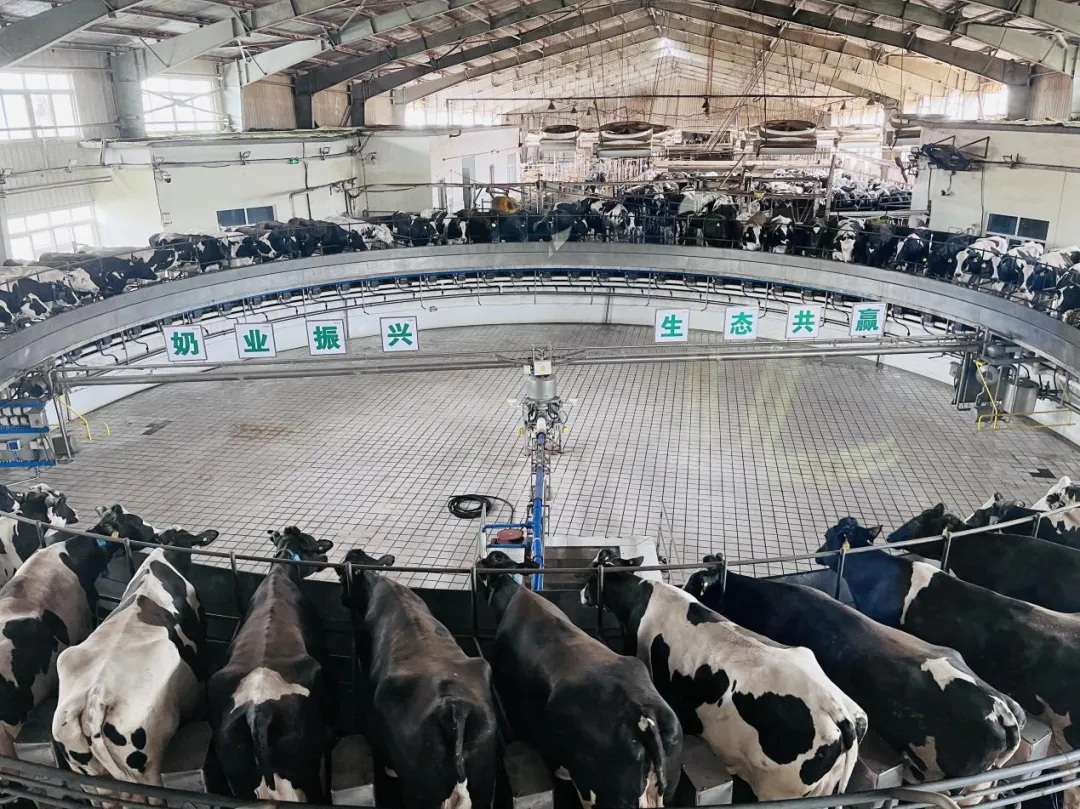
智慧牧场

Search documents
骑士乳业董事长党涌涛:打造区域性乳企韧性成长模板
Shang Hai Zheng Quan Bao· 2026-01-14 17:52
Core Viewpoint - Inner Mongolia Knight Dairy Group has adopted a differentiated development path through a comprehensive "Agriculture-Animal Husbandry-Dairy" integrated model, which helps the company respond to market challenges and enhances efficiency [2] Group 1: Integrated Model - The "Agriculture-Animal Husbandry-Dairy" model provides not only cost control but also serves as a complex risk hedging mechanism and efficiency improvement solution [2] - The synergy effects include: high-quality forage provided by agriculture for animal husbandry, recycling of cow dung to improve soil, and ensuring stable and high-quality milk sources for the dairy industry [2] - The unique "Agriculture-Animal Husbandry-Dairy" synergy involves crop rotation of forage and sugar beets, ensuring supply for both animal feed and sugar production, promoting scientific land rotation and green development [2] Group 2: Market Strategy - The company focuses on regional markets and low-temperature products to create a competitive edge against national brands, emphasizing shorter distances and fresher products [3] - Knight Dairy has specialized in the development of low-temperature yogurt and pasteurized milk, achieving a shelf life of 28 days, which allows for effective sales radius expansion [3] - The brand has established a strong reputation in core markets such as Hohhot, Baotou, and Ordos, driven by a commitment to quality and consumer trust [3] Group 3: Capital Market Engagement - The company aims to enhance communication with the market through various channels, including its official website and investor meetings, to clarify its long-term value [3] - Knight Dairy positions itself as a "slow and steady" long-term player, focusing on improving information disclosure for investors [3] Group 4: Technological Advancements - Knight Dairy is implementing smart farming technologies, including milking robots and automated feeding systems, which have reduced labor time by over 30% and labor intensity by over 60% [4] - The company aims to apply digital twin, AI, and IoT technologies in farm management, targeting a new management model of "robots managing robots" [4]

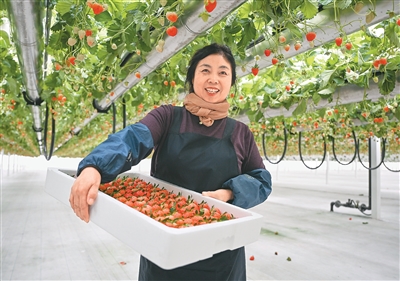
“智慧农牧民”日子更红火(“融”观中国)
Ren Min Ri Bao Hai Wai Ban· 2025-09-22 00:35
Core Insights - Inner Mongolia is focusing on digital rural development as a key task for promoting rural revitalization, aiming to build a national important agricultural and livestock product production base [8][9][12] Digital Agriculture Development - The implementation of smart farming technologies has significantly improved livestock management efficiency and quality, with farmers like Aoyun Bilige reporting reduced labor time and increased sheep quality, earning over 200,000 yuan in subsidies last year [9][10] - A total of 120 smart farms have been established in the region, enhancing income for herders and driving high-quality development in the livestock sector [9] - The use of data-driven approaches in agriculture has led to increased crop yields, with blueberry production seeing a doubling of fruit set rates and an increase of 2,000 pounds per acre [11][12] Technological Integration - Advanced technologies such as IoT, big data analysis, and remote monitoring are being utilized to optimize feeding, environmental conditions, and disease prevention in livestock farming [9][10] - The establishment of a digital agricultural service platform has facilitated the management of agricultural machinery and pest warning systems, covering 10 cities and 53 counties [12][15] Community and Governance Enhancement - Digital platforms have improved rural governance by enabling efficient problem-solving and resource coordination, exemplified by the rapid response to community health needs through a digital request system [12][13] - The development of a digital platform in villages has enhanced transparency in village affairs, allowing residents to participate in decision-making processes [14][15] Future Outlook - The government plans to continue optimizing digital rural services, ensuring that farmers become active participants in rural revitalization efforts [15]
(活力中国调研行)华中“奶业硅谷”激活“牛链条”
Zhong Guo Xin Wen Wang· 2025-08-29 03:05
Core Insights - The article highlights the development of a smart dairy industry park in Nanzhang County, Hubei, known as the "Silicon Valley of Dairy" in Central China, which is set to revolutionize local dairy farming through advanced technology and data-driven management [1][4]. Group 1: Industry Overview - The Nanzhang County Yunshang Mugge Smart Dairy Industry Park covers an area of 1,200 acres with a total investment of 1.2 billion RMB, aiming to produce approximately 130 tons of fresh milk daily [1][3]. - The park utilizes automated milking machines and smart systems to monitor the health and productivity of dairy cows, allowing one worker to manage up to 70 cows efficiently [1][3]. Group 2: Economic Impact - The establishment of the dairy park has activated a "cow chain" that connects over 3,500 local farmers to the industry, fostering a collaborative agricultural ecosystem [4][6]. - Local entrepreneur Zou Weijun returned to his hometown to start a company providing silage corn for the dairy farm, achieving an annual profit of over 800,000 RMB and creating job opportunities for over 100 villagers [4][6]. Group 3: Future Prospects - By the end of 2025, the dairy park is expected to house 10,000 cows, producing 90,000 tons of fresh milk annually, positioning it as the largest milk source in the Yangtze River basin [3][6]. - The project has also led to the establishment of related industries, including dairy product processing and organic fertilizer production, creating a comprehensive industrial chain from "grass to milk" [6].

【辉煌60载 魅力新西藏 】藏北牧区新图景:智慧牧场+现代新村 牧民生活大变样
Yang Shi Wang· 2025-07-31 03:12
Core Viewpoint - The article highlights the transformation of pastoral life in the Nagqu region of Tibet, focusing on the development of modern housing and cooperative farming practices that enhance the living standards of local herders and improve the efficiency of livestock management [1][3][4]. Group 1: Housing and Living Conditions - The villagers of Hangjia New Village have moved into new homes equipped with modern amenities such as water, electricity, heating, and internet, significantly improving their living conditions compared to their previous residences [3][4]. - The village, originally known as Luogang Village, consists of 85 households, many of which previously lived in remote areas with poor access to infrastructure [3]. Group 2: Cooperative Farming and Economic Development - The "Three Pastoral Linkage" reform encourages herders to join cooperatives, allowing them to pool resources and manage larger pastures collectively, thus fostering a more organized and efficient agricultural model [6]. - The government supports the development model of "leading companies + cooperative organizations + herders," which has led to the establishment of a full-chain livestock industry, from breeding to product sales [10][12]. Group 3: Technological Integration in Livestock Management - The introduction of smart farming technologies, such as real-time tracking collars for yaks, allows for better monitoring of livestock health and safety, enhancing overall herd management [8]. - The Agricultural Bank of Tibet has launched "Smart Livestock Loans," providing financial support to herders through live animal collateral, with a total of 5 loans amounting to 5.25 million yuan issued in the Nagqu region this year [8]. Group 4: Market Expansion and Employment Opportunities - The processing of livestock products at Gaqie Pasture has created job opportunities, particularly for university graduates, by integrating various aspects of the livestock industry [12]. - The local government aims to leverage the region's unique resources to develop distinctive brands and expand market reach, ultimately increasing the income of local communities [12].

二十四节气看蒙牛丨大暑走进和林一牧看科技防暑与生态反哺
Zhong Guo Jing Ji Wang· 2025-07-22 06:57
Core Insights - The article highlights the innovative practices in modern dairy farming, particularly in the context of high temperatures during the summer season, showcasing how technology and human care are utilized to maintain the comfort and productivity of dairy cows [1][3][5]. Group 1: Technological Innovations - The farm employs an automated sprinkler system and a fan system in the milking hall to maintain a comfortable temperature range of 16-18°C, ensuring that the cows' feed intake remains above 43 kilograms even during high temperatures [3][5]. - Each Holstein cow is equipped with a smart collar that captures real-time data on activity, rumination, and health, allowing for precise management and timely health alerts [5][9]. - The farm is transitioning to a "smart farm" model, implementing automated temperature control systems, precise feeding models, and health warning algorithms to enhance the quality assurance of milk production [9]. Group 2: Sustainable Practices - The farm utilizes a waste management system that converts cow manure into bedding material and organic fertilizer, promoting a green ecological cycle [7]. - A 300-acre windbreak forest of Xinjiang poplar trees, combined with an automated irrigation system, creates a unique microclimate that provides a comfortable environment for the cows and enhances the ecological value of the farm [7]. - The farm has been recognized as an "Ecological Circular Agriculture Demonstration Base" in Inner Mongolia for its sustainable practices [7]. Group 3: Production Efficiency - Despite the challenges posed by high temperatures, the farm maintains an average daily milk production of over 42 kilograms per cow [5]. - The farm has received multiple accolades, including being designated as a "National Standardized Demonstration Farm for Livestock and Poultry Breeding" and a "Source Base for Student Drinking Milk" [9].