
推理模型

Search documents
烧2万亿美元却难用?Gary Marcus狂喷AI赛道不靠谱:推理模型只是“模仿秀”,OpenAI一年后倒闭?
AI前线· 2026-01-27 03:50
Core Viewpoint - The current investment in AI, particularly in neural networks and large language models, is deemed misguided, with claims that these technologies will not lead to Artificial General Intelligence (AGI) as anticipated [2][3][4]. Group 1: Investment and Market Dynamics - The AI industry has seen investments totaling between $1 trillion to $2 trillion, which the expert believes is based on flawed assumptions about the capabilities of neural networks [14]. - OpenAI is projected to face severe financial challenges, with monthly losses around $3 billion, leading to a potential crisis if further funding is not secured [55][58]. - The market for large language models is becoming increasingly commoditized, with prices dropping significantly, indicating a price war among competitors [38][39]. Group 2: Technology and Performance Limitations - Large language models primarily function as advanced autocomplete tools, lacking true understanding and often producing "hallucinations" or fabricated information [19][29]. - The models are criticized for their inability to perform logical reasoning and abstract thinking, which limits their effectiveness in complex real-world scenarios [46]. - The reliance on massive datasets for training these models is seen as inefficient compared to human learning processes, which require far less information [49]. Group 3: Industry Trends and Future Directions - There is a notable shift within AI companies towards integrating traditional symbolic AI techniques alongside neural networks, indicating a recognition of the limitations of current models [34]. - The competitive landscape is evolving, with companies like Google catching up rapidly, suggesting that the lack of technological barriers will lead to increased standardization in AI products [36][37]. - The expert predicts that OpenAI may eventually be acquired by a larger entity like Microsoft, drawing parallels to the downfall of WeWork, highlighting the unsustainable nature of its current business model [55][58].


马斯克的一张合影告诉你,美国AI产业竟然靠着华人撑着
Sou Hu Cai Jing· 2026-01-10 13:05
Core Insights - The article highlights the significant role of Chinese talent in the American AI industry, particularly in Silicon Valley, where they have evolved from being mere executors to becoming key decision-makers and innovators in AI technology [3][5][7]. Group 1: Chinese Talent in AI - Chinese professionals have become indispensable in the development of AI technologies, contributing to major advancements in companies like NVIDIA and OpenAI [3][4]. - The transformation of Chinese engineers from "top architects" to "essential pillars" of American AI dominance reflects a broader trend of their increasing influence in the industry [3][5]. - The "Yao Class" from Tsinghua University and other elite institutions has gained recognition in Silicon Valley, often surpassing local talent in terms of capability and innovation [9][10]. Group 2: Engineering Excellence - The article emphasizes the "engineering brutality aesthetics" exhibited by Chinese teams, showcasing their ability to optimize complex algorithms and data processes, which is crucial in the current AI landscape [13]. - The success of the Chinese-led AI company Manus, which was acquired by Meta for billions, illustrates the rapid engineering capabilities and innovative approaches of these teams [5][13]. - Chinese engineers are noted for their meticulous attention to detail and relentless work ethic, which have become vital in the competitive AI sector [13][15]. Group 3: Cultural and Social Dynamics - A unique ecosystem has emerged among Chinese professionals in Silicon Valley, characterized by strong cultural ties and trust, facilitating rapid information exchange and collaboration [15]. - The social dynamics, including informal gatherings and discussions, play a crucial role in fostering innovation and community support among Chinese engineers [15]. - This cultural cohesion allows for efficient resource mobilization, enabling Chinese teams to quickly adapt and thrive in the fast-paced AI environment [15]. Group 4: Geopolitical Context - The article discusses the complex geopolitical landscape that Chinese AI professionals navigate, balancing their contributions to American technological advancement with the scrutiny of their backgrounds [17]. - Despite the challenges posed by international tensions, the presence of Chinese talent is deeply embedded in the fabric of the American AI industry, making them a critical component of its success [17][19]. - The narrative suggests that the contributions of Chinese engineers transcend national boundaries, emphasizing the universal nature of intelligence and innovation in the field of AI [19].

MIT新论文:2026推理模型过时了,“套娃模型”当立
量子位· 2026-01-04 09:06
Core Viewpoint - The article discusses the emergence of a new paradigm in language models called the "Recursive Language Model" (RLM), which significantly improves the handling of long texts and reduces costs compared to traditional models like GPT-5 [3][5][23]. Group 1: RLM Overview - The RLM introduces a novel approach by storing text in a code environment and allowing the model to write programs that recursively call itself to process the text [5][9]. - This method decouples the length of input data from the model's context window size, enabling the processing of text limited only by physical memory rather than the constraints of the Transformer architecture [10][12]. Group 2: Performance Metrics - RLM has demonstrated the ability to effectively handle up to 10 million tokens, surpassing the context window of leading models like GPT-5 by two orders of magnitude [23]. - In various benchmark tests, RLM outperformed traditional models in complex tasks, achieving F1 scores of 58.00% and 23.11% in OOLONG and OOLONG-Pairs tests, respectively, while traditional models scored below 0.1% [27]. Group 3: Cost Efficiency - RLM's approach allows for selective reading of relevant text segments, leading to a significant reduction in operational costs. For instance, the average cost for RLM in the BrowseComp-Plus benchmark was only $0.99, compared to $1.50 to $2.75 for GPT-5 [29][31]. - This cost efficiency indicates that RLM can maintain performance while controlling inference costs, making it a viable option for large-scale applications involving long texts [32].

2025,AI圈都在聊什么?年度十大AI热词公布
3 6 Ke· 2025-12-26 07:33
Core Insights - The development of AI in 2025 is marked by emerging concepts that are reshaping the industry landscape, as highlighted by the "MIT Technology Review" which identifies the top ten AI buzzwords of the year [1] Group 1: Emerging Concepts in AI - Vibe Coding redefines programming by allowing developers to express goals and logic in natural language, with AI generating the corresponding code [2] - Reasoning models have gained prominence, enabling AI to tackle complex problems through multi-step reasoning, with major advancements from OpenAI and DeepSeek [3] - World models aim to enhance AI's understanding of real-world causal relationships and physical laws, moving beyond mere language processing [4] Group 2: Infrastructure and Economic Implications - The demand for AI has led to the construction of super data centers, exemplified by OpenAI's $500 billion "Stargate" project, raising concerns about energy consumption and local community impacts [5] - The AI sector is experiencing a capital influx, with companies like OpenAI and Anthropic seeing rising valuations, although many are still in the high-investment phase without stable profit models [6] Group 3: Quality and Standards in AI - The term "intelligent agents" is widely used in AI marketing, but there is no consensus on what constitutes true intelligent behavior, highlighting a lack of industry standards [7] - Distillation technology allows smaller models to learn from larger ones, achieving high performance at lower costs, indicating that effective algorithms can drive AI advancements [8] Group 4: Content Quality and User Interaction - "AI garbage" refers to low-quality AI-generated content, reflecting public concerns about the authenticity and quality of information in the AI era [9] - Physical intelligence remains a challenge for AI, as robots still require human intervention for complex tasks, indicating a long road ahead for AI to fully understand and adapt to the physical world [10] - The shift from traditional SEO to Generative Engine Optimization (GEO) signifies a change in how brands and content creators engage with AI, emphasizing the importance of being referenced by AI in responses [11]
2025智算产业发展研究报告
Sou Hu Cai Jing· 2025-10-12 12:46
Core Insights - The report highlights the rapid transformation of the global economy driven by artificial intelligence (AI), predicting a 15% growth in global economic scale over the next decade, with a contribution of 11 trillion yuan to China's GDP by 2035 [1][16] - 2025 is identified as a pivotal year for the large-scale application of AI, with the intelligent computing industry emerging as a core engine for digital economic growth [1][17] Global Policy Landscape - A global competition in intelligent computing policies has commenced, with the US planning to invest $500 billion over four years to enhance AI infrastructure through the "Stargate Project" [1][19] - The European Union has launched the "InvestAI" initiative, aiming to raise €200 billion for AI investments and establish a €20 billion fund for building AI super factories [1][20] - Japan and South Korea are also accelerating their investments in AI and semiconductor industries, with Japan planning to invest over $65 billion by 2030 and South Korea establishing a national AI computing center [1][21][22] China's Development Path - China's intelligent computing industry is characterized by an "application-driven + inclusive service" approach, with multi-level policy support promoting AI applications across various sectors [2][24] - As of June 2025, China has 10.85 million standard racks in use, with an intelligent computing scale of 788 EFLOPS and a total storage capacity exceeding 1,680 EB, maintaining a leading position globally [2][16] Demand and Supply Dynamics - The demand side is shifting from "training" to "inference," with inference models evolving from pure text to multi-modal capabilities, expected to account for over 70% of global computing demand by 2026 [3][4] - On the supply side, major tech companies are significantly increasing their capital expenditures, with a projected $246 billion in 2024, and China's intelligent computing market growing by 43% [4][5] Future Trends - Five key trends are anticipated in the intelligent computing industry: accelerated domestic chip replacement, expansion of computing clusters, green transformation of AI infrastructure, evolution of integrated intelligent computing platforms, and increased penetration of AI applications in vertical industries [5][6] - The market for vertical AI applications is expected to grow from $5.1 billion to $47.1 billion by 2030, indicating substantial potential in various sectors [5] Regional Development - China's intelligent computing industry exhibits significant regional disparities, with Guangdong, Beijing, Jiangsu, and Shanghai leading in innovation, while other provinces are catching up through local economic vitality and policy support [6][24] - Technological innovations such as PD separation, heterogeneous mixed training, and silicon photonics are driving industry breakthroughs [6][6]

宏观经济周报(2025年9月15日-9月20日)
Sou Hu Cai Jing· 2025-09-23 10:54
Group 1 - The Federal Reserve announced a 25 basis point reduction in the federal funds rate target range to 4.00% to 4.25%, marking its first rate cut since December 2024 after five consecutive meetings without changes [1] - The Bank of England decided to maintain its benchmark interest rate at 4%, aligning with market expectations, as inflation remains above target and the labor market shows signs of weakness [1] - In the U.S. Senate, both a short-term spending bill proposed by Republicans and a competing bill drafted by Democrats failed to pass, risking a government shutdown if a new funding measure is not approved by October 1 [1] Group 2 - Australia, Canada, and the UK officially recognized the State of Palestine on September 21 [2] - Chinese Premier Li Qiang emphasized the importance of cooperation between China and the U.S. during a meeting with a U.S. congressional delegation, advocating for mutual respect and constructive dialogue [2] - The Chinese government announced 19 measures to expand service consumption, including a "service consumption season" and extended operating hours for popular cultural and tourist venues [2] - The National Healthcare Security Administration of China released guidelines for the 11th batch of centralized drug procurement, focusing on maintaining clinical stability and quality [2] Group 3 - Economic cycle expert Lars Tvede discussed the profound impact of artificial intelligence (AI) on the economy and society, highlighting the efficiency of generative AI and reasoning models in processing information [3] - Tvede noted that the energy demands of AI are increasing, with the energy consumption for processing prompts rising to 50 times that of a year ago, emphasizing the need for diverse hardware solutions [3] - The current statistical systems fail to capture the true economic value generated by AI investments, which are nearing 1% of U.S. GDP, while the value created may be tenfold that amount [3] Group 4 - The U.S. Department of Labor reported that initial jobless claims for the week ending September 13 were 231,000, lower than the expected 240,000 and down from the previous week's 263,000 [4] - Eurozone industrial production increased by 1.8% year-on-year in July, matching expectations, while month-on-month growth was 0.3%, slightly below the forecast of 0.4% [4] Group 5 - The UK's ILO unemployment rate for the three months ending in July was reported at 4.7%, with annual wage growth (excluding bonuses) slowing from 5.0% to 4.8% [5] - Japan's core CPI rose by 2.7% year-on-year as of August, marking the lowest increase in nine months, indicating some relief for households facing rising living costs [5]
大模型六小龙底牌对决:AGI加注、赛道转换与多模态竞速
Di Yi Cai Jing· 2025-07-27 11:41
Core Insights - The enthusiasm for foundational AI models has declined, leading to significant investments from various institutions yielding limited returns, primarily in the form of early insights into market dynamics [1][3] - The AI startup ecosystem is evolving, with a shift towards a few dominant players as the market consolidates, particularly following DeepSeek's breakthrough [3][4] Industry Trends - The AI landscape is witnessing an increase in players, but the competition is intensifying, with many foundational model startups experiencing a drop in interest [3][7] - The "Six Dragons" of AI are diversifying, with companies like Zhipu and MiniMax preparing for IPOs, while others like Baichuan are pivoting to different sectors [10][14] Market Dynamics - The current competitive environment is characterized by low differentiation among foundational models, leading to fierce competition and low switching costs for users [9] - Companies are exploring unique paths to differentiate themselves, focusing on commercial viability, multi-modal capabilities, and aligning with the growing interest in intelligent agents [9][17] Technological Developments - The path to AGI (Artificial General Intelligence) is becoming more complex, with two main perspectives emerging: a single model dominance versus a multi-model approach [15][16] - Companies are investing heavily in multi-modal capabilities, recognizing that a comprehensive model is essential for handling complex tasks [17][18] Future Outlook - The foundational model industry is still in its early stages, with no company establishing an unassailable competitive moat yet [18] - The ability to create a data flywheel or closed-loop system will be crucial for companies to build a sustainable competitive advantage moving forward [18]
AI教父联名OpenAI、DeepMind、Anthropic:警惕CoT
3 6 Ke· 2025-07-16 12:34
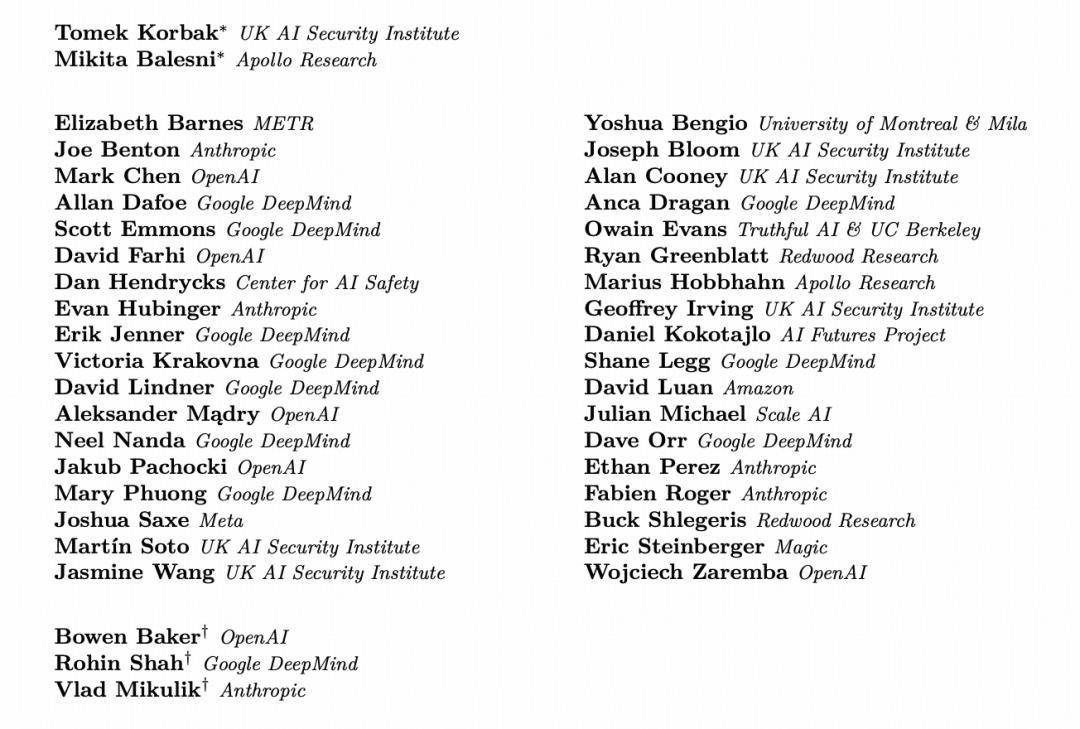
Group 1 - Meta has recruited Jason Wei, a prominent researcher known for his work on Chain of Thought (CoT) papers, to join their superintelligence team, potentially impacting OpenAI significantly [1] - OpenAI, Google DeepMind, and Anthropic have jointly published a position paper advocating for deeper research into monitoring AI reasoning models' thinking processes, specifically CoT [1][2] - The position paper includes notable figures such as Yoshua Bengio, emphasizing the importance of understanding AI systems' reasoning for safety [1] Group 2 - The authors of the position paper argue that monitoring CoT can provide unique opportunities for AI safety by allowing the detection of harmful intentions through the reasoning process [5] - CoT monitoring is seen as a method to intercept harmful behaviors by analyzing the reasoning steps of AI models, thus enhancing understanding of their decision-making processes [7] - The paper outlines the necessity and tendency of models to externalize reasoning in natural language, which can be monitored for safety [8][9] Group 3 - The authors highlight potential factors that could reduce the monitorability of CoT, including the evolution of training paradigms and the reliance on reinforcement learning [10] - They propose several research directions to better understand CoT monitorability, including evaluating its effectiveness and identifying training pressures that may affect it [11][12][13][14] - The paper suggests that future AI models may actively evade CoT monitoring, necessitating the development of more robust monitoring systems [16] Group 4 - The authors provide specific recommendations for AI developers to protect and utilize CoT monitorability, including standardized evaluation methods and transparency in reporting [17][18] - They emphasize the need for multi-layered monitoring systems, with CoT monitoring serving as a valuable perspective for observing AI decision-making processes [18]
启明创投周志峰对话阶跃星辰姜大昕:探索AI创业的“无人区”
IPO早知道· 2025-06-23 03:23
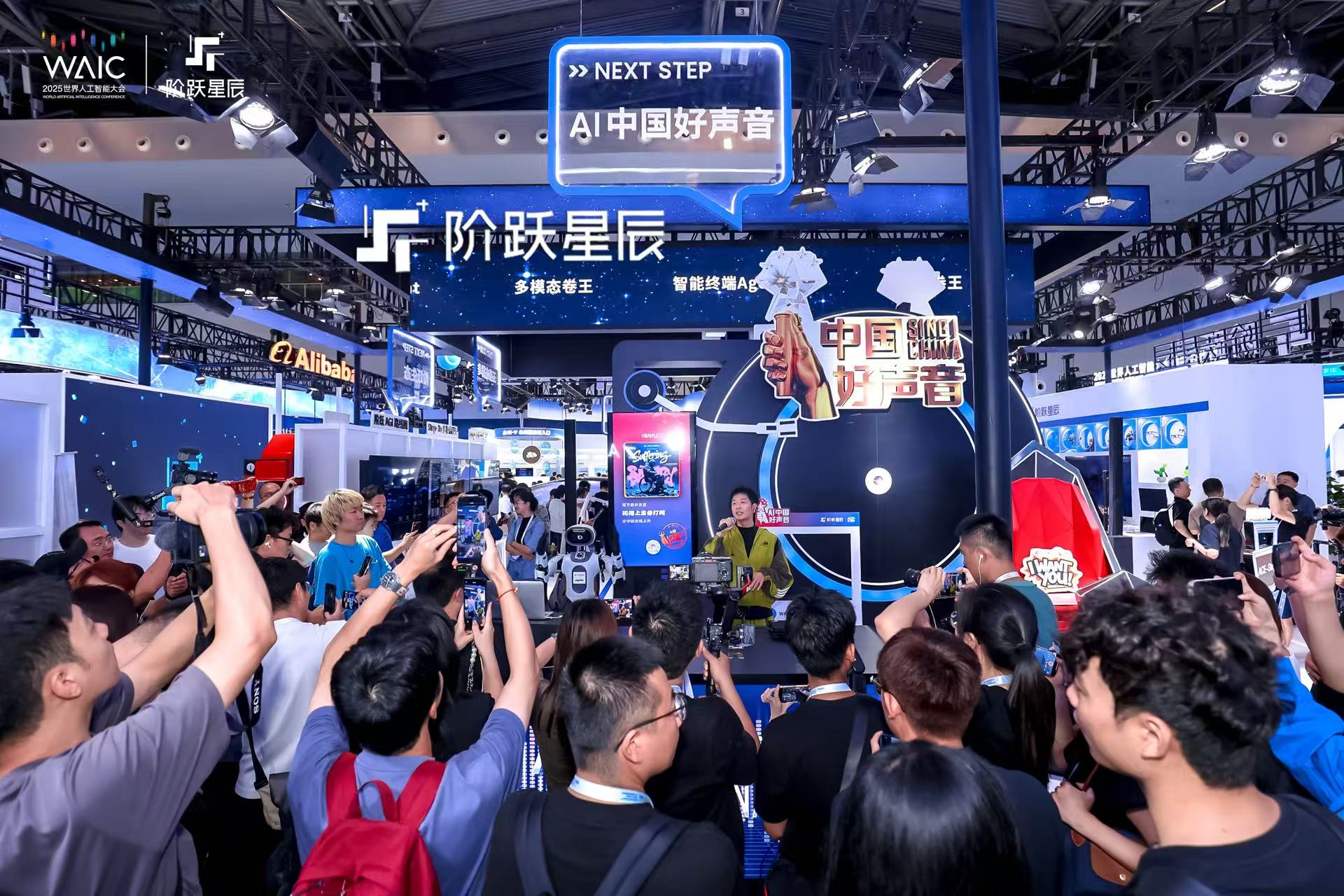
Core Viewpoint - The article discusses the advancements and strategic positioning of Jiyue Xingchen, a leading AI model startup, in the context of the evolving AI landscape, particularly focusing on the development of AI Agents and the pursuit of Artificial General Intelligence (AGI) [2][25]. Group 1: AI Model Development and AGI - Jiyue Xingchen emphasizes the importance of integrated multimodal models for understanding and generating tasks, which is crucial for the development of AI Agents [2][11]. - The company has set a goal to achieve AGI, defining it as the ability of models to perform 50% of human tasks by 2030, and has outlined a three-phase roadmap: Simulated World, Exploratory World, and Inductive World [7][10]. - The first phase involves imitation learning from vast internet data, while the second phase focuses on problem-solving capabilities through slow thinking and reinforcement learning [8][10]. Group 2: AI Agent and Market Positioning - The concept of AI Agents is gaining traction, with predictions that 2025 will be a pivotal year for their adoption, driven by the need for strong reasoning capabilities and multimodal understanding [25][26]. - Jiyue Xingchen aims to create a platform for intelligent terminals that can autonomously assist users in complex tasks, highlighting the importance of both automatic and proactive functionalities in AI Agents [27][28]. - The company differentiates itself by focusing on comprehensive multimodal capabilities, which are essential for achieving AGI and enhancing user interaction [12][11]. Group 3: Technological Trends and Future Directions - The article notes that the AI model landscape is rapidly evolving, with significant advancements in reasoning models and the integration of multimodal capabilities [14][15]. - Jiyue Xingchen is actively working on improving reasoning efficiency and exploring how reinforcement learning can be applied in various domains, including mathematics and coding [16][18]. - The integration of understanding and generation tasks in multimodal models is identified as a critical area for future development, with ongoing efforts to enhance this capability [19][20].

国际产业新闻早知道:中美原则上达成协议框架,各国加大人工智能投资力度
Chan Ye Xin Xi Wang· 2025-06-11 05:41
Group 1: China and US Trade Agreement - China and the US have reached a preliminary agreement framework after two days of negotiations, which will be reported to their respective leaders [4] - The agreement aims to implement the Geneva consensus and address issues related to rare earths and magnets [4] Group 2: Argentina's Economic Measures - Argentina's central bank announced a $2 billion repurchase loan plan to strengthen foreign exchange reserves, with the agreement expected to be finalized on June 11 [8] - The country's risk index has dropped to its lowest level in four years, decreasing over 40% since the beginning of the year [10] - The central bank is transitioning to a market-determined interest rate system as part of significant monetary policy reforms [9][11] Group 3: AI Investments and Developments - Japan plans to enhance its intellectual property competitiveness through AI and advanced technologies, aiming to establish a robust IP system by 2025 [14][15] - The UK government announced a £1 billion investment to increase AI infrastructure and training for 7.5 million AI professionals over the next five years [21][23] - Amazon plans to invest at least $20 billion in Pennsylvania to expand its data center infrastructure for AI and cloud computing, creating 1,250 new high-skilled jobs [32] Group 4: Semiconductor Industry Insights - The global semiconductor market is projected to reach $700.9 billion by 2025, with an 11.2% year-on-year growth driven by demand in AI and cloud infrastructure [36] - Qualcomm announced a $2.4 billion acquisition of Alphawave to accelerate its entry into the data center market [37] - Global semiconductor IP market is expected to reach $8.49 billion in 2024, with a compound annual growth rate of 16.78% [38] Group 5: Automotive Industry Developments - General Motors plans to invest $4 billion in its US factories over the next two years to increase production of popular gasoline models in response to tariffs [44] - GAC Group aims to enter the Argentine market by the second half of 2025, expanding its presence in South America [46] - VinFast reported a 296% year-on-year increase in electric vehicle deliveries in Q1, despite a net loss of approximately $712 million [48][49] Group 6: Robotics and AI Technology - A Chinese research team developed the world's first fully tactile robotic hand, showcasing significant advancements in robotics technology [32][34] - The F-TAC Hand features high-resolution tactile sensors and is designed to enhance the adaptability of robots in uncertain environments [35] Group 7: International Cooperation and Agreements - Chinese Vice President Han Zheng met with French President Macron to discuss strengthening bilateral cooperation and multilateralism [6][7] - Meta signed a 20-year power supply agreement with Constellation Energy to meet the growing electricity demand from AI initiatives [65]



