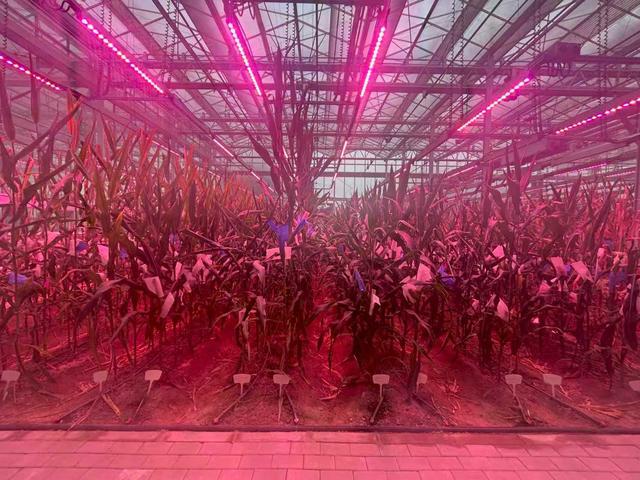
智能育种

Search documents
新春走基层 ·一线直击 | 机器人成为育种“新农人”
Xin Lang Cai Jing· 2026-02-16 03:38
Core Viewpoint - The integration of robotics and advanced breeding techniques is revolutionizing agricultural practices, significantly reducing the breeding cycle and improving crop resilience, yield, and taste [1][2][4]. Group 1: Technological Advancements - A breeding robot equipped with a high-precision visual recognition system can identify blooming tomato flowers and collect real-time environmental data, allowing for dynamic adjustments in breeding operations [1][2]. - Genetic editing has customized flower shapes to enhance compatibility with robotic operations, addressing previous limitations in manual breeding processes [2]. Group 2: Efficiency and Collaboration - The use of robotics in breeding can reduce the breeding cycle by more than half, overcoming traditional challenges such as long cycles, low precision, and high labor costs [2][3]. - A diverse team of young professionals from various fields, including criminal justice and nuclear power, is contributing their expertise to enhance the efficiency of robotic breeding [2][3]. Group 3: Future Prospects - The current focus on tomatoes is just the beginning; the team aims to apply their intelligent breeding system to tackle challenges in soybean and new rubber crop breeding, which are considered significant hurdles in China's agricultural sector [4]. - The goal is to empower agriculture with smart breeding technologies, ensuring self-sufficiency in crop production despite environmental challenges [4].

新春走基层 · 一线直击 | 机器人成为育种“新农人”
Xin Hua She· 2026-02-15 08:22
Core Viewpoint - The integration of robotics in agricultural breeding is revolutionizing the industry, significantly reducing breeding cycles and improving precision in crop development [1][2][3][4]. Group 1: Technological Advancements - The breeding robots utilize high-precision visual recognition systems to identify flowering plants and collect environmental data, allowing for dynamic adjustments in operations [1]. - Genetic editing has customized flower shapes for tomatoes, making them more compatible with robotic operations, thus enhancing efficiency [2]. Group 2: Efficiency and Labor Dynamics - Traditional breeding methods took seven to eight years, heavily reliant on weather conditions, whereas robotic integration can reduce this cycle by over 50%, improving resilience, yield, and taste [2]. - The use of robots alleviates the burden of repetitive tasks from human workers, allowing them to focus on data analysis and other critical aspects of breeding [3]. Group 3: Interdisciplinary Collaboration - The team comprises individuals from various fields, including criminal investigation and nuclear power, applying their skills to enhance robotic capabilities in agriculture [2][3]. - The collaboration of diverse technologies is essential for empowering the agricultural sector and overcoming existing challenges [2]. Group 4: Future Aspirations - The current focus on tomatoes is just the beginning; the team aims to tackle breeding challenges for soybeans and new rubber crops, which present significant difficulties due to their unique characteristics [4]. - The goal is to implement intelligent breeding technologies widely, ensuring self-sufficiency in agricultural "chips" and addressing critical supply needs [4].
深圳市泽智谷智能育种科技有限公司成立,注册资本200万人民币
Sou Hu Cai Jing· 2026-01-13 02:35
Group 1 - Shenzhen Zezhigu Intelligent Breeding Technology Co., Ltd. has been established with a registered capital of 2 million RMB, fully owned by Shenzhen Langgu Smart Agriculture Operation Co., Ltd. [1] - The legal representative of the new company is Zhu Faming, and its business scope includes agricultural scientific research, software development, IoT technology research and services, and various technical services [1] - The company is classified under the national standard industry of scientific research and technical services, specifically in engineering and technical research and development [1] Group 2 - The company is located at 3 Huanghuai Road, Fubao Community, Fubao Street, Futian District, Shenzhen, in the Shenfubao Technology Industrial Park [1] - The business license allows for a range of activities including internet information services, inspection and testing services, and the production of major agricultural crop seeds [1] - The operational period of the company is from January 12, 2026, with no fixed term [1]
首农食品集团打造现代畜禽种业“中国芯”
Zhong Guo Jing Ji Wang· 2025-11-03 09:36
Core Insights - The launch of the "AI + Livestock Breeding Collaborative Innovation Platform" by Shou Nong Food Group marks the entry of China's intelligent breeding into a "closed-loop era" [1] - The company has been deeply involved in the livestock industry for over 70 years, establishing a modern livestock breeding system covering pigs, cattle, chickens, and ducks, contributing significantly to national food security and agricultural modernization [1] - The introduction of gene editing and artificial intelligence in pig breeding signifies a shift from "experience-based selection" to "intelligent design" [1] Livestock Breeding Innovations - The birth of the world's first "5-gene edited disease-resistant pig" on August 30, 2023, represents a major innovation in disease-resistant breeding, transitioning from "single disease resistance" to "multi-disease resistance" [1] - In the dairy cattle sector, the Sanyuan Dairy Cattle Center has developed China's first genome selection breeding chip for Holstein cattle, improving the average milk yield from under 3 tons in 2000 to 9.9 tons in 2024 [2] - The Huadu Yuko Poultry Industry has successfully transitioned China's egg-laying hen breeding from "following" to "leading," with the cumulative promotion of the Jing series of egg-laying hens exceeding 7.8 billion [2] Data and Technology Integration - The establishment of the Beijing (Pinggu) Biological Seed Industry Innovation Center aims to support national agricultural technology projects and create a hub for agricultural innovation [4] - The data center for molecular breeding at Shou Nong focuses on collecting, storing, analyzing, and applying breeding data across various livestock species, enhancing data application and storage capabilities [3] - The integration of genomic and biological breeding technologies has significantly improved the economic benefits and market share of high-end duck breeds, with the "Jingdian Beijing Duck" achieving over 90% market share [3]
我国在智能育种装备与工程化应用上取得关键突破
Zhong Guo Qing Nian Bao· 2025-11-03 02:20
Core Insights - The launch of the all-chain robot breeder "Xiao Hai" and the "Hai Ba Facility" rapid wheat breeding commercialization service platform marks a significant breakthrough in China's intelligent breeding equipment and engineering applications [1][2] Group 1: Technological Innovations - The intelligent breeding team at the Hefei Institute of Material Science proposed the "biological breeding engineering" concept in 2022 to address low breeding efficiency and long cycles in the industry [1] - The "Hai Ba Facility" aims to drive mechanization, automation, digitalization, intelligence, and standardization throughout the breeding process through technological equipment [1] Group 2: Key Features of "Xiao Hai" - "Xiao Hai" covers critical aspects of the breeding chain, including germplasm creation, identification, and stability, serving as a miniature version of the "Hai Ba Facility" for technology testing and concept validation [2] - The core advantages of "Xiao Hai" include three acceleration capabilities: - In germplasm innovation, it utilizes energy-carrying ion mutation breeding technology empowered by AI, increasing gene resource discovery efficiency by over 10 times [2] - In germplasm identification, it focuses on creating a platform for adversity screening under extreme conditions, enabling precise intelligent control of crop environments [2] - In germplasm stability, it establishes a rapid breeding system for multiple crops and varieties within a year [2]
「e公司观察」种业掀起增资潮 “耐心资本”瞄准产业机会
Zheng Quan Shi Bao Wang· 2025-10-21 14:36
Core Insights - The recent capital increase and expansion activities by leading seed companies such as Suqian Agricultural Development, Guotou Fengle, Longping High-Tech, and Wens Foodstuff reflect a significant trend in the seed industry, driven by national seed industry revitalization strategies and the influx of long-term capital [1][2][4] - The capital influx is expected to accelerate technological development and support the goal of achieving self-sufficiency in seed sources, thereby fostering industry growth [1][4] Company Summaries - Suqian Agricultural Development plans to raise 1 billion yuan through capital reduction and expansion, aiming to leverage strategic investors to advance its seed industry strategy [1] - Guotou Fengle is set to issue up to 184 million shares at 5.91 yuan each, raising no more than 1.089 billion yuan to strengthen its capital base and focus on seed technology [1][2] - Longping High-Tech has been actively raising capital, with its subsidiary Lianchuang Seed Industry planning to raise 800 million yuan, following a previous 1.2 billion yuan increase from CITIC Agriculture [2][3] - Wens Foodstuff's former subsidiary, Zhongxin Seed Industry, raised approximately 2.33257 billion yuan through cash and equity investments, with a post-investment valuation of 10.057 billion yuan [2] Industry Trends - The seed industry is likened to the "chip" of agriculture, with its development directly impacting national food security, and the current capital influx aligns with both policy direction and market demand [2][4] - The urgency for technological iteration, particularly in gene editing and smart breeding, is a key driver for the current wave of capital increases, as high investment and long development cycles necessitate sustained capital support [3] - The capital structure optimization through these increases allows companies to focus on long-term research and development while enhancing governance and decision-making efficiency [3] Market Implications - The capital influx is facilitating domestic companies to expand internationally, with Longping High-Tech leveraging its capital strength to integrate the rice seed market and further develop corn and vegetable seed sectors, as well as exploring overseas markets [3]


一粒种子的“芯”力量
Ren Min Wang· 2025-10-14 02:21
Core Insights - The research focuses on the utilization of hybrid vigor in major crops, particularly rice, to enhance agricultural productivity and efficiency [4]. Group 1: Research and Development - Researchers are screening germplasm resources to identify superior traits for rice cultivation [1]. - DNA extraction from rice leaves is being conducted to facilitate genetic analysis and breeding programs [3]. - Seed purity testing results are being analyzed at a key laboratory dedicated to hybrid vigor in rice [4]. Group 2: Agricultural Practices - A small-scale isolation seed production trial is being conducted at a research base, which can accommodate approximately 800 demonstration varieties and 15,000 resource and small material plantings annually [6]. - Farmers are actively involved in harvesting and ensuring the quality of rice, as seen in a high-standard farmland in Hefei, where harvested rice is being carefully loaded [7]. Group 3: Technological Innovations - The Smart Breeding Accelerator Innovation Research Institute is utilizing controlled environment chambers to significantly shorten the growth cycle of crops, allowing for 4 to 6 generations of wheat to be produced in one year, compared to the traditional one generation per year [10].

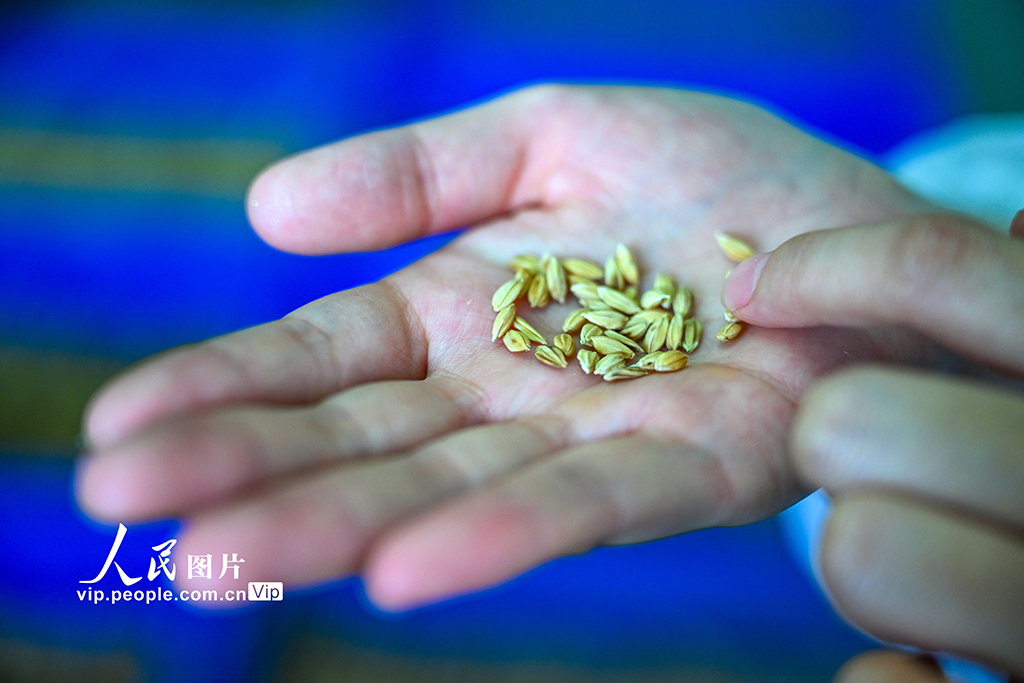
【人民日报】一粒种子的“芯”力量
Ren Min Ri Bao· 2025-10-14 02:20
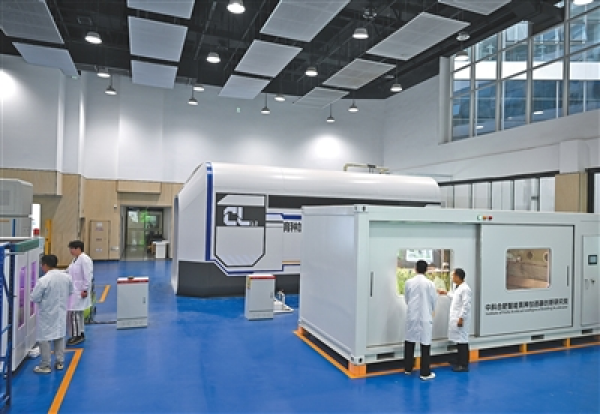
Group 1 - The core theme of the global event on October 16, World Food Day, is "Hand in Hand to Advocate for Diverse Cuisine, Uniting Efforts to Create a Better Future" [4] - The concept of seed as the "chip" of agriculture is emphasized, highlighting its critical role in food production [4] - The advancements in breeding methods, such as the use of ion chambers, adversity chambers, and accelerated generation chambers, are transforming the breeding landscape [3] Group 2 - The accelerated generation chamber significantly shortens the growth cycle of crops, allowing wheat to produce 4 to 6 generations in one year, compared to the traditional one generation per year [2] - Researchers are actively engaged in scientific breakthroughs to enhance breeding techniques [3] - The innovation platform at the Hefei Institute of Physical Science is focused on the transformation of research outcomes into practical applications in intelligent breeding [4]
一粒种子的“芯”力量(记录中国)
Ren Min Ri Bao· 2025-10-13 22:20
Group 1 - The core theme of World Food Day 2025 is "Hand in Hand to Advocate for Diverse Cuisine, Uniting Efforts to Create a Better Future" [2] - Seeds are referred to as the "chips" of agriculture, highlighting their critical importance in food production [2] - The Chinese Academy of Sciences' Hefei Institute of Physical Science is advancing intelligent breeding through innovative research platforms [2] Group 2 - The introduction of advanced breeding methods such as ion chambers, stress chambers, and accelerated breeding chambers is transforming traditional breeding practices [1] - The accelerated breeding chamber significantly shortens the growth cycle of crops, allowing for 4 to 6 generations of wheat to be cultivated in one year, compared to the traditional one generation per year [1]
人工智能如何重塑农业新局
Huan Qiu Wang Zi Xun· 2025-10-11 07:43
Group 1: AI in Agriculture - Artificial intelligence is transforming agriculture by integrating into breeding, planting, and breeding processes, leading to a significant shift from traditional methods to data-driven decision-making [1][2][3] - The Chinese government has initiated the "AI+" action plan to promote the deep integration of AI with various sectors, including agriculture, aiming for a profound digital transformation [1][2] Group 2: Smart Breeding Techniques - High-throughput molecular breeding technology allows for the simultaneous detection of tens of thousands of samples, significantly speeding up the breeding process compared to traditional methods [2][3] - The breeding accelerator can reduce the growth cycle of crops like soybeans from 120 days to as little as 60 days, enabling multiple generations of breeding within a year [4][6] Group 3: Smart Farming Practices - Digital farm management tools are being utilized to optimize agricultural practices, providing real-time data on weather, soil conditions, and crop management [7][9] - AI-driven smart machinery is enhancing efficiency in farming operations, with automated systems for planting, harvesting, and soil management [10] Group 4: Fruit Harvesting Innovations - The introduction of robotic systems for apple picking is revolutionizing the harvesting process, making it safer and more efficient [11][12] - Advanced sorting technologies using AI are improving the quality control of harvested fruits, ensuring only the best products reach the market [13][15] Group 5: Intelligent Pig Farming - The modern "high-rise pig farming" model incorporates AI and IoT technologies to enhance efficiency and animal welfare, significantly reducing disease rates and improving meat quality [17][18][20] - AI systems are being developed to optimize feeding and health monitoring of pigs, allowing for personalized care and management [20] Group 6: Challenges and Future Directions - The integration of AI in agriculture faces challenges such as data interoperability, talent shortages, and high application costs, which need to be addressed for widespread adoption [21][22][24] - Collaborative efforts among government, research institutions, and industry are essential to create a supportive ecosystem for AI in agriculture, ensuring that innovations are effectively implemented [22][24]