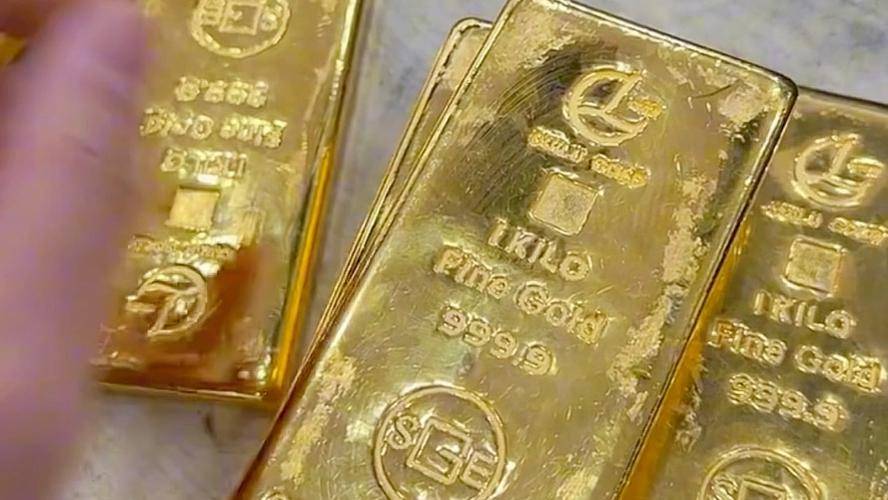
有色金属暴涨行情

Search documents
“顶风”涨停,彻底涨疯了
Ge Long Hui· 2025-12-26 14:20
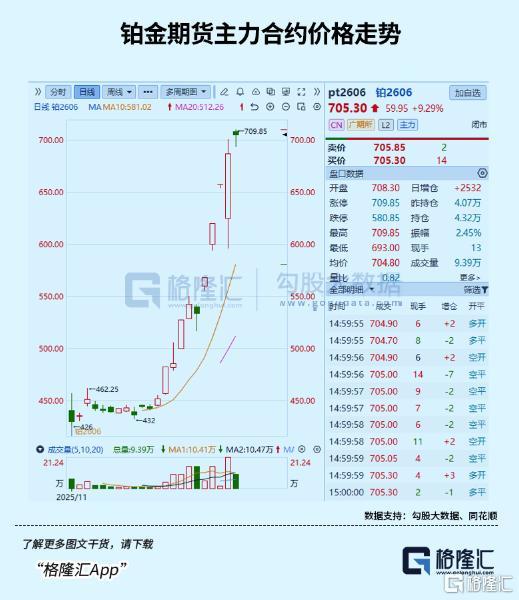
Core Viewpoint - The Chinese commodity market experienced a significant surge in prices for precious and non-ferrous metals, with multiple products reaching historical highs, driven by various market factors and government policy announcements [2][9][12]. Group 1: Price Movements - Precious metals and non-ferrous metals collectively surged, with platinum futures on the Shanghai Futures Exchange hitting a record high of 709.85 yuan per gram, marking a monthly increase of 61.9% [2]. - Silver futures also rose sharply, reaching 18,658 yuan per kilogram, with a total trading volume of 267.69 billion yuan, making it the largest contract by trading volume in the futures market [4]. - Copper futures peaked at 99,730 yuan per ton, closing at 98,720 yuan per ton, reflecting a 3.60% increase [5]. - Lithium carbonate futures surged by 8.12%, reaching a new high of 131,000 yuan per ton since November 2023 [6]. Group 2: Market Drivers - The recent surge in non-ferrous metals prices was catalyzed by a government announcement emphasizing the optimization of traditional industries, which raised expectations for a contraction in supply growth for aluminum and copper [9]. - International macroeconomic factors, including expectations of a shift in U.S. Federal Reserve monetary policy and rising geopolitical tensions, have also contributed to increased demand for precious metals as safe-haven assets [12][13]. Group 3: Supply and Demand Dynamics - The copper market is expected to face supply constraints due to recent mining accidents and declining ore grades, which are anticipated to drive prices higher in the long term [13]. - The zinc market is showing signs of recovery, with expectations of increased supply from new smelting capacities and a potential tightening of supply by 2026, which could lead to a bullish trend in zinc prices [14]. Group 4: Industry Performance - The non-ferrous metals industry is projected to see significant revenue growth, with a reported income of 2.82 trillion yuan in the first three quarters of 2025, reflecting a year-on-year increase of 9.3% [17]. - The net profit for the industry is expected to rise by 41.55%, with energy metals showing the most substantial profit growth of 385.53% year-on-year [17]. Group 5: Investment Strategies - Investment strategies are focusing on companies with strong resource reserves, scale, and integrated supply chains, while suggesting a cautious approach for retail investors during market volatility [19]. - Recommendations include building a diversified portfolio with leading copper and aluminum companies, gold ETFs for hedging, and targeting undervalued mining companies for potential value appreciation [19]. Group 6: Future Outlook - The non-ferrous metals market is anticipated to enter a sustained bull market in 2026, driven by global economic recovery and improved supply-demand dynamics [20].

“顶风”涨停!彻底涨疯了!
格隆汇APP· 2025-12-26 10:57
Core Viewpoint - The article highlights a significant surge in the prices of precious and non-ferrous metals in the Chinese commodity market, driven by various factors including supply constraints and macroeconomic conditions [2][3][8]. Price Movements - Precious metals and non-ferrous metals collectively saw a dramatic increase, with platinum futures reaching a record high of 709.85 yuan per gram, marking a monthly increase of 61.9% [3]. - Silver futures rose over 8.5% during the day, closing at 18,658 yuan per kilogram, with a total trading volume of 267.69 billion yuan [5]. - Lithium carbonate futures surged by 8.12%, hitting a new high of 131,000 yuan per ton since November 2023 [6]. Market Drivers - The recent price surge is attributed to a combination of factors, including intensified market conditions for silver and copper futures, and a favorable macroeconomic environment [8]. - A key stimulus was a statement from the National Development and Reform Commission emphasizing the need for better management and optimization in resource-intensive industries, which raised expectations for supply constraints in copper and aluminum [9]. Macroeconomic Influences - The article notes that the U.S. Federal Reserve's potential shift towards a more accommodative monetary policy is a significant driver, with recent data showing an unexpected rise in the unemployment rate to 4.6%, reinforcing expectations for interest rate cuts [12]. - Geopolitical tensions and conflicts have also heightened market risk aversion, leading to increased investments in safe-haven assets like gold and silver [12]. Supply and Demand Dynamics - The supply-demand landscape for non-ferrous metals, particularly copper, is tightening due to several factors, including mining accidents and declining ore grades, which are expected to lead to a supply shortage by 2025 [15][16]. - The zinc market is also showing signs of recovery, with expectations of increased supply and demand balance, particularly as export opportunities open up [16]. Industry Performance - The non-ferrous metals industry is experiencing a significant rebound in profitability, with revenues reaching 2.82 trillion yuan in the first three quarters of 2025, a year-on-year increase of 9.3%, and net profits rising by 41.55% [18]. - Energy metals have shown the most substantial profit growth, with a staggering increase of 385.53% year-on-year [18]. Investment Strategies - Investment strategies should focus on leading companies with strong resource reserves, scale, and integrated supply chains. It is advised to avoid chasing prices and instead adopt a phased approach to building positions [20]. - The outlook for 2026 suggests a potential bull market for non-ferrous metals, driven by a recovering global economy [21].

近期黄金、白眼、铂金、钯金等有色金属暴涨行情能持续多久?
Sou Hu Cai Jing· 2025-12-26 06:05
Core Viewpoint - The analysis provides insights into the price trends and key drivers for various precious metals, including gold, silver, platinum, and palladium, up to December 24, 2025, highlighting potential volatility and risks at high price levels [2]. Group 1: Short-term, Medium-term, and Long-term Outlook - **Gold**: Expected to experience high-level fluctuations with support between 4100–4200, followed by a potential upward movement. The medium-term outlook suggests a strong average price, supported by monetary attributes, while the long-term trend remains within a high price range [2]. - **Silver**: Anticipated to show significant volatility with support at 62–64, driven by industrial demand and financial attributes. The long-term outlook remains positive due to a balanced supply-demand scenario [2]. - **Platinum**: After an overbought condition, a pullback is expected with support at 1900–1950, followed by a potential rebound. The long-term outlook is strong, supported by a persistent supply gap and increasing demand from hydrogen and fuel cell applications [2]. - **Palladium**: Expected to experience a pullback after a corrective rise, with support at 1650–1700. The long-term outlook is weak due to declining gasoline vehicle demand and increased substitution, leading to reduced returns and stability [2]. Group 2: Key Conclusions and Recommendations - For **gold and silver**, the short-term outlook indicates high-level fluctuations, while the medium-term trend remains unchanged, suggesting a phased investment approach with risk management [2]. - For **platinum**, a strong medium-term trend is expected, with recommendations to wait for a pullback before entering positions [2]. - For **palladium**, the risk of a pullback is high after a corrective rise, with advice to reduce positions at high levels and adopt a wait-and-see approach [2]. Group 3: Trigger Signals and Operational Suggestions - Key reversal signals include the Federal Reserve pausing interest rate cuts or restarting hikes, a sustained strengthening of the US dollar index, significant easing of geopolitical risks, and a rapid narrowing of the spot market gap for platinum group metals [3]. - Operational advice includes setting stop-loss levels (gold at 4000, silver at 60, platinum at 1800, palladium at 1550), building positions gradually, and avoiding chasing high prices, with a long-term focus on gold and silver and swing trading for platinum and palladium [3].