机构资金布局

Search documents
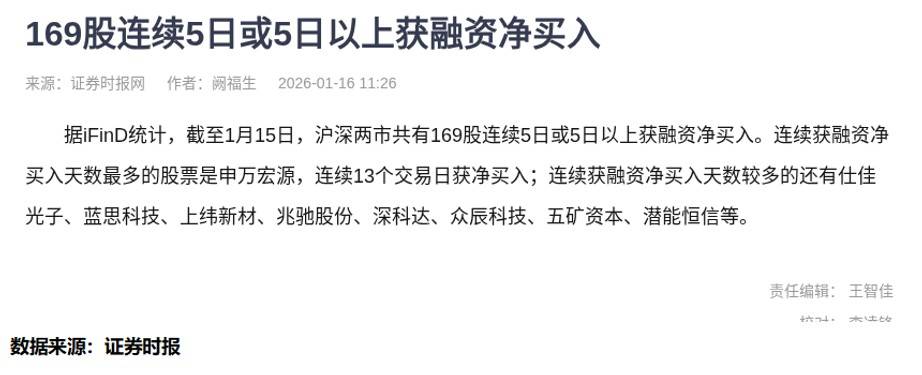
百股连获融资加仓,看穿资金真实动作
Sou Hu Cai Jing· 2026-01-16 07:22
Group 1 - The article emphasizes the importance of understanding the underlying trading behaviors of funds rather than just reacting to surface-level news about stocks [1][4] - It highlights that significant funds often start positioning themselves well before public announcements, as seen with the Yaxia Hydropower Station project, where related stocks had already appreciated prior to the official news [4][6] - The use of quantitative tools, such as "graded zones," is recommended to identify the activity levels of institutional funds, with lower numbers indicating higher activity [4][9] Group 2 - The trading behavior data of a leading stock in the Yaxia Hydropower concept shows that institutional funds were active from early 2025, even when the stock's performance was not prominent [6][9] - Adjustments in stock prices can be misleading; if a stock is in a "secondary zone," it indicates that institutions are still involved but at a reduced pace, suggesting a consolidation phase rather than a downturn [9][11] - Not all stocks within the same concept perform equally; the level of institutional participation is a key differentiator, as seen with another stock in the Yaxia Hydropower concept that showed lower institutional engagement [11]

白银基金跌停,背后是资金态度的转变
Sou Hu Cai Jing· 2025-12-26 14:46
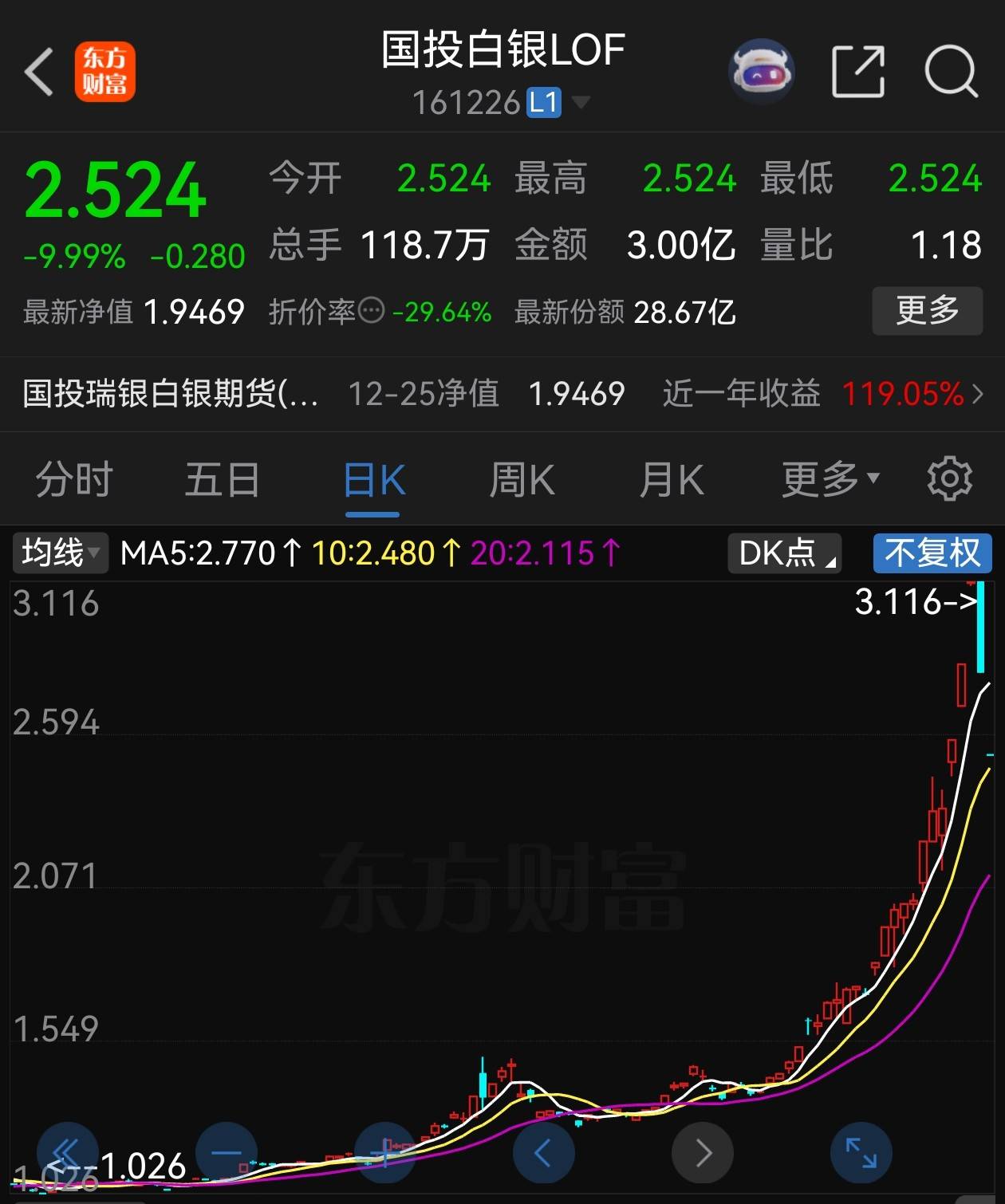
Core Viewpoint - The recent continuous trading halt of Guotou Silver LOF (161226) indicates a shift in market sentiment, with the fund's premium rate remaining high at 29.64% despite a trading volume of 300 million yuan [1][3]. Group 1: Fund Performance and Market Sentiment - Guotou Silver LOF has experienced a second consecutive trading halt, reflecting a change in investor sentiment and a tightening of purchase limits [1][3]. - The fund announced a limit on regular investment amounts for Class A shares to 100 yuan starting December 29, marking a series of restrictions since October [1][3]. Group 2: Market Misconceptions - In a bull market, investors often fall into the trap of believing they can profit simply by holding stocks, ignoring market structure differentiation [3][4]. - Common misconceptions include "holding for gains," "chasing hot stocks," "stronger stocks continue to perform well," and "expecting rebounds from oversold conditions" [3][4]. Group 3: Institutional Behavior and Market Dynamics - The core driving force behind price fluctuations is the real behavior of institutional funds, which can be observed through trading data rather than just price movements [4][6]. - Institutional funds often act before public announcements, leading to significant price movements prior to news releases [5][6]. Group 4: Data Insights on Institutional Activity - Observing the "behavior data" of funds can help ordinary investors identify opportunities, as active institutional trading often precedes price changes [6][8]. - The "lock-up" phase of stocks, where institutions reduce trading frequency but remain invested, can indicate potential future price movements [11][13]. Group 5: Implications for Guotou Silver LOF - The tightening of purchase limits and the fund's price decline suggest a shift from aggressive buying to cautious selling among institutional investors [13]. - High premiums indicate significant risk, and as the fund restricts inflows, the support for its price may weaken, reflecting a broader change in trading behavior [13].
6亿融资买入新易盛:散户跟风还是机构布局?
Sou Hu Cai Jing· 2025-12-21 16:08
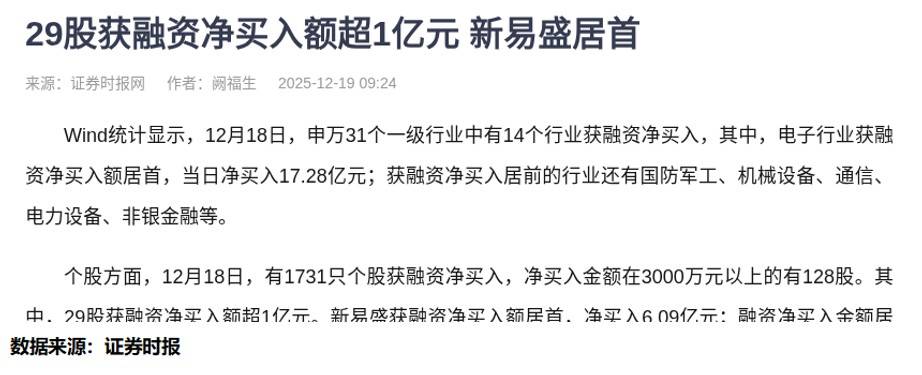
Core Insights - The A-share market has seen significant net buying in the electronics sector, with a net inflow of 1.728 billion yuan, leading all industries, and New Yisheng alone received 609 million yuan in net buying, surprising many investors [1] - Despite the Shanghai Composite Index reaching a nearly ten-year high, over 40% of stocks have not reached new highs in four years, indicating a disconnect between index performance and individual stock performance [3] Group 1: Market Behavior and Analysis - Market changes are driven by trading behavior, which is often overlooked in traditional analysis methods [4] - Quantitative trading systems can filter out market noise and reveal the true trading behaviors that influence stock prices [4] - Price fluctuations are merely superficial; understanding institutional behavior is essential for making informed investment decisions [10] Group 2: Institutional Investment in Electronics - The concentrated inflow of institutional funds into the electronics sector reflects a strategic approach typical of professional institutions, which adhere to planned trading strategies despite short-term volatility [10] - Institutional investment in the electronics sector is not a fleeting trend; data indicates sustained activity over a significant period [11] - Funds are not evenly distributed across the sector but are highly concentrated in a few leading stocks, showcasing a clear investment strategy [11] Group 3: Recommendations for Investors - Investors should focus on trading behavior rather than price movements, as price is a result rather than a cause [11] - Continuous data analysis is crucial, as single-day data can be misleading; valuable insights come from persistent behavioral patterns [11] - Understanding the long-term strategies and risk management approaches of institutional investors is vital, as they prioritize medium to long-term positions over short-term fluctuations [11]

机构早已布局!你却还在犹豫?
Sou Hu Cai Jing· 2025-11-15 04:10
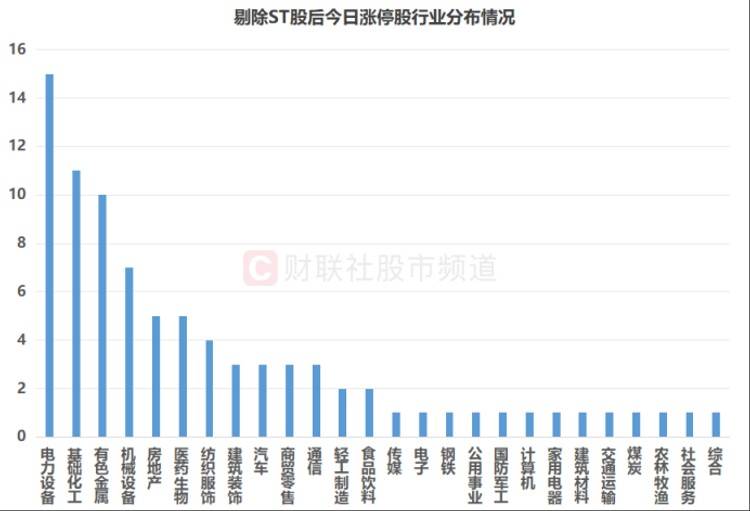
Group 1 - The A-share market experienced a "hundred stocks limit up" phenomenon on November 13, with 106 stocks hitting the limit, led by the electric equipment, basic chemicals, and non-ferrous metals sectors [1][3] - The average total market capitalization of the limit-up stocks reached 14.063 billion, with 37.73% of stocks having a market cap over 10 billion [3] - Notable stocks include *ST Dongyi with 12 consecutive limit-ups and Moen Electric with 8 consecutive limit-ups, highlighting the missed opportunities for retail investors [3][9] Group 2 - The biggest risk in a bull market is missing out, as many investors feel more pain from not participating than from actual losses [3][4] - The essence of a bull market is a positive trend, which is a process of consensus formation and reinforcement, often driven by institutional funds rather than retail investors [3][4] Group 3 - The importance of observing actual trading behavior rather than relying on subjective feelings about high or low prices is emphasized [4][6] - Institutional funds have been actively accumulating bank stocks since 2022, even when prices were relatively stable, showcasing their foresight [6] Group 4 - The disappearance of "institutional inventory" data since October 2023 indicates that markets without institutional participation struggle to maintain sustained trends [8] - Quantitative data is highlighted as a valuable tool for uncovering market truths, allowing for a deeper understanding of fund behavior beyond traditional price charts [8][10] Group 5 - The current market conditions present both opportunities and challenges for ordinary investors, who should focus on understanding rather than predicting market movements [10][11] - Key advice includes recognizing the importance of large fund behaviors, finding suitable tools to filter information, and maintaining patience in the investment process [11]


靴子提前落地,小心大佬作妖!
Sou Hu Cai Jing· 2025-09-17 01:41
Group 1 - The core message indicates that recent developments in US-China negotiations have led to a significant rise in US stock markets, while A-shares experienced volatility, with a notable rebound in the afternoon [1][3]. - The unexpected progress in negotiations, particularly regarding TikTok, has contributed to market optimism, despite initial tensions [3][5]. - The New York Fed manufacturing index dropped sharply from 11.9 to -8.7, raising expectations for interest rate cuts by the Federal Reserve [3][5]. Group 2 - The market is currently focused on the extent of potential interest rate cuts rather than whether cuts will occur, with expectations leaning towards a total reduction of 75 basis points this year [5][9]. - There are indications that the central bank may intervene in the bond market, suggesting preparations for liquidity challenges, reinforcing the likelihood of interest rate cuts [5][12]. - Institutional funds are showing signs of recovery, which is a positive signal for the market, despite short-term fluctuations [12][16]. Group 3 - The market is characterized by significant style shifts, with a focus on technology stocks, although only 160 out of 314 computing concept stocks have outperformed the index in the past two months [14][16]. - The concept of "washing" or creating volatility is discussed, indicating that institutions may be manipulating stock prices to shake off weaker hands while maintaining active inventory [16][12]. - The presence of active institutional funds is crucial for sustaining individual stock performance, and their movements should be closely monitored for investment decisions [9][12].

消费电子突然爆发,这套路很多板块都在用!
Sou Hu Cai Jing· 2025-08-28 02:16
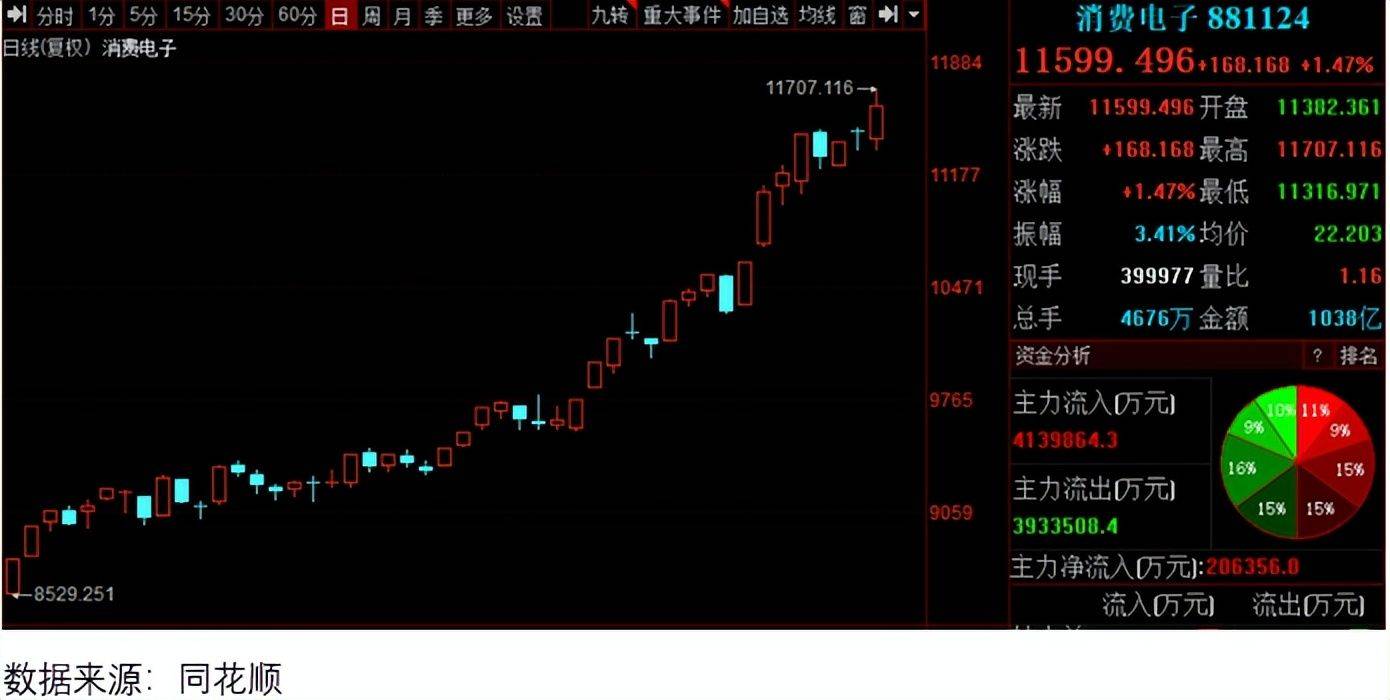
Group 1 - The consumer electronics sector has recently surged, particularly driven by Huawei-related stocks, indicating a potential underlying trend rather than just news-driven excitement [1][4] - The performance of Huawei-related stocks, such as Junyi Digital and Aerospace Hongtu, suggests that their rise is not solely due to upcoming product launches but reflects deeper market dynamics [4][6] - Institutional investors have been quietly accumulating these stocks during periods of consolidation, which often leads to ordinary investors missing out on the subsequent rallies [6][10] Group 2 - The key to profiting in a bull market lies in the efficient use of capital, as some investors significantly outperform the market while others struggle to keep pace [7][9] - Many investors mistakenly believe that simply holding stocks during a bull market is sufficient, but this can lead to idle capital during long periods of price stagnation [9][10] - Recognizing institutional trading behaviors and timing entry points can enhance capital utilization and improve investment outcomes [10][12] Group 3 - Quantitative data analysis can reveal patterns in institutional trading, providing insights into when institutions are likely to start accumulating positions [10][12] - For instance, the "institutional inventory" data indicates the level of institutional activity, and a rise in this data often signals significant institutional buying [12][14] - Stocks like Silicon Treasure and Changchun Yidong have shown similar patterns of institutional accumulation prior to price increases, highlighting a consistent trend across different sectors [14][16][18] Group 4 - The recent activity in the consumer electronics sector is likely a result of prior institutional positioning, suggesting that the current market movements may be part of a longer-term trend rather than short-lived reactions to news [18]
美股还要再涨500点,A股会被反噬吗?
Sou Hu Cai Jing· 2025-07-06 16:53
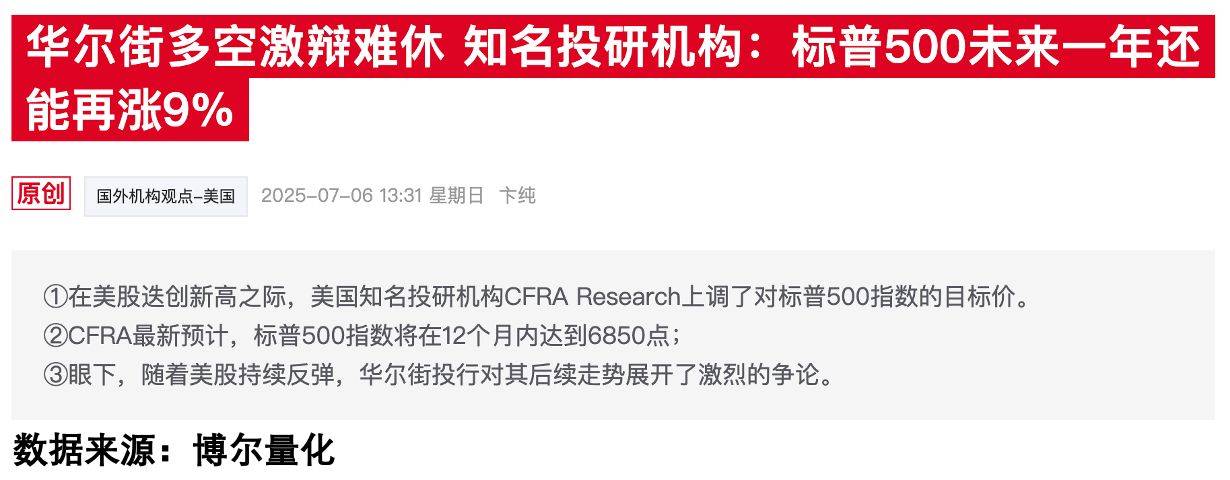
Group 1 - The core viewpoint of the articles emphasizes skepticism towards expert predictions and highlights the importance of observing institutional trading behaviors instead [1][9][10] - CFRA Research predicts a potential 9% increase in the S&P 500 over the next 12 months, while U.S. bank strategists warn of bubble risks, showcasing the conflicting views among experts [1][9] - The articles suggest that market pricing power is primarily held by institutions, and their trading actions are more indicative of market trends than expert opinions [3][5][9] Group 2 - The case of "Rongke Technology" illustrates that institutional investors began accumulating shares during a market downturn, indicating potential investment opportunities [5][7] - "Wenyi Technology" serves as another example where institutional trading patterns align with later disclosed data, reinforcing the idea of monitoring institutional behavior [7] - The articles advocate for investors to focus on actual trading data rather than expert forecasts, as institutional movements often provide clearer insights into market dynamics [9][10]

央妈和美联储联动,A股本周大考!
Sou Hu Cai Jing· 2025-06-16 06:32
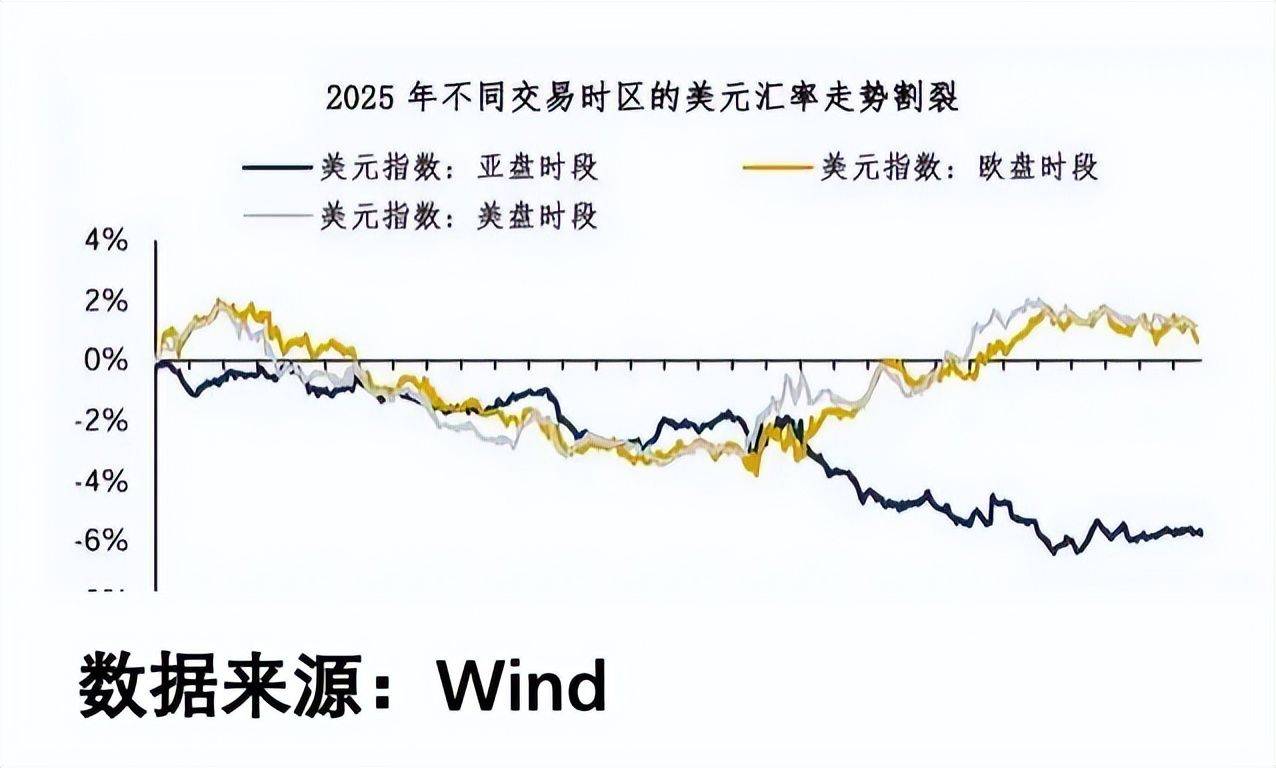
Group 1 - The upcoming events, specifically the Federal Reserve's interest rate meeting and the Lujiazui Forum, are expected to significantly influence the A-share market trajectory [1][2] - The recent decline of the US dollar index has led to a global stock market rally, except for the A-share market, which is attributed to the limited appreciation of the RMB [2][4] - The Federal Reserve's upcoming policy guidance and the potential nomination of a new chairperson could heighten market expectations for a weaker dollar and interest rate cuts [5] Group 2 - The Lujiazui Forum on June 18 is anticipated to provide critical financial policy signals, influenced by the US-China trade agreement progress, the Federal Reserve's decisions, and recent economic data [5] - A potential RMB appreciation could alter the market landscape, fostering a unified market sentiment that has been lacking due to fragmented trading behaviors [7] Group 3 - Ordinary investors face challenges due to information asymmetry, as institutional investors often act on opportunities before they become public knowledge [8][10] - Identifying institutional investment patterns can help ordinary investors navigate the market more effectively, focusing on the activity levels of institutional funds [10][16] - The behavior of institutional investors shows three key characteristics: continuity, scale, and repetitiveness, which can be analyzed to understand their investment strategies [16]
降息预期再次上升,机构狂动,散户别踩这波套路
Sou Hu Cai Jing· 2025-06-13 15:59
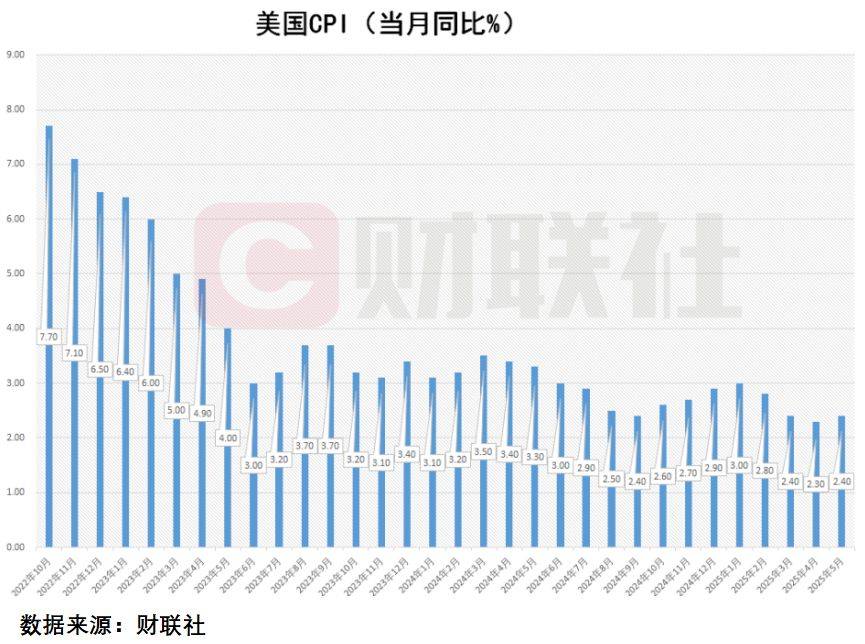
Group 1 - The core point of the article is that the recent U.S. CPI data for May came in lower than expected, leading to increased market speculation about potential interest rate cuts by the Federal Reserve [2][5] - The U.S. CPI year-on-year rate was reported at 2.4%, below the expected 2.5%, while the core CPI increased by 2.8%, also lower than the anticipated 2.9% [2][6] - Following the CPI release, the probability of a rate cut in September surged to 70%, with expectations for at least two cuts within the year [5] Group 2 - Despite the excitement in the market, the probability of a rate cut in June is only 2.4%, indicating that significant actions may still be months away [6] - The article discusses that a decrease in inflation suggests a potential economic slowdown, prompting the Federal Reserve to consider lowering interest rates to stimulate the economy [7] - It highlights that institutional investors typically do not wait for favorable conditions but instead leverage market expectations to position themselves, often causing market volatility before actual rate cuts occur [8][10] Group 3 - The article emphasizes the importance of understanding institutional trading behaviors rather than relying solely on market sentiment or technical analysis [10][12] - It provides examples of past stock movements, illustrating that significant price increases often follow periods of institutional accumulation, while lack of institutional support can lead to price declines [12][15] - The key takeaway is that recognizing and analyzing data related to institutional activity is crucial for making informed investment decisions [15][17]
A股扮猪吃老虎,这波操作暗藏玄机!
Sou Hu Cai Jing· 2025-04-21 09:39
Group 1 - The current market is experiencing frequent fluctuations, with a significant drop on April 7, followed by a gradual stabilization. Many investors perceive a lack of investment opportunities, but this may not be the case [1] - Investors are focusing on the upcoming tariff negotiations, with a notable shift in the global perception of the U.S. under Trump's administration. The U.S. is seen as less dominant compared to 2018, allowing China and other countries to respond more assertively to tariffs [2] - Domestic policies are responding promptly to stabilize the market, with initiatives from the Central Huijin and other funds to inject vitality into the stock market. The emphasis on stabilizing the stock market over the real estate market indicates the government's commitment [2] Group 2 - Historical context shows that similar market conditions occurred on September 24 last year, where many investors left the market during a downturn, only to be surprised by subsequent gains. This highlights the importance of understanding institutional investment movements [3] - Advanced data analysis tools are now available to track institutional trading activities, allowing for better insights into market dynamics. These tools can capture and analyze trading data to identify unusual patterns [3][5] - The "institutional inventory" data indicates the level of institutional participation in trading. A longer duration of active institutional inventory suggests greater confidence in the stock's future performance [5][7] Group 3 - Currently, there are fewer than a thousand stocks with institutional inventory, but over 700 stocks have shown institutional inventory for multiple days. This indicates a growing interest from institutional investors [9] - The number of stocks with 4-5 days of institutional inventory has reached a recent high, suggesting potential investment opportunities that may not be immediately apparent to retail investors [9]