杠杆投机

Search documents
说到底,黄金这样还是美国的错
Sou Hu Cai Jing· 2026-01-31 16:36
Group 1 - The recent volatility in gold prices was triggered by a significant drop, with gold falling over 12% and silver dropping 36% in a short period, following a surge in the likelihood of Kevin Warsh being nominated as the next Federal Reserve Chair, which raised concerns about a hawkish monetary policy [1][3] - Central banks globally have been increasing their gold reserves, with net purchases exceeding 1,000 tons annually, and the proportion of gold in central bank foreign reserves rising from 11% to 23%, indicating a trend towards de-dollarization amid geopolitical tensions [2][6] - The recent drop in gold prices is seen as a move to eliminate speculative leveraged positions, with significant options holdings at various price levels contributing to the market's reaction [3][5] Group 2 - The U.S. national debt has increased significantly, with the debt-to-GDP ratio at 128%, raising questions about the independence of the Federal Reserve under new leadership [5] - Despite the recent price drop, gold remains a zero-credit-risk asset, and its long-term bullish outlook is supported by ongoing central bank purchases, which are expected to reach a historical high of 1,180 tons in 2024 [6] - The demand for gold jewelry has shown resilience, with a decline of only 18% despite a 67% increase in gold prices, indicating strong underlying demand [6]
融资政策收紧背景下泓博医药股价 “过山车” 非理性炒作引警惕
Quan Jing Wang· 2026-01-19 02:52
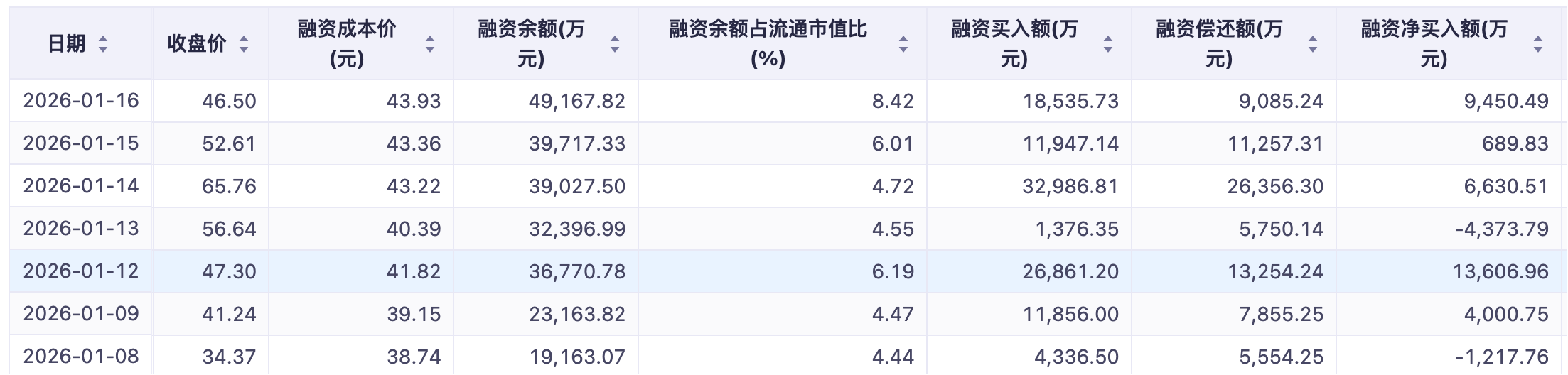
Core Viewpoint - The stock price of Hongbo Pharmaceutical (301230) experienced extreme volatility, with a cumulative increase of over 100% in five trading days before a significant drop following the announcement of a financing margin policy adjustment by the stock exchanges, highlighting short-term speculative risks in the market [1][2]. Group 1: Stock Price Movement - From January 8 to January 14, the company's stock price surged over 100%, with a notable increase of over 30% on January 13 and 14, leading to a classification of severe abnormal volatility [1]. - On January 15, the stock price hit a limit down, closing at 52.61 yuan, with a trading volume of 8.88 billion yuan, and the next day it continued to decline, closing at 46.50 yuan with a trading volume of 10.09 billion yuan [2]. Group 2: Financing Policy Impact - On January 14, the stock exchanges announced an increase in the minimum financing margin ratio from 80% to 100%, effective January 19, aimed at reducing market leverage and preventing speculative risks [1]. - The adjustment was based on previous active financing trading and ample liquidity, intending to protect investors' legal rights [1]. Group 3: Valuation Concerns - As of January 14, the company's rolling price-to-earnings ratio reached 250.87 times, significantly exceeding the industry average of 33.34 times, indicating a notable bubble characteristic [2]. - The stock price volatility is attributed to a lack of substantial fundamental support, with market analysts suggesting that the speculative influx was driven by a "last train effect" before the financing policy adjustment [4]. Group 4: Company Operations and Shareholder Actions - The company clarified that its operations are normal and there are no undisclosed significant matters, with the revenue from the DiOrion platform's drug development services being minimal and not materially affecting overall operations [1]. - On January 5, the company disclosed a shareholder inquiry regarding a 5% stake transfer, which is a non-public agreement and not a statutory lock-up release, with a six-month lock-up period for the buyer [4].

芝加哥商品交易所会出手抢购白银吗?_ZeroHedge
2026-01-04 11:34
Summary of Key Points from the Conference Call Industry Overview - The focus of the discussion is on the silver market, particularly the recent price surge and historical context related to silver prices during financial crises and speculative activities [1][5][15]. Core Insights and Arguments - **Price Surge**: Silver prices have doubled this year, showing a significant increase compared to 2023, reminiscent of past price spikes [1]. - **Historical Context**: The price of silver rose by 500% from $8.50 to $50.00 during the 2008 financial crisis, driven by excessive monetary policy and speculative behavior [5]. - **Monetary Policy Impact**: The Federal Reserve's actions, including lowering interest rates to zero and implementing quantitative easing, contributed to the price increase of silver as it became a hedge against extreme monetary policies [5][9]. - **Supply and Demand Dynamics**: The silver market is experiencing a supply-demand imbalance, with industrial demand increasing significantly while supply remains constrained [7][16]. - **Leverage and Speculation**: The use of leverage through futures and options has significantly increased demand for silver, leading to price volatility [7][9][13]. - **CME's Role**: The Chicago Mercantile Exchange (CME) has previously raised margin requirements, which has historically led to sharp declines in silver prices, indicating a potential risk for current investors [7][20]. Additional Important Content - **Historical Speculative Events**: The Hunt brothers' attempt to corner the silver market in the 1970s led to significant price manipulation and subsequent regulatory actions, highlighting the risks associated with speculative trading [10][11][13]. - **Current Market Conditions**: The current environment mirrors past conditions where monetary and fiscal policies are pushing investors towards precious metals as a hedge against inflation and currency devaluation [15][16]. - **Valuation Metrics**: Investors often use silver-to-gold and silver-to-oil ratios to assess silver's valuation, which are currently indicating potential for significant price movements [18]. - **Risk of Market Correction**: There is a belief that the current bullish trend in silver may end similarly to past trends, with potential for a sharp market correction due to high leverage and regulatory changes [22]. Conclusion - Investors are advised to be cautious given the historical precedents of volatility in the silver market, particularly in light of leverage and regulatory actions that could impact market dynamics [22].

股市泡沫与清王朝的覆灭:对当前科技投资的警示
水皮More· 2025-09-30 09:19
Group 1 - The article discusses the historical context of the rubber stock market frenzy in late Qing Dynasty Shanghai, highlighting its impact on the financial system and the eventual collapse of the Qing Dynasty [1] - Shanghai emerged as a financial hub in the Far East after its opening in 1843, with a dual financial system comprising foreign banks and local money shops, which facilitated speculation [2][3] - The establishment of the Shanghai Stock Exchange allowed for the trading of rubber stocks, but the lack of regulation led to rampant insider trading and market manipulation [3][4] Group 2 - The rubber industry experienced explosive growth due to technological advancements in the early 20th century, with significant increases in demand for rubber products, particularly from the automotive sector [6][7] - Many rubber companies listed in Shanghai were found to have exaggerated claims about their production capabilities, leading to inflated stock valuations [7][9] - The speculative bubble was fueled by a combination of misleading information, high dividend promises, and a lack of transparency in the operations of rubber companies [8][9] Group 3 - Financial institutions and media played a crucial role in promoting the rubber stock frenzy, with banks providing leverage for investors and newspapers amplifying the hype around rubber stocks [11][12] - Local money shops engaged in high-risk lending practices, significantly increasing their exposure to the stock market, which contributed to the systemic risk [12][16] - The speculative environment led to widespread participation from various social classes, resulting in a collective investment frenzy that detached stock prices from underlying values [13][15] Group 4 - The bubble burst in mid-1910 due to a combination of declining demand for rubber and increasing supply from newly established plantations, leading to a rapid decline in stock prices [17][18] - The collapse of the rubber market triggered a liquidity crisis among money shops, which were heavily invested in rubber stocks, resulting in a wave of bankruptcies [20][22] - The financial crisis had far-reaching consequences, leading to a significant contraction in economic activity and contributing to the social unrest that culminated in the 1911 revolution [25][26] Group 5 - The article concludes with lessons learned from the rubber stock frenzy, emphasizing the importance of risk management, regulatory oversight, and the need for transparency in financial markets to prevent similar crises in the future [31][36]