校园食品安全管理

Search documents
广阳市场监管部门发布 校园食品安全工作提示
Xin Lang Cai Jing· 2026-02-04 05:06
Group 1 - The article emphasizes the importance of food safety management in school canteens during the winter break and the beginning of the new semester, highlighting the need for thorough inspections and proper handling of food materials [1] - It outlines specific measures to control risks at the source, including the complete clearance of perishable and expired food items, and the proper storage of essential dry goods [1] - The article stresses the necessity of environmental sanitation to prevent mold contamination, recommending comprehensive cleaning and disinfection of canteen facilities before and after the holiday [1] Group 2 - The article identifies the need for hardware upgrades in school canteens to address issues such as improper layout, insufficient camera coverage, and outdated refrigeration equipment [2] - It suggests that increased financial investment is required to enhance the hardware configuration during the winter break, which is seen as an optimal time for these improvements [2] - The focus is on optimizing the overall hardware support level to ensure better functionality and safety in school canteens [2]
以“陪餐制”为契机,全面优化校园食品安全管理
Nan Fang Du Shi Bao· 2025-12-20 06:02
Core Viewpoint - The Guangdong Provincial Education Department has released a draft guideline for a student meal accompaniment system in schools, addressing growing concerns over campus food safety [1][2]. Group 1: Implementation of Accompaniment System - The guideline proposes a structured accompaniment system for student meals across various educational institutions, detailing the frequency, format, and personnel involved in the accompaniment process [1]. - The introduction of a parent accompaniment system is highlighted as a significant aspect, with parents required to participate at least once a month, enhancing transparency and accountability [2]. Group 2: Challenges and Limitations - There are concerns regarding the effective implementation of the accompaniment system, particularly the principle of "same meal, same quality," and the potential for superficial compliance [1][2]. - The root causes of food safety issues in schools are linked to operational models, funding constraints, and regulatory responsibilities, indicating that the accompaniment system alone cannot resolve these fundamental problems [2][3]. Group 3: Recommendations for Improvement - The implementation of the accompaniment system should serve as an opportunity to enhance the overall food safety management framework in schools, rather than being seen as a final solution [3]. - Recommendations include establishing a transparent and traceable food procurement mechanism, improving oversight of school meal operations, increasing food safety funding, and creating effective feedback channels for students and parents [3].
额敏县多部门协同发力织密秋季校园食品安全“防护网”
Zhong Guo Shi Pin Wang· 2025-09-26 08:26
Group 1 - The core viewpoint emphasizes the importance of strengthening campus food safety management to eliminate food safety hazards and ensure the dietary safety of students and teachers [1] - A comprehensive inspection was conducted by a joint team led by the county food safety office, involving multiple departments, resulting in the identification and rectification of 13 issues in campus canteens and 9 issues in 52 food businesses around schools [1] - Training sessions were held for centralized food delivery companies to enhance their safety awareness and operational skills, focusing on food safety laws, storage, transportation standards, and traceability systems [1] Group 2 - The market supervision bureau, in collaboration with the education department, organized training for over 100 school leaders and food safety personnel to improve their safety awareness and management capabilities [2] - A real-name management system was established for campus food safety oversight, with 21 enforcement personnel assigned to 33 schools and kindergartens for precise regulatory engagement [2] - Future efforts will focus on strict checks of the implementation of food safety management systems and responsibilities within schools to continuously enhance food safety assurance levels [2]
学校食堂食材采购“双人或多人联检”
Bei Jing Shang Bao· 2025-09-25 16:40
Core Viewpoint - The Ministry of Education and the State Administration for Market Regulation have issued guidelines to standardize the procurement and acceptance management of bulk food ingredients in school canteens, aiming to enhance food safety and management standards in educational institutions [1][4]. Group 1: Procurement Management - Schools must procure bulk food ingredients from suppliers that have obtained the necessary legal qualifications and have not experienced food safety incidents in the past three years [2][4]. - The procurement process should involve the opinions of the school meal committee and other stakeholders, adhering to the "three major and one large" requirements [2]. - Schools are encouraged to use digital and information technology for record-keeping to improve the integrity and traceability of procurement records [4]. Group 2: Acceptance Management - A "dual or multiple personnel inspection" system must be established for the acceptance of bulk food ingredients, requiring at least two inspectors, including a food safety officer and a canteen manager [2][3]. - The acceptance process should be transparent, with schools retaining video records and detailed documentation of the inspection process, including checks on information, appearance, labels, temperature, and invoices [2][3]. Group 3: Food Safety and Accountability - Schools are required to maintain comprehensive records of the entire procurement and management process for bulk food ingredients, including supplier selection, acceptance, storage, and usage [4]. - The guidelines emphasize the importance of the principal's responsibility for food safety and mandate regular meetings to discuss food safety issues [4]. - The implementation of a parent accompanying system in canteens is encouraged to enhance oversight and transparency [4].
明确“双人或多人联检”制,两部门出台学校食堂食材采购新要求
Bei Jing Shang Bao· 2025-09-25 13:39
Core Viewpoint - The Ministry of Education and the State Administration for Market Regulation have issued guidelines to standardize the procurement and acceptance management of bulk food ingredients in school canteens, aiming to enhance food safety and management in educational institutions [1][6]. Group 1: Procurement Management - Schools must procure bulk food ingredients from suppliers that have obtained the necessary legal qualifications and have not experienced food safety incidents in the past three years [3][5]. - The procurement process should involve input from the school diet committee and adhere to the "three major and one large" requirements, ensuring that suppliers meet national quality standards [3][6]. Group 2: Acceptance Management - A "dual or multiple personnel inspection" system must be established for the acceptance of bulk food ingredients, requiring at least two inspectors, including a food safety officer and a canteen manager, to ensure transparency and accountability [3][4]. - Schools are encouraged to retain video records of the acceptance process, documenting checks on information, appearance, labels, temperature, and invoices [3][4]. Group 3: Food Safety and Accountability - Schools are required to maintain comprehensive records of the procurement process, including supplier selection, acceptance, storage, usage, and inventory management of bulk food ingredients [5][6]. - The guidelines emphasize the importance of a principal's responsibility for food safety and the implementation of a meal accompaniment system, which includes parents where possible [6][5]. Group 4: Systematic Improvement - The issuance of these guidelines marks a new phase in the management of campus meals, focusing on refined decision-making, optimized supplier selection, detailed acceptance processes, and enhanced meal accompaniment systems to improve safety, nutrition, and management levels [6][4].

供应商须具备合法经营资质,学校食堂大宗食材采验新要求发布
第一财经· 2025-09-25 07:48
Core Viewpoint - The article discusses the issuance of guidelines by the Ministry of Education and the State Administration for Market Regulation to standardize the procurement and acceptance management of bulk food ingredients in school canteens, aiming to enhance food safety and management in schools [1][2] Group 1: Procurement and Acceptance Management - The guidelines emphasize that schools must procure bulk food ingredients from suppliers with legal operating qualifications and a good safety record over the past three years [1] - Schools are required to implement a strict incoming inspection system to ensure traceability and safety of food sources, prohibiting the purchase of substandard ingredients [1][2] - A "dual or multiple-person inspection" system for acceptance management is mandated, ensuring transparency and accountability in the process [1] Group 2: Storage and Record Management - The guidelines specify that accepted bulk food ingredients should be promptly stored and recorded, adhering to food safety operation standards [2] - Proper storage conditions must be maintained, including ventilation and pest control, while keeping hazardous materials at a safe distance [2] - Schools are required to maintain detailed management records of bulk food ingredients, ensuring accountability and traceability [2] Group 3: Training and Responsibilities - The guidelines highlight the importance of training for staff to ensure food safety responsibilities are effectively implemented [2] - Responsibilities for managing bulk food procurement and acceptance are clearly defined for educational and market regulation departments [2] - Schools must adopt a principal accountability system for food safety, integrating it into key school discussions and activities [2]
教育部开展专项资金检查
Ren Min Ri Bao· 2025-09-16 22:10
Group 1 - The Ministry of Education is conducting inspections to enhance campus food safety management and regulate the use of special funds for nutrition improvement plans for rural compulsory education students [1][2] - The inspections involve checking the implementation of food safety responsibilities by educational administrative departments and schools, including internal controls and management systems [2] - The inspections also focus on the management of school canteens, covering the entire process of food ingredient management from procurement to processing [2] Group 2 - Financial management related to meal funding is a key area of inspection, including the establishment of financial systems and accounting practices [2] - The management of nutritional meal subsidy funds for rural education is being scrutinized, including the arrangement, use, and supervision of these funds [2] - Issues identified during inspections will be promptly reported to relevant provincial authorities for corrective action to ensure compliance [2]
被罚30000元!广东一中学:传菜电梯已彻底整改
Nan Fang Du Shi Bao· 2025-09-13 09:40
Core Viewpoint - Huizhou No. 1 Middle School was fined 30,000 yuan for using an unregistered and uninspected "dumbwaiter" and failing to implement required operational controls in food service [1][2][3]. Group 1: Administrative Penalty Details - The penalty was issued by the Huizhou Market Supervision Administration for violations of the Special Equipment Safety Law and the Food Safety Law [2]. - The specific penalty included a warning and a fine of 30,000 yuan [1][2]. - The penalty decision was made on September 1, 2025 [2]. Group 2: School's Response and Compliance - Huizhou No. 1 Middle School stated that the ownership and management of the cafeteria were transferred back to the school in January 2025, after which they took corrective actions [3]. - The school has completed the necessary rectifications for the dumbwaiter and has obtained the required certification, reporting this to the market supervision authority [3]. - The school claims that all aspects of food safety management, from ingredient procurement to meal preparation, now fully comply with campus food safety regulations [3].

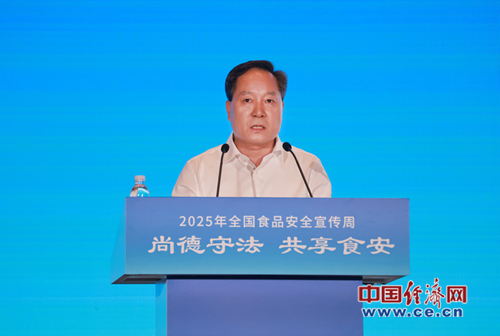
林伟明:坚持“健康第一”理念,用心守护师生饮食安全
Zhong Guo Jing Ji Wang· 2025-09-11 10:58
Core Viewpoint - The 2025 National Food Safety Publicity Week main event emphasizes the importance of food safety management in schools, highlighting the efforts of Beijing Haidian Middle School in ensuring the safety of food for students and staff through a comprehensive approach [2][5]. Group 1: Institutional Framework - The school has established a robust food safety management system covering all aspects from procurement to meal service, ensuring accountability and operational standards [2]. - Key management responsibilities are structured into a three-tier system focusing on daily risk control, weekly hazard identification, and monthly strategic planning [2]. Group 2: Smart Empowerment - As a pilot school for smart canteens, Haidian Middle School utilizes digital tools to oversee all food-related processes, enhancing transparency and control [3]. - The procurement process includes strict quality checks and traceability, with automated systems for inventory management and verification of food quality [3]. Group 3: Food Education Integration - The school promotes a culture of food education, integrating knowledge on food safety, ecological awareness, and nutrition into the curriculum to foster healthy eating habits among students [4]. - A collaborative governance mechanism involving students and parents is established to enhance food safety oversight within the school [5].