
生产关系

Search documents
X @Yuyue
Yuyue· 2026-02-18 16:44
为什么我说 “打工,不如投资” 呢?因为二级的红利每个人都有机会吃到。如果你在 AI 或者显卡需求刚火的时候就买了英伟达,那么收益率其实未必比不上 BTC。而你想吃到这波红利,其实只需要一个能买到 $NVDA 的券商账户。如今或许机器人赛道的二级也远没到顶今天看到这条微博,我的第一反应就是 “或许机器人板块还能继续涨到年中”。A 股这边的逻辑,就是老美要有的我们也要有,加上国内股市这轮牛感觉远远还没结束,两会在三月,三月或许会出台一系列相关政策促使机器人板块进一步繁荣吧毕竟,宇树都还没正式 IPO 发行,龙头还没上架,你跟我说机器人见顶?不会吧不会吧现在我们想吃到红利就更简单了,甚至不用开通账户,直接买 onchain stocks 都行,虽然目前还有一些费率问题和流动性的问题,但对于大部分小户来说已经可以满足。我有券商账户,还是会选择券商买费率便宜,但是有时候为了速度 / 加杠杆的需求,还是会用一下 hyperliquid 之类的来开一单。而国内的股票由于政策关系,onchain 的部分很难操作,但中国公民开通 A 股券商也没啥难度,还是挺适合去试试水的币圈肯定还是会有钱赚的,我也还持有一些 BTC 现货, ...

X @Yuyue
Yuyue· 2026-02-16 21:31
昨晚春晚的机器人方阵,其实给我们也敲响了警钟。这就是我之前提到的焦虑之一,具身智能的爆发正在重塑生产力的底层逻辑有这两个维度的一些思考,算是暂时回应自己之前的焦虑如何解决:- 从生产关系转向生产力协同:Crypto 解决的是生产关系(分钱),AI 解决的是生产力(干活)。AI 究竟需不需要 Crypto,是由人决定的。机会可能出现在生产关系变革的时刻- 打工,可能未必比得上投资:很多人纠结要不要转行去 AI 公司打工,其实大可不必。PVP 老兵真正的优势在于对资本流向和对热钱的敏锐度。昨晚我对马男说,我的钱都是从追热点赚的,甚至能进入币圈也是因为热点,这也是一种路径依赖吧现在很明显热点是 AI 了,利用好现有的资本,去深耕美股 / AH 股二级市场,或许也是一种很好的思路一些阶段性答案Yuyue (@yuyue_chris):分享一些最近的真实焦虑:作为 985 商科背景出身,入行 Crypto 确实让自己对目前的状况比较满意,但也陷入了某种 “路径依赖”。Crypto 的经验像是特化技能,在其他科技领域很难移植面对 AI 和 Robotics ...
付鹏:全球秩序重构下的资产分化——解码生产力博弈与财政货币政策的底层逻辑与未来走向【付鹏说16】
Hua Er Jie Jian Wen· 2026-01-26 11:16
Core Viewpoint - The article discusses the current state of global economic dynamics, emphasizing the duality of asset differentiation driven by productivity breakthroughs and the ongoing restructuring of production relations and world order [6][19]. Group 1: Economic Structure and Asset Differentiation - The global economy has seen a phase of productivity breakthroughs, but the core contradiction lies in the incomplete restructuring of production relations and the rebuilding of world order [6][19]. - Assets are categorized into two types: those anchored in productivity growth, such as AI-related stocks and U.S. equities, and those reflecting the chaos of world order, including war-related assets and precious metals [6][19]. - This asset structure is expected to undergo transmission and recalibration within the next 12 to 18 months, aligning productivity, production relations, and world order [6][19]. Group 2: Monetary and Fiscal Policy Dynamics - Monetary and fiscal policies serve as regulatory tools, with their effectiveness contingent upon the stability of world order [6][19]. - The current chaos in world order has concentrated the core contradictions within government sectors, leading to a weakening of monetary policy effectiveness over the past decade, as seen in Japan's case [7][20]. - Fiscal deficits are not inherently problematic; the key issue is whether government spending translates into effective output, with concerns about government credit arising from world order instability [7][20]. Group 3: Effective Spending and Economic Stability - The sustainability of fiscal policy hinges on whether spending is effective, which involves stabilizing core productivity drivers and optimizing debt leverage and distribution relations [8][21]. - Historical examples from Japan and China illustrate that effective fiscal spending can stabilize productivity and economic fundamentals, even amid rising government debt [8][21]. - A balance between effective spending and income generation is crucial; without it, the risk of a "spend without revenue" scenario could lead to significant economic turmoil [9][22]. Group 4: Global Economic Challenges - The risks faced are not isolated to single economies but represent a global challenge, with potential widespread implications if major economies fall into similar predicaments [10][23]. - The European context highlights that the core issues are not merely about defense spending but rather about productivity shortfalls and lagging reforms in production relations [10][23]. - The ability of G2 countries to simultaneously adjust productivity and production relations is critical for global order reconstruction, while Europe struggles with internal political and ideological conflicts [11][24]. Group 5: Future Outlook - Once stability is achieved and productivity aligns with production relations, government debt issues are expected to ease as effective spending generates revenue to cover liabilities [12][25]. - The debate surrounding large-scale fiscal investments emphasizes that if these can be transformed into effective income through production relations adjustments, debt will not be a concern [12][25]. - Understanding the interconnectedness of productivity, production relations, world order, and monetary and fiscal policies is essential for grasping current global economic dynamics [12][25].

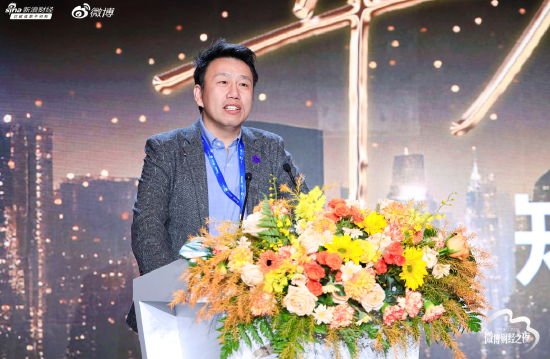
2025微博财经之夜--发言实录
付鹏的财经世界· 2026-01-15 16:01
Core Viewpoint - The discussion emphasizes the transformation of productivity, production relations, and global order, highlighting the importance of technological advancements and their impact on economic structures [4][12]. Group 1: Productivity and Technological Advancements - The past decade has seen significant shifts in productivity, with a focus on technological revolutions that began around 2015, marking a new industrial and technological era [7][9]. - The emergence of AI and its foundational technologies, such as ChatGPT, represents a critical turning point in productivity enhancement, akin to historical technological milestones [10][11]. - The investment in technological infrastructure is crucial for future productivity gains, paralleling historical discussions on infrastructure's role in economic development [11][12]. Group 2: Production Relations and Economic Structures - The discourse highlights the misalignment of production relations globally, with countries facing challenges in balancing productivity gains with economic realities [13][14]. - The need for a human-centered approach in production relations is emphasized, advocating for increased welfare and compensation to ensure stability in economic systems [14]. - The ongoing tension between productivity advancements and existing production relations suggests that without addressing these discrepancies, economic stability may be at risk [13][14]. Group 3: Global Order and Economic Implications - The current global economic order is under scrutiny, with the potential for significant upheaval if productivity advancements do not align with production relations [12][13]. - The discussion suggests that the future of global economic stability hinges on the successful integration of technological advancements into existing economic frameworks [12][14]. - The potential for a new world order is contingent upon how countries adapt their production relations in response to technological changes [14].

付鹏:现在大家用的ChatGPT、千问、DeepSeek等,都不是未来真正重要的东西
Xin Lang Cai Jing· 2026-01-15 12:11
Core Viewpoint - The speech by Fu Peng emphasizes the importance of early-stage investment in technology and the necessity of risk-taking capital for industrial and technological advancements, highlighting the cyclical nature of industry life cycles and the current focus on AI as a pivotal point for future growth [3][4][5]. Group 1: Historical Context and Investment Philosophy - Fu Peng referenced two significant historical events from 2015 and 2016: Elon Musk's emotional response to the failure of SpaceX and Cathie Wood's influential presentation that outlined future technological paths, contrasting her investment style with that of Warren Buffett [3][7]. - He argues that early-stage investments, even if perceived as bubbles, are essential for progress, likening the need for risk-taking capital to historical support from monarchs and nobles for exploration and innovation [3][7]. - The period from 2015 to 2022 is described as uncertain, with a growing recognition of the need for a technological revolution to address mismatched production relationships and global instability [3][5]. Group 2: Industry Lifecycle and AI Development - Fu Peng highlighted that 2022 was a crucial year in the industry lifecycle, using NVIDIA's 70% stock drop as an example of perceived bubble behavior, which later transformed into a significant player in AI computing [4][8]. - The emergence of ChatGPT in early 2023 is seen as a turning point, representing a shift from foundational AI infrastructure to practical applications, although he cautions that current AI tools may not be the most critical innovations [4][9]. - The next 15 to 18 months are deemed critical for determining whether the current technological advancements will yield substantial returns on investment, with implications for global production relationships and order [4][9]. Group 3: Future Implications and Production Relationships - Fu Peng stresses the need for a focus on improving production relationships alongside advancing productivity, advocating for human-centered policies that enhance welfare and compensation to prevent societal collapse [5][9]. - He posits that if the current technological advancements are genuine, they could positively impact humanity and stabilize global order; conversely, if they are not, countries may face significant challenges due to mismatched production relationships [5][9].

付鹏:木头姐不是“女版巴菲特”,她和巴菲特完全不同
Xin Lang Cai Jing· 2026-01-15 12:05
Core Viewpoint - The speech by Fu Peng emphasizes the importance of early-stage investment in technology and the necessity of taking risks to support innovation and progress in human civilization [3][4][5]. Group 1: Historical Context and Investment Philosophy - Fu Peng referenced two significant events from 2015 and 2016: Elon Musk's SpaceX failure, symbolizing the courage to challenge norms, and Cathie Wood's influential presentation outlining future technological paths, which attracted substantial investment [3][7]. - He argues that early-stage investments, often perceived as bubbles, are essential for the advancement of industries and technologies, highlighting the historical need for risk-taking capital to support innovation [3][4][7]. Group 2: Industry Lifecycle and Technological Evolution - Fu Peng identified 2022 as a pivotal year in the industry lifecycle, marking a transition from uncertainty to a clearer focus on AI and technological revolution, driven by mismatched production relations and global instability [4][5]. - He cited NVIDIA's 70% stock drop in 2022 as an example of a typical industry lifecycle, where a perceived bubble can lead to a significant transformation, ultimately establishing its value in AI computing [4][8]. Group 3: Future Outlook and Societal Implications - The emergence of ChatGPT in early 2023 is seen as a sign of progress from foundational AI infrastructure to practical applications, although current AI tools are not viewed as the most critical innovations [4][9]. - Fu Peng stressed the importance of the next 15 to 18 months in determining whether the current technological advancements will genuinely enhance productivity and reshape global production relations, or if they are merely illusory [5][9]. - He highlighted the need for a focus on human-centered production relations, advocating for increased welfare and compensation to prevent societal collapse and ensure a stable world order [5][9].
企业文化是什么,究竟有啥用?我从任正非这里悟透奥妙,醍醐灌顶
Sou Hu Cai Jing· 2026-01-14 02:29
Core Viewpoint - The essence of corporate culture is crucial for a company's success and development, as it serves as the "soul" of the enterprise, influencing cohesion and organizational strength [1][4][10] Group 1: Definition and Importance of Corporate Culture - Corporate culture is defined as the unique cultural image of a company, formed by its values, beliefs, and operational methods, and is reflected in daily operations [3][9] - A strong corporate culture fosters team cohesion and organizational strength, while a lack of it can lead to disunity and inefficiency [4][6] - The culture of a company is fundamentally linked to the personality and values of its leadership, which shapes the overall corporate environment [7][8] Group 2: Role of Leadership in Corporate Culture - Leadership plays a pivotal role in establishing and nurturing corporate culture, with the leader's vision and values directly impacting the company's cultural framework [7][8] - Successful entrepreneurs focus on creating an environment that promotes shared values and collective progress, rather than relying solely on personal authority [8][9] - The alignment of individual and corporate goals is essential for a cohesive corporate culture, as it provides a shared understanding of priorities and values [9][10] Group 3: Institutional Support for Corporate Culture - Corporate culture must be supported by institutional frameworks, such as KPIs, to ensure its effective implementation and assessment [5] - The integration of culture into the company's operational structure is necessary for sustaining its values and ensuring long-term success [5][9] Group 4: Cultural Influence on Performance - A positive cultural atmosphere is a vital management resource, especially after the initial stages of entrepreneurship, as it helps in professionalizing management and reducing reliance on individual leaders [8] - The transformation of cultural values into a collective ethos can drive the company towards achieving its objectives and maintaining competitive advantage [10]
2026年十大关键词
3 6 Ke· 2026-01-04 04:03
Group 1 - The concept of "capital despotism" refers to capital transcending its commercial and financial limitations, taking control over a nation's policies, cultural systems, and ideologies [9] - The emergence of capital despotism is characterized by capital breaking through functional restrictions and forming a comprehensive control system over societal operations and cultural thoughts [9] - Observing the development of capital despotism provides a clearer understanding of the current dynamics in both Eastern and Western worlds [9] Group 2 - The relationship between productive forces and production relations is complex, with productive forces determining production relations over time, particularly in a rapidly developing economy like China [10] - Existing interests often delay the process of productive forces determining production relations to maximize their benefits, leading to a mismatch in the evolution of these relations [10] - The current demographic structure in China contributes to the prolonged process of aligning production relations with productive forces, necessitating innovative measures to address this disconnect [10] Group 3 - The rise of artificial intelligence signifies a transformative shift in the employment landscape, compelling individuals to adapt to a fundamentally different work environment [11] - In the coming years, AI will evolve from a nascent tool to a widely utilized production resource, capable of automating many jobs [11] - The impact of AI on employment will be profound, particularly affecting urban middle-class jobs, raising concerns about how society will treat individuals in this changing context [11]
确保发展新质生产力取得重大突破
Jing Ji Ri Bao· 2025-12-10 22:17
Group 1 - The core viewpoint emphasizes the importance of developing new quality productivity as an intrinsic requirement and key focus for promoting high-quality development, as outlined in the "14th Five-Year Plan" [1] - New quality productivity is characterized by innovation, high technology, high efficiency, and high quality, which directly impacts the quality and efficiency of economic and social development [1][2] - Achieving significant breakthroughs in new quality productivity is crucial for enhancing total factor productivity, an important indicator of a country's economic development quality [1][2] Group 2 - The article highlights that the current new round of technological revolution and industrial transformation is a critical opportunity for countries to gain competitive advantages, with major powers like the U.S. and Germany focusing on mastering key disruptive technologies [2] - The development of new quality productivity is essential for ensuring decisive progress towards achieving socialist modernization in China, emphasizing the need for quality and efficiency in economic growth [2] Group 3 - China possesses favorable conditions for achieving breakthroughs in new quality productivity, including a large pool of high-quality labor and entrepreneurial talent, which are vital for enhancing competitiveness [3] - The country has a complete industrial system that supports significant technological innovation, as evidenced by its leading position in global manufacturing value added and production of major industrial products [4] Group 4 - China's vast market size and stable operation provide fertile ground for the development of new quality productivity, with a population of over 1.4 billion and a significant middle-income group driving consumption [5] - The ongoing construction of a unified national market is expected to facilitate the smooth flow of advanced production factors, promoting the innovative allocation of resources and deep industrial transformation [5] Group 5 - The article stresses that only countries with strong and sustained innovation capabilities can truly master competitive and developmental initiatives, highlighting the need for deep integration of technological and industrial innovation [6] - It outlines four key focuses for development: achieving high-level technological self-reliance, fostering strategic emerging industries, integrating technological and industrial innovation, and promoting institutional innovation to adapt to new quality productivity [6][7]
付鹏和李蓓 采访会议纪要
2025-12-01 00:49
Summary of Conference Call Notes Industry or Company Involved - The discussion primarily revolves around the macroeconomic environment in China and the implications for various sectors, particularly focusing on technology and AI investments. Core Points and Arguments 1. **Macroeconomic Challenges**: The current economic situation in China is characterized by a mismatch in production relations, leading to issues such as overcapacity and insufficient effective demand. This has been a consistent theme among economists since mid-last year, with policies introduced in September aimed at addressing these issues, though they are seen as more of a stopgap rather than a solution to the core problems [1][2][3]. 2. **Production Relations vs. Productivity**: There is a critical distinction made between productivity improvements (especially through technology) and the underlying production relations. While technological advancements are essential, they do not necessarily resolve the existing mismatches in production relations, which may even worsen in certain scenarios [2][3][4]. 3. **AI and Capital Expenditure**: The rise of AI has led to significant capital expenditure in the U.S., which is not as pronounced in China. This investment is compared to past infrastructure investments by local governments in China, suggesting that while AI may provide short-term benefits, the long-term financial sustainability of such investments is questionable [5][6]. 4. **Market Dynamics and Investment Strategy**: The capital markets are currently driven by productivity, particularly in technology sectors. However, there is a warning that the current enthusiasm for AI stocks may be overblown, with potential bubbles forming. Investors are advised to consider a balanced approach, incorporating both high-growth tech stocks and more stable value stocks [7][8][9]. 5. **Sector Performance**: There is a notable performance difference between AI-related stocks and traditional sectors such as commodities and mining, which have shown better returns this year. Value stocks, particularly in the banking sector, have also performed well, suggesting a need for diversification beyond tech [10][11]. 6. **Long-term Economic Outlook**: The discussion highlights the uncertainty surrounding the sustainability of current economic trends, particularly in relation to AI and its impact on labor markets. There are signs of layoffs in tech sectors, indicating that the benefits of AI may not be as widespread as anticipated [12][13][14]. 7. **Investment in Gold and Silver**: The conversation touches on the rising prices of gold and silver, with a suggestion that these assets may serve as a hedge against inflation and currency devaluation. However, there are concerns about the long-term sustainability of gold prices, especially in light of recent central bank actions [20][21][22][23]. 8. **Cyclical Nature of Industries**: The potential for recovery in certain sectors, such as construction and materials, is discussed. Companies that maintain profitability during downturns may emerge stronger as weaker competitors exit the market [13][14][15]. Other Important but Overlooked Content - The discussion emphasizes the importance of understanding the cyclical nature of industries and the potential for recovery, even in currently struggling sectors. There is a call for investors to remain vigilant and adaptable in their strategies, considering both macroeconomic indicators and sector-specific dynamics [16][17][18][19]. - The historical context of economic cycles and the impact of government policies on market dynamics are also highlighted, suggesting that past experiences can inform current investment decisions [24][25][26][27][28][29][30]. - The potential for the Chinese yuan to gain strength in the global market is mentioned, which could influence investment strategies moving forward [27][28][29][30]. This summary encapsulates the key themes and insights from the conference call, providing a comprehensive overview of the current economic landscape and investment considerations.