欧盟碳边境调节机制

Search documents
明泰铝业面临欧盟碳税挑战,再生铝技术或成优势
Jing Ji Guan Cha Wang· 2026-02-12 05:12
Core Viewpoint - Ming Tai Aluminum faces challenges from the EU Carbon Border Adjustment Mechanism (CBAM) but is expected to gain a green premium due to its low-carbon advantages from recycled aluminum [1][2]. Industry Policy and Environment - The EU Carbon Border Adjustment Mechanism will officially take effect in 2026, potentially increasing export costs for aluminum products. The China Nonferrous Metals Industry Association indicates that this mechanism will pose compliance cost challenges for the industry, but Ming Tai Aluminum has proactively positioned itself with recycled aluminum technology, which may allow it to obtain a green premium [2]. Company Status - According to the company's three-year plan disclosed in November 2025, Ming Tai Aluminum will increase its annual dividend payout ratio to no less than 30% starting in 2026 to enhance investor returns. A cash dividend of 10 for every 1 share has already been implemented in the third quarter of 2025, marking two consecutive years of interim dividends [3]. Company Project Progress - The company is advancing its new project for an annual production capacity of 720,000 tons of aluminum-based new materials, primarily targeting the fields of new energy batteries and low-altitude economy. The construction period is expected to be two years, and upon production, it will enhance high-end capacity. The first production line of its subsidiary Hongsheng New Materials' aluminum industrial park for automotive and green energy applications was put into operation in October 2025 [4]. Performance and Operating Conditions - The company forecasted a year-on-year increase of 12% to 14% in net profit attributable to shareholders for 2025, with a complete annual report expected to be disclosed soon [5].

甲醇:供需失衡缓解可期
Zhong Guo Hua Gong Bao· 2026-01-28 02:38
Core Viewpoint - The domestic methanol market is gradually strengthening amid rising international geopolitical tensions, but the rebound in prices is expected to be limited due to insufficient demand support [1] Supply and Demand Analysis - The methanol market in 2025 is projected to experience a supply-demand imbalance due to increased supply and weak demand, leading to a price decline of over 15% by year-end compared to the beginning of the year [2] - Supply-side factors include high operating rates of coal and natural gas methanol production facilities at 80% and 49% respectively, with an overall industry operating rate exceeding 78%, resulting in ample production [2] - The demand side is constrained by weak traditional downstream demand and insufficient growth in emerging demand, particularly in the methanol-to-olefins (MTO) sector, which is affected by negative margins [2] External Influences - International geopolitical situations and changes in imports significantly impact the methanol market, with Iranian methanol production currently at a low operating rate of around 16% due to domestic issues, leading to a substantial decrease in exports to China [3] - In January, China's methanol import volume is estimated to be between 1.05 million and 1.1 million tons, a decrease of approximately 400,000 tons from the previous month, which may boost market confidence [3] Market Dynamics - The current methanol spot market is characterized by platform consolidation, with expectations of inventory reduction at ports, but weakened demand from sectors like MTO may limit price movements [4] - In 2026, methanol prices may exhibit seasonal volatility, with potential price increases in the first half due to lower import pressure, while the second half may face significant import challenges [4] - Long-term prospects indicate that green methanol could become a core focus due to its applications in shipping and electric vehicles, driven by EU carbon border adjustment mechanisms, leading to a shift towards higher industry concentration and green transformation [4]
7亿元“罗生门”,风电巨头大金重工陷合同纠纷
Hua Xia Shi Bao· 2026-01-02 11:36
Core Viewpoint - The ongoing legal disputes between Dajin Heavy Industry and China Gezhouba Group Electric Power Co., Ltd. involve significant financial claims, with Dajin Heavy Industry seeking compensation of approximately 129 million yuan due to alleged economic losses caused by Gezhouba Electric Power [1][4]. Group 1: Legal Disputes - Dajin Heavy Industry's subsidiary has filed a lawsuit against Gezhouba Electric Power for compensation of 129 million yuan and related litigation costs [1][4]. - Gezhouba Electric Power previously initiated a lawsuit against Dajin Heavy Industry's subsidiary, claiming approximately 573 million yuan for construction contract disputes [1][2]. - The court has frozen a total of 12.53 million yuan in bank deposits from both companies as part of the legal proceedings [3]. Group 2: Financial Impact - The financial implications of the lawsuits could affect Dajin Heavy Industry's performance, particularly if the company is required to pay damages, which would impact profits [3][4]. - Dajin Heavy Industry reported significant revenue growth in 2025, achieving 4.595 billion yuan in revenue, a 99.25% increase year-on-year, and a net profit of 888 million yuan, up 214.63% [5]. - The company has experienced a turnaround after two years of declining revenue, with the increase attributed to a surge in overseas business [5]. Group 3: Overseas Business Expansion - Dajin Heavy Industry has become the leading supplier of offshore wind foundation equipment in Europe, with market share increasing from 18.5% in 2024 to 29.1% in the first half of 2025 [6]. - The company's export business has seen a significant rise, with export revenue accounting for nearly 80% of total income, reflecting a 23 percentage point increase from the previous year [5][6]. - Plans for a Hong Kong IPO are underway, with funds intended for upgrading solutions, constructing a European assembly base, and expanding into new global markets [6].


商务部回应:这种自相矛盾的做法,是典型的双重标准
中国能源报· 2026-01-01 09:10
Core Viewpoint - The Chinese government firmly opposes the EU's Carbon Border Adjustment Mechanism (CBAM), asserting that it will take all necessary measures to respond to any unfair trade restrictions, while emphasizing the importance of maintaining the stability of global supply chains and the legitimate rights of Chinese enterprises [1][3]. Group 1: EU's CBAM Implementation - The EU's CBAM is set to be officially implemented on January 1, 2026, with proposals that include setting default values for carbon emissions intensity and plans to expand the range of covered products [1]. - The EU's approach is criticized for ignoring China's achievements in green and low-carbon development, as it sets significantly high default values for carbon emissions intensity for Chinese products, which are expected to increase annually over the next three years [1]. Group 2: Expansion of CBAM Scope - The EU plans to expand the CBAM to include approximately 180 types of steel and aluminum-intensive downstream products, such as machinery, automobiles, and household appliances, starting in 2028 [2]. - This legislative proposal is viewed as exceeding the scope of climate change response and exhibiting clear unilateralism and trade protectionism, raising serious concerns from the Chinese side [2]. Group 3: Criticism of EU's Double Standards - The EU's recent modification of the 2035 ban on new fuel vehicles, which relaxes green regulations internally while promoting protectionism externally, is highlighted as a contradiction and a typical example of double standards [2]. - The EU is accused of imposing its carbon standards on developing countries under the guise of preventing "carbon leakage," which raises the costs of climate action for these nations and undermines international cooperation on climate change [3].
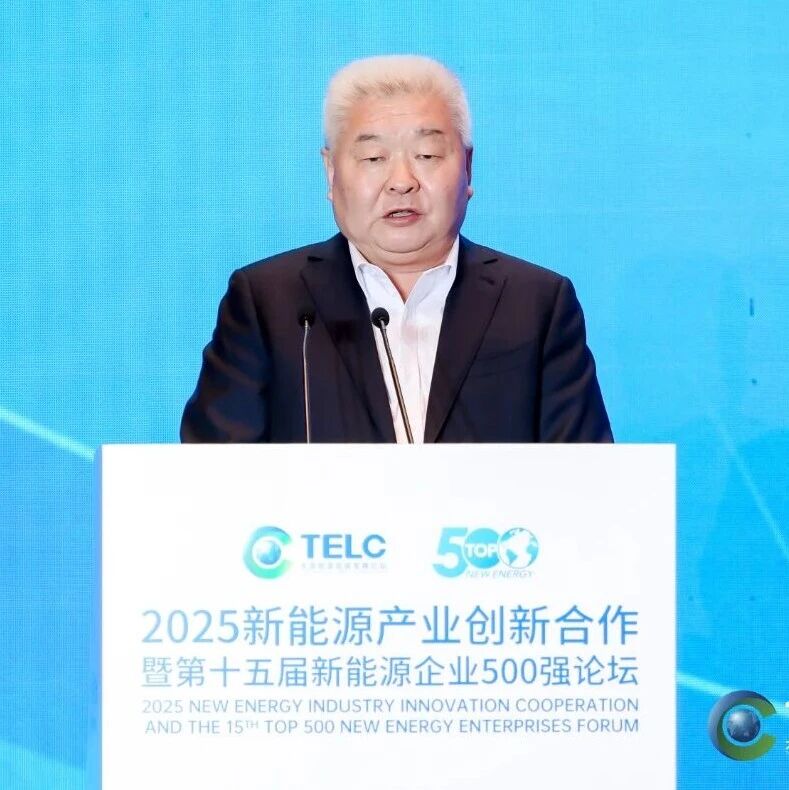
尹绪龙:新能源高质量发展转向终端应用驱动
中国能源报· 2025-09-28 13:04
Core Viewpoint - The article emphasizes the shift in the renewable energy sector from policy-driven growth to application-driven development, highlighting the importance of energy consumption and system efficiency in driving high-quality growth in the industry [4]. Group 1: Industry Changes - The increase in clean energy installations, particularly solar and wind, has led to consumption issues becoming a major constraint on renewable energy development [4]. - Policies such as the 136 Document and subsequent initiatives like zero-carbon parks and green electricity direct connection are guiding the industry towards a new direction focused on terminal application [4]. - The competitive landscape has shifted from traditional energy sources to intra-renewable competition, where higher efficiency and stability in energy generation are crucial for profitability [4]. Group 2: Focus Areas for Renewable Energy Stations - The industry is now placing greater emphasis on overall system efficiency rather than individual components, making the entire renewable energy generation system the focal point [5]. - There is an increased focus on the stability of system operations, as more stable and fault-free power stations yield higher returns over their lifecycle [5]. - The future will see a greater emphasis on refined operations, with intelligent and precise maintenance of solar power stations to enhance efficiency and extend generation periods [5]. Group 3: Product Requirements - Future market demands for solar photovoltaic (PV) components will prioritize superior weak light performance, ensuring higher energy output during low-light conditions [5]. - Stability in power generation performance is essential, with products needing to demonstrate high efficiency, reliability, and adaptability to ensure consistent energy production [5]. - Enhanced system compatibility is critical, as lower system losses and higher matching degrees between products will lead to increased overall output and profitability [5]. - A higher level of intelligence in operations is required, with systems capable of rapid responses and smart management to improve operational efficiency and energy output [6]. Group 4: Company Initiatives - Yingli Green Energy focuses on product quality and application development, with the launch of N-type series products catering to various scenarios including desert construction and offshore projects [6]. - The company has successfully implemented solar projects in regions like Xinjiang and Langfang, addressing local grid connection and consumption challenges [7]. - The Qinghai Gonghe 1 million kW solar thermal project is noted as the first smart power station in the country, utilizing intelligent upgrades for point-to-point management of components [7]. Group 5: Market Outlook - The renewable energy project market is expected to expand significantly, with the zero-carbon park market projected to reach 490.8 GW by 2030 [8]. - Green electricity direct connection presents immense potential, allowing projects to connect directly with end-users without consuming annual wind and solar quotas, thus facilitating low-carbon transitions for high-energy-consuming enterprises [8]. - The direct matching of supply and demand in green electricity reduces transmission losses and provides traceable green electricity certificates, which are crucial for companies aiming to meet international market standards under carbon neutrality goals [8].