
铝产品

Search documents
美以发动空袭!
证券时报· 2026-03-29 08:30
Group 1 - The article discusses recent airstrikes by the US and Israel in northern Iraq, resulting in at least 5 deaths and 9 injuries, with specific incidents reported in Mosul and Kirkuk [3][4]. - The "Popular Mobilization Forces," linked to Iran, have been frequently targeted since the US and Israel initiated large-scale military actions against Iran on February 28 [4]. - Iran's military condemned the drone attacks on Kurdish leaders' residences in northern Iraq, labeling the US-Israel alliance as a significant threat to global security and peace [6][7]. Group 2 - The US and Israel conducted an attack on an Iranian dock near the Strait of Hormuz, leading to 5 deaths and 4 injuries [10]. - Two large aluminum plants in Bahrain and the UAE confirmed they were attacked by Iranian forces, resulting in injuries and property damage, which could impact the global aluminum supply [12]. - Bahrain Aluminum Company reported that its facility was attacked, causing minor injuries and a 20% reduction in production due to previous disruptions in shipping through the Strait of Hormuz [13].


美国和墨西哥启动关键谈判,北美制造业站在十字路口
第一财经· 2026-03-16 14:15
Core Viewpoint - The article discusses the upcoming bilateral talks between the U.S. and Mexico as part of the USMCA joint review process, focusing on trade issues such as tariffs, market access, and supply chain security [3][4]. Group 1: USMCA Joint Review Process - The U.S. and Mexico will hold bilateral talks to discuss measures to ensure the USMCA benefits all parties, including reducing reliance on external imports and strengthening origin rules [3][4]. - The USMCA includes a "sunset clause" requiring a joint review six years after its implementation, with a decision on extending the agreement due by July 1, 2026 [5]. - The U.S. Trade Representative's office has indicated that the outcome of the joint review will depend on resolving issues related to origin rules for non-automotive industrial products and economic security collaboration [5]. Group 2: Tariffs and Market Access - Mexico aims to avoid significant modifications to the USMCA and seeks to optimize the dispute resolution mechanism to limit unilateral tariffs imposed by the U.S. [4]. - The U.S. has previously imposed a 25% tariff on certain Mexican imports, which was recently ruled invalid by the U.S. Supreme Court, but Mexico may leverage the joint review to seek exemptions from these tariffs [6][9]. - The automotive sector in Mexico has been affected by tariffs, with the industry experiencing a decline in production and exports, losing nearly $2.7 billion in 2025 [8]. Group 3: Negotiation Leverage - The high dependency of U.S. companies on Mexican supply chains provides Mexico with leverage in negotiations, as the integration of North American manufacturing spans various industries [8]. - Advanced technology products accounted for 27% of U.S. imports from Mexico in 2025, highlighting the importance of this trade relationship [8]. - Mexican officials emphasize the need to eliminate tariffs and establish clear trade rules to mitigate uncertainty and its impact on investment [9].

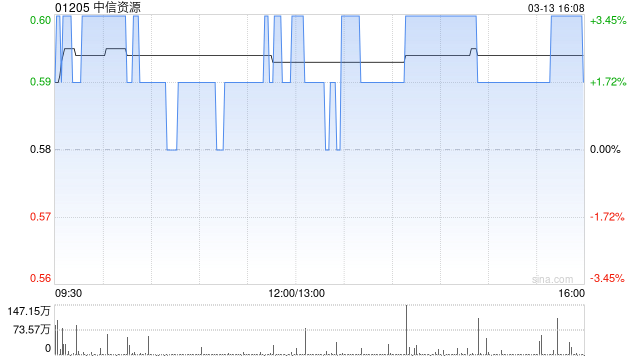
中信资源发布年度业绩 股东应占溢利1.71亿港元同比减少70.2%
Xin Lang Cai Jing· 2026-03-15 07:44
Group 1 - The core viewpoint of the article is that CITIC Resources (01205) reported its annual performance for the year ending December 31, 2025, showing a significant increase in revenue but a substantial decrease in profit attributable to shareholders [1][5]. Group 2 - The company achieved a revenue of HKD 14.965 billion, representing a year-on-year increase of 57.6% [1][5]. - The profit attributable to ordinary shareholders was HKD 171 million, which reflects a year-on-year decrease of 70.2% [1][5]. - Earnings per share were reported at HKD 0.0217 [1][5]. Group 3 - The decrease in profit is primarily attributed to several factors: a significant decline in the average selling prices of crude oil and coal, a substantial increase in the cost of raw materials, particularly alumina used in the Portland Aluminium Smelter, and the cessation of ownership in Alumina Limited from July 18, 2024, leading to a significant reduction in profits from joint ventures [1][5]. - Additionally, a joint venture involved in the extraction, production, and sale of oil, as well as the production and sale of road asphalt and clarified oil, reported losses due to a year-on-year decline in average crude oil prices [1][5].
洛阳钼业旗下贸易公司IXM,将重启铝产品交易
Xin Lang Cai Jing· 2026-03-15 03:12
Core Viewpoint - IXM, a trading company under Luoyang Molybdenum Co., Ltd., is set to restart aluminum product trading, enhancing its product offerings in the commodities market [1] Group 1: Company Overview - IXM has primarily focused on physical commodity trading, with its main trading products including copper, cobalt, nickel, gold, and lead-zinc [1] - The company operates under a "mining + trading" dual-driven business model, which is a significant part of Luoyang Molybdenum's overall strategy [1] Group 2: Market Activity - The restart of aluminum product trading marks IXM's return to this segment, as it had previously engaged in aluminum trading before pausing the business [1] - Industry insiders indicate that this move is a strategic decision to re-enter the aluminum market, thereby diversifying IXM's trading portfolio [1]

CGS-NDI专题报告:CBAM深度解析:高排放行业的加速转型契机
Yin He Zheng Quan· 2026-03-04 14:40
Investment Rating - The report does not explicitly provide an investment rating for the industry Core Insights - The EU Carbon Border Adjustment Mechanism (CBAM) officially comes into effect on January 1, 2026, covering six high-emission industries: steel, aluminum, cement, fertilizers, electricity, and hydrogen [6][8] - CBAM aims to address "carbon leakage" risks and is designed to push non-EU producers to adopt cleaner technologies [9][10] - The mechanism is seen as a green trade barrier, reflecting the EU's dual ambitions of revitalizing its economy and advancing global climate governance [6][25] - CBAM will significantly increase short-term carbon costs for China's high-emission industries, with the cost pressure ranking as follows: cement > steel > aluminum [6][19] - The report emphasizes the need for China's high-emission industries to accelerate their transition towards low-carbon technologies [6][20] Summary by Sections Section 1: CBAM as a Supplement to the EU Carbon Market - CBAM is introduced to mitigate "carbon leakage" risks and to impose carbon costs on high-emission trade goods [9][11] - The mechanism will gradually align with the EU carbon market reforms, with a shift from free allowances to paid certificates from 2026 to 2034 [15][16] Section 2: CBAM as a Green Trade Barrier - The introduction of CBAM is closely linked to the EU's green transition goals and aims to create a fair competitive environment while enhancing the EU's global leadership in climate action [25][26] - The mechanism is perceived as a response to internal and external pressures faced by the EU, including economic recovery post-COVID-19 and geopolitical tensions [27][28] Section 3: Short-term Carbon Costs for China's High-Emission Industries - The report highlights that China's high-emission industries face dual carbon cost pressures due to both domestic and international policies [20][21] - The transition to low-carbon practices is deemed essential for these industries to remain competitive in the evolving global landscape [20][22] Section 4: Investment Recommendations - Investment in low-carbon technologies and industries is crucial for high-emission sectors to adapt to CBAM and achieve green transformation [6][25] - The report suggests that companies with advanced technology and financial resources will likely enhance their international competitiveness through successful low-carbon transitions [6][25]
商务部新闻发言人就调整对加拿大反歧视措施答记者问
Shang Wu Bu Wang Zhan· 2026-02-27 08:44
Group 1 - Canada has adjusted its tariffs on Chinese steel and aluminum products, which aligns with China's announcement of adjustments to its anti-discrimination measures against Canada [1] - The Ministry of Commerce of China initiated an anti-discrimination investigation against Canada on September 26, 2024, and announced additional tariffs on March 8, 2025 [1] - From March 1, 2026, to December 31, 2026, China will not impose anti-discrimination tariffs on certain imported goods from Canada, following the recent adjustments by the Canadian government [1] Group 2 - Both countries aim to resolve trade issues in sectors such as electric vehicles, steel, aluminum, and agricultural products, based on the consensus reached by their leaders [1] - China is committed to promoting healthy, stable, and sustainable development of economic and trade relations with Canada [1]
云铝股份:目前公司以国内市场为主
Zheng Quan Ri Bao· 2026-02-25 11:11
Core Viewpoint - Yun Aluminum Co., Ltd. primarily focuses on the domestic market for its aluminum products, with only a small portion of aluminum welding materials being exported to Europe [2] Company Summary - The company has indicated that the majority of its aluminum products are sold within the domestic market [2] - A limited quantity of aluminum welding materials is exported to Europe, highlighting the company's focus on domestic sales [2]

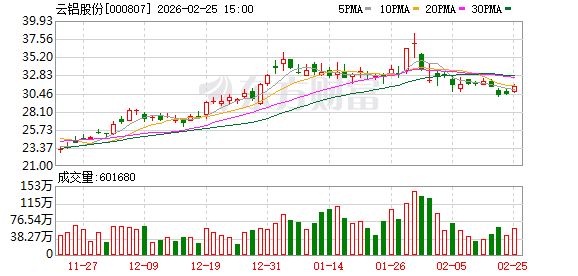
中信金属:公司现有的贸易品种主要为铜产品、铌产品、铁矿石、铝产品和钢铁产品等
Zheng Quan Ri Bao Zhi Sheng· 2026-02-24 11:38
Core Viewpoint - The company emphasizes its trade product selection aligns with national strategic needs, focusing on scientific methods and strategic guidance [1] Group 1: Trade Products - Current trade products include copper, niobium, iron ore, aluminum, and steel [1] - The company aims to develop more high-quality trade products under the new "domestic and international dual circulation" framework [1] Group 2: Market Strategy - The company plans to enhance market research to seize transformation opportunities [1] - The goal is to create a diverse, balanced, and continuously growing trade product structure with strong cyclical hedging capabilities and growth potential [1]

深市近120家公司节前分红
第一财经· 2026-02-13 03:36
Core Viewpoint - The article highlights the increasing trend of cash dividends among listed companies in the Shenzhen market, with a significant rise in the number of companies distributing dividends and the total amount of cash dividends paid out, reflecting a positive outlook on corporate performance and a commitment to returning value to shareholders [3][4]. Summary by Sections Dividend Distribution Trends - Since December 2025, nearly 120 companies in the Shenzhen market have implemented profit distributions, totaling over 37.5 billion yuan in cash dividends [3]. - In 2025, the total cash dividends distributed by Shenzhen companies reached 547.56 billion yuan, marking the second consecutive year exceeding 500 billion yuan [3]. - During the "14th Five-Year Plan" period, the total cash dividends from Shenzhen companies surpassed 2 trillion yuan, indicating a growing ecosystem of companies willing to distribute dividends regularly [3]. Corporate Performance - As of January 31, 2026, 1,714 out of 2,866 Shenzhen companies pre-disclosed their 2025 operating performance, accounting for 59.39% of the total number of companies and 48.48% of market capitalization [3]. - Nearly 60% of these companies reported improved performance, with a combined net profit of 82.01 billion yuan, an increase of 155.67 billion yuan year-on-year [3]. - Among the top 100 companies by market capitalization in Shenzhen, 40 companies pre-disclosed their 2025 performance, all of which are expected to be profitable, with anticipated growth exceeding 60% [3]. Notable Companies and Their Dividends - Lixun Precision (002475.SZ) announced a cash dividend of 1.6 yuan per 10 shares, totaling approximately 1.165 billion yuan, with a projected net profit for 2025 between 16.518 billion yuan and 17.186 billion yuan, reflecting a year-on-year growth of 23.59% to 28.59% [5]. - Tianshan Aluminum (002532.SZ) implemented a cash dividend of 1 yuan per 10 shares, totaling about 459 million yuan, with a commitment to a minimum cash dividend of 50% of the net profit attributable to shareholders for 2025, up from 41% in 2024 [5]. - Yilian Network (300628.SZ) distributed a cash dividend of 5 yuan per 10 shares, amounting to 633 million yuan, maintaining a high dividend payout ratio of over 50% of its net profit [6]. - GoerTek (002241.SZ) distributed a cash dividend of 1.5 yuan per 10 shares, totaling approximately 521 million yuan, and has established a long-term stable dividend policy through a rolling planning mechanism [7].





明泰铝业面临欧盟碳税挑战,再生铝技术或成优势
Jing Ji Guan Cha Wang· 2026-02-12 05:12
Core Viewpoint - Ming Tai Aluminum faces challenges from the EU Carbon Border Adjustment Mechanism (CBAM) but is expected to gain a green premium due to its low-carbon advantages from recycled aluminum [1][2]. Industry Policy and Environment - The EU Carbon Border Adjustment Mechanism will officially take effect in 2026, potentially increasing export costs for aluminum products. The China Nonferrous Metals Industry Association indicates that this mechanism will pose compliance cost challenges for the industry, but Ming Tai Aluminum has proactively positioned itself with recycled aluminum technology, which may allow it to obtain a green premium [2]. Company Status - According to the company's three-year plan disclosed in November 2025, Ming Tai Aluminum will increase its annual dividend payout ratio to no less than 30% starting in 2026 to enhance investor returns. A cash dividend of 10 for every 1 share has already been implemented in the third quarter of 2025, marking two consecutive years of interim dividends [3]. Company Project Progress - The company is advancing its new project for an annual production capacity of 720,000 tons of aluminum-based new materials, primarily targeting the fields of new energy batteries and low-altitude economy. The construction period is expected to be two years, and upon production, it will enhance high-end capacity. The first production line of its subsidiary Hongsheng New Materials' aluminum industrial park for automotive and green energy applications was put into operation in October 2025 [4]. Performance and Operating Conditions - The company forecasted a year-on-year increase of 12% to 14% in net profit attributable to shareholders for 2025, with a complete annual report expected to be disclosed soon [5].
