
气象科技

Search documents
气象预报工具赋能多元场景(新春走基层)
Ren Min Ri Bao· 2026-02-25 22:18
Core Insights - The article discusses the development of artificial intelligence forecasting models by the Xiong'an Meteorological AI Innovation Research Institute, aimed at enhancing the safety and efficiency of drone logistics delivery in urban environments [1][2]. Group 1: AI Forecasting Models - The Xiong'an Institute has developed a weather forecasting model called "Wind Clear," which can generate global weather forecasts with a 25 km resolution, updated every 6 hours for the next 15 days [1]. - A climate prediction model named "Wind Smooth" provides forecasts for climate anomalies over weeks to months [1]. - The meteorological science model "Wind Source" enables end-to-end forecasting driven directly by observational data [1]. Group 2: Applications and Future Plans - The AI meteorological models have already been applied in various scenarios, including new energy power forecasting, flood control scheduling, and aviation support [2]. - The institute aims to continuously improve the precision of multi-scenario forecasts and expand the application of AI meteorological models across more industries [2].
600119,业绩预亏!或被*ST
Zhong Guo Ji Jin Bao· 2026-01-28 14:38
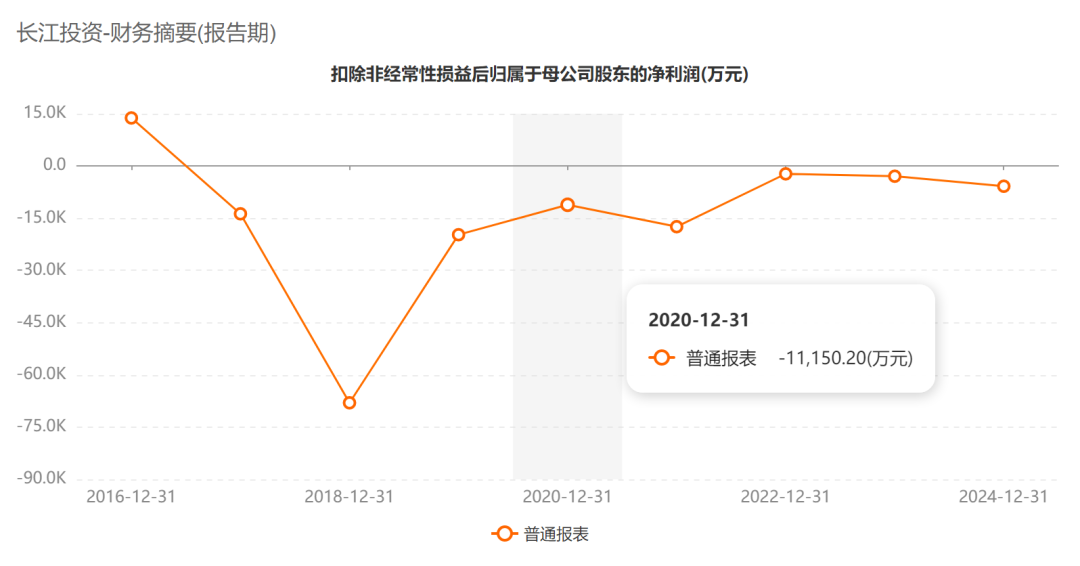
Core Viewpoint - Changjiang Investment is expected to report a negative profit for the fiscal year 2025, with revenues projected to be below 300 million yuan, which may lead to a delisting risk warning [1][2]. Financial Performance - The company forecasts a total profit of -30 million to -20 million yuan for 2025, with a net profit attributable to shareholders ranging from -45 million to -30 million yuan, and a net profit excluding non-recurring items between -48 million and -33 million yuan [1]. - Revenue is anticipated to be between 180 million and 220 million yuan, with core business revenue estimated at 179 million to 219 million yuan [1]. - The revenue for 2025 is projected to be only one-tenth of the peak revenue of 2.841 billion yuan achieved in 2017 [6]. Business Segments - Changjiang Investment's main business segments include modern logistics, meteorological technology, long-term rental apartments, and resource investments, with modern logistics accounting for 79% of revenue in 2024 [3]. Historical Performance - The company has experienced a declining trend in revenue from 2017 to 2024, with continuous losses in net profit excluding non-recurring items over the past eight years, with figures of -137 million, -680 million, -197 million, -112 million, -174 million, -23 million, -29 million, and -58 million yuan respectively [3]. Market Conditions - The decline in revenue for 2025 is attributed to intensified market competition, particularly affecting the international freight forwarding and automotive logistics businesses, which have not covered operational expenses [7]. Legal Issues - A significant lawsuit involving 152 million yuan may further impact the company's profits for 2025. The lawsuit pertains to bankruptcy-related disputes, with the company receiving court notifications and updates regarding the case [8][9].


600119 业绩预亏!或被*ST
Zhong Guo Ji Jin Bao· 2026-01-28 14:36
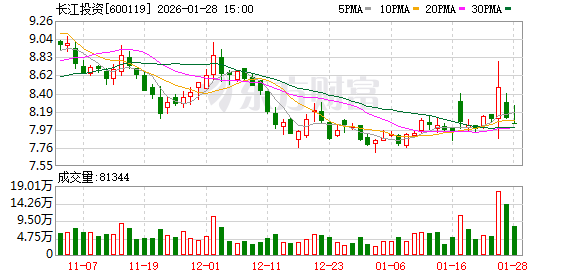
Core Viewpoint - Changjiang Investment is expected to report a negative profit for the fiscal year 2025, with revenue projected to be below 300 million yuan, which may lead to a delisting risk warning [2][3]. Financial Performance - The company forecasts a total profit of -30 million to -20 million yuan for 2025, with a net profit attributable to shareholders ranging from -45 million to -30 million yuan, and a non-recurring net profit of -48 million to -33 million yuan [2]. - Revenue is anticipated to be between 180 million to 220 million yuan, with core business revenue estimated at 179 million to 219 million yuan [2]. - The revenue for 2025 is projected to be only one-tenth of the peak revenue of 2.841 billion yuan achieved in 2017 [7]. Business Segments - Changjiang Investment's main business segments include modern logistics, meteorological technology, long-term rental apartments, and resource investments, with modern logistics accounting for 79% of revenue in 2024 [4]. Historical Performance - The company has experienced a declining trend in revenue from 2017 to 2024, with non-recurring net profits showing continuous losses over the past eight years, with figures such as -137 million, -680 million, -197 million, -112 million, -174 million, -23 million, -29 million, and -58 million yuan [4]. Legal Issues - A significant lawsuit involving 152 million yuan may further impact the company's profits for 2025, with the outcome still uncertain [8]. - The lawsuit pertains to bankruptcy-related disputes, and the company has received various court documents regarding this matter [9]. Market Position - As of January 28, the company's stock price was 8.05 yuan per share, with a total market capitalization of 2.94 billion yuan [10].
长江投资:预计2025年亏损3000万元-4500万元
Sou Hu Cai Jing· 2026-01-28 11:03
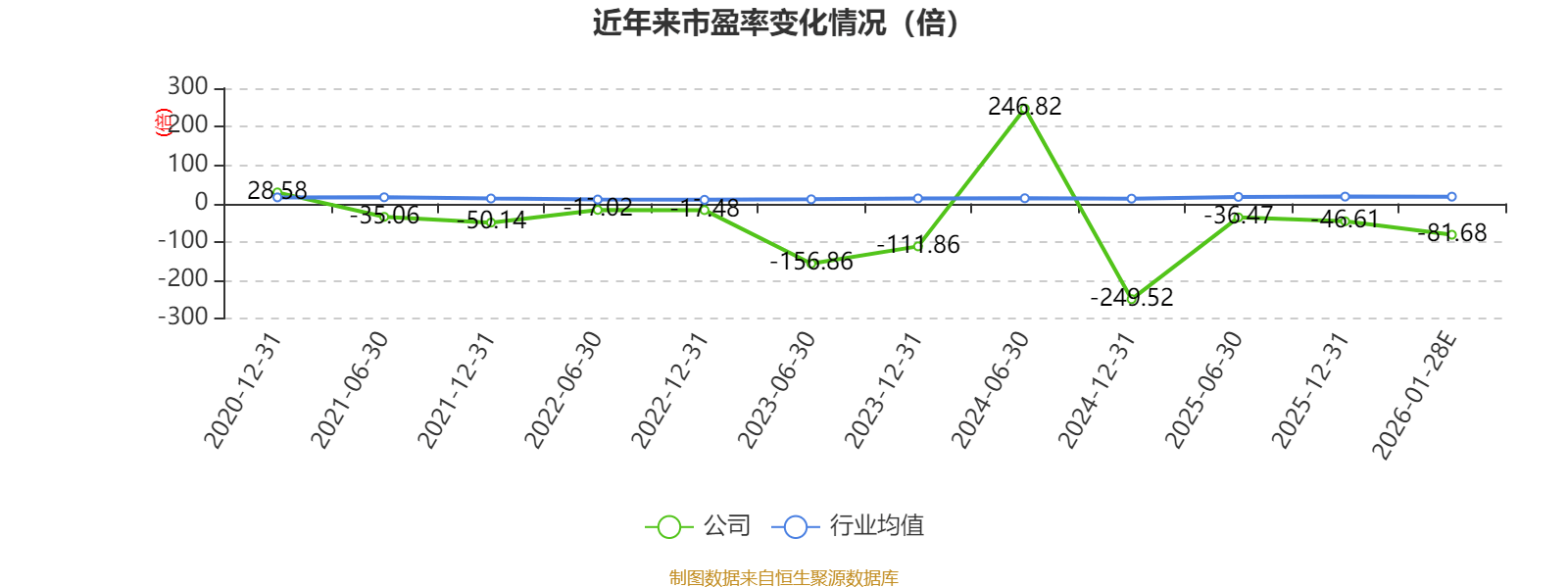
Group 1 - The company's performance has been negatively impacted by intensified market competition, leading to a decline in revenue from international freight forwarding and automotive logistics, which has not covered daily operational expenses [9] - The company operates in three main sectors: modern logistics, meteorological technology, and other industrial investments [11] Group 2 - Historical revenue and net profit growth rates show fluctuations, with total revenue growth rates experiencing significant changes over the years [12][13] - The quarterly changes in total revenue and net profit indicate a trend of declining performance, with specific figures showing a decrease in net profit and revenue in recent quarters [14][15]
加快推进气象科技能力现代化 天气预报预测准确率进一步提升
Ren Min Ri Bao· 2026-01-27 02:00
Core Viewpoint - The accuracy of weather forecasting in China has significantly improved, with the lead time for severe convective weather warnings reaching a historical high of 48 minutes, an increase of 10 minutes compared to the "13th Five-Year Plan" period [1] Group 1: Forecasting Accuracy - The 24-hour typhoon path forecast error has been reduced to 58 kilometers, maintaining international leadership [1] - The meteorological department is accelerating the modernization of meteorological technology capabilities to steadily enhance forecasting accuracy [1] Group 2: Observation Network Enhancements - The observation network has been continuously improved, with the launch of 2 Fengyun meteorological satellites and the establishment of 296 new weather radars, 150 ship meteorological stations, and over 50 drifting buoys [1] - The average distance between automatic meteorological stations has been reduced to 9.8 kilometers, contributing to improved observation quality [1] Group 3: Technological Advancements - The accuracy of the Beidou sounding wind measurement has improved to 0.3 meters per second [1] - The Earth system forecasting development strategy has been released, with deep applications of artificial intelligence forecasting models further enhancing forecasting capabilities [1]
迭代破局!“新技术+AI内核” 硬核科技筑牢防灾减灾防线
Yang Shi Wang· 2026-01-11 03:38
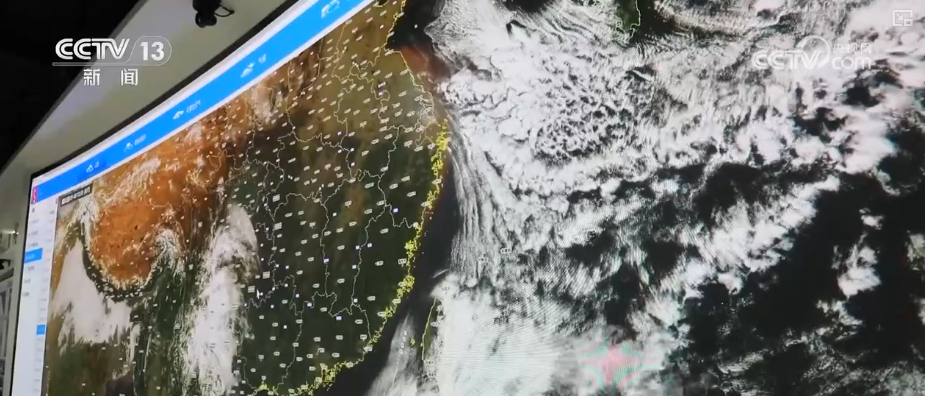
Core Viewpoint - Extreme weather events have become a significant risk affecting people's production and daily life, with challenges in precise forecasting due to their sudden and destructive nature [1] Group 1: Technological Advancements - The National Satellite Meteorological Center, in collaboration with multiple organizations, has developed a deep diffusion model for Fengyun meteorological satellite data, extending the effective forecasting duration for severe convective weather to 4 hours [3][10] - This breakthrough technology is entirely domestically developed, overcoming challenges in predicting severe convective weather [3][8] - The core algorithm of this technology has undergone three generations of updates, significantly improving forecasting accuracy and effective warning time [8][10] Group 2: Forecasting Capabilities - The deep diffusion model can cover an area of 20 million square kilometers, generating high-resolution convective forecasts every 15 minutes for the next 4 hours [10] - The model demonstrates stable forecasting capabilities across different spatial scales and seasons, providing crucial technical support for precise early warning of severe convective weather [10][20] Group 3: Applications and Impact - The advancement in forecasting time allows for proactive measures in urban emergency response, giving critical preparation time for infrastructure protection [22] - In agriculture, the extended warning time enables farmers to take necessary actions such as reinforcing greenhouses and harvesting mature crops [24][29] - The technology transforms "passive emergency time" into "active preparation time," enhancing disaster prevention and mitigation capabilities across various sectors [29]
“妈祖”出海记
Ren Min Ri Bao· 2026-01-02 01:11
Core Viewpoint - The "Mazu" early warning cloud platform, developed by the China Meteorological Administration, is being implemented globally to enhance disaster prevention and response to climate change, showcasing China's technological capabilities and experience in meteorological AI [1][5][13]. Group 1: Global Implementation and Impact - The "Mazu" platform has been deployed in five countries, including Pakistan and Mongolia, and is undergoing trials in 43 countries across Asia, Africa, and Oceania [5]. - The platform provides customized AI tools for different countries to monitor and respond to various meteorological risks, significantly improving early warning capabilities [3][4]. - In countries like Afghanistan and Uganda, the platform has successfully predicted extreme weather events, allowing for timely warnings and disaster mitigation [2][5]. Group 2: Technological Advancements - The "Mazu" platform integrates advanced AI technologies to enhance the accuracy of weather forecasts, particularly for extreme weather events that are traditionally difficult to predict [7][8]. - The platform employs innovative algorithms to improve the detection and forecasting of severe weather phenomena, addressing the limitations of conventional models [8][9]. - The AI models developed under "Mazu" are open-source, allowing global access and collaboration, which enhances the platform's adaptability and effectiveness [6][10]. Group 3: Training and Capacity Building - The China Meteorological Administration is committed to training over 2,000 professionals from developing countries in meteorological forecasting and disaster risk management from 2025 to 2027 [6]. - Collaborative efforts include sending scholars to China for training and developing localized forecasting models tailored to specific regional needs [6][10]. - The initiative aims to build a global network of early warning systems, fostering international cooperation in climate change adaptation [12][13]. Group 4: Future Prospects and Collaborations - The "Mazu" platform is set to integrate additional AI models, enhancing its service offerings and expanding its global reach [11][15]. - Upcoming collaborations with various countries and organizations aim to further develop meteorological AI capabilities and improve disaster response strategies [13][15]. - The initiative aligns with global climate governance efforts, positioning China as a key player in international meteorological cooperation [13][15].
“妈祖”出海记(深度观察)
Ren Min Ri Bao· 2026-01-01 22:10
Core Viewpoint - The "Mazu" early warning cloud platform, developed by the China Meteorological Administration, is being implemented globally to enhance disaster prevention and climate change response, showcasing China's technological capabilities and experience in meteorological AI [1][5][16]. Group 1: Global Implementation and Impact - The "Mazu" platform has been deployed in five countries, including Pakistan and Mongolia, and is undergoing trials in 43 countries across Asia, Africa, and Oceania [5]. - The platform provides customized AI tools for different countries, addressing specific meteorological challenges such as extreme weather events [3][4]. - In Afghanistan and Uganda, the AI system successfully issued early warnings for severe weather, aiding in disaster response and loss reduction [2]. Group 2: Technological Advancements - The "Mazu" platform integrates various AI models and tools for risk assessment, monitoring, warning dissemination, and emergency response [4]. - The platform's AI models have shown superior performance, with the "Fengqing" model producing results in half the time of traditional numerical forecasting models [16]. - Innovations in AI algorithms have improved the detection and prediction of extreme weather events, addressing historical challenges in meteorological forecasting [8][9]. Group 3: Training and Capacity Building - The China Meteorological Administration is committed to open-source AI models and data sharing, facilitating international collaboration and training for meteorological professionals [6]. - Plans for 2025-2027 include providing over 2,000 short-term training opportunities and scholarships for professionals from developing countries [6]. - The initiative aims to build a global network for early warning systems, enhancing the capacity of countries to respond to climate-related disasters [12][14]. Group 4: Strategic Collaborations and Future Plans - The "Mazu" initiative aligns with international efforts, such as the UN Climate Change Framework, to improve early warning systems and climate adaptation capabilities in developing nations [16]. - Collaborative projects with countries like Ethiopia and Mongolia are underway to develop tailored meteorological AI models [6][16]. - The platform is positioned as a key player in global climate governance, contributing to the establishment of a safer and more resilient global community [16].
气象预报事关国安,“中国要打破欧洲依赖”
Xin Lang Cai Jing· 2025-12-23 04:36
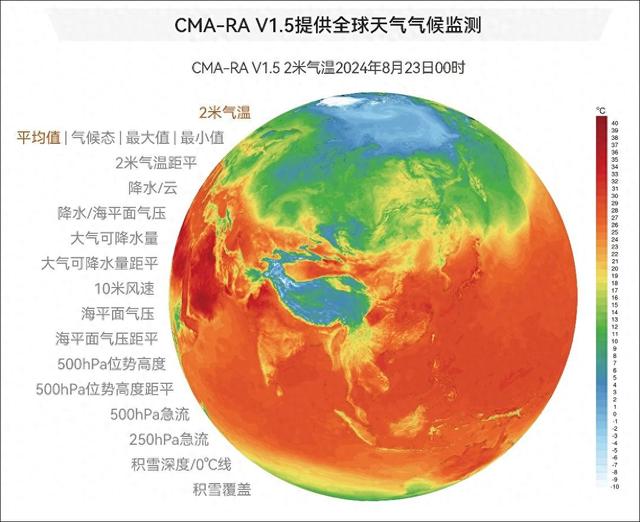
Core Insights - The article discusses China's ambition to become a meteorological superpower by developing its own meteorological data sets to reduce reliance on European data sources, particularly the ERA5 data set, which is crucial for AI-driven weather forecasting [1][2]. Group 1: Strategic Importance of Meteorological Data - Meteorological data has become a core strategic resource for nations, surpassing its original purpose of weather forecasting [1]. - The ERA5 data set, which integrates global observational data, is essential for assessing climate trends and improving forecasting accuracy, with an estimated annual economic value of several hundred million dollars [1]. Group 2: Development of Domestic Data Sets - The National Data Bureau of China has initiated a global atmospheric reanalysis system project to eliminate dependence on Western reanalysis products [2]. - The newly released CMA-RA V1.5 data set is already being utilized by domestic AI weather models for training purposes [2]. Group 3: Technological Innovations - The domestic data set has achieved significant technological breakthroughs, transitioning from "catching up" to "leading in certain areas" through three main innovations: 1. Upgraded assimilation technology, improving satellite data assimilation by 13% over the first 20 years [4]. 2. Self-controllable domestic observational data, integrating data from 116 satellites, with a significant portion being domestic [4]. 3. Internationally leading resolution and timeliness, with a model resolution of 13 kilometers and hourly updates, outperforming ERA5 [4]. Group 4: International Industry Attention - The opening of the domestic data set has attracted international industry interest, with companies like Vaisala exploring potential applications for weather derivatives [5]. - The integration of multiple data sets, including CMA-RA V1.5, is seen as beneficial for researchers studying climate change and extreme weather, as well as for wind farm project developers [5][6].
周红波到在宁高校调研科技成果转化工作
Nan Jing Ri Bao· 2025-12-17 02:36
Group 1 - The core message emphasizes the importance of integrating education, technology, and talent development to support the construction of a modern industrial system in Nanjing [1] - Nanjing Agricultural University is recognized for its contributions to national food security and high-quality agricultural development, focusing on key areas such as crop variety cultivation and pest management [1] - The city aims to enhance agricultural innovation by fostering collaboration between universities and local enterprises, particularly in fields like smart agriculture and ecological agriculture [1] Group 2 - Nanjing University of Information Science and Technology is accelerating the development of its "Meteorology+" and "Information+" disciplines, which are closely linked to local industrial development and public welfare [2] - The university is encouraged to strengthen cooperation with the Jiangbei New Area and relevant research platforms to promote the industrialization of advanced technology [2] - The city plans to optimize its open innovation ecosystem and deepen collaboration among government, industry, academia, and research institutions to foster independent technological innovation and talent development [2]