
汇率核查

Search documents
关税与汇市双重压力下 日本财务大臣片山皋月重申与美方紧密协作
Xin Hua Cai Jing· 2026-02-24 04:24
Group 1 - The Japanese government is maintaining close dialogue with the United States regarding fluctuations in the foreign exchange market, with communications having deepened over the past four months [1] - Japanese Finance Minister Katsunobu Kato did not comment on reports of the U.S. Treasury's recent currency review, which is seen as a preparatory step for potential currency intervention [1] - The recent depreciation of the yen against the dollar, reaching 155.51, is approaching a sensitive intervention threshold for Japanese authorities, raising the possibility of coordinated action between Japan and the U.S. [1] Group 2 - In response to the U.S. Supreme Court ruling on February 20 regarding the legality of certain tariffs from the Trump administration, Japan will continue to monitor developments and ensure that its investment commitments in the U.S. are steadily implemented [2] - Japan emphasizes ongoing communication with the U.S. on key issues such as tariffs and exchange rates to maintain bilateral economic stability [3]
日本财务省:1月份未进行日元干预操作
Hua Er Jie Jian Wen· 2026-01-30 17:08
Core Viewpoint - The Japanese Ministry of Finance confirmed that there was no direct intervention in the foreign exchange market during most of January, with the yen appreciating from near 160 to the 154 range primarily due to market concerns over potential joint action by Japan and the U.S. rather than actual intervention [1][4]. Group 1: Intervention Strategy - From December 29 to January 28, Japan did not utilize any funds for foreign exchange intervention, contrasting sharply with the nearly 10 trillion yen (approximately 65 billion USD) spent in the spring of 2024 for similar adjustments [4]. - This strategy has provided the government of Prime Minister Kishi Suga, facing elections on February 8, with valuable breathing space, as inflation driven by yen depreciation has been a major concern for voters [4]. - Analysts warn that this reliance on U.S. policy cooperation is significantly fragile and difficult to sustain; should the yen approach 160 again, Japan may have to initiate larger-scale interventions [4]. Group 2: Market Reactions and Signals - Market analysis suggests that Japanese authorities conducted currency checks prior to the yen's appreciation, which typically involves the central bank contacting major traders for real-time quotes, serving as a warning to the market without actual trading [5]. - Reports indicate that inquiries from the New York Federal Reserve contributed to the yen's strength, with the potential threat of U.S.-Japan joint intervention having a stronger market impact than unilateral actions by Japan [5]. - Japanese Finance Minister Shunichi Suzuki has repeatedly referenced the U.S.-Japan currency agreement from September, emphasizing the possibility of coordinated actions with the U.S. in response to exchange rate fluctuations [6]. Group 3: Future Considerations - The latest strategy by the Japanese Ministry of Finance has provided the Kishi Suga government with a respite before the elections, but post-election, authorities may need to implement large-scale interventions to signal stronger policy responses [7]. - If Kishi Suga wins, the yen may come under renewed pressure due to his aggressive fiscal policies, which have been viewed by global investors as a reason to short the yen [8].

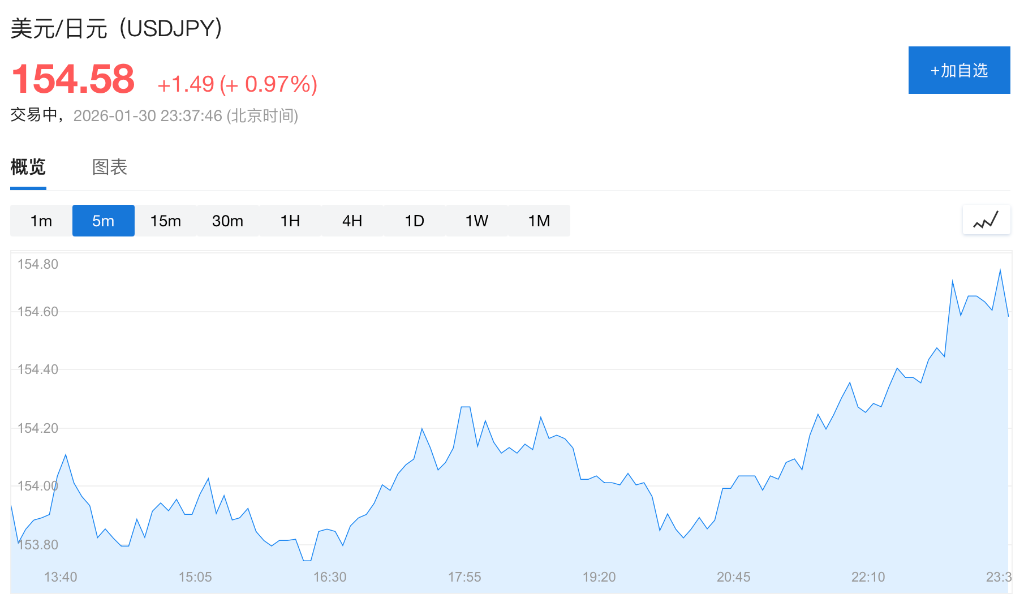
“大空头”预警日元升值连锁反应!美国股债危?
Jin Shi Shu Ju· 2026-01-26 13:40
Group 1 - Michael Burry, the protagonist of the movie "The Big Short," indicates that the reversal of the yen's trend is long overdue, raising concerns about its potential impact on U.S. stock performance due to recent Fed scrutiny on the yen [1][2] - The New York Fed has reached out to potential trading counterparts regarding the yen's exchange rate against the dollar, coinciding with warnings from Japanese officials about the yen's weakness and potential intervention actions [1] - The dollar-yen exchange rate peaked at 159 last Friday but fell below 154 on Monday, reflecting volatility in the currency market [1] Group 2 - Burry warns that the return of Japanese capital, driven by higher interest rates, could signal a significant shift in capital flows, which U.S. investors should monitor closely [2] - He argues that the combination of rising interest rates in Japan and falling rates in the U.S. will negatively affect both U.S. stocks and bonds, contrasting with the previous environment that supported their growth [3] - Michael Wilson from Morgan Stanley notes that most investors in Japan believe the dollar-yen exchange rate should return to the 140-145 range, suggesting that short-term volatility from yen appreciation could lead to long-term gains in the Japanese stock market [4] Group 3 - The S&P 500 index closed at 6915 points last Friday, marking its second consecutive week of decline [5]
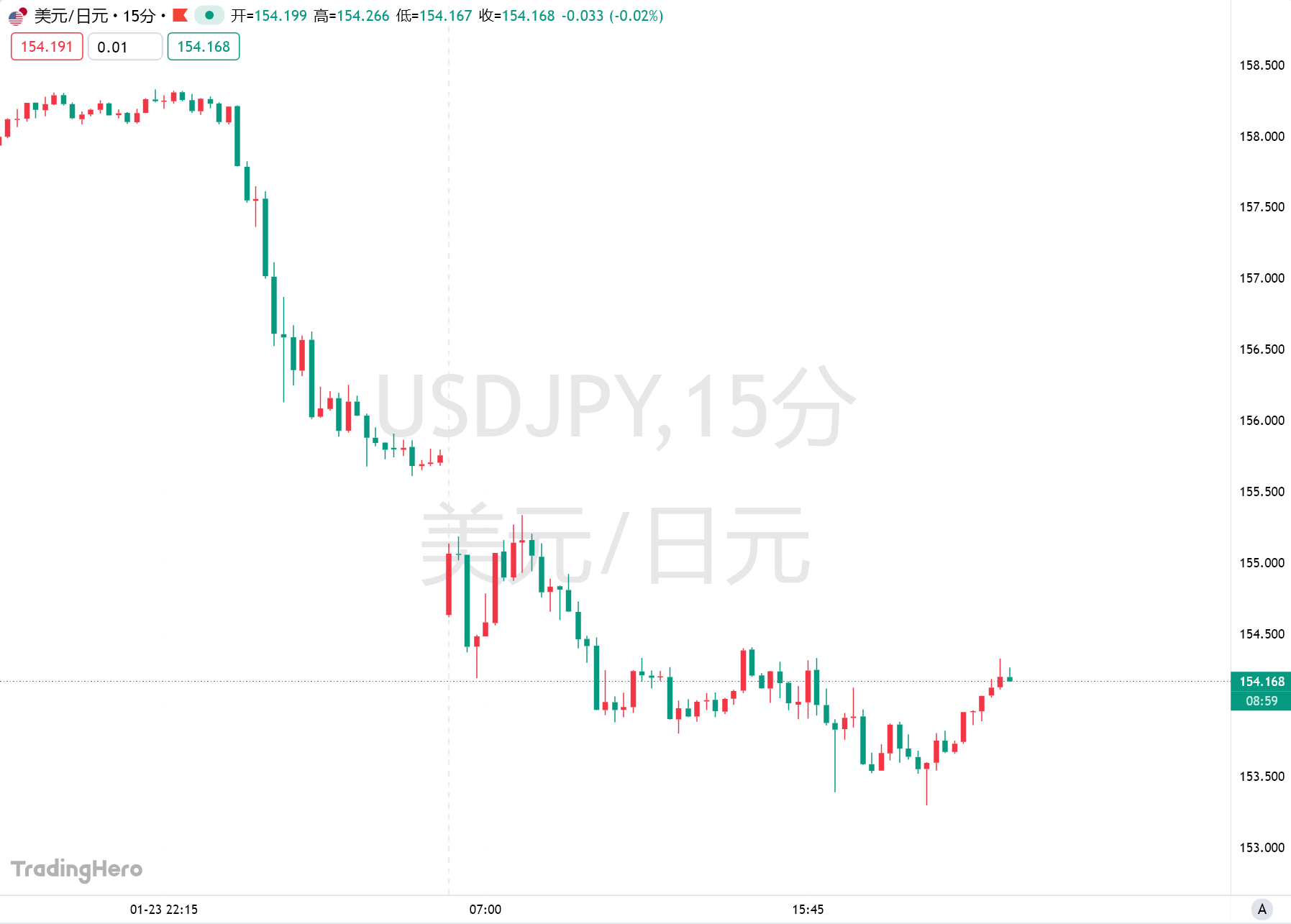
日元大幅升值 美元遭遇6月以来最大单周跌幅
Xin Lang Cai Jing· 2026-01-23 19:42
Group 1 - The Japanese yen surged on Friday, rebounding to 156.2 yen per dollar after hitting a nearly 18-month low, with market speculation suggesting that Japanese authorities have initiated a "currency check," signaling potential market intervention [1][3] - Traders believe that under Prime Minister Fumio Kishida's administration, ongoing fiscal issues are pressuring the yen, and this currency check is more of a warning rather than a direct market intervention action [1][3] - Concurrently, the US dollar experienced a significant decline due to geopolitical tensions and recent actions by Trump regarding Europe and Greenland, approaching its largest weekly drop since June [1][3] Group 2 - The euro and pound saw slight increases, with the euro expected to achieve a 1% weekly gain despite ongoing budget issues in France [2][4]
日元兑美元突然拉升 引发市场各种猜测
Xin Lang Cai Jing· 2026-01-23 13:31
Core Viewpoint - The Japanese yen experienced a significant appreciation against the US dollar, with traders uncertain about the reasons behind this movement, leading to a tense market atmosphere [1][2]. Group 1: Market Reaction - The yen rose by 0.7% to 157.37 after previously falling by 0.5% to 159.23 [1][2]. - The market's reaction suggests that the yen's exchange rate is approaching a critical level, often referred to as the "red line," where past interventions have occurred [1][2]. Group 2: Analyst Insights - Valentin Marinov, a strategist at Crédit Agricole, indicated that the current situation might signal the early stages of official intervention [1][2]. - Mingze Wu, a forex trader at StoneX in Singapore, mentioned that the movement could be a currency check, but it is not definitively clear; if it were an official intervention, it would not likely occur in such a large, singular manner [1][2]. - Wu also suggested that the market reaction might have been an overreaction to comments made by Bank of Japan Governor Kazuo Ueda, leading to significant selling of the dollar against the yen [1][2].