油电共存

Search documents
德系高管纷纷认错
汽车商业评论· 2026-02-06 23:05
Group 1 - German automakers are recognizing the need to adapt to the changing market demands, particularly in the context of the electric vehicle (EV) transition, which has previously led to a disconnect with Chinese consumer preferences [5][6] - Volkswagen Group CEO Oliver Blume admitted that the decision to make the second-generation Macan fully electric was a mistake, which contributed to a decline in sales in the Chinese market [5] - BMW acknowledged that charging for seat heating was an unreasonable decision, reflecting a broader trend of misjudgments in the EV business model among German automakers [6][8] Group 2 - BMW's subscription model for seat heating, which was introduced during the pandemic, faced backlash from consumers who felt it infringed on their ownership rights, leading to a revision of their charging strategy [12][14] - Audi's decision to implement a "single and double number" naming strategy for vehicles was reversed due to negative feedback, as it confused consumers regarding vehicle classifications [18][20] - Volkswagen's shift to a fully touch-based interface was criticized for harming user experience, prompting a return to physical buttons for essential functions in future models [26][30]



买电车还是油车?院士:火灾发生率相差不大,但新能源汽车起火强度远超传统燃油车【附新能源汽车行业市场分析】
Qian Zhan Wang· 2025-10-24 07:51
Group 1 - The core viewpoint of the article highlights the fire risk associated with electric vehicles (EVs) compared to traditional fuel vehicles, noting that while the fire occurrence rate for EVs is similar to that of fuel vehicles, the intensity and difficulty of extinguishing fires in EVs are significantly higher [2] - The battery is identified as a critical component in the safety and overall structure of the EV industry, with battery manufacturing holding a dominant position in the supply chain, accounting for over 40% of the value in the Chinese EV industry chain by 2024 [3][5] - China holds a leading position in the global EV battery market, supplying two-thirds of the world's demand, with companies like CATL and BYD establishing comprehensive advantages in technology, production capacity, cost, and supply chain [7] Group 2 - The market for EVs has experienced explosive growth, with a penetration rate of 31.6% in 2023, projected to rise to 40.3% in early 2024, and a retail growth rate of 24.4% in the first nine months of the year [8] - Despite the rise of EVs, fuel vehicles remain relevant, particularly in long-distance transport and low-temperature environments, indicating a coexistence of both vehicle types in the market [9] - Industry leaders predict that within the next decade, electric vehicles will dominate the market in China, with an expected 90%-95% share of new car sales, outpacing the global transition to electrification [9]



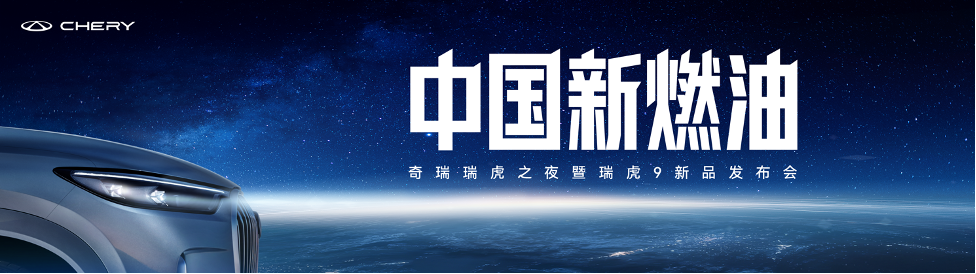
奇瑞瑞虎 9 双旗舰诠释 “中国新燃油” 力量
Yang Zi Wan Bao Wang· 2025-09-28 06:14
Core Insights - The Chinese automotive market is undergoing a significant energy transformation as the penetration rate of new energy vehicles surpasses 50%, yet over 12 million fuel vehicle users still demand technological upgrades for better experiences [1][4]. Strategic Breakthrough - Chery Automobile has launched the "China New Fuel" strategy, introducing the flagship models Tiggo 9 and Tiggo 9X, emphasizing "new technology, new intelligence, new safety, and new patterns" for the evolution of fuel vehicles [3][4]. - The strategy aims to redefine the value proposition of fuel vehicles, moving from "power competition" to "comprehensive value competition," leveraging Chery's 30 years of technological expertise [4]. Technological Advancements - Chery's self-developed Kunpeng powertrain has achieved over 3.1 million units installed globally, with the 2.0TGDI engine boasting a thermal efficiency of 41%, placing it among the global leaders [4]. - The second-generation Kunpeng 8AT transmission, featuring 96% maximum mechanical efficiency and a wide speed ratio of 7.8, complements the AWD Snow Leopard system, creating a balanced technical ecosystem [4]. Product Features - The Tiggo 9X is designed as a "wide-body ultra-comfortable smart flagship," equipped with advanced features like the Qualcomm Snapdragon 8255 automotive-grade chip, enabling stable smart interactions in extreme temperatures [5]. - The vehicle includes the Falcon 500 intelligent driving assistance system, which can memorize 20 routes of 150 km each, significantly reducing driving fatigue and enhancing user experience [5][6]. Space and Safety - The Tiggo 9X offers spacious dimensions (4817×1930×1741 mm) and a long wheelbase of 2770 mm, providing a loading capacity suitable for family outings, with a maximum trunk volume of 2065L [7]. - Safety features include a five-star global safety standard design, an 85% high-strength steel body, and seven airbags, ensuring comprehensive protection [7][9]. Market Positioning - The Tiggo 9 is positioned as a "more powerful and comfortable" family vehicle, featuring a Kunpeng 2.0T GDI engine with a maximum power of 192 kW and peak torque of 400 N·m, ensuring robust performance [9]. - Pricing strategies include an introductory price of 127,900 yuan for the Tiggo 9X and 137,900 yuan for the Tiggo 9, along with incentives like up to 20,000 yuan in trade-in subsidies, making high-end fuel vehicles more accessible [11][13]. Industry Insights - The launch of the Tiggo 9 series reflects the coexistence of fuel and electric vehicles in the Chinese market, providing traditional fuel vehicle users with upgraded options and enriching the market supply structure [13][15]. - Chery's strategy aligns with the dual-driven approach of integrating new energy technologies while enhancing fuel vehicle offerings, contributing to the narrative of "Chinese intelligence" in the global automotive industry [15].