汽车电池

Search documents
雷军谈小米汽车电池工厂:希望将先进电池制造能力复制给整个产业链
Xin Lang Cai Jing· 2026-02-27 12:56
Core Insights - Lei Jun, the founder and CEO of Xiaomi, discussed the company's advanced battery factory during a live stream, emphasizing its high automation and excellent yield rates [1][2] Group 1: Battery Factory - The battery factory is described as a very advanced facility with a high level of automation [1][2] - The company aims for the battery factory to become a benchmark and lighthouse factory in the battery manufacturing sector [1][2] - Xiaomi intends to replicate its advanced battery manufacturing capabilities across the entire industry supply chain to enhance systemic capabilities [1][2]

美国关税一天涨五个点,欧盟刚掏钱就作废,这事儿真不是闹着玩的
Sou Hu Cai Jing· 2026-02-24 08:32
Group 1 - The recent court ruling limits the President's power to impose tariffs, stating that national security cannot be an all-encompassing excuse for trade negotiations [1][3] - Following the court's decision, the White House issued a new order to increase tariffs on Europe from 10% to 15%, indicating a shift in strategy despite previous temporary concessions [1][3] - The European Union (EU) has made concessions in negotiations, such as agreeing to establish battery plants and chip joint ventures in Europe, but these efforts have not yielded tangible results [3][5] Group 2 - The EU faces significant challenges in confronting the U.S. due to its reliance on American military support and the economic impact of potential tariffs on European exports [5][7] - Recent EU actions include investigating U.S. tech companies for government subsidies and implementing new regulations on battery materials, indicating a shift towards reducing dependency on the U.S. [7][8] - The evolving geopolitical landscape suggests that traditional alliances are becoming more fluid, prompting Europe to quietly adapt its strategies and regulations to mitigate reliance on the U.S. [8]


“福特CEO找白宫官员讨论:拉中企来美国合资造车吧”
Guan Cha Zhe Wang· 2026-02-15 04:38
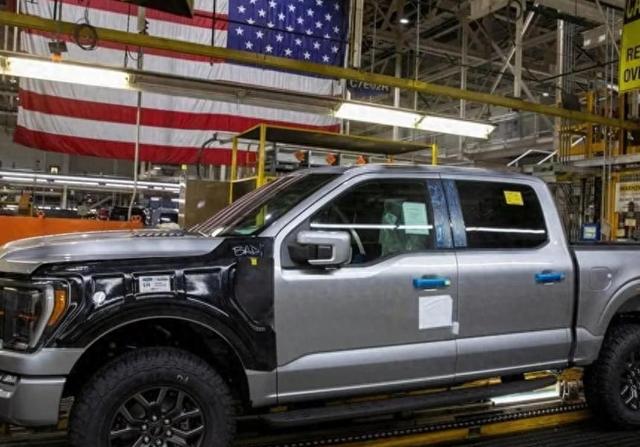
Core Viewpoint - Discussions are ongoing between Ford's CEO Jim Farley and senior officials from the Trump administration regarding a potential framework that would allow Chinese automakers to establish manufacturing plants in the U.S. while providing protections for domestic companies [1][3]. Group 1: Discussions and Framework - The talks involve the possibility of Chinese automakers forming joint ventures with U.S. companies, where the U.S. partners would hold majority stakes, allowing for shared profits and technology [1][3]. - These discussions are described as informal and preliminary, with no decisions made yet [1][3]. - Ford emphasized the need to protect the domestic market from the impact of Chinese-manufactured vehicles, citing privacy and national security concerns [1]. Group 2: Market Context and Implications - The potential entry of Chinese automakers into the U.S. market is seen as a significant turning point that could impact American manufacturers, their supply chains, and consumers [4]. - Chinese automakers have been rapidly gaining market share in Europe, Mexico, and South America with low-cost models equipped with advanced electric vehicle batteries and infotainment systems [4]. - Trump's recent comments suggest a willingness to allow Chinese manufacturers into the U.S. if they create jobs for Americans, which surprised U.S. automakers who believed trade barriers would protect them [6]. Group 3: Competitive Landscape - General Motors has expressed opposition to the entry of Chinese companies into the U.S. market, fearing loss of market share and potential negative impacts on North American suppliers [6]. - Farley has warned that low-cost, high-tech vehicles from China pose a "survival threat" to U.S. automakers, while Ford remains open to collaboration with Chinese companies [6]. - Ford is actively seeking partnerships with Chinese automakers and battery manufacturers to enhance its own electric vehicle offerings, planning to launch a low-cost electric vehicle by 2027 to compete with BYD [6][4]. Group 4: Potential Collaborations - Recent reports indicate that Ford is considering a joint venture with Xiaomi for vehicle production in the U.S., although both companies have denied this [7]. - Ford has expanded its partnership with Chinese battery giant CATL to include manufacturing fixed power sources for utilities and data centers, in addition to electric vehicle battery units [6].

欧盟汽车市场迎来电动化转型“拐点”
Ren Min Ri Bao· 2026-02-11 00:27
Core Insights - The European automotive market is undergoing a significant transition towards electric vehicles (EVs), with projections indicating that by December 2025, new registrations of pure electric vehicles in the EU will surpass those of traditional gasoline vehicles for the first time, reaching 1.88 million units, a year-on-year increase of 29.9% [1] - The German government has reinitiated electric vehicle purchase subsidies, with amounts ranging from €1,500 to €6,000, aiming to support up to 800,000 electric vehicles over three years with a total budget of €3 billion [1] - Spain's electric vehicle registrations are expected to grow by 77.1% in 2025, supported by a €400 million investment in direct purchase subsidies and additional funding for charging infrastructure [2] - The European automotive industry plans to launch approximately 350 new electric vehicle models by 2032, with over 70% being pure electric vehicles, driven by supportive policies and increasing practicality of EVs [3] - The EU is investing €1.8 billion in a "Battery Acceleration Plan" to support local battery manufacturers, alongside regulations mandating minimum standards for public charging infrastructure [4] Industry Developments - The collaboration between Chinese and European automotive companies is deepening, with a focus on technology innovation and supply chain cooperation, as evidenced by the significant increase in Chinese electric vehicle sales in Europe, projected to grow over 60% in 2025 [5][6] - Chinese automakers are establishing local production facilities in Europe, enhancing their integration into the local electric vehicle supply chain, with companies like Xpeng and BYD launching production projects in Austria and Hungary, respectively [6] - The partnership model of "European vehicle technology + Chinese battery solutions" is gaining traction, with significant investments in battery production facilities in France and Spain, indicating a trend towards collaborative innovation [7]
突发!全球汽车巨头出售电池子公司49%股权
起点锂电· 2026-02-09 03:12
Group 1 - Stellantis Group announced the sale of its 49% stake in NextStar Energy to LG Energy Solution [2] - NextStar Energy, a joint venture between Stellantis and LG Energy, was established in 2022 with plans to invest over $4.1 billion to build Canada's first large-scale battery manufacturing plant in Windsor, Ontario, targeting an annual production capacity of 49.5 GWh [2] - As of now, NextStar Energy has invested over 5 billion CAD in the factory, initially planned to produce automotive batteries but started producing energy storage system (ESS) batteries since late November last year, with plans to double ESS battery production this year [2] Group 2 - After the completion of this transaction, NextStar Energy will become a wholly-owned subsidiary of LG Energy Solution [3]
汽车行业周报(20260126-20260201):有色波动影响中上游短期议价,继续看好新产业方向-20260201
Huachuang Securities· 2026-02-01 11:31
Investment Rating - The report maintains a "Buy" recommendation for the automotive industry, focusing on new energy vehicles and related technologies [1]. Core Insights - The automotive market is currently experiencing a cautious atmosphere, with stakeholders observing the recovery of terminal demand and the impact of policies and costs on profitability. Short-term fluctuations in the non-ferrous sector are affecting pricing negotiations in the upstream and midstream segments. The report suggests monitoring factors that could lead to a rebound in vehicle sales in Q1, including retail and export performance, while remaining optimistic about the automotive parts sector, particularly in areas like intelligent driving, liquid cooling, and robotics [1][3]. Data Tracking - In late January, the industry discount rate decreased to 9.5%, showing a year-on-year increase of 0.6 percentage points and a month-on-month decrease of 0.1 percentage points. The average discount amount was 21,541 yuan, up by 1,294 yuan year-on-year but down by 718 yuan month-on-month [3]. - December saw a decline in wholesale and retail sales of passenger vehicles, with wholesale sales at 2.85 million units, down 8.7% year-on-year and 6.3% month-on-month. Retail sales of domestic passenger vehicles were 2.28 million units, down 16.8% year-on-year but up 13.7% month-on-month [3]. - The report highlights specific companies to watch: Geely, JAC Motors, and BYD are recommended for vehicle manufacturers, while Foresight Technology, Minth Group, and Top Group are suggested for automotive parts [5]. Industry News - In January, the Secretary-General of the Passenger Car Association reported that the automotive industry generated revenues of 1.11796 trillion yuan in 2025, a year-on-year increase of 7.1%, with costs rising by 8.1% [31]. - The report notes that the total number of new energy vehicles in China reached 43.97 million by the end of 2025, accounting for 12.01% of the total vehicle population [31]. - The report also mentions the establishment of a joint venture between a Vietnamese automaker and BYD to build a commercial electric vehicle battery factory in Vietnam, with a total investment of $130 million [31][32]. Market Performance - The automotive sector experienced a decline of 5.12% this week, ranking 28th out of 29 sectors. The average decline for the sector was 5.2%, with 236 stocks falling and only 41 rising [8][34].

现代与LG新能源合作的乔治亚州电池工厂将于上半年开业
Jin Rong Jie· 2026-01-31 15:15
Core Insights - Hyundai's CEO announced that the battery plant in Georgia, developed in collaboration with LG Energy Solution, is set to open in the first half of the year [1] - Most Hyundai employees who were previously detained in the U.S. have returned to the Georgia plant [1]
SK Innovation称终止与福特合资公司将产生约26亿美元资产损失
Zhong Guo Qi Che Bao Wang· 2026-01-28 09:17
Core Insights - SK Innovation will incur an asset loss of 3.7 trillion Korean Won (approximately 2.6 billion USD) following the termination of its joint venture with Ford Motor Company [1] - The companies announced the end of the BlueOval project, which was initially a 11 billion USD investment plan to build three battery plants and an electric farmer vehicle assembly plant in the United States [1] - Post-termination, Ford will take over the two facilities located in Kentucky, while SK Innovation's battery division, SK On, will operate the plant in Tennessee [1]
冰天雪地试车,“冷资源”有“热动力”
Xin Lang Cai Jing· 2026-01-18 04:03
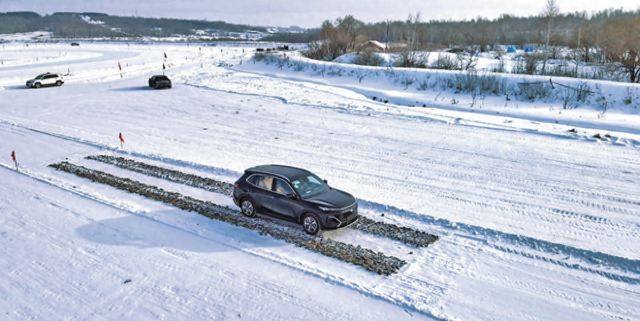
Core Insights - The development of the cold-weather vehicle testing industry in Heihe, Heilongjiang Province, is transforming local economic conditions by attracting numerous automotive companies for winter performance testing [3][4] - The establishment of specialized testing facilities and improved services has positioned Heihe as a key player in the national automotive cold-weather testing market, with significant growth in both local employment and industry collaboration [4][5] Group 1: Industry Development - Heihe has become a vital location for automotive cold-weather testing, with 34 specialized testing bases and over 120 performance testing roads established to meet the increasing demand from automotive companies [4] - The city has formed partnerships with over 170 domestic and international companies, with 92 companies conducting tests this winter, involving more than 5,000 personnel and over 3,100 vehicles [4][6] Group 2: Economic Impact - The growth of the cold-weather testing industry has led to increased local employment, with residents earning additional income as testing assistants and in related automotive services [5][6] - The integration of testing events with tourism and sports has generated over 600 million yuan in revenue, further enhancing the local economy [6] Group 3: Future Prospects - The upcoming launch of a four-season low-temperature testing facility in September 2025 is expected to reduce the R&D cycle for automotive companies by 30% to 40%, making Heihe a year-round testing destination [4][7] - The local government aims to further develop extreme environment testing scenarios and enhance the infrastructure to support the growing automotive industry [7][8]
高寒测试“火”出新高度!“冷资源”满是科技范儿 产业火热溢出效应持续放大
Yang Shi Wang· 2026-01-15 07:05
Core Viewpoint - The article highlights the increasing importance of cold weather testing for new energy vehicles (NEVs) in China, particularly in the context of the upcoming "14th Five-Year Plan" and the establishment of a comprehensive testing infrastructure in Inner Mongolia's Yakeshi to support the high-quality development of the NEV industry [1][13]. Group 1: Industry Development - In 2026, China will introduce a development plan for the intelligent connected NEV industry to promote sustainable growth [1]. - The cold weather testing in Yakeshi has expanded significantly, with the testing area now covering 1.7 million square meters due to the rising number of vehicles being tested [4]. - The average annual growth rate of NEV testing during the "13th Five-Year Plan" period exceeded 50%, with over 5,000 NEVs tested out of approximately 7,000 vehicles [12]. Group 2: Testing Innovations - This winter, over 300 NEVs will undergo cold weather testing, an increase of more than 100 vehicles compared to 2025, focusing on low-temperature endurance, cabin heating, and charging performance [10]. - New testing projects for NEVs on icy roads have been introduced, including standardized electronic stability system tests to enhance vehicle stability and safety [15][21]. - The performance of NEVs has improved significantly, with tire slip suppression effectiveness increasing by over 20% due to rigorous cold weather testing [10]. Group 3: Economic Impact - The cold weather testing industry in Yakeshi has led to a significant increase in local service sector revenues, with hotel occupancy rates rising and restaurants experiencing substantial growth in business [31][33]. - The local economy has benefited from the influx of international clients, with hotels reporting a 15% increase in revenue in 2025 [31]. - The testing industry has created over 12,000 jobs and generated more than 1.5 billion yuan in income for the local economy [41]. Group 4: Infrastructure and Investment - An additional investment of 1.2 billion yuan will be made to develop an all-season ice and snow testing base for intelligent connected vehicles in Yakeshi during the "14th Five-Year Plan" [12]. - Yakeshi has become a hub for over 1,200 domestic and international companies, forming a complete cold weather testing industry chain [30]. - The market share of Yakeshi's winter automotive testing industry has increased from less than 10% to over 40% in the past five years, with stable annual revenue growth of 20% [30].