
油运超级牛市

Search documents
油运行业2026年春季策略(精华版):油运迎来超级牛市,期待超高景气持续
GUOTAI HAITONG SECURITIES· 2026-03-30 12:04
Core Insights - The oil shipping industry is experiencing a "super bull market" characterized by two phases of significant growth, with expectations for high prosperity to continue [3] - The strategic value of oil shipping is highlighted, with a recommendation to maintain an "overweight" rating on the sector [3] Investment Highlights - The oil shipping market has achieved a "super bull market" in two phases from 2022 to 2025. The first phase involved a restructuring of global oil shipping trade due to the Russia-Ukraine conflict, which increased shipping distances and demand by over 10%, driving capacity utilization rates to a critical threshold [5] - The second phase is marked by an increase in global oil production, with OPEC+ expected to start increasing production from April 2025, leading to a sustained high demand for oil shipping [5] - The report emphasizes that even without geopolitical conflicts, the high prosperity of the oil shipping sector is expected to last for several years [5] - The emergence of a gray market due to U.S. sanctions on countries like Iran and Russia has created unexpected supply-demand dynamics, which could further enhance the high prosperity of the oil shipping market [5] - The report notes that 17% of VLCCs (Very Large Crude Carriers) have been sanctioned by the U.S., primarily older vessels, and if sanctions are lifted, there could be a significant shift back to compliant demand, sustaining high market conditions [5] - The report suggests that the oil shipping sector's supply constraints and aging fleet will ensure continued high prosperity and provide valuation space for the industry [5] - The current order book for VLCCs has risen to 22%, with deliveries scheduled until 2030, while the aging fleet is expected to lead to a supply bottleneck in the coming years [5] Strategic Recommendations - The report recommends maintaining an "overweight" rating on the oil shipping sector, highlighting the strategic value of Chinese shipping companies, which are expected to exceed market expectations [5] - Specific companies recommended for investment include COSCO Shipping Energy Transportation, China Merchants Energy Shipping, China Merchants Jinling Shipyard, and China Shipbuilding Leasing [5]


国泰海通交运周观察:油运战略价值凸显,快递行业量价双升
GUOTAI HAITONG SECURITIES· 2026-03-22 08:52
Investment Rating - The report assigns an "Accumulate" rating for the transportation industry [2]. Core Insights - The aviation sector is experiencing high domestic passenger load factors and rising ticket prices, with international routes seeing significant price increases. The impact of oil prices is expected to be less than previously feared, suggesting a strategic opportunity to capitalize on geopolitical oil price movements [3][4]. - In the oil shipping sector, the strategic value of oil transportation is becoming more pronounced, with the Chinese fleet's value expected to exceed expectations. The oil shipping market has entered a high prosperity phase, driven by geopolitical factors and market dynamics [4]. - The logistics sector is witnessing a dual increase in volume and price, particularly in the express delivery segment, with expectations for continued growth and recovery in performance throughout the year [4]. Summary by Sections Aviation - Domestic passenger load factors are estimated to have increased by over 2 percentage points year-on-year, supporting a continued upward trend in ticket prices. The average domestic aviation fuel price decreased by 8% year-on-year in Q1 2026, while ticket prices are expected to rise by over 4% year-on-year, leading to a significant improvement in airline gross margins [4][5]. - The report recommends investing in major airlines such as Air China, China Eastern Airlines, and Spring Airlines due to their potential for profitability amidst favorable supply-demand dynamics [4]. Oil Shipping - The oil shipping market is characterized by a "super bull market" with long-term growth prospects. The geopolitical situation in the Middle East is providing opportunities for market changes, which could lead to sustained high prosperity in the sector [4]. - Recommendations include companies like COSCO Shipping Energy and China Merchants Energy, which are expected to benefit from these market conditions [4]. Logistics - The express delivery sector saw a year-on-year volume increase of 7.1% in January and February 2026, with major players like YTO Express and SF Express showing varying growth rates. The report anticipates a continued recovery in pricing and volume throughout the year, benefiting leading companies [4]. - Attention is drawn to the B2B supply chain, particularly in the context of fluctuating commodity prices, with companies like Jiayou International and Hongchuan Wisdom highlighted as potential beneficiaries [4].




交通运输行业2026年春季策略之【油运行业】:油运迎来超级牛市,期待超高景气持续
GUOTAI HAITONG SECURITIES· 2026-03-21 13:01
Investment Rating - The industry investment rating is "Hold" with a cautious increase, indicating a relative performance of 5% to 15% above the CSI 300 index [84]. Core Insights - The shipping industry is experiencing a "super bull market" driven by two main factors: unexpected demand and supply bottlenecks, which will provide dual space for performance valuation [8]. - The oil shipping market has shown an unexpected upward trend over the past four years, and even without geopolitical conflicts, it is expected to achieve a "super bull market" for the first time in decades [8]. - The first phase of this market began in 2022, driven by geopolitical conflicts that restructured global oil trade, significantly increasing oil shipping capacity utilization rates [8][9]. - The second phase is anticipated to start in the second half of 2025, driven by increased oil production, which will further boost oil shipping demand and capacity utilization rates [31]. - The future outlook suggests that oil production will continue to rise, and the rigid supply of oil tankers will maintain a favorable supply-demand balance, leading to a sustainable high market [8][31]. Summary by Sections Market Dynamics - The oil shipping market has undergone a significant restructuring due to the Russia-Ukraine conflict, leading to an increase in average shipping distances by 8%, resulting in nearly a 10% year-on-year increase in oil shipping demand [17]. - The capacity utilization rate has risen to approximately 90%, driving up freight rates [17][11]. Geopolitical Factors - The European Union's ban on Russian oil imports has shifted imports to longer routes from the US, West Africa, and the Middle East, with expectations that the EU will completely eliminate reliance on Russian energy by 2027 [20]. - Concerns exist regarding the potential rollback of the oil trade restructuring if peace talks between Russia and Ukraine progress, but it is believed that the EU will maintain a cautious approach to energy security [20]. Future Projections - The average oil shipping rates are expected to stabilize in 2024, with the first half showing strong performance despite seasonal trends, while the second half may face challenges due to geopolitical oil prices and Iranian production increases [25]. - By the first half of 2025, oil shipping rates are projected to rise significantly, with capacity utilization returning to threshold levels, indicating a responsive freight rate to supply-demand changes [28][31]. Supply Chain Considerations - The oil shipping industry is facing a supply bottleneck, with a significant portion of the fleet aging, and it is expected that 27% of VLCCs will exceed 20 years of age in the next five years [62]. - The current order book represents 22% of the existing fleet, with deliveries scheduled until 2030, indicating limited new capacity in the near term [62][67]. Investment Opportunities - The report highlights potential investment opportunities in companies like COSCO Shipping Energy and China Merchants Energy, which are positioned to benefit from the high shipping rates and market dynamics [80]. - The performance elasticity of these companies is expected to increase with a $10,000 rise in VLCC TCE, potentially adding approximately 1 billion RMB to their annual net profits [80].
国泰海通|交运:油运运价仍维持高位,关注灰色市场变化
国泰海通证券研究· 2026-03-15 14:31
Core Viewpoint - The article emphasizes that the restructuring of global oil trade driven by geopolitical conflicts has significantly increased oil shipping demand, with expectations for continued growth in oil transportation due to rising crude oil production by 2025, leading to a potential super bull market in the oil shipping sector [1][2][3]. Group 1: Oil Shipping Market - Oil shipping rates remain high, with attention on changes in the gray market [2] - The first phase of a "super bull market" is driven by geopolitical conflicts, leading to a restructuring of global oil trade, which has extended shipping distances and increased capacity utilization rates [2][3] - The second phase is expected to commence with increased global crude oil production, further driving oil shipping demand, while effective supply remains rigid [3] Group 2: Dry Bulk Shipping - A recovery in demand for dry bulk shipping is anticipated from 2023 to 2024, driven by post-pandemic growth, although a decline in demand is expected in the first half of 2025 due to production cuts in some steel mills [4] - The global iron ore production cycle is beginning, with significant projects like the West Simandou project expected to boost demand beyond expectations [5] Group 3: Container Shipping - The easing of tariffs is returning to a new normal, with a focus on the new trade dynamics between China and the U.S. [6] - The container shipping market has experienced two cycles of high prosperity over the past five years, with an increase in profitability [6][7] - Future years are expected to see larger vessels and supply pressures in the main shipping routes, with a pause in 301 sanctions aligning with expectations [7] Group 4: Investment Strategy - The company maintains a bullish rating on oil shipping, anticipating that high shipping rates will continue to exceed expectations, with profits in Q4 2025 expected to reach a ten-year high [8] - The gray market changes are expected to provide unexpected supply-demand options in the future [8]


油运行业更新报告:能源运输战略价值凸显,关注油运灰色市场变化
GUOTAI HAITONG SECURITIES· 2026-03-02 02:40
Investment Rating - The report assigns an "Overweight" rating for the oil shipping industry, indicating a projected performance that exceeds the Shanghai and Shenzhen 300 Index by more than 15% [6][12]. Core Insights - The oil shipping industry is entering a second phase of growth driven by increased crude oil production starting in 2025, alongside unexpected supply-demand dynamics from gray market changes. The ongoing escalation of the Middle East situation since 2026 warrants close attention to these gray market fluctuations [3][6]. - The first phase of the industry's growth was characterized by geopolitical conflicts, notably the Russia-Ukraine conflict, which significantly altered global oil shipping trade patterns, increasing average shipping distances and demand by over 10% [6]. - The second phase will see a continued rise in oil shipping demand due to OPEC+ increasing production starting April 2025, transitioning from a reduction to an expansion cycle. This is expected to support oil export growth and shipping demand, especially as aging tankers and stricter environmental regulations tighten effective supply [6]. - The report highlights the potential for unexpected demand spikes due to gray market activities, particularly in light of U.S. sanctions on Iran, Russia, and Venezuela, which have created a significant gray market for oil shipping services [6]. - Oil shipping rates have reached a five-year high, with shipowners actively controlling capacity, which is expected to enhance pricing power in a high-utilization environment [6]. - The report emphasizes the strategic value of energy transportation amid escalating geopolitical tensions, suggesting that changes in the gray market could lead to significant increases in compliant oil shipping demand [6]. Summary by Sections Industry Overview - The oil shipping industry is poised for a super bull market driven by geopolitical conflicts and crude oil production increases [6]. Market Dynamics - The report notes that the average shipping distance has increased significantly due to geopolitical tensions, leading to a rise in shipping demand and capacity utilization [6]. Future Outlook - The anticipated increase in oil production by OPEC+ is expected to bolster oil shipping demand, with a focus on the implications of gray market changes and geopolitical developments in the Middle East [6]. Company Performance - Key companies in the sector, such as COSCO Shipping Energy Transportation and China Merchants Energy Shipping, are recommended for an "Overweight" rating based on their projected performance and market conditions [7].
中远海能早盘涨超5% 机构预计一季度油轮盈利将同比大增数倍
Xin Lang Cai Jing· 2026-02-16 02:40
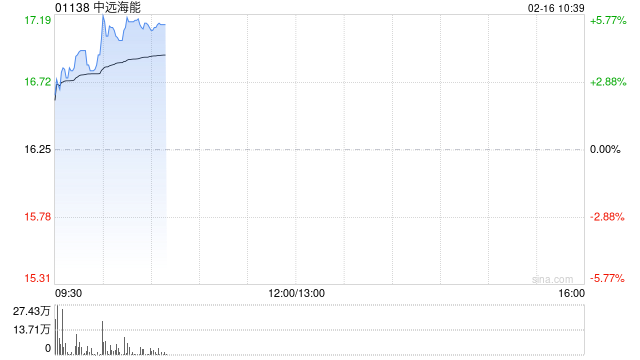
Core Viewpoint - The stock price of COSCO Shipping Energy Transportation Co., Ltd. (01138) rose by 5.35% to HKD 17.12, with a trading volume of HKD 46.04 million, indicating positive market sentiment towards the company amid rising oil shipping rates and geopolitical tensions [1][3]. Group 1: Market Sentiment and Price Movement - The stock price of COSCO Shipping Energy increased by 5.35% to HKD 17.12, with a trading volume of HKD 46.04 million [1][3]. - Geopolitical tensions since 2026 have heightened shipowners' sentiment, contributing to the recent high oil shipping rates [5]. Group 2: Industry Outlook - The company is advised to monitor the upward trend in shipping rates, which are expected to increase significantly year-on-year, with projections indicating that tanker profits in Q1 2026 will surge several times compared to previous years [5]. - The outlook for oil shipping is characterized as a "super bull market" rather than a short-term reaction to geopolitical events, suggesting a long-term growth trajectory [5]. - Global crude oil production increases are anticipated to drive demand for oil shipping, while the aging fleet of tankers will ensure a rigid supply of compliant capacity [5]. - Attention is drawn to changes in the gray market, as geopolitical situations may provide unexpected supply-demand options [5].
港股异动 | 中远海能(01138)涨超5% 机构预计一季度油轮盈利将同比大增数倍
智通财经网· 2026-02-16 02:40
Core Viewpoint - China Merchants Energy (01138) has seen a stock price increase of over 5%, currently at 17.1 HKD, with a trading volume of 42.4864 million HKD, driven by heightened shipping sentiment due to geopolitical tensions and sustained high oil shipping rates [1] Group 1: Market Sentiment and Price Trends - Geopolitical tensions since 2026 have led to increased shipping sentiment among shipowners, with foreign shipowners intensifying their control over the rental market [1] - Recent oil shipping rates have remained high, indicating a potential for continued strong performance in the sector [1] Group 2: Profitability and Future Outlook - The company is expected to see a significant year-on-year increase in tanker profitability in Q1 2026, potentially by several times [1] - The long-term outlook for oil shipping is characterized as a "super bull market," driven by ongoing global crude oil production increases and the aging of tankers ensuring a rigid supply of compliant capacity [1] Group 3: Market Dynamics - The company should monitor changes in the gray market, as geopolitical situations may provide unexpected supply-demand options [1]
中远海能涨超5% 机构预计一季度油轮盈利将同比大增数倍
Zhi Tong Cai Jing· 2026-02-16 02:33
Group 1 - The core viewpoint of the article highlights that Cosco Shipping Energy Transportation (中远海能) has seen a stock price increase of over 5%, currently trading at 17.1 HKD with a transaction volume of 42.4864 million HKD [1] - According to Cathay Securities, geopolitical tensions since 2026 have heightened shipowners' sentiment, leading to increased control over the market by foreign shipowners, and oil transportation rates have remained high [1] - The report suggests that the positive sentiment among shipowners is likely to continue impacting short-term freight rates, with expectations of a significant year-on-year increase in tanker profits in Q1 2026 [1] Group 2 - The analysis emphasizes that oil transportation is not merely a short-term play on geopolitical issues but is supported by a long-term "super bull market" logic [1] - The firm is optimistic about the continued growth in oil transportation demand driven by global crude oil production increases, while the aging of tankers will ensure a rigid supply of compliant capacity [1] - Attention is drawn to changes in the gray market, with geopolitical situations potentially providing unexpected options for supply and demand [1]
中远海能再涨超5% 年初至今股价累涨超六成 油运运价维持高位
Zhi Tong Cai Jing· 2026-02-10 05:55
Core Viewpoint - COSCO Shipping Energy (中远海能) has seen its stock price increase by over 60% year-to-date, with a recent rise of 5.04% to HKD 16.06, reflecting strong market performance and investor interest [1] Group 1: Company Overview - COSCO Shipping Energy has undergone significant business restructuring, establishing an integrated operational model encompassing oil, gas, chemicals, and storage [1] - The core business of oil transportation has consistently contributed over 80% of the company's revenue for the past decade, with foreign trade crude oil and refined oil transportation being the main profit drivers [1] - As of September 2025, the company's fleet capacity distribution is projected to be 83.2% for oil tankers, 16.5% for LNG carriers, 0.3% for chemical tankers, and 0.1% for LPG carriers [1] Group 2: Industry Insights - Guotai Junan Securities highlights a two-phase development leading to a "super bull market" in oil transportation. The first phase is characterized by geopolitical conflicts that have restructured global crude oil trade, increasing shipping distances and driving up oil transportation demand for over three years [1] - The second phase is marked by a global increase in crude oil production, further boosting oil transportation demand [1] - Oil transportation rates have surged since September and are expected to remain high, with tanker profits projected to reach a ten-year high in Q4 2025 and for the entire year [1] - The outlook for 2026 suggests that the oil transportation market will continue to exceed expectations, with potential benefits from falling oil prices [1]
国泰海通交运周观察:春运客流持续增长,油运盈利Q1大增
国泰海通· 2026-02-01 03:03
Investment Rating - The report assigns an "Overweight" rating for the transportation industry [4]. Core Insights - The aviation sector is expected to see significant improvement in profitability by 2025, with a continuous increase in passenger flow during the Spring Festival, indicating a strong performance in peak seasons. Airlines are projected to reduce losses significantly in 2025, with Air China, China Eastern Airlines, China Southern Airlines, and Hainan Airlines forecasting net profits of -1.6 billion, -1.6 billion, 0.9 billion, and 2.0 billion RMB respectively, reflecting a reduction in losses [3][4]. - The oil shipping sector anticipates a substantial increase in profitability in Q1 2026, driven by rising oil production in the Middle East and South America, as well as changes in import regulations from India. The report highlights a bullish outlook for the oil shipping market, suggesting a super bull market is on the horizon [3][4]. - The railway sector plans for a 3.5% increase in passenger flow in 2026, with recent adjustments to train schedules increasing the number of scheduled passenger trains by 2%. The report notes that the railway network has expanded significantly, enhancing connectivity across major urban areas [4]. Summary by Sections Aviation - The report forecasts a 5% year-on-year increase in civil aviation passenger volume for 2025, with domestic passenger volume expected to grow by 4% and international passenger volume by 22% [6][9]. - The Spring Festival demand is anticipated to remain strong, with an estimated 10% year-on-year increase in passenger flow during the holiday period [4]. Oil Shipping - The report indicates that the average earnings for oil tankers are expected to increase significantly, with the TCE (Time Charter Equivalent) for VLCCs on the Middle East to China route rising to 123,000 USD, reflecting a robust demand outlook [4][5]. Railway - The railway sector's operational capacity has expanded, with over 165,000 kilometers of operational railways, including more than 50,000 kilometers of high-speed rail. The report estimates that the number of passengers transported by rail will reach 4.402 billion in 2026, marking a new high [4].