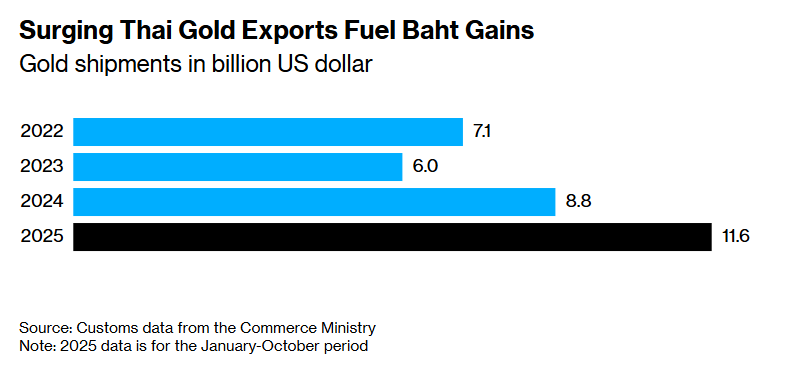
泰铢升值

Search documents
泰国央行意外降息至1.0% 力抗泰铢升值与经济低迷
Xin Hua Cai Jing· 2026-02-25 08:11
Core Viewpoint - The Bank of Thailand unexpectedly lowered the benchmark interest rate by 25 basis points to 1.0%, breaking market expectations, to address weak economic growth, excessive appreciation of the Thai baht, and downside risks to inflation [1][2]. Group 1: Economic Context - The Thai baht's strength is harming exporters, with the central bank noting that the current economic growth rate is below potential levels and inflation faces greater downside risks, necessitating policy intervention [1][2]. - Exports account for nearly 60% of GDP, and the continued appreciation of the baht has severely squeezed corporate profits, while domestic demand remains weak and private investment is insufficient [2]. Group 2: Policy Measures - In addition to the rate cut, the central bank announced a series of accompanying measures, including new regulations on financial institution fees, requirements for banks to report cash withdrawals exceeding 500,000 baht, and plans to support small businesses in obtaining credit [1][2]. - The central bank aims to implement a "policy mix" that combines fiscal and monetary policies along with financial regulatory reforms to boost investment, support SMEs, and curb deflation risks [2]. Group 3: Growth Expectations - The central bank governor indicated a nuanced adjustment in growth expectations, projecting economic growth close to 2.7% for the year while also stating a more cautious estimate of approximately 1.9%, reflecting concerns over external demand and the impact of the baht's appreciation on exports [3]. - Despite a stable financial system, the export-oriented economy is under pressure from the strong baht, with the governor emphasizing that structural issues are the root cause of low economic growth, suggesting that monetary policy alone cannot resolve these challenges [3].
泰国出台黄金交易新规 抑制泰铢升值
Sou Hu Cai Jing· 2026-01-28 15:20
Group 1 - The core viewpoint is that Thailand's central bank has implemented new regulations requiring gold traders with an average annual trading volume of at least 10 billion Thai Baht (approximately 2.24 billion RMB) over the past five years to report their trading activities [1] - The central bank's measures aim to curb the Thai Baht's continuous appreciation, which is believed to be driven by gold trading activities [3] - The central bank has mandated that qualifying gold traders retain at least three years of trading records [3] Group 2 - Thailand's central bank plans to impose limits on gold trading, potentially capping daily trading volumes conducted through online platforms at 50 million or 100 million Thai Baht [5] - The Thai Baht has appreciated approximately 1% against the US dollar this year, following a cumulative appreciation of 9% in 2025, raising concerns among various industries about the sustainability of this appreciation [5] - In Thailand, gold serves as both a store of value and a tool for cross-border capital flows, with significant demand for Thai Baht arising from online gold trading [7]

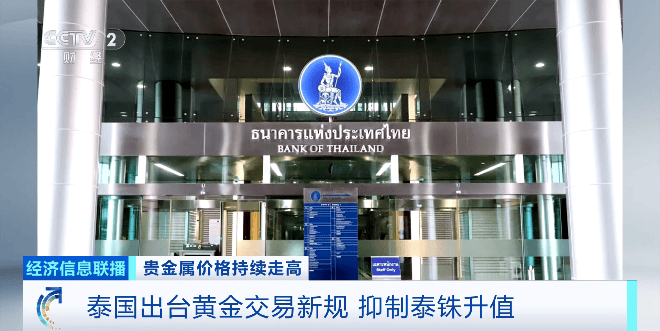
泰国出台黄金交易限制措施
中国能源报· 2026-01-28 12:34
Group 1 - Thailand has introduced new restrictions on gold trading, requiring traders with an average annual trading volume of 10 billion THB (approximately 323 million USD) over the past five years to report their activities to the Bank of Thailand [1] - The Bank of Thailand's statement indicates that qualifying gold traders must also retain transaction records for at least three years, with the announcement dated January 23 [1] - This measure is part of the Bank of Thailand's efforts to curb the appreciation of the Thai baht, which has been driven by gold trading activities [1][3] Group 2 - The central bank governor previously mentioned that Thailand would impose limits on gold trading, potentially capping daily trading volumes on online platforms at 50 million or 100 million THB [3] - Following a cumulative appreciation of 9% in 2025, the Thai baht has appreciated approximately 1% against the US dollar this year, raising concerns among various industries about the sustainability of the baht's strength relative to the economic fundamentals [3] - In Thailand, gold serves as both a store of value and a tool for cross-border capital flows, with significant demand for THB arising from online gold trading platforms that typically quote and settle transactions in THB [3]

泰国新出黄金交易限制措施
第一财经· 2026-01-28 10:15
Core Viewpoint - The new regulations by the Bank of Thailand require gold traders with an average annual trading volume of 10 billion THB (approximately 323 million USD) over the past five years to report their trading activities to the central bank [1] Group 1: Regulatory Changes - Gold traders meeting the specified criteria must retain trading records for at least three years [1] - The announcement was made on January 23, indicating a proactive approach by the central bank to monitor and regulate the gold trading sector [1] Group 2: Economic Implications - The central bank's measures aim to curb the appreciation of the Thai Baht, which has been significantly influenced by gold trading activities [1] - Following a cumulative appreciation of 9% in 2025, the Thai Baht has appreciated approximately 1% against the US dollar this year [1] - Concerns have been raised by various industries regarding the extent of the Baht's appreciation, which is perceived to exceed what the Thai economy can support [1] Group 3: Market Dynamics - In Thailand, gold serves as both a store of value and a tool for cross-border capital flow, with substantial funds being traded online [1] - The online gold trading platforms predominantly quote and settle transactions in Thai Baht, creating significant demand for Baht conversions [1]
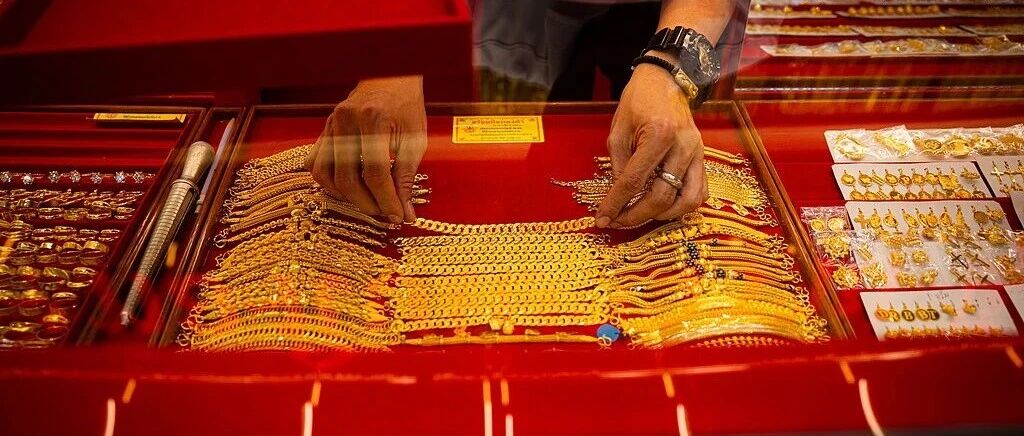
【微特稿】泰国新出黄金交易限制措施
Sou Hu Cai Jing· 2026-01-28 06:42
Core Viewpoint - The new regulations by the Thai Royal Gazette require gold traders with an average annual trading volume of 10 billion THB (approximately 323 million USD) over the past five years to report their trading activities to the Bank of Thailand [1] Group 1: Regulatory Changes - Gold traders meeting the specified criteria must retain trading records for at least three years [1] - The Bank of Thailand announced that it will impose limits on gold trading, potentially capping daily transactions conducted through online platforms at 50 million or 100 million THB [1] Group 2: Economic Context - The Thai central bank views the recent appreciation of the Thai baht as being driven primarily by gold trading activities [1] - Following a cumulative appreciation of 9% in 2025, the Thai baht has appreciated approximately 1% against the US dollar this year [1] - Concerns have been raised by various industries in Thailand regarding the extent of the baht's appreciation, which they believe exceeds what the country's economic fundamentals can support [1] Group 3: Market Dynamics - In Thailand, gold serves as both a store of value and a tool for cross-border capital flows [1] - A significant amount of capital is exchanged through online platforms for gold trading, creating substantial demand for baht conversions [1] - Most online gold trading platforms in Thailand quote and settle transactions in Thai baht [1]
泰国央行称已进行大规模干预 以平抑泰铢波动
Xin Hua Cai Jing· 2025-12-26 13:19
Core Viewpoint - The Thai baht has appreciated significantly due to a surge in gold trading, prompting the central bank to take measures to mitigate its volatility [1][2]. Group 1: Currency Appreciation - The Thai baht has strengthened by 10.3% against the US dollar this year, trading around the 31 mark, the highest level in over four years [1]. - The appreciation is driven by substantial gold trading volumes, which are not aligned with the country's economic fundamentals [1][2]. - Factors contributing to the baht's rise include a weaker dollar, capital inflows, and a higher-than-expected current account surplus [1]. Group 2: Central Bank Measures - The Bank of Thailand has initiated measures to scrutinize capital inflows exceeding $200,000 and has mandated stricter compliance from banks [2]. - The central bank plans to regulate online gold trading and may impose limits on trading volumes to alleviate the baht's strength [2]. - A loan guarantee scheme is set to launch in January 2026, expected to generate an additional 100 billion baht in credit for eligible SMEs [2]. Group 3: Economic Impact - The rapid appreciation of the baht has weakened Thailand's export and tourism competitiveness [2]. - Despite large-scale interventions in the second half of the year, the central bank has only managed to ease volatility without setting a specific target for the baht's value [2]. - The central bank may consider further monetary policy easing if necessary, although it acknowledges that lowering interest rates will not address structural issues [3].
泰铢升至四年高位 泰国在考虑限制部分黄金交易
Xin Lang Cai Jing· 2025-12-23 08:55
Core Viewpoint - The Thai Ministry of Finance and the Bank of Thailand are considering imposing taxes on certain gold transactions and implementing trading restrictions due to a surge in gold trading activities, which is believed to be a key factor in the appreciation of the Thai baht to a multi-year high [1][3]. Group 1: Taxation and Trading Restrictions - The Ministry of Finance is exploring the possibility of levying a business tax on online gold transactions [1][3]. - The Bank of Thailand is also studying the implementation of trading restrictions on gold transactions [1][3]. Group 2: Currency Impact - The Thai baht appreciated by 0.3% to 31.089 against the US dollar, marking its fifth consecutive day of gains and reaching a four-year high [1][3]. - The appreciation of the baht may weaken Thailand's export competitiveness, potentially exacerbating economic growth challenges [1][3]. Group 3: Monitoring and Regulation - The Bank of Thailand has been monitoring the impact of gold trading on the baht for over three months and has met with representatives from the Thai Gold Traders Association to encourage close monitoring of gold transactions [4]. - The central bank has instructed commercial banks to enhance the scrutiny of all documents related to the sale of US dollars by gold traders [2][5]. - The Bank of Thailand is seeking approval from the Ministry of Finance to require major gold traders to report more detailed foreign exchange transaction data [2][5].
泰国央行行长称黄金交易推动泰铢上涨
Xin Lang Cai Jing· 2025-12-23 07:47
Core Viewpoint - The appreciation of the Thai Baht is attributed to an increase in gold trading volume, as stated by the Governor of the Bank of Thailand, Vitai Ratanakorn [1] Group 1: Economic Impact - The revenue of 15 domestic gold traders is projected to grow by 39% in 2025 [1] Group 2: Regulatory Context - A press conference was held by the Bank of Thailand, the Ministry of Finance, and the Securities and Exchange Commission regarding the exchange rate of the Thai Baht [1]
?揭秘2025年“东南亚最强货币”泰铢背后的双引擎:关税“意外助攻”与黄金潮汐
Zhi Tong Cai Jing· 2025-12-22 11:48
Core Insights - The Thai Baht is experiencing its largest annual appreciation against the US dollar in eight years, with a 10% increase in 2025, outperforming other Southeast Asian currencies [1][2] - The strong performance of the Baht is attributed to rising gold prices and unexpected benefits from US tariff policies, despite Thailand's economic challenges [1][2] - The appreciation of the Baht poses challenges for Thailand's export-driven economy and the new Prime Minister, who faces an election in February [1][5] Group 1: Factors Contributing to Baht Strength - The Baht's strength began in mid-2024, coinciding with government economic stimulus plans and traders selling dollars ahead of the Federal Reserve's interest rate cuts [2] - A significant portion of the Baht's appreciation is linked to a 60% increase in gold prices, driven by a weakening US labor market and seasonal peaks in Thailand's tourism [3] - The US tariffs have inadvertently boosted Thailand's economy by encouraging manufacturers to shift production to Thailand, benefiting from lower tariffs compared to Chinese goods [2][3] Group 2: Economic Implications of a Strong Baht - A strong Baht makes Thai products more expensive in international markets, leading to slower export growth [4] - The tourism sector is under pressure as the strong Baht diminishes Thailand's appeal as a low-cost destination, with a downward revision of foreign tourist arrivals expected [4] - While a stronger Baht reduces import costs for households, the overall impact on an economy reliant on exports and tourism is negative [4] Group 3: Government and Central Bank Responses - The Thai government is addressing concerns from export-oriented businesses regarding the Baht's appreciation, amidst political instability and upcoming elections [5] - The central bank has intervened in the foreign exchange market to manage excessive volatility and has proposed measures to increase flexibility for businesses managing offshore earnings [6] - Discussions are ongoing regarding potential taxation on physical gold transactions to mitigate the impact of gold prices on the Baht's strength [6]
揭秘2025年“东南亚最强货币”泰铢背后的双引擎:关税“意外助攻”与黄金潮汐
Zhi Tong Cai Jing· 2025-12-22 11:40
Core Viewpoint - The Thai Baht is experiencing its largest annual appreciation against the US dollar in eight years, with a 10% increase in 2025, outperforming other Southeast Asian currencies despite economic challenges [1][2]. Group 1: Factors Contributing to Baht Strength - The appreciation of the Baht began in mid-2024, coinciding with government economic stimulus plans and traders selling off the US dollar ahead of the Federal Reserve's latest interest rate cuts [2]. - A significant portion of the Baht's recent gains is attributed to a 60% increase in gold prices, driven by a weakening US labor market and seasonal peaks in Thailand's tourism industry [3]. - The Trump administration's import tariffs have unexpectedly boosted Thailand's economy by encouraging local manufacturing for exports to the US, as tariffs on Thai goods are lower than those on Chinese products [2][3]. Group 2: Economic Implications of a Strong Baht - A strong Baht makes Thai products more expensive in international markets, leading to the slowest export growth in over a year [5]. - The tourism sector is under pressure as the strong Baht diminishes Thailand's appeal as a low-cost vacation destination, with a downward revision of foreign tourist arrivals expected [6]. - While a stronger Baht can reduce inflation for imported goods, the overall impact on an economy heavily reliant on exports and tourism is negative [6]. Group 3: Government and Central Bank Responses - The Thai government is addressing concerns from export-oriented businesses regarding the Baht's appreciation, but political instability complicates fiscal policy direction [7]. - The Bank of Thailand has intervened in the foreign exchange market to manage excessive volatility and has proposed increasing the offshore income retention limit for businesses [8]. - Discussions are ongoing regarding measures to mitigate the impact of gold prices on the Baht, including potential taxation on physical gold transactions [8].