
涉外法治建设

Search documents
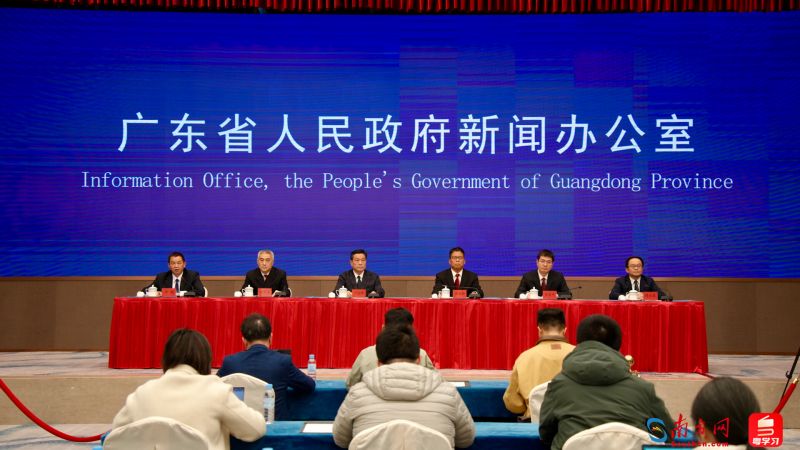
叶向荣:“十四五”平安广东建设规划任务圆满完成
Zhong Guo Fa Zhan Wang· 2026-02-25 03:58
Core Viewpoint - Guangdong aims to build a safe and stable environment, achieving a public safety satisfaction index of 98.76% by 2025, maintaining above 98% for four consecutive years [1] Group 1: Institutional Mechanisms - Establishment of a comprehensive leadership system for public safety, with leadership groups at provincial, municipal, and county levels [3] - Implementation of over 10 regulations to enhance the institutional framework for public safety, including the "Guangdong Provincial Public Safety Construction Regulations" [3] - Creation of 11.4 million emergency response units and 92,000 community defense organizations, engaging 1.307 million members [4] Group 2: Risk Prevention and Stability - Focus on political security, with no major incidents threatening national political safety reported [4] - Implementation of special governance to address social stability issues, leading to the suspension of 43 high-risk decision-making matters [4] - Successful management of large-scale events, ensuring the smooth operation of over 16,000 major activities [4] Group 3: Social Security and Crime Prevention - Continuous efforts in combating organized crime, achieving a 100% resolution rate for homicide cases [4] - Anticipated declines in criminal incidents by 17.7% and 10.2% by 2025, marking the lowest levels in this century [4] - Establishment of a comprehensive governance system for social security, with 1,535 rapid response zones created [4] Group 4: Judicial and Legal Framework - Significant increase in judicial efficiency, with 3.8275 million cases concluded in 2025, a 38.08% increase from 2022 [4] - Implementation of a unified digital law enforcement platform, enhancing legal service accessibility [4] - Continuous improvement in legal supervision, with over 38,000 arrests approved by the prosecution in five years [4] Group 5: Economic and Legal Environment - Introduction of the "Guangdong Provincial Optimizing Business Environment Regulations," maintaining the top position in integrated government service capabilities for five consecutive years [4] - Establishment of a communication mechanism for legal departments in the Guangdong-Hong Kong-Macao Greater Bay Area [4] - Development of a high-level foreign legal service platform, with 18 Guangdong law firms setting up 34 branches overseas [4]

全景展现涉外法治建设成就
Xin Lang Cai Jing· 2026-02-24 23:26
Core Insights - The publication of the "China Foreign-related Legal Blue Book (2025)" aims to provide intellectual support for the construction of a foreign-related legal system in the new era, serving as an important reference for understanding China's foreign-related legal dynamics [1][2]. Group 1: Overview of the Blue Book - The Blue Book focuses on the comprehensive overview of China's foreign-related legal construction for the year 2024, analyzing it from six dimensions: legislation, law enforcement, judicial processes, legal compliance and services, talent cultivation, and international cooperation [2]. - It details the achievements in foreign-related legislation, showcasing the progress in building a systematic and complete foreign-related legal framework [2]. - The law enforcement section highlights the effectiveness in key areas such as countering foreign sanctions, intellectual property protection, and anti-monopoly efforts, emphasizing China's legal capacity to safeguard national sovereignty and development interests [2]. Group 2: Judicial and Legal Services - The judicial section summarizes the progress in foreign-related judicial trials and institutional reforms, focusing on international cooperation in law enforcement and judicial processes, as well as the equal protection of the legal rights of both domestic and foreign parties [2]. - In terms of legal compliance and services, the Blue Book presents how Chinese enterprises protect their rights during international operations and showcases developments in legal services, including arbitration [2]. Group 3: Talent Development and Global Governance - The talent cultivation section illustrates efforts by institutions like China University of Political Science and Law to enhance foreign-related talent training through optimized curricula and deepened practical cooperation [2]. - The Blue Book also depicts China's participation in global governance and international legal cooperation, documenting practices related to free trade zones, high-standard economic agreements, and international treaty ratifications [2]. Group 4: Significance and Recognition - The publication of the Blue Book is intended to contribute wisdom and strength to the long-term systematic project of foreign-related legal construction, aiming to create a favorable legal environment for China's modernization and national rejuvenation [3]. - The series has gained recognition, with the previous edition receiving the "Outstanding Achievement Award" from the China Think Tank Index (CTTI) in 2023, highlighting its importance in showcasing China's foreign-related legal achievements [3].
涉外买卖合同纠纷案宣判 法院适用域外法判决卖方退款并赔偿损失
Zhong Guo Jing Ying Bao· 2026-02-15 06:03
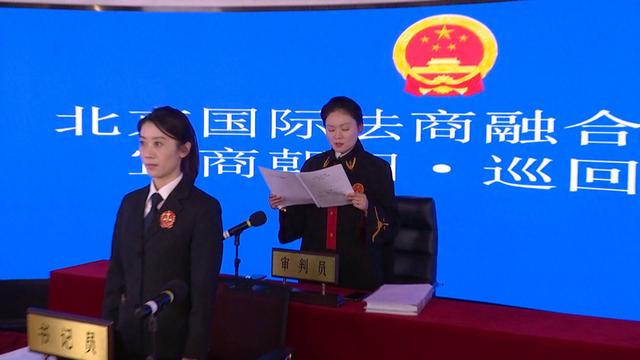
Core Viewpoint - The Beijing Chaoyang District People's Court has conducted a trial involving an international sales contract dispute, applying the United Nations Convention on Contracts for the International Sale of Goods (CISG) to resolve the case [1][2]. Group 1: Case Details - A company registered in Georgia, referred to as Company A, entered into a sales contract with an import-export company in China, referred to as Company B, for the purchase of seven tractors at a total price of €35,709 [1]. - Company A paid the full amount but did not receive the goods, leading to a lawsuit for contract termination, refund of the purchase price, interest, and compensation for container losses incurred due to Company B's failure to fulfill the contract [1]. Group 2: Court Ruling - The court determined that both companies are parties to the CISG and that the provisions of the CISG apply to the case, as there were no exceptions to its applicability [2]. - The court ruled that Company B must refund the full payment to Company A, pay interest on the amount, and compensate for the container costs incurred by Company A due to the non-delivery of goods [2]. Group 3: Legal and International Trade Implications - The case highlights the importance of adhering to international treaties and practices in maintaining fair and just international trade and investment orders, especially in the context of China's Belt and Road Initiative [3]. - The Supreme People's Court has noted a significant increase in the number of foreign-related civil and commercial cases, indicating a growing need for effective international commercial dispute resolution mechanisms [3].
全款购7辆拖拉机未发货,“一带一路”国家在华维权胜诉
Xin Lang Cai Jing· 2026-02-14 02:59
Core Viewpoint - The case involves a dispute between a Georgian company and a Chinese import-export company regarding the non-delivery of tractors after full payment was made, leading to a court ruling in favor of the Georgian company for the return of funds and compensation for losses [1][3]. Group 1: Contractual Obligations - The Georgian company entered into a contract to purchase 7 tractors for a total price of 35,709 euros, but the tractors were never shipped despite full payment [1]. - The Chinese company failed to fulfill its contractual obligations and demanded additional fees from the Georgian company, which resulted in further losses [3]. Group 2: Court Ruling - The Beijing Chaoyang District Court ruled that the Chinese company must return the full payment and compensate for additional losses, applying the United Nations Convention on Contracts for the International Sale of Goods (CISG) [3][5]. - The court declared the contract void, which is equivalent to a contract termination under Chinese civil law, emphasizing the need for adherence to international treaties [3][5]. Group 3: Legal and International Trade Implications - The case highlights the importance of accurately applying international treaties and conventions in cross-border trade disputes, particularly in the context of the Belt and Road Initiative [5]. - The ruling serves to protect the legal rights of both domestic and foreign parties, promoting a stable investment environment for foreign enterprises in China [5].
法治之光照亮向海图强之路
Xin Lang Cai Jing· 2026-02-03 20:49
Core Viewpoint - The news highlights the efforts of Guangxi Zhuang Autonomous Region in enhancing foreign-related legal services and cooperation with ASEAN countries, aiming to create a robust legal framework that supports cross-border trade and dispute resolution [1][2][3] Group 1: High-Level Planning - Guangxi's foreign-related legal work is prioritized by the regional party committee, with a focus on creating a unique path for foreign-related legal services [1] - A comprehensive plan was established in November 2025, outlining 19 specific measures to improve legal services, legislation, and talent development [1] - The first border meeting between Chinese and Vietnamese judicial departments took place in June 2025, marking a significant step towards institutionalized legal cooperation [1] Group 2: Platform Empowerment - A recent case involving an Australian national was resolved in just five days through collaboration between the Guangxi International Commercial Mediation Center and local courts, showcasing the efficiency of the legal service system [2] - Guangxi has developed a comprehensive legal service platform to support cross-border commercial activities, providing services to over 72,000 individuals in recent years [2] - The establishment of various legal service centers and alliances aims to create a model for commercial dispute resolution in the region [2] Group 3: Legal Awareness Promotion - Innovative legal awareness initiatives, such as bilingual legal dramas, have been implemented to educate border residents about legal rights and responsibilities [3] - Guangxi integrates legal education into border governance, utilizing local cultural elements to enhance understanding of legal concepts among the populace [3] - The region is building a multi-dimensional legal awareness network that includes community engagement and modern technology to disseminate legal knowledge effectively [3]
苏州仲裁委员会国际商事仲裁院启用
Su Zhou Ri Bao· 2026-01-28 00:35
Core Viewpoint - The establishment of the International Commercial Arbitration Court in Suzhou aims to enhance the international commercial dispute resolution mechanism and support the city's development as an international open gateway [1] Group 1: Arbitration Court Establishment - The International Commercial Arbitration Court is located in the Suzhou Free Trade Zone Legal Service Center and features an international commercial arbitration service center and a remote arbitration hearing system [1] - The court has appointed 54 foreign-related arbitrators to handle disputes in international trade, intellectual property, financial securities, and international investment [1] Group 2: Collaborations and Support - A cooperation agreement was signed between Suzhou University’s Wang Jian Law School and the Suzhou Arbitration Committee to collaborate on foreign-related arbitration think tank support and talent cultivation [1] - Strategic cooperation agreements were established between the International Commercial Arbitration Court, the Suzhou Cross-Border E-Commerce Association, and the Municipal Industrial Park Development Promotion Association to assist Suzhou enterprises in expanding international markets and mitigating legal risks [1]
(粤港澳大湾区)港澳当事人在广州参与诉讼更便利
Xin Lang Cai Jing· 2026-01-14 13:25
Core Viewpoint - Guangzhou courts are enhancing the litigation process for Hong Kong and Macau cases during the 14th Five-Year Plan period, making it more convenient for parties from these regions to participate in legal proceedings [1][2] Group 1: Legal Innovations and Reforms - Guangzhou courts are simplifying the qualification confirmation procedures for litigation involving Hong Kong and Macau parties, and have published trilingual (Chinese, English, Portuguese) foreign litigation service guidelines [1] - The courts are adopting judicial rules from Hong Kong and Macau, such as factual assertions and evidence disclosure, and have conducted mock trials to study the integration of civil contract rules [1] - The introduction of the Hong Kong and Macau juror system and a dual mediation system involving "mainland + Hong Kong and Macau" mediators has been highlighted as innovative practices [1] Group 2: Statistical Insights - From 2022 to 2024, approximately one-sixth of the national first-instance foreign-related civil and commercial cases will be handled by Guangzhou courts [1] - Guangzhou has achieved a national "ten consecutive championships" in judicial transparency index over the past five years [1] Group 3: Legal Environment and Collaboration - The establishment of the Guangzhou Bay Area Central Legal Zone has attracted over 1,300 high-quality legal institutions from both domestic and international sources [1] - The city has hosted the Guangdong-Hong Kong-Macau Greater Bay Area Legal Forum for three consecutive years, fostering important collaboration among legal professionals from the three regions [1]
海商法修订引领航运强国新征程
Xin Lang Cai Jing· 2026-01-04 19:01
Core Viewpoint - The revision of China's Maritime Law is essential to adapt to the evolving maritime trade landscape, enhance ecological protection, and align with international regulations, ensuring a robust legal framework for the shipping industry and international trade [1][2]. Group 1: Legislative Background - The current Maritime Law was enacted in 1993 and has played a crucial role in regulating maritime trade and protecting stakeholders' rights for over 30 years [1]. - The legislative process for the revision has been rigorous, with the National People's Congress (NPC) prioritizing this work in its legislative planning for 2024 and 2025 [1]. Group 2: Key Revisions - The revised Maritime Law consists of 16 chapters and 310 articles, addressing issues such as the unification of domestic and international maritime rules, the clarification of rights and obligations among parties, and the adaptation to digital developments [1][2]. - New provisions include the inclusion of electronic transport records with equal legal status to paper documents, enhancing the legal framework for digitalization in shipping [2]. Group 3: Focus Areas of Revision - The revision emphasizes ecological protection by incorporating responsibilities for pollution prevention and establishing a mandatory insurance system for oil pollution damages [1][2]. - It also enhances the legal framework for international shipping contracts, ensuring compliance with international conventions and improving the legal applicability of maritime laws [2]. Group 4: Implications for the Shipping Industry - The updated Maritime Law aims to balance the interests of various stakeholders, including carriers, shippers, and crew members, fostering a more dynamic shipping industry [1]. - By aligning with international standards, the revised law is expected to strengthen China's position in the global maritime sector and contribute to the healthy development of economic globalization [2].
为新征程改革发展保驾护航——深学笃行习近平法治思想
Jing Ji Ri Bao· 2025-12-30 23:58
Group 1 - Xi Jinping's rule of law thought is a significant component of the Xi Jinping Thought on Socialism with Chinese Characteristics for a New Era, representing the latest achievement of the sinicization and modernization of Marxist legal theory [2][4] - The core essence of Xi Jinping's rule of law thought is encapsulated in the "Twelve Persistences," which provide a comprehensive framework for understanding and implementing the rule of law in China [3][4] - The thought emphasizes the integration of Marxist principles with traditional Chinese legal culture and contemporary practices, leading to significant theoretical and practical advancements in the rule of law [4][5] Group 2 - The rule of law is essential for the development of a socialist market economy, and it is emphasized that economic growth must transition from high-speed to high-quality development underpinned by legal frameworks [6][7] - The implementation of the Civil Code and the recent Private Economy Promotion Law are examples of legal measures that support and protect the rights of various ownership entities, reflecting the commitment to a diverse economic structure [7][8] - The establishment of a robust legal system is crucial for creating a favorable business environment, which is necessary for effective market operations and government interventions [8][9] Group 3 - The rapid development of new economic forms, such as the digital economy, necessitates the establishment of clear legal frameworks to balance innovation and risk management [9][10] - Strengthening foreign-related legal construction is vital for safeguarding national sovereignty and economic interests, particularly in the context of expanding high-level openness [10][11] - The media's role in promoting legal awareness and compliance is highlighted, with a focus on enhancing the legal framework to support the media's operations and governance [11][12]
为新征程改革发展保驾护航
Jing Ji Ri Bao· 2025-12-30 22:37
Group 1 - The core idea of Xi Jinping's rule of law thought is to integrate Marxist legal theory with China's specific realities and traditional legal culture, providing a guiding framework for comprehensive rule of law in the new era [1][2] - The "Twelve Persistences" outlined in the latest guidelines emphasize the organic unity of governing the country by law and governing the Party by regulations, which is crucial for long-term legal development [2][3] - Xi Jinping's rule of law thought has led to significant breakthroughs and innovations in legal theory, addressing long-standing legal issues and creating a new landscape for the construction of a rule-of-law China [3][4] Group 2 - The socialist market economy is fundamentally a rule-of-law economy, and the implementation of the new development concept requires law to lead economic transformation towards high-quality development [5][6] - The recent implementation of the Private Economy Promotion Law exemplifies the commitment to legally protect the rights of various ownership enterprises, highlighting the importance of equal protection under the law [6] - Strengthening the legal system for the socialist market economy is essential for creating a favorable business environment and addressing risks associated with inadequate legal protections [7][8] Group 3 - The rapid development of new economic forms necessitates a balance between innovation and regulation, requiring effective legal frameworks to guide economic activities [8][9] - The construction of a comprehensive legal system for foreign-related affairs is vital for maintaining national sovereignty and expanding high-level openness, as demonstrated by the Hainan Free Trade Port [9] - The media's role in promoting legal awareness and compliance is crucial for enhancing the effectiveness of economic reporting and public discourse [10][11]