
清洁运输

Search documents
生态环境部:我国重点行业清洁运输比例已接近80%
Xin Lang Cai Jing· 2026-02-27 12:15
Core Viewpoint - The proportion of clean transportation in key industries in China has approached 80%, with a target of 19.8 million sales of new energy heavy trucks by 2025 [1] Group 1 - The Ministry of Ecology and Environment reported on February 27 that the clean transportation ratio in key industries is nearing 80% [1] - The sales volume of new energy heavy trucks is projected to reach 198,000 units by 2025 [1]
河南省生态环境厅:企业清洁运输监管,不得随意扩大货车限制范围
Xin Jing Bao· 2026-02-05 10:01
Core Viewpoint - The Henan Provincial Ecological Environment Department has issued a notice to regulate the clean transportation of heavy-duty trucks, prohibiting local authorities from arbitrarily restricting the access of fuel and gas heavy-duty trucks to factory areas, following reports of companies requiring the replacement of truck heads with electric ones to comply with clean transportation regulations [1][2]. Group 1: Regulatory Actions - The notice emphasizes that local governments must adhere to national and provincial clean transportation requirements without expanding restrictions on heavy-duty trucks [1]. - The department has called for differentiated management based on the environmental performance of different industries and companies to gradually improve clean transportation levels [1][2]. Group 2: Enforcement and Compliance - The Henan ecological environment departments are to enhance joint law enforcement with police and transportation departments to crack down on illegal license plate usage around key industry enterprises [2]. - There is a focus on understanding local freight conditions and company demands through visits and discussions, aiming to promote clean transportation policies and garner support from all stakeholders [2]. Group 3: Industry Impact - Reports indicated that some companies in Henan were only allowing electric trucks into their facilities, leading to a market for "head swapping," where truck heads are rented for 200 to 400 yuan per use [2]. - Following the exposure of these practices, some companies, such as Yidian Group in Yichuan, have begun allowing National VI trucks to enter their facilities [3].
煤车“换头”才能进厂卸货环保不容掩耳盗铃
Xin Lang Cai Jing· 2026-02-02 16:59
Core Viewpoint - The phenomenon of "changing truck heads" to comply with environmental regulations highlights significant issues of formalism and inefficiency in the implementation of clean transportation policies [1][2]. Group 1: Policy Implementation Issues - Some paper and power companies in Henan only allow electric trucks to enter their facilities, leading to a rental market for electric truck heads, with fees ranging from 200 to 400 yuan based on usage time [1]. - The "Three-Year Action Plan for Promoting Ecological Environment Quality Stability (2023-2025)" aims for 80% of bulk goods in industries like power and steel to be transported cleanly by 2025 [1]. - The local environmental authority stated that there has never been a requirement to restrict "National VI" emission standard trucks, indicating a misinterpretation or excessive enforcement of policies at the local level [1][2]. Group 2: Economic and Environmental Implications - The "changing truck heads" practice does not actually reduce emissions but creates a false compliance with environmental standards, resulting in increased transportation costs and reduced logistics efficiency [2]. - The concept of clean transportation should not be limited to electric vehicles; it includes various low-carbon methods, and both electric vehicles and "National VI" compliant vehicles meet national requirements [2]. - The local or corporate decision to only allow electric vehicles contradicts higher-level policy requirements and lacks scientific justification, potentially disrupting the market for compliant vehicles [2]. Group 3: Need for Policy Reevaluation - The emergence of the "truck head change" scenario raises questions about why a policy intended to reduce emissions has devolved into a mechanism that increases costs and promotes formalism [2]. - There is a need to reassess the evaluation of clean transportation, as it may have become overly focused on the vehicle entry process rather than broader environmental impacts [2]. - The situation underscores the necessity for stronger measures to combat formalism in environmental governance [2].
拉煤货车换新能源车头才能进厂,环保不容掩耳盗铃
Xin Jing Bao· 2026-02-02 03:07
Core Viewpoint - The article highlights the absurdity of the "head-switching" practice in the transportation sector, where companies are forced to use electric truck heads to comply with environmental regulations, despite the fact that this does not lead to actual emissions reductions and increases logistics costs [1][2]. Group 1: Policy Implementation and Compliance - The "head-switching" operation is primarily a workaround for companies to meet environmental performance ratings, creating a compliance cost that is neither environmentally friendly nor economically viable [2]. - Local authorities have stated that they never mandated a "one-size-fits-all" requirement, indicating a misunderstanding or over-implementation of policies at the local level [2][3]. - The push for clean transportation aims to optimize transport structures and promote environmental governance, but the execution in some areas has led to increased costs and reduced logistics efficiency, revealing a significant issue of formalism [1][3]. Group 2: Misinterpretation of Clean Transportation - Clean transportation should not be equated solely with the use of new energy vehicles; it can also include vehicles meeting the "National VI" emission standards, which are compliant with national requirements [2]. - The restriction of allowing only new energy vehicles into factories contradicts higher-level policy requirements and lacks scientific justification, potentially affecting the market circulation and operational ecology of compliant vehicles [2]. Group 3: Future Considerations and Recommendations - The need for further examination of clean transportation assessments is highlighted, questioning whether evaluations focus solely on vehicle types rather than actual emission reductions [3]. - The emergence of the "head-switching" phenomenon serves as a reminder of the necessity to combat formalism in environmental governance and to ensure that compliance measures are effective and practical [3].
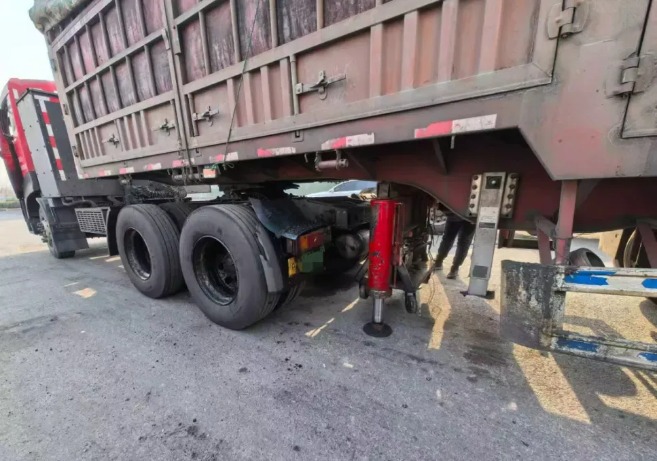
被迫“换头”的国六货车:企业称为治理大气仅让新能源车入内,货车租电动车头才能进厂卸货,每次花费200至400元
Xin Jing Bao· 2026-02-02 00:10
Core Viewpoint - The implementation of a policy requiring only electric vehicles for cargo transport into factories in Henan province has led to significant operational challenges and increased costs for transport companies, despite the vehicles meeting the latest emission standards [2][3][4][9]. Group 1: Policy Implementation - Since October 2025, Henan Jianghe Paper Company has mandated that only electric vehicles can enter its premises for unloading [5]. - This policy is part of a broader initiative by the Henan provincial government to improve air quality and achieve an 80% clean transport ratio for major industries by 2025 [3][17]. - Local environmental authorities have indicated that there was no official directive to restrict vehicles meeting the National VI emission standards from entering factories [11][24]. Group 2: Operational Challenges - Transport companies are facing increased wait times and costs due to the need to switch to electric vehicle heads outside factory gates, with fees ranging from 200 to 700 yuan per switch [12][14][21]. - The process of changing vehicle heads can take about 10 minutes, but often involves long waiting periods for unloading, leading to additional costs for transporters [6][14]. - Many transporters have reported that the requirement to switch to electric vehicles has added at least one hour to their unloading times [12]. Group 3: Environmental Impact and Industry Response - The push for clean transport is seen as a necessary response to the high levels of air pollution in several cities in Henan, which have ranked poorly in air quality assessments [16][20]. - Companies are under pressure to meet clean transport ratios as part of their environmental performance ratings, which can affect their operational capabilities [20][24]. - Some transporters have resorted to using fake electric vehicle plates to circumvent the restrictions, indicating the extent of frustration with the current policy [15]. Group 4: Regulatory Oversight - The Henan Provincial Ecological Environment Department has acknowledged the issues arising from the "head-switching" policy and plans to conduct field investigations to address these challenges [24]. - The department emphasizes that while clean transport is a goal, the implementation should not unduly burden transport operators who comply with existing emission standards [24].


被迫“换头”的国六货车:企业称为治理大气仅让新能源车入内 货车租电动车头才能进厂卸货 每次花费200至400元
Xin Jing Bao· 2026-02-02 00:01
Core Viewpoint - The implementation of a policy requiring only new energy electric trucks to enter factories in Henan has led to a significant increase in logistics costs and operational inefficiencies for transport companies, despite many trucks already meeting the latest emission standards. Group 1: Policy Implementation - Since October 2025, Henan Jianghe Paper Company has mandated that only new energy electric trucks can enter its facility, causing logistical challenges for transport companies [2][5]. - The policy is part of a broader initiative by the Henan provincial government to improve air quality and achieve a clean transportation target of over 80% for major goods in industries such as coal, steel, and chemicals by 2025 [2][19]. Group 2: Impact on Transport Companies - Transport companies are forced to rent electric truck heads at costs ranging from 200 to 400 yuan per use, with some instances of fees reaching up to 700 yuan due to delays [11][12][16]. - The time taken to unload goods has increased by at least one hour due to the requirement to switch truck heads, leading to longer wait times and increased operational costs [12][24]. Group 3: Regulatory Response - The Henan Provincial Ecological Environment Department has stated that it never mandated restrictions on trucks meeting the National VI emission standards and will investigate the "head-switching" practices at various companies [9][29]. - The department aims to balance environmental policies with the rights of transport workers, indicating a need for further investigation into the practices of companies enforcing the head-switching policy [29][25].
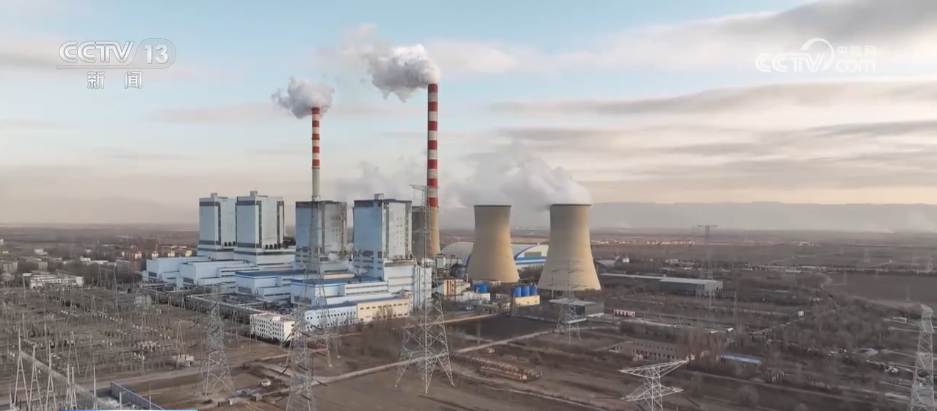
新能源重卡服务清洁运输绿色转型 供暖“绿”模式不断“上新”
Yang Shi Wang· 2025-11-26 02:36
Group 1 - The core viewpoint of the articles highlights the response of Shanxi Province, particularly Shuozhou City, to a severe cold wave, with temperatures dropping to -18°C, leading to increased electricity generation to meet heating demands and reduce environmental pollution [1][3] - Shuozhou City is a significant coal and electricity production base in Shanxi Province, facing challenges in air quality during the heating season due to high coal consumption [5] - Local authorities have mandated the use of new energy heavy trucks for material transportation in key industries, including coal mines and coal-fired power plants, to minimize pollutant emissions [5] Group 2 - As of October 2025, the number of new energy electric heavy trucks in Shuozhou is expected to exceed 1,277, with all coal transportation vehicles for four large coal-fired power plants in the city transitioning to new energy [7] - The clean transportation ratio in key industries within the city is projected to reach 76%, indicating significant progress in the transition to cleaner transportation methods [7]
鲁托与美国国务卿鲁比奥就贸易、安全问题举行会谈
Shang Wu Bu Wang Zhan· 2025-09-27 03:23
Core Points - The meeting between Kenyan President William Ruto and U.S. Secretary of State Marco Rubio focused on trade and security issues, with an agreement to reach a trade deal by the end of the year [1] - There is a commitment to increase U.S. investment in Kenya and enhance security cooperation, particularly in counter-terrorism [1] - The discussion included the African Growth and Opportunity Act (AGOA), which Ruto emphasized as crucial for Kenya's economic growth [1] - A partnership agreement between California and Africa was signed, focusing on clean transportation, electric vehicles, green ports, climate-smart agriculture, renewable energy, and digital innovation [1]