
渐进式迭代

Search documents
盯上你的眼 苹果、谷歌也加入“百镜混战”
2 1 Shi Ji Jing Ji Bao Dao· 2025-12-19 12:38
Group 1 - Major tech companies like Apple and Google are intensifying their focus on the smart glasses market, with Apple pausing its Vision Pro upgrade plans to accelerate AI smart glasses development, expected to launch in 2026 [1] - The competition in the smart glasses sector is heating up in China, with companies like Li Auto, Alibaba, Baidu, Huawei, and Xiaomi launching their own AI glasses, indicating a cross-industry battle involving tech, internet, and new energy sectors [1][2] - The entry of established tech giants and new players into the smart glasses market signifies a strategic move to capture the next generation of human-computer interaction, positioning smart glasses as a key hardware in the AI multimodal era [2][4] Group 2 - The smart glasses are seen as an extension of existing ecosystems and a means to leverage AI capabilities, with Li Auto's Livis glasses gaining significant consumer interest and sales [4] - Alibaba's Quark AI glasses have also seen strong sales due to their practical features, indicating that major internet companies are finding viable paths in this new market [4] - The industry is at a critical juncture, with startups needing to focus on niche markets or technological breakthroughs to survive amidst competition from larger firms [5][6] Group 3 - The relationship between smart glasses and smartphones is expected to be complementary rather than one replacing the other, as both technologies evolve together [7] - Current technological limitations in smart glasses, such as weight and battery life, indicate that the industry is still in its early stages, with significant growth potential ahead [7][8] - The global market for smart glasses is projected to grow significantly, with sales expected to reach 41.53 million units by 2029, potentially exceeding 100 billion yuan in market size [8] Group 4 - The influx of major players into the smart glasses market is expected to accelerate technological advancements and reshape industry standards, while also creating challenges for smaller brands [9] - The competitive landscape is shifting from price wars to technology-driven competition, emphasizing the importance of AI integration and user experience [9][11] - Key supply chain companies in the smart glasses sector have shown active stock performance, reflecting investor interest and market optimism [11]






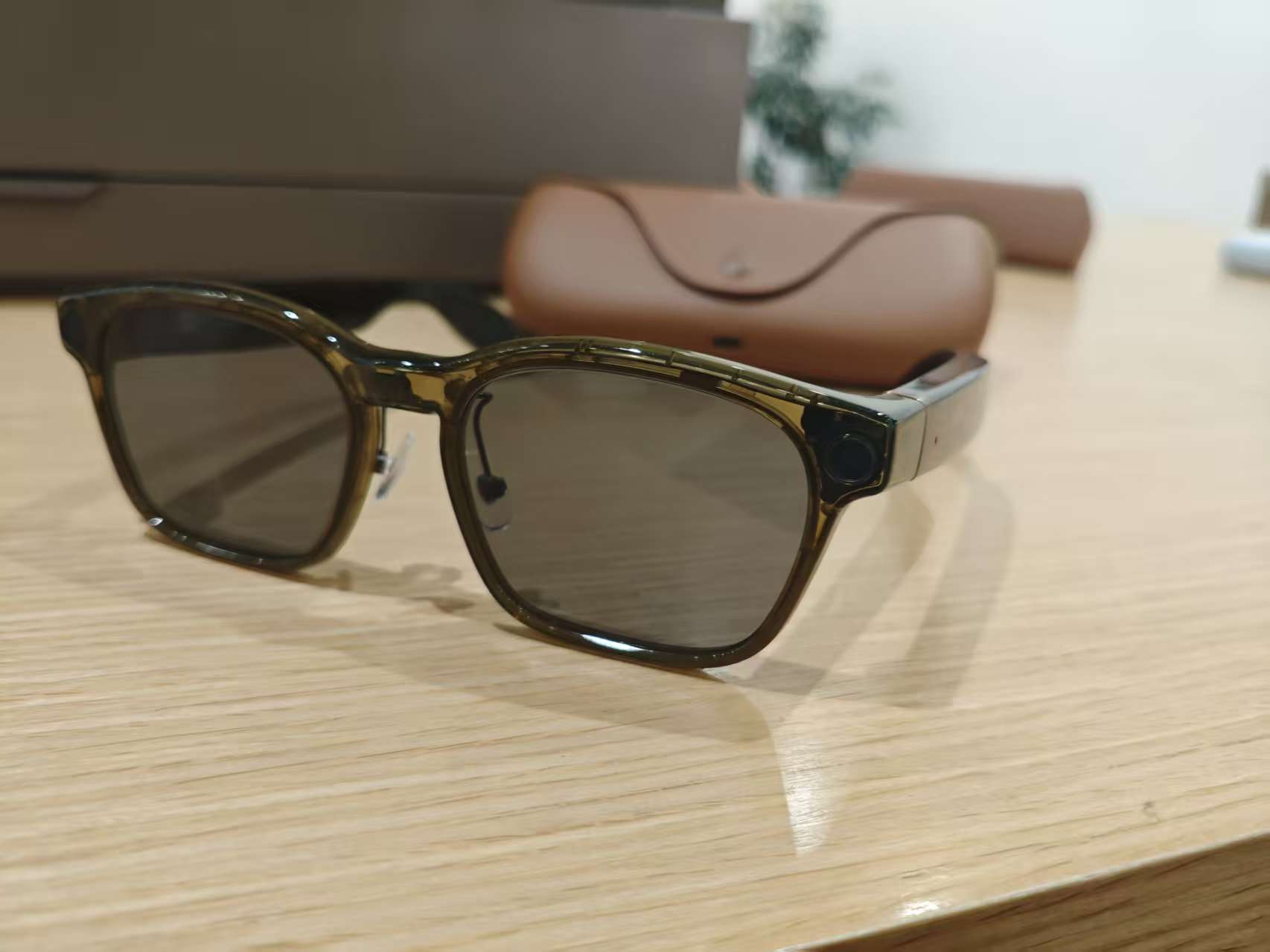
从AR眼镜产业演进看科技金融服务新质生产力的实践逻辑
Zheng Quan Ri Bao Wang· 2025-12-12 10:17
Core Insights - The global technology competition is rapidly evolving, with cutting-edge technologies like AI, spatial computing, and human-machine collaboration reshaping production, lifestyle, and national competitiveness [1] - The 20th National Congress of the Communist Party of China emphasizes accelerating the development of new productive forces and strengthening the role of enterprises in technological innovation, placing "technology finance" as a top priority in building a strong financial nation [1] Development Challenges - Traditional AR glasses face commercialization challenges, with global sales projected at only 500,000 units in 2024, significantly below early market expectations [1] - The core issue lies in the "all-or-nothing" development paradigm, which creates a negative cycle of high R&D investment, high-cost pricing, low user acceptance, and immature supply chains [1][3] - This approach neglects critical variables such as market acceptance, user behavior inertia, and capital patience, making it incompatible with the new paradigm of "early, small, long-term, and hard technology" in technology finance [1] Evolution Path - A new "gradual iterative" paradigm is emerging, led by AI smart glasses, which is validating a three-stage evolution path: audio/camera glasses, AI smart glasses, and AI+AR glasses [2][5] - The first stage involves audio/video glasses that integrate basic functions to cultivate user habits without altering wearing preferences [5] - The second stage introduces AI capabilities for enhanced functionality, transforming devices from mere tools to intelligent companions, as evidenced by the success of Meta's Ray-Ban Meta glasses [7] - The third stage aims to incorporate lightweight AR display modules, achieving "what you see is what you get" spatial computing, supported by accumulated orders that drive down optical module costs [8] Market Logic - The "gradual iterative" approach targets a substantial existing market of over 1.54 billion units of traditional glasses sold annually, providing a natural user base for smart glasses [9] - This paradigm shift redefines smart glasses as "smart traditional glasses," significantly lowering decision-making barriers and facilitating market penetration [9] - Investment in the AR sector is transitioning from a technology risk-driven model to one focused on market validation, with significant funding increases observed in 2025 [9] Competitive Landscape - The global AR glasses market is evolving, with competition shifting from short-term hardware comparisons to long-term ecosystem building [11] - Companies like Meta and Google are adopting different strategies, with Meta focusing on a closed-loop experience and Google promoting an open ecosystem [11] - Domestic players are leveraging rapid hardware iterations and vertical market penetration, while larger companies like Huawei and Xiaomi are creating seamless cross-device experiences [11] Capital Mechanism - The evolution of AR glasses represents a microcosmic experiment in the collaboration of technology, finance, and institutional evolution [12] - The "gradual iterative" paradigm addresses structural mismatches between technological innovation and financial capital, allowing for phased value release mechanisms [14] - This approach enables capital to receive mid-term market feedback and cash flow support without sacrificing long-term visions, alleviating common challenges faced by early-stage hard technology projects [14] Future Outlook - The true revolution of consumer-grade AR glasses lies in redefining the relationship between humans, information, and the world, facilitating seamless integration of digital information into physical reality [16] - AR glasses have the potential to enhance social interactions, transforming them from social isolators to social enhancers, provided they are designed thoughtfully [17] - The successful adoption of AR glasses will depend on the establishment of ethical frameworks and institutional support to address privacy concerns and ensure equitable access [18]

消费级AR眼镜系列报告(一):破局与展望——全球AR市场增长逻辑与投资机
Sou Hu Cai Jing· 2025-12-05 04:26
Core Insights - The consumer-grade AR glasses industry is at a critical development turning point, with a "gradual iteration" paradigm breaking the previous stagnation in industry growth [1][7][8] - The global market for AI smart glasses is projected to reach 1.52 million units in 2024, significantly surpassing traditional AR glasses at 500,000 units [1][7][58] - The market potential is primarily driven by the replacement of traditional eyewear, with global sales of traditional glasses exceeding 1.5 billion pairs annually [1][8] Industry Growth Logic - The gradual iteration path involves three stages: audio glasses to cultivate user habits, AI glasses with smart cores to enhance stickiness, and finally, AI+AR glasses as the target form [1][7][8] - If the penetration rate increases from 0.01% in 2023 to 4.44% by 2030, and the average selling price drops to 1,500 RMB, the global AR smart glasses market could grow from 735 million RMB in 2023 to 118.7 billion RMB by 2030, with a CAGR of 106.7% [1][8] Competitive Landscape - The global competitive landscape is evolving towards ecological differentiation, with Meta leading with an "AI+AR" technology route and Google adopting an open ecosystem model [2][9] - Domestic players like Thunder and Rokid focus on rapid hardware iteration, while giants like Huawei and Xiaomi leverage their mobile ecosystems to build cross-device collaboration capabilities [2][9] - The competition is shifting from short-term hardware specifications to long-term ecological barriers, with cross-device collaboration and personalized services becoming core competitive strengths [2][9] Industry Chain Analysis - In the AR glasses BOM cost structure, optical display units account for 43%, while computing units centered around chips account for 31% [2][10] - The industry chain includes upstream hardware and software suppliers, midstream brand owners and content producers, and downstream sales and distribution channels, all collaborating to drive the industry from technological exploration to large-scale implementation [2][10] Future Outlook - The consumer-grade AR glasses industry is expected to gradually replace traditional eyewear, becoming the next generation of personal information centers covering various scenarios in life, work, and travel [3][26] - The rapid growth of AI glasses validates the feasibility of the gradual iteration path, with AI glasses expected to reach 3.5 million units in 2025, while traditional AR glasses are projected at 650,000 units [1][58]

全球AR市场增长逻辑与投资机遇:消费级AR眼镜系列报告(一):破局与展望
Minmetals Securities· 2025-12-04 03:11
Investment Rating - The report does not explicitly state an investment rating for the industry, but it emphasizes the potential growth and investment opportunities in the AR glasses market. Core Insights - The development of consumer-grade AR glasses has been relatively slow due to the challenge of achieving both lightweight design and affordability. The current trend is towards a "gradual iteration" paradigm, starting with audio glasses, moving to AI glasses, and eventually to AI+AR glasses [2][3]. - The global market for AI smart glasses is projected to reach 1.52 million units in 2024, while traditional AR glasses are expected to sell 500,000 units. The acceptance of "AI+social" product positioning is reflected in the sales growth of Meta's upgraded Ray-Ban Meta glasses, which are expected to reach nearly 3 million units by Q2 2025 [2][3]. - The traditional eyewear market, with annual sales exceeding 1.5 billion units, provides a substantial replacement market for smart glasses. If the AI+AR solution matures, the penetration rate could rise from 0.01% in 2023 to 4.44% by 2030, with the global AR smart glasses market projected to grow from 735 million RMB in 2023 to 118.7 billion RMB by 2030, reflecting a CAGR of 106.7% [3][4]. Summary by Sections Industry Turning Point - The XR industry is diversifying, with AR emerging as a new growth engine. The report outlines the historical challenges and commercialization phases of AR technology, highlighting the shift from initial excitement to a recovery growth phase driven by technological advancements [12][16][24]. Competitive Landscape - The competition is evolving from a focus on hardware products to building ecological barriers. Major players like Meta and Google are adopting different strategies, with Meta focusing on AI+AR technology and Google moving towards an open ecosystem model. Domestic companies are categorized into those focusing on rapid hardware iteration and those leveraging their mobile ecosystems for cross-device collaboration [4][5][6]. Industry Chain Analysis - The report emphasizes the importance of focusing on core segments of the industry chain that hold significant value. The cost structure of AR glasses is detailed, with optical display units accounting for 43% of the BOM cost, followed by chip-based computing units at 31% [5][6]. Market Outlook - The report predicts a significant growth trajectory for AR glasses, with a gradual increase in sales expected as the technology matures. The AI glasses market is expected to see substantial growth, with sales projected to reach 3.5 million units by 2025, while traditional AR glasses are forecasted to sell only 650,000 units [49][52]. Conclusion - The report concludes that the gradual iteration path taken by AI glasses is more aligned with market demands, providing a foundation for the future development of AR glasses. This approach is expected to facilitate the overcoming of initial technological bottlenecks and accelerate market penetration [34][41][42].