
港股策略

Search documents
华泰证券港股策略:春节前后或依然有较多科技和消费主线催化,建议均衡配置、持股过节
Jin Rong Jie· 2026-02-09 00:18
Core Viewpoint - The Hong Kong stock market experienced volatility due to global risk asset fluctuations, with significant inflows from foreign and southbound investors driving traditional sectors like agriculture, food and beverage, and transportation to strengthen [1] Fundamental Analysis - Non-financial earnings expectations have been revised upwards, particularly in the semiconductor (4.8%/1.5%), pharmaceutical (1.9%/1.2%), and real estate (0.7%/0.9%) sectors over the past four weeks and one week respectively [2] - The toy sector saw a 1.0%/0.4% upward revision in earnings expectations, while the food and beverage sector experienced a downward revision of 0.4%/1.1% [2] Capital Flow - As of Wednesday, foreign net inflows into Hong Kong stocks amounted to $1.88 billion, down from $2.80 billion the previous week, with active foreign inflows at $420 million and passive inflows at $1.47 billion [3] - Southbound net inflows into Hong Kong stocks reached HKD 56 billion, significantly up from HKD 2.7 billion the prior week, with media, real estate, non-bank financials, transportation, and banking sectors seeing the highest net inflows [3] Market Sentiment - The Hong Kong stock sentiment index stood at 63.8, indicating an optimistic outlook, with net inflows from southbound funds and buying intensity showing further recovery [4] - Despite recent market volatility, there has been no significant adjustment in positions, suggesting that investor sentiment remains resilient [4] Investment Strategy - Short-term focus should be on semiconductor hardware and innovative pharmaceuticals, with a continued emphasis on resource stocks, insurance, and local Hong Kong stocks in the medium term [5]


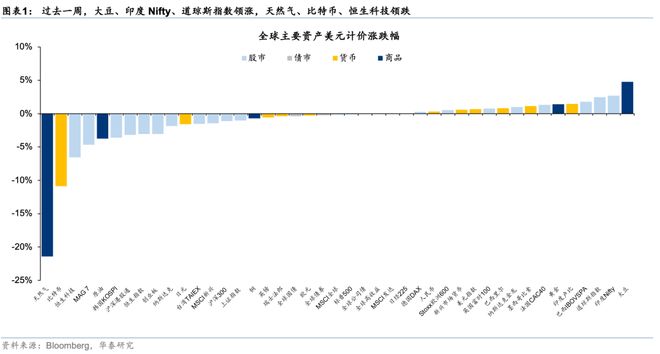
华泰证券港股策略:港股正在进入布局区
Zheng Quan Shi Bao Wang· 2025-11-24 00:08
Core Viewpoint - Huatai Securities reports that recent market volatility is primarily driven by liquidity, sentiment, and risk appetite, but remains optimistic about the domestic asset revaluation trend and the demand for core assets [1] Group 1: Market Conditions - The current market volatility has raised concerns among investors regarding the divergence between weakening economic data and the stock market [1] - The adjustment in the Hong Kong stock market occurred earlier and has seen a deeper decline compared to the A-share market, indicating a potential for value [1] Group 2: Investment Recommendations - Short-term capital may continue to seek refuge and shift between high and low sectors, with a focus on consumer services, construction, textiles and apparel, and home appliances, which have underperformed this year [1] - In the third round of revaluation since August, certain industries have seen limited gains but significant recent declines, suggesting a higher probability of being "wronged," particularly in electronics, pharmaceuticals, automotive, and light manufacturing [1] - The technology sector in Hong Kong has experienced considerable pullbacks, and while sensitivity to positive catalysts has decreased amid falling risk appetite, there remains a revaluation opportunity once liquidity conditions improve [1]
晨会报告:哪些二级债基适配高波环境?-20251112
Shenwan Hongyuan Securities· 2025-11-12 01:01
Core Insights - The report discusses the adaptability of secondary bond funds in high volatility environments, emphasizing diverse strategies for selecting aggressive products [3][12]. - It highlights the importance of high allocation and growth styles in secondary bond funds, suggesting that funds with a weighted average stock PE above 30 times are classified as growth style funds [4][12]. - The report also notes the increasing investment in Hong Kong stocks by secondary bond funds, with a stock market value ratio reaching 11.21% in Q3 2025 [12]. Summary by Sections High Allocation Strategy - High allocation secondary bond funds typically maintain high positions, with an average convertible bond allocation exceeding 30% across 64 funds, including both conservative and aggressive styles [3][12]. - A three-dimensional selection system is recommended, focusing on high elasticity, favorable holding experience, and cost-effectiveness, evaluated through three core indicators and five sub-indicators [12]. Growth Style - Growth style funds are identified by their holding stocks with a PE ratio above 30, with evaluations based on holding experience and risk-return ratios, particularly the Sharpe ratio [4][12]. - The report emphasizes the need to consider industry rotation, portfolio construction methods, and the balance between growth and quality [4][12]. Hong Kong Stock Strategy - The report indicates a continuous increase in the proportion of Hong Kong stock investments within secondary bond funds, with specific funds maintaining stable positions in this market [12]. - It mentions that the investment limit for Hong Kong stocks is capped at 50% of the stock assets for products that can invest in Hong Kong stocks [12]. Tool-based Products - Tool-based products within secondary bond funds include strategies focused on innovation and micro-cap stocks, with specific funds targeting these areas [12]. - The report identifies representative products for micro-cap strategies and highlights the unique index-enhanced strategy products focused on innovation [12].
申万宏源证券晨会报告-20251112
Shenwan Hongyuan Securities· 2025-11-12 00:44
Core Insights - The report emphasizes the diverse strategies of secondary bond funds and the significant differences in their risk-return profiles, suggesting a focus on high-positioning and growth-oriented funds to capitalize on high-growth sectors [3][12] - It highlights the increasing investment in Hong Kong stocks by secondary bond funds, with the proportion reaching 11.21% of stock market value in Q3 2025, indicating a trend towards technology-driven assets [12] - The report outlines a three-dimensional selection system for high-elasticity products, focusing on high performance, good holding experience, and cost-effectiveness [12] Summary by Sections Secondary Bond Fund Strategies - The report identifies four main strategies for selecting secondary bond funds suitable for high volatility environments: high positioning, growth style, Hong Kong stock strategy, and tool-type products [3][12] - High-positioning funds typically have an average convertible bond position exceeding 30%, with 64 funds identified, ranging from conservative to aggressive styles [12] - Growth style funds are characterized by a weighted average PE ratio above 30, with evaluations based on holding experience and risk-return ratios [4][12] Hong Kong Stock Strategy - The report notes a continuous increase in the investment ratio of secondary bond funds in Hong Kong stocks, with specific funds maintaining stable positions [12] - It mentions that the investment limit for products that can invest in Hong Kong stocks is capped at 50% of their stock assets [12] Tool-Type Products - The report discusses the emergence of tool-type products within secondary bond funds, including strategies focused on innovation and micro-cap stocks [12] - It highlights specific funds that target dual innovation strategies and micro-cap stocks, indicating a growing trend in specialized investment approaches [12]
哪些二级债基适配高波市场环境?
Shenwan Hongyuan Securities· 2025-11-07 08:45
1. Report Industry Investment Rating - No information provided about the industry investment rating in the report. 2. Core Views of the Report - Secondary bond funds have diverse strategies and significant differences in risk - return indicators. Higher -仓位 products generally perform better in 2025, with products having an excessively high convertible bond position achieving an average return of 14.43%, while low -仓位 products only have an average return of 3.88% [3][4]. - There are four strategies to select offensive secondary bond funds: high -仓位 convertible bond strategy, growth - style strategy, Hong Kong stock strategy, and tool - type product strategy [3][10]. 3. Summary by Related Catalogs 3.1 Strategy 1: High -仓位 Convertible Bond Funds - High -仓位 convertible bond funds vary in style. There are currently 64 secondary bond funds with an average convertible bond position exceeding 30%, including conservative, aggressive, and extreme - style products [20]. - A three - dimensional selection system is used to evaluate high - elasticity products based on three core indicators and five sub - indicators, focusing on high elasticity, good holding experience, and high cost - effectiveness [19][20]. - Some high - performance high -仓位 convertible bond funds are recommended, such as Huabao Enhanced Income A, with a 924 - since return of 50.44%, and Guangda Tianyi A, with a 924 - since return of 55.05% [22]. 3.2 Strategy 2: Growth - Style Funds - Growth - style funds are identified by a weighted average stock PE above 30 times. Fund evaluation focuses on holding experience (number of new high days, maximum drawdown recovery speed) and risk - return cost - effectiveness (Sharpe ratio) [52]. - Many growth - style secondary bond funds are listed, such as Invesco Great Wall Jinyi Yuli A, with a 924 - since return of 8.53%, and Penghua Enjoy A, with a 924 - since return of 11.92% [51]. - Different investment strategies of growth - style funds are analyzed, including industry rotation (e.g., Yongying Steady Enhancement, Huashang Credit Enhancement), industry concentration and stock dispersion (e.g., Huashang Credit Enhancement, Huashang Anheng), and the balance between booming growth and quality growth (e.g., Invesco Great Wall Jinyi Fengli, Penghua Double Debt Plus) [55][58]. - Some growth - style funds' investment in popular technology tracks is studied. For example, Yongying Steady Enhancement invests more in the cloud - computing theme, and Xingye Income Enhancement invests more in the semiconductor theme [64][65]. 3.3 Strategy 3: Hong Kong Stock Strategy Funds - The proportion of Hong Kong stock investment in secondary bond funds has been increasing continuously, reaching 11.21% in Q3 2025. Secondary bond funds invest in Hong Kong stocks through the Hong Kong Stock Connect, with an investment limit of up to 50% of the stock assets [98][99]. - Some secondary bond funds with relatively stable Hong Kong stock positions are mentioned, such as Huatai - PineBridge Double - Xin Tianli, Invesco Great Wall Jinyi Zunli, and China - Europe Fengli [99]. - The investment style of Hong Kong - stock secondary bond funds focuses on scarce, low - valuation, high - dividend, and high - quality growth stocks. They do not only invest in scarce Hong Kong - listed assets but also in stocks listed in both Hong Kong and A - shares, and prefer sectors such as technology innovation, finance, and medicine [100][103]. 3.4 Strategy 4: Tool - Type Products - Some secondary bond funds have clear track/style characteristics, such as the dual - innovation strategy (e.g., Fuguo Xingli Enhancement, Penghua Enjoy (Science and Technology Innovation 100 Enhancement)) and the micro - cap strategy (e.g., CITIC Prudential Anxin Return) [3]
华泰证券港股策略:建议从普涨思维转向基本面兑现
Xin Lang Cai Jing· 2025-10-19 23:49
Core Viewpoint - Huatai Securities has released a strategy for Hong Kong stocks, indicating that the current global risk asset valuations are relatively high, with increased leveraged trading, leading to heightened market volatility due to tariff risks, overseas credit, and liquidity concerns. The impact is more emotional rather than a fundamental reversal, suggesting that better opportunities for increasing positions may still need to be awaited [1] Group 1: Market Conditions - Global risk asset valuations are at a high percentile [1] - Increased leveraged trading is contributing to market volatility [1] - Current market impact is driven more by emotional factors than fundamental reversals [1] Group 2: Investment Recommendations - Shift from a broad market rally mindset to a focus on fundamental performance [1] - Attention should be given to technology hardware with upward revisions in earnings expectations over the past month [1] - Consider pharmaceutical stocks that have experienced sufficient price corrections [1] - Focus on leading internet companies and consumer goods with stable ROE and revenue stabilization [1]
港股策略周报-20250708
Shanghai Securities· 2025-07-08 11:02
Market Overview - The Hong Kong stock market indices experienced a mixed performance last week, with the Hang Seng Index declining by 1.52%, the Hang Seng China Enterprises Index down by 1.75%, and the Hang Seng Technology Index falling by 2.34% [5][10] - The Hang Seng Large Cap Index decreased by 1.60%, while the Mid Cap Index rose by 1.93% and the Small Cap Index increased by 2.31% [5][10] Economic Indicators - The manufacturing PMI for June was reported at 49.7%, the non-manufacturing business activity index at 50.5%, and the composite PMI output index at 50.7%, indicating a slight recovery in economic activity with increases of 0.2 percentage points for the first two indices and 0.3 percentage points for the composite index compared to the previous month [6][9] - Experts noted that the Chinese economy demonstrated resilience and vitality in the first half of the year, laying a solid foundation for achieving annual growth targets [6][9] Investment Recommendations - It is suggested to focus on the high-tech manufacturing sector within the Hong Kong stock market due to the positive economic signals indicated by the PMI data [5][6] Market Data - As of July 4, the Hang Seng Index's current PE (TTM) was 10.41 times, approximately at the 55th percentile since January 1, 2007, while the PB was 1.13, at the 40th percentile [7][12] - The southbound capital inflow last week was 13.892 billion HKD, a decrease from the previous week's inflow of 14.489 billion HKD [7][14] - The top five net purchases by southbound funds included SMIC at 2.279 billion HKD, Tracker Fund of Hong Kong at 1.674 billion HKD, Meituan at 1.530 billion HKD, Innovent Biologics at 1.225 billion HKD, and China Construction Bank at 1.096 billion HKD [7][16] - The top five net sales included Alibaba at 6.998 billion HKD, Tencent at 2.015 billion HKD, Xiaomi at 1.274 billion HKD, CanSino Biologics at 0.641 billion HKD, and Pop Mart at 0.413 billion HKD [7][17]
中金:预计今年南向资金流入约8000亿至1万亿港元 恒指料见20500点
Zhi Tong Cai Jing· 2025-04-29 06:11
Group 1 - The core viewpoint of the report is that the southbound capital inflow is expected to reach approximately HKD 800 billion to HKD 1 trillion this year, with various scenarios for the Hang Seng Index (HSI) based on different market conditions [1][2] - In a baseline scenario, the HSI is projected to be around 20,500 points, while in a positive scenario, it could recover to between 23,000 and 24,000 points, and in a pessimistic scenario, it may drop to around 18,000 to 19,000 points due to a 7% decline in corporate earnings [1][2] - Since the beginning of the year, the net inflow of southbound capital has reached HKD 604.08 billion, which is approximately three-quarters of the total inflow of HKD 807.87 billion for the entire previous year, with an average daily inflow 2.5 times that of last year [1] Group 2 - The report indicates that the current sentiment in the market reflects a pessimistic outlook similar to that of late 2018, with the HSI potentially fluctuating around 20,500 points unless new risks emerge [2] - The report highlights that the market has become desensitized to tariff figures, focusing more on the actual impact on growth, which is closely tied to the progress of negotiations and the effectiveness of mainland policies [2] - It is noted that sectors with technology support and lower export exposure, such as internet technology, remain key investment themes, while cyclical sectors related to domestic demand may present better opportunities if fiscal policies can provide adequate support [2]
