爆款IP

Search documents
泡泡玛特大跌!做空新消费的人越来越多
Sou Hu Cai Jing· 2025-12-09 03:44
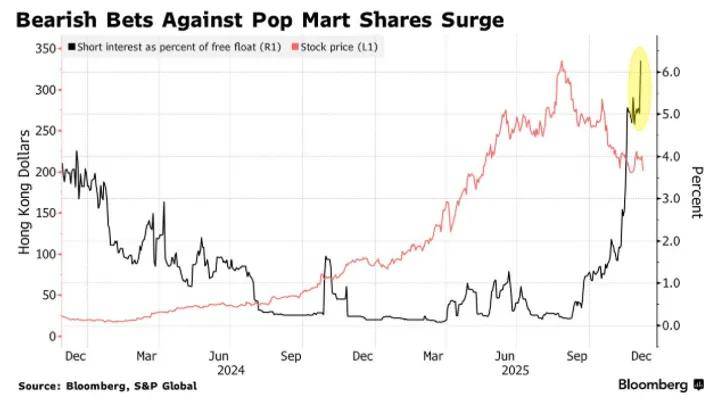
Core Viewpoint - The recent surge in short-selling funds against Pop Mart has led to a significant decline in its stock price, with the short-selling activity reaching a one-year high since September [1][4]. Group 1: Short-Selling Activity - The cumulative funds for short-selling Pop Mart have reached a new high over the past year, contributing to the continuous decline in its stock price [1]. - An increasing number of foreign institutions have published bearish views on Pop Mart, echoing concerns similar to those seen during the AI bubble, indicating a lack of immediate evidence to confirm or refute these views [4]. Group 2: Market Sentiment and Performance - The stock price of Pop Mart is expected to remain stagnant in the short term due to the absence of strong data supporting either bullish or bearish positions, leading to a stalemate [4]. - Concerns have been raised regarding the sustainability of high growth driven by the Labubu product, with fears of a high base effect impacting future performance [6][10]. Group 3: Future Outlook - The ideal time for bottom-fishing in Pop Mart would be when the premium expectations for Labubu diminish and market hopes for new hit products are low [5]. - Pop Mart is currently positioned between the expansion and peak phases of its product cycle, with market fears that it may soon transition into a downturn phase if new hit products are not developed [8][10].


铜师傅的资本突围与增长焦虑
Bei Jing Shang Bao· 2025-11-26 15:54
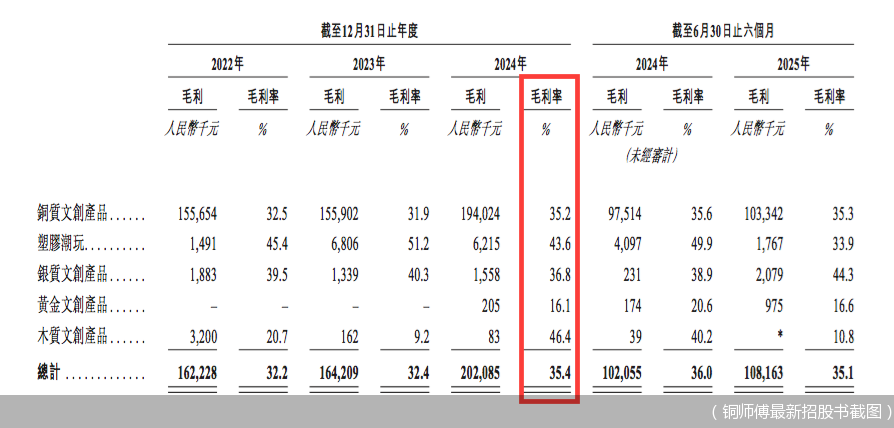
Core Viewpoint - The company, Hangzhou Copper Master Cultural (Group) Co., Ltd., faces multiple challenges in its capital market journey, including price fluctuations of copper, limited customer base expansion, and slow market growth, despite being the market leader in China's copper cultural crafts [1][3][9]. Group 1: Market Position and Financial Performance - Copper Master holds the top market share in China's copper cultural crafts, with its copper products accounting for over 90% of total revenue from 2022 to the first half of 2023 [3][4]. - Revenue from copper cultural products for 2022 and the first half of 2023 was approximately 4.8 billion yuan, 4.88 billion yuan, 5.51 billion yuan, and 2.92 billion yuan, representing 95.4%, 96.3%, 96.6%, and 94.9% of total revenue respectively [3][4]. - The average selling price of copper cultural products has decreased from 363.7 yuan in 2022 to 290.4 yuan in the first half of 2023, attributed to a shift in consumer preference towards lower-priced products [5]. Group 2: Challenges and Risks - The company is highly sensitive to copper price fluctuations, with average copper prices rising from 47,600 yuan per ton in 2019 to 77,600 yuan per ton by June 30, 2023, which could impact procurement costs and overall revenue [4]. - The gross margin for copper cultural products has been relatively low, with figures of 32.5%, 31.9%, 35.2%, and 35.3% from 2022 to the first half of 2023, lagging behind other product categories [4]. - The company has struggled to develop blockbuster IPs, which are crucial for expanding its market reach and customer base [6][8]. Group 3: Product Development and IP Strategy - Copper Master has launched a significant number of new SKUs based on both self-developed and licensed IPs, with 407, 350, and 528 new self-developed SKUs introduced from 2022 to 2024 [6]. - The company’s self-developed IPs have generated approximately 1.3 billion yuan and 1.08 billion yuan in revenue, but overall IP revenue has only accounted for about 20% of total revenue in recent years [6][8]. - The company is expanding its product categories to include plastic toys and silver cultural products, but revenue from these categories remains low, indicating a need for further market penetration [7][8]. Group 4: Industry Outlook and Competitive Landscape - The market for metal cultural crafts is projected to grow from 23.1 billion yuan in 2019 to 29.3 billion yuan by 2029, while the plastic resin category is expected to grow significantly more, indicating limited growth potential for copper products [9]. - The company’s transition from the Shenzhen Stock Exchange to the Hong Kong Stock Exchange aims to leverage more flexible listing conditions and enhance its international presence [9][11]. - Competitors like Zhu Bingren Copper Art Co., Ltd. are also pursuing listings, highlighting the competitive nature of the industry [10].

铜师傅再冲IPO:铜质文创龙头的资本突围与增长焦虑
Bei Jing Shang Bao· 2025-11-25 05:24
Core Viewpoint - The company, Hangzhou Copper Master Cultural (Group) Co., Ltd., faces multiple challenges in its capital market journey, including price fluctuations of copper, limited customer base expansion, and slow market growth, despite holding the leading market share in China's copper cultural crafts at 35% [1][2][3] Financial Performance - Revenue from copper cultural products for the years 2022 to the first half of 2025 is projected to be approximately 480 million RMB, 488 million RMB, 551 million RMB, and 292 million RMB, respectively, accounting for over 94% of total revenue during these periods [3] - The average selling price of copper cultural products has decreased from 363.7 RMB in 2022 to 290.4 RMB in the first half of 2025, attributed to a shift in consumer preference towards lower-priced small-sized products [5] Market Challenges - The copper cultural product market is expected to grow from 23.1 billion RMB in 2019 to 29.3 billion RMB by 2029, while the plastic resin category is projected to increase from 38 billion RMB to 155.5 billion RMB, indicating limited growth potential for copper products [9] - The company’s gross margin for copper cultural products has been relatively low, with figures of 32.5%, 31.9%, 35.2%, and 35.3% from 2022 to the first half of 2025, lagging behind margins of other product categories [3][4] IP and Product Development - The company has launched a significant number of new SKUs based on both self-developed and licensed IPs, with 407, 350, and 528 new SKUs introduced from 2022 to 2024, respectively [6] - Despite the introduction of new IPs, the company lacks a "super IP" that could serve as a cultural symbol and brand icon, which is essential for reaching a broader market [6][8] Strategic Outlook - The company aims to leverage its brand, channels, and product advantages to enhance product value, explore high-end markets, and develop derivative products to tap into existing market potential [10] - The transition to the Hong Kong Stock Exchange is seen as a strategy to improve listing success and efficiency, given the more flexible and international nature of the market [9][10]
当不了Labubu的盲盒,堆满好特卖
3 6 Ke· 2025-10-15 03:52
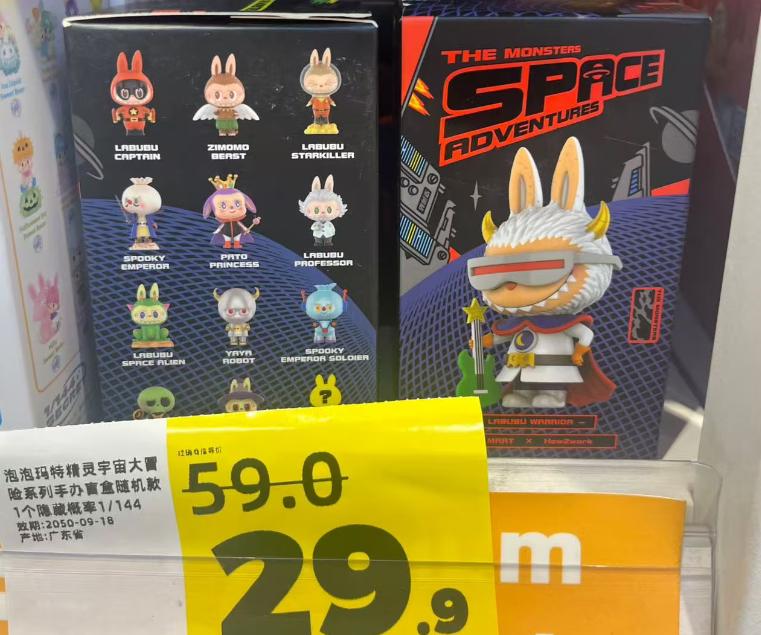
Core Insights - The rise of discount stores like "Hao Te Mai" is reshaping the blind box market, attracting consumers with significantly lower prices compared to traditional offerings [1][9] - The phenomenon of "discount blind boxes" reflects an oversupply in the blind box economy, highlighting structural contradictions within the industry [1][9] - Companies must strategically manage their IP to avoid their products being sold at discount prices, which can impact their market value and brand perception [1][9] Group 1: Consumer Behavior - Young consumers are drawn to "Hao Te Mai" for its "bone-breaking prices," allowing them to purchase multiple blind boxes for a fraction of the original cost [1][5] - The discount store offers a mix of popular and lesser-known IPs, but often features outdated or less desirable products, leading to a perception of "picking up trash" rather than valuable finds [1][2][5] - There is a growing skepticism among consumers regarding the authenticity of the products sold at such low prices, with some associating the store with counterfeit goods [7][8] Group 2: Industry Dynamics - The influx of blind boxes into discount channels like "Hao Te Mai" can indicate that these products are underperforming, which may negatively affect the overall profitability of the companies involved [9][10] - Successful companies like Pop Mart have managed to create a strong market presence by developing proprietary IPs, allowing them to maintain higher profit margins and avoid reliance on external IPs [10][13] - The competitive landscape is shifting, with new entrants seeking to replicate the success of established brands, but many still struggle to create hit IPs, leading to a higher likelihood of unsold inventory [19][24] Group 3: Business Strategy - Companies are exploring various strategies to develop successful IPs, including collaborations with artists and internal design teams to enhance their product offerings [15][16] - The marketing approach has evolved, with companies testing new IPs through social media before committing to larger production runs [16][19] - "Hao Te Mai" is adjusting its product mix to focus more on blind boxes and other trending items, aiming to improve sales efficiency and adapt to changing consumer preferences [23][24]