
自有IP

Search documents
2025年全球销量破4亿只,爆款在手,泡泡玛特如何“长红”?
Xin Lang Cai Jing· 2026-02-10 13:48
Core Viewpoint - Pop Mart has announced significant growth in its global sales and revenue for 2025, driven by its successful IPs, particularly THE MONSTERS series, which has become a global phenomenon [3][4]. Group 1: Sales and Revenue Performance - In 2025, Pop Mart's global sales of all IP products are expected to exceed 400 million units, with THE MONSTERS series alone surpassing 100 million units [3]. - For the first half of 2025, Pop Mart reported revenue of 13.88 billion yuan, a year-on-year increase of 204.4%, and an adjusted net profit of 4.71 billion yuan, up 362.8% [3]. - By the third quarter of 2025, revenue is projected to grow by 245%-250%, with domestic revenue increasing by 185%-190% and overseas revenue by 365%-370% [4]. Group 2: Key IP Performance - In the first half of 2025, 13 IPs generated over 100 million yuan in revenue, with 5 IPs exceeding 1 billion yuan, including THE MONSTERS, MOLLY, SKULLPANDA, CRYBABY, and DIMOO [4]. - THE MONSTERS series, particularly LABUBU, achieved the highest revenue of 4.81 billion yuan, a staggering year-on-year growth of 668.0%, accounting for 34.7% of total revenue [4]. Group 3: Market Trends and Competitive Landscape - The global trend toy market is projected to grow from $20.3 billion in 2020 to $52 billion by 2025, with a compound annual growth rate of 19.8% [5]. - Competitors in the trend toy sector, such as Miniso and 52TOYS, are intensifying their efforts, prompting Pop Mart to solidify its competitive advantages and build a strong market position [5]. Group 4: Strategic Recommendations - To maintain IP engagement, it is suggested that Pop Mart learn from Disney by enriching IPs with deeper stories and cultural elements, and by fostering closer connections with consumers [5]. - Developing proprietary IPs and enhancing membership benefits are seen as crucial strategies for extending customer loyalty and lifecycle [5].


9.9元IP玩具商桑尼森迪赴港上市:营销费用持续走高,尚未开发出自有IP
Bei Jing Shang Bao· 2026-01-13 14:05
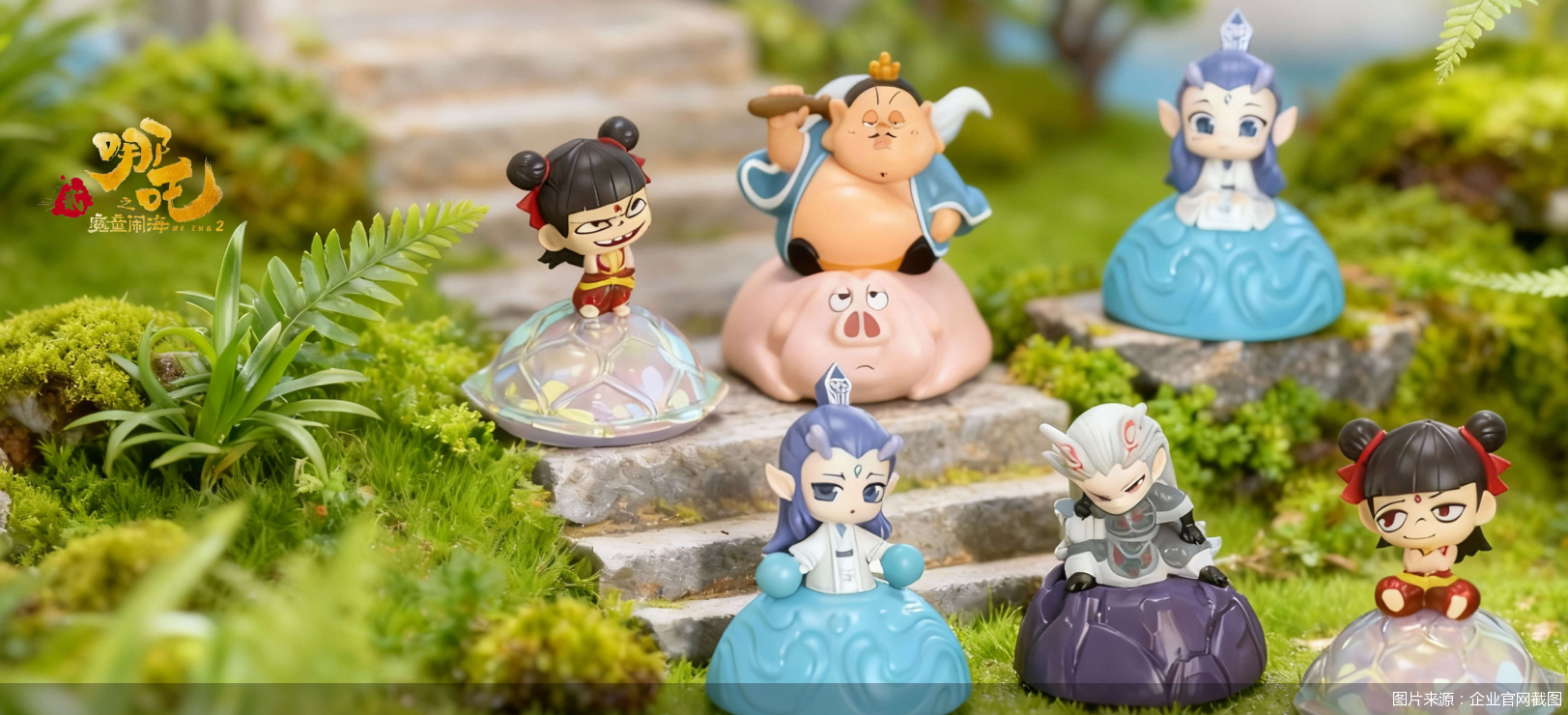
Core Viewpoint - Sunnysondi (Hunan) Group Co., Ltd. has submitted its prospectus to the Hong Kong Stock Exchange for a main board listing, leveraging popular IPs like "Nezha: Birth of the Demon Child" and "Wang Wang Mountain Little Monsters" to establish a leading position in the affordable IP toy market [2][3] Group 1: Company Performance - Sunnysondi's revenue has shown consistent growth from 2023 to the first three quarters of 2025, achieving revenues of 107 million yuan, 245 million yuan, and 386 million yuan respectively, with profits turning positive in 2025 [3] - The company's IP toy business has increased its revenue contribution from 28% in 2023 to 78.3% in the first three quarters of 2025 [3] Group 2: Market Position and Strategy - The affordable IP toy market in China is projected to reach 29 billion yuan in 2024, with a compound annual growth rate of 27.7% from 2024 to 2030 [4] - Sunnysondi plans to use the funds raised from the IPO to enhance product competitiveness, strengthen smart manufacturing and digital capabilities, expand sales networks, and seek strategic investments and acquisitions [4] Group 3: Marketing and Brand Challenges - The company has increased its marketing and promotional expenses significantly, with costs rising from 12.22 million yuan in 2023 to 36.82 million yuan in the first three quarters of 2025, representing 11.5%, 8.5%, and 9.5% of revenue respectively [5] - Despite the marketing efforts, there is a notable disparity in sales volume among different product lines, with top products significantly outperforming others [5][6] Group 4: IP Dependency and Risks - Sunnysondi relies heavily on non-exclusive IP partnerships, with over 20 collaborations across various categories, but lacks proprietary IP, which poses risks related to pricing power and potential termination of agreements [8][9] - The company has seen a substantial increase in licensing fees, which rose from 6.48 million yuan in 2023 to 50.77 million yuan in the first three quarters of 2025, accounting for 20.3% of sales costs [8]
年终盘点|不只是LABUBU!中国潮玩走向全球
Sou Hu Cai Jing· 2025-12-31 19:46
Core Viewpoint - The潮玩 (trendy toy) market is experiencing significant growth, driven by "emotional consumption," with LABUBU's global success marking a pivotal moment in 2025 [2][3]. Group 1: Market Growth and Trends - The潮玩 market in China is projected to grow from 229 billion in 2020 to 763 billion by 2024, with expectations to surpass 1 trillion by 2026 [5]. - In 2025, emotional consumption has become a key trend, leading to a surge in潮玩 popularity, particularly following LABUBU's breakout success [2][3]. - The潮玩 industry has seen a rapid increase in new registrations, with 9,787潮玩-related companies established in 2025, bringing the total to 25,000 [5]. Group 2: Company Performance - Bubble Mart reported a revenue of 138.8 billion in the first half of 2025, a 204.4% increase year-on-year, with an adjusted net profit of 47.1 billion, up 362.8% [3]. - LABUBU's segment, THE MONSTERS, generated 48.1 billion in revenue, achieving a staggering 668% year-on-year growth [3]. - Bubble Mart's international revenue showed remarkable growth, with the Americas experiencing a 1,142.3% increase and Europe seeing a 729.2% rise [8]. Group 3: International Expansion - Bubble Mart participated in the Macy's Thanksgiving Day Parade in New York, becoming the first Chinese brand to feature an original潮玩 IP in the event [6]. - The company has seen long queues at its overseas stores, indicating strong demand for LABUBU products [6]. - Other潮玩 brands like 52TOYS and TOP TOY are also expanding internationally, with TOP TOY planning to open over 1,000 stores in 100 countries within five years [9]. Group 4: Development of Proprietary IP - The success of LABUBU has prompted潮玩 brands to focus on developing proprietary IP, which offers greater brand autonomy compared to licensed IP [10]. - TOP TOY's revenue from proprietary IP remains low, with only 610,000 generated in the first half of 2025, compared to 6.15 billion from licensed IP [10]. - Both 52TOYS and TOP TOY are increasing their investment in proprietary IP, with 52TOYS launching multiple original潮玩 IPs in 2025 [12]. Group 5: Marketing Strategies - The rise of明星营销 (celebrity marketing) has become a significant strategy for潮玩 brands, with various brands collaborating with popular figures to boost visibility and sales [16]. - Brands are recognizing that while celebrity endorsements can drive initial interest, sustained success requires effective brand management and product quality [16].
名创优品(09896):三季度营收同比增长28%,同店表现持续改善
Guoxin Securities· 2025-11-29 09:03
Investment Rating - The report maintains an "Outperform the Market" rating for the company [6]. Core Insights - The company demonstrated a significant acceleration in revenue growth in Q3, achieving a revenue of 5.797 billion, a year-on-year increase of 28.2%, surpassing previous guidance [2]. - The adjusted operating profit for Q3 was 1.022 billion, up 14.8% year-on-year, while the adjusted net profit reached 767 million, reflecting an 11.7% increase [2]. - The company expects Q4 revenue growth to be between 25% and 30%, with double-digit same-store sales growth anticipated in both China and the U.S. [2]. - The domestic business is benefiting from a large store strategy and refined operations, with same-store sales showing a positive trend [4]. - The overseas business is expanding rapidly, with a net addition of 117 stores in Q3, bringing the total overseas store count to 3,424 [2]. Financial Performance Summary - Q3 revenue for the brand was 5.222 billion, a year-on-year increase of 22.9%, with domestic revenue at 2.909 billion, up 19.3% [2]. - The company forecasts a full-year revenue growth of 25%, with adjusted operating profit expected to be between 3.65 billion and 3.85 billion [4]. - The financial projections for 2023 to 2027 indicate a steady increase in revenue and net profit, with 2023 revenue projected at 13.839 billion, growing to 28.578 billion by 2027 [5]. - The adjusted net profit for 2023 is estimated at 2.253 billion, with a projected increase to 3.257 billion by 2027 [5].
第三季度TOP TOY收入翻倍 名创优品叶国富:将不断提升自有IP的销售贡献
Mei Ri Jing Ji Xin Wen· 2025-11-22 04:53
Core Viewpoint - Miniso reported a total revenue of 5.8 billion yuan for Q3 2025, marking a 28% year-on-year increase, with significant growth in both its main brand and TOP TOY segment [1] Revenue Performance - Total revenue for Miniso Group reached 5.8 billion yuan, up 28% year-on-year [1] - Revenue from the Miniso brand was 5.22 billion yuan, reflecting a 23% year-on-year growth [1] - TOP TOY brand revenue was 570 million yuan, showing a remarkable 111% year-on-year increase [1] Strategic Developments - Miniso is advancing the plan for a separate listing of TOP TOY on the Hong Kong Stock Exchange [1] - TOP TOY is currently positioned as a trendy toy collection store, primarily focusing on external IP retail, with a relatively small proportion of self-owned IP [1] Operational Insights - During the earnings call, the CEO highlighted that TOP TOY achieved single-digit same-store sales growth in Q3, with a significant improvement in gross margin [1] - The rapid expansion of the self-owned IP 'Nommi' contributed to the performance, and TOP TOY is enhancing store image to create more immersive experience scenarios [1] - The company aims to increase the sales contribution from its self-owned brands and IP [1]
想做成泡泡玛特第二,TOP TOY还差什么?
Xin Lang Cai Jing· 2025-11-20 05:41
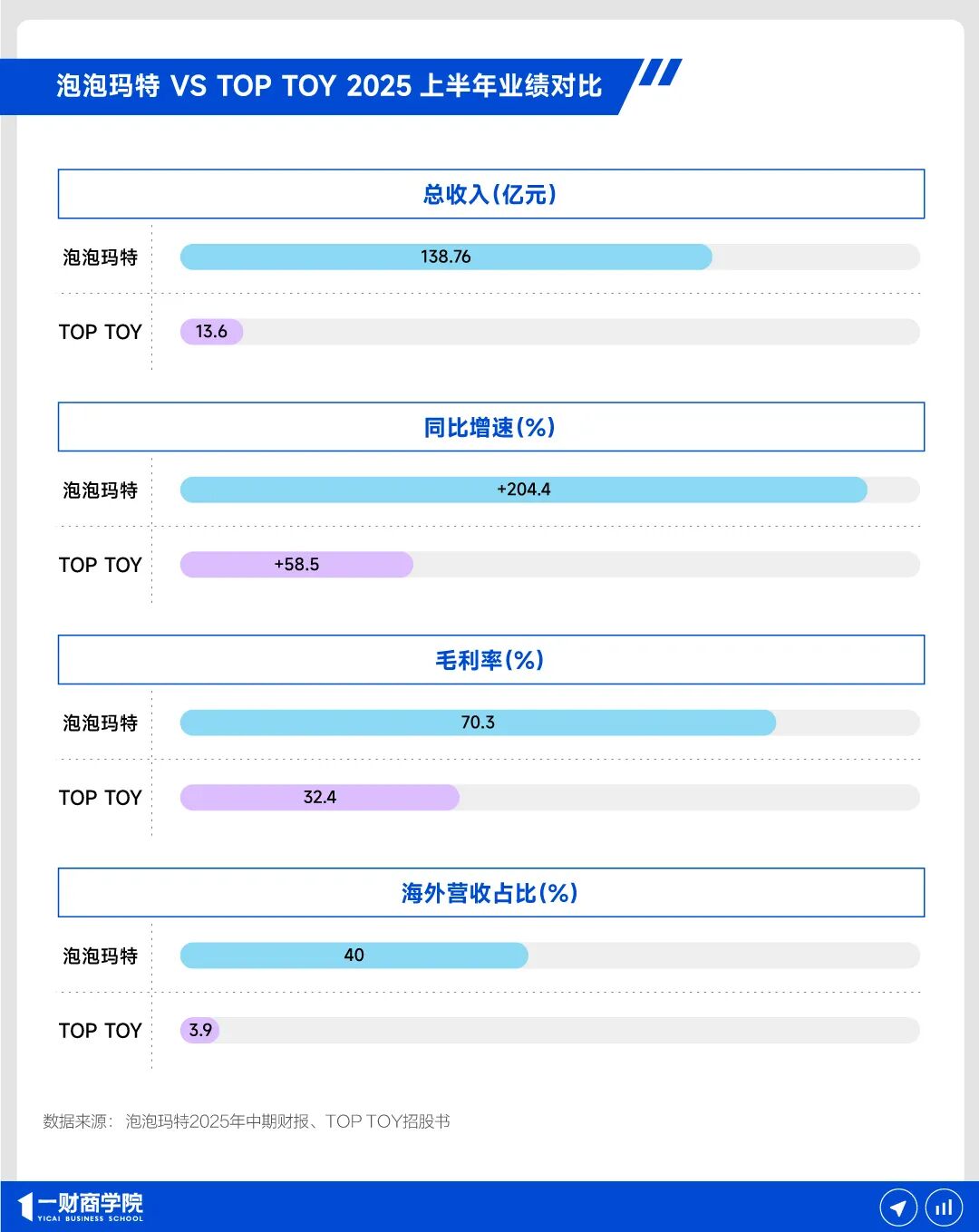
Core Insights - TOP TOY has submitted its listing application to the Hong Kong Stock Exchange, marking a significant step for the brand under the ownership of Miniso, which recently acquired Yonghui Supermarket [1] - The founder of Miniso, Ye Guofu, expresses strong confidence in the retail sector, indicating a strategic vision for expanding TOP TOY alongside its other retail ventures [1] - TOP TOY aims to position itself closer to the success of Pop Mart, despite following a different business model, by enhancing its own IP portfolio and expanding overseas [1][4] Business Model Analysis - The collectible toy industry features three primary business models: licensed IP, proprietary IP, and third-party IP [2] - TOP TOY incorporates all three models but is increasing its focus on proprietary IP ahead of its IPO [3] - By 2025, TOP TOY's proprietary IP is expected to contribute 5%-10% of total revenue, compared to Pop Mart's 90% [4] Financial Performance Comparison - In the first half of 2025, Pop Mart reported a profit of approximately 4.6 billion, while TOP TOY's profit was only 180 million, highlighting a significant disparity in revenue scale and profit margins [6] - Pop Mart's gross margin stands at 70.3%, more than double that of TOP TOY, indicating a challenge for TOP TOY in achieving similar profitability [9] Strategic Initiatives - TOP TOY's strategy includes reducing reliance on third-party IP and increasing proprietary product development to enhance profit margins [13] - The company has successfully launched its proprietary IP "Nuomi Er," achieving sales of 50 million within a year and a half, aiming to replicate the success of Pop Mart's Molly [13][21] - TOP TOY is also focusing on expanding its online sales, which currently account for only 8.5% of total sales, compared to Pop Mart's 35.5% [14] Global Expansion Plans - TOP TOY has initiated a global strategy to establish 1,000 overseas stores within five years, leveraging its existing retail network for market penetration [18][19] - The company plans to utilize its extensive offline presence, including nearly 300 brand stores and over 8,000 stores from Miniso and Yonghui, to gather consumer data and refine its IP selection process [19][22] Competitive Landscape - TOP TOY is currently perceived as following Pop Mart's lead rather than innovating, as evidenced by its recent product adaptations [20] - The company recognizes the importance of capital in acquiring successful IPs, with plans to leverage its market position for future growth [21] - The ability to effectively market and distribute IPs through its extensive channels is seen as a critical advantage for TOP TOY [22][23]
TOP TOY:成于渠道,困于渠道
3 6 Ke· 2025-11-10 09:50
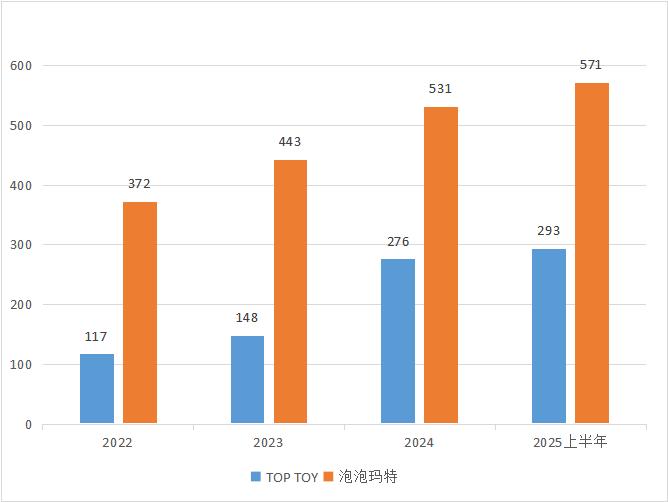
Core Insights - TOP TOY, a潮玩 brand under Miniso, has submitted its prospectus to the Hong Kong Stock Exchange, aiming to raise approximately $300 million [1] - The brand has experienced rapid expansion in the潮玩 market since its establishment in 2020, positioning itself as a "潮玩聚集地" [1][2] - Despite impressive revenue growth, TOP TOY faces challenges in maintaining its expansion rate and profitability due to reliance on external IPs and a franchise model [8][12] Company Overview - TOP TOY was founded in 2020 and has quickly grown to become a significant player in the潮玩 market, which is projected to grow from RMB 207 billion in 2019 to RMB 587 billion by 2024, with a CAGR of 23.2% [1][2] - The company reported a revenue of RMB 19.09 billion in 2024, marking a year-on-year increase of 30.64% [2][5] - The product range includes self-developed and externally sourced IPs, with a focus on figures, 3D models, and plush toys [1][4] Market Position and Growth - TOP TOY's store count increased from 117 in 2022 to 293 by mid-2025, with a notable rise in franchise stores [2][4] - However, the growth in store numbers has not translated into proportional revenue growth, indicating a potential slowdown in expansion [2][4] - The company’s revenue structure shows that潮玩 product sales account for approximately 97% of total income, with distributors contributing nearly 50% of revenue [4][5] Profitability and Financial Performance - TOP TOY achieved profitability in 2023, with net profits of RMB 2.97 billion in 2024 and RMB 1.8 billion in the first half of 2025, resulting in a net profit margin of about 13.2% [5][8] - The gross margin has been relatively low, ranging from 28% to 30%, primarily due to the franchise model and reliance on external IPs [4][5] IP Strategy and Challenges - The company has a significant number of licensed IPs but lacks strong self-developed IPs, which limits its competitive edge in the market [8][12] - The reliance on external IPs poses risks such as rising licensing costs and potential expiration of contracts, which could impact long-term growth [8][12] - TOP TOY is investing in developing its own IPs, having acquired stakes in companies to enhance its IP portfolio [11][12] Channel Structure and Future Outlook - The current channel structure is heavily reliant on distributors and franchisees, with over 50% of revenue coming from this model [13][15] - The company aims to reduce dependency on its parent company’s distribution channels to enhance brand identity and market presence [17] - Future plans include expanding the store count to 380-400 by the end of the year and targeting 1,000 stores globally within five years [17]
资本市场,被潮玩“坑”怕了
创业邦· 2025-11-03 10:11
Core Viewpoint - The article discusses the current state and challenges of the Chinese潮玩 (trendy toy) industry, highlighting the contrasting performance of leading companies like泡泡玛特 (Pop Mart) and new entrants likeTOP TOY as they navigate market dynamics and investor sentiment [6][8]. Market Performance - TOP TOY has recently initiated its IPO process in Hong Kong, following a $59.426 million A-round financing led by Temasek, valuing the company at $1.3 billion [6]. -泡泡玛特 reported a significant revenue increase of 245%-250% year-on-year for Q3 2025, with overseas market growth reaching 365%-370% [6][10]. - Despite strong revenue growth,泡泡玛特's stock price has seen a decline, with a notable drop of 8.08% on the day of its earnings report [6][8]. Market Growth and Trends - The Chinese潮玩 market is projected to grow from 22.9 billion yuan in 2020 to 76.3 billion yuan by 2024, with a compound annual growth rate (CAGR) of 35.1% [10]. - The growth drivers include a structural upgrade in consumer demographics, diversification of product categories, and a trend of covering all age groups [10]. - The Z generation contributes over 40% of the market share, driven by a desire for self-pleasure in consumption [10]. Capital Market Concerns - Investors are increasingly cautious about the潮玩 industry due to its heavy reliance on intellectual property (IP), which is subject to changing consumer emotions and trends [12]. - The premium consumers are willing to pay for top IPs has decreased significantly, indicating a potential decline in market enthusiasm [12]. - The influx of new brands has intensified competition, leading to market saturation and reduced investor confidence in smaller brands [13]. Global Expansion and Challenges -泡泡玛特's overseas revenue reached 5.59 billion yuan in the first half of 2025, accounting for 40% of total revenue, with significant growth in the Asia-Pacific and Americas regions [14][16]. - However, many brands are merely replicating domestic strategies abroad without adapting to local cultures, raising concerns about sustainable growth [16]. Profit Margins and Business Models - The潮玩 industry enjoys high profit margins, with泡泡玛特's gross margin increasing from 57.5% in 2022 to 70.3% in the first half of 2025 [18][19]. - The high margins are attributed to the emotional resonance of IPs and low material costs, but there are concerns about the sustainability of this model [19][23]. - TOP TOY's reliance on IP licensing rather than owning its IP has resulted in lower profitability compared to泡泡玛特 [23]. Comparison with Disney - Despite the growth of潮玩 brands, none have reached the scale or cultural impact of Disney, which has a market capitalization over four times that of泡泡玛特 [28]. - Disney's success is attributed to its comprehensive ecosystem of stories, IPs, and merchandise, which潮玩 brands have yet to replicate [28][29]. - The lack of deep cultural narratives and emotional connections in the潮玩 industry limits its potential for long-term growth and consumer loyalty [30].

名创优品:再开100家泰国门店,并逐步拓展至全球丨消费出海
2 1 Shi Ji Jing Ji Bao Dao· 2025-10-29 13:11
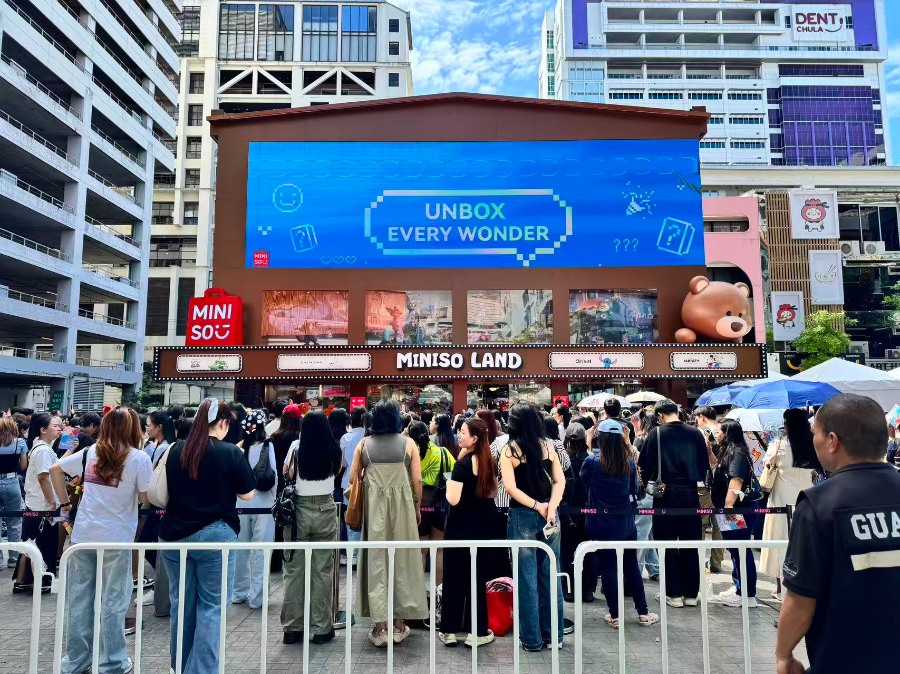
Core Insights - The founder of MINISO, Ye Guofu, believes that China's IP market is just beginning to explode, with significant potential for overseas expansion, particularly in cultural consumption [1][8] - MINISO LAND, the company's strategic store format, has opened its first overseas location in Bangkok, Thailand, which has exceeded revenue expectations [2][3] Expansion Strategy - Since its overseas expansion began in late 2015, MINISO has viewed Southeast Asia as its primary overseas base, with Thailand being a key focus due to its young population and cultural similarities to China [2][5] - The company plans to open 100 stores in Thailand over the next 3-5 years, primarily through direct ownership, and will also expand into other Southeast Asian countries [2][7] Business Model - The "IP + Scene" business model has attracted consumer attention and generated significant sales, with the MINISO LAND store in Shanghai achieving over 100 million yuan in sales within nine months [3][5] - In Bangkok, the IP product ratio in the MINISO LAND store is as high as 85-90%, reflecting local consumer preferences for both international and local IPs [6][7] Financial Performance - As of June 2023, MINISO operates 7,612 stores globally, with 4,305 in China and 3,307 overseas. The overseas business generated 1.94 billion yuan in revenue in Q2 2025, a 28.6% year-on-year increase, accounting for 42.6% of total revenue [7][8] IP Development - MINISO aims to cultivate its own IP, with a goal of having 70% of its products as self-developed IP and 30% as international IP. The company has signed contracts with 17 local artists and aims to sign over 20 by the end of the year [8][9] - The company has successfully launched several self-developed IPs, with "Youyou Sauce" generating over 40 million yuan in sales since its launch in June 2023 [9][10] Store Optimization - The "Tenglong Huan Niao" strategy involves systematically updating a portion of stores rather than a mass closure, focusing on enhancing store locations and sizes to improve sales performance [10]
名创优品:再开100家泰国门店,并逐步拓展至全球
2 1 Shi Ji Jing Ji Bao Dao· 2025-10-29 12:39
Core Viewpoint - MINISO is expanding aggressively into overseas markets, particularly in Southeast Asia, with a focus on cultural consumption and the development of proprietary IPs [1][2][6]. Group 1: Expansion Strategy - MINISO opened its first overseas MINISO LAND store in Bangkok, Thailand, which has exceeded revenue expectations and plans to open 100 more stores in the next 3-5 years [2][3]. - The company views Southeast Asia as its primary overseas base, benefiting from a young population, high acceptance of fashion and IP, and favorable operating costs [2][3]. - MINISO LAND stores are designed to enhance brand visibility and market penetration, with a significant portion of products being IP-related [3][4]. Group 2: Market Adaptation - The Thai market shows a strong acceptance of both international and local IPs, leading to a tailored product offering in stores [4][6]. - MINISO has established a regional logistics center in Thailand to optimize operational costs and improve product competitiveness [4]. Group 3: Financial Performance - As of June 2023, MINISO operates 7,612 stores globally, with 3,307 located overseas, and reported overseas revenue of 1.94 billion yuan in Q2 2025, a 28.6% increase year-on-year [6][8]. - Overseas revenue accounted for 42.6% of total revenue in Q2 2025, up from 39.5% in the same period of 2024 [6]. Group 4: Proprietary IP Development - MINISO aims to develop its own IPs, with a goal of having 70% of its offerings as proprietary IPs and 30% as international IPs [7][8]. - The company has signed contracts with 17 local artists and aims to sign over 20 by the end of the year, emphasizing the importance of nurturing these IPs [7][8]. Group 5: Store Optimization - The strategy of "腾笼换鸟" (replace old with new) involves systematic updates to existing stores rather than a mass closure, enhancing store performance significantly [9]. - Upgraded stores in Thailand have seen sales increase by 8-10 times compared to previous performance, indicating a successful investment in store optimization [9].