
牧光互补

Search documents
聚焦高质量发展|云南昭通:绿色能源澎湃乌蒙动力
Xin Hua Wang· 2026-02-06 08:41
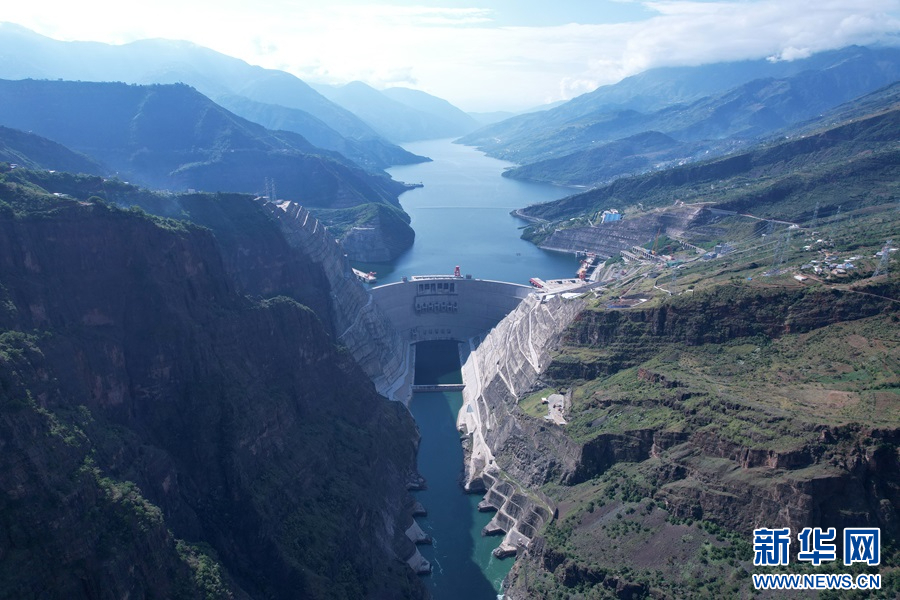
Core Insights - The article highlights the rapid development of the clean energy industry in Zhaotong, driven by wind, water, and solar energy, aiming for a multi-energy complementary system and integrated development of "source, grid, load, and storage" [1][5][11] Group 1: Hydropower Development - The Baihetan Hydropower Station, the second-largest in the world, is a key component of China's "West-to-East Power Transmission" project, contributing to the world's largest clean energy corridor [4] - The Baihetan Hydropower Station has a total installed capacity of 16 million kilowatts, with each unit capable of generating 150 kilowatt-hours of electricity, sufficient for a typical household's monthly consumption [4][5] - Zhaotong's three major hydropower stations have a combined installed capacity of 13.86 million kilowatts, with the Xiluodu Hydropower Station alone generating over 700 billion kilowatt-hours since its commissioning [4][5] Group 2: Wind and Solar Energy Integration - Zhaotong is expanding its wind and solar energy capacity, with the Qiaojia County Laishishan Wind Farm having an installed capacity of 223,500 kilowatts and generating over 5.499 billion kilowatt-hours to date [6][9] - The Baigoulin Photovoltaic Power Station has a total installed capacity of 200 megawatts, expected to generate over 250 million kilowatt-hours by 2025, benefiting from Zhaotong's high solar irradiation [9][11] Group 3: Industrial Integration and Economic Impact - The integration of clean energy has significantly benefited local industries, with Yunnan Yun Aluminum Haixin Aluminum Co., Ltd. projected to consume approximately 9.5 billion kilowatt-hours of electricity by 2025, achieving a high operating rate of up to 90% [11][14] - The company has produced 3.3545 million tons of green aluminum, generating an industrial output value of 59.712 billion yuan and paying 2.171 billion yuan in taxes [14][16] - The presence of abundant green electricity and a complete upstream supply chain has enabled local manufacturers to meet stringent supply chain requirements from global high-end clients [16]


青海祁连:光伏板下育藏羊
Ke Ji Ri Bao· 2026-02-06 00:40
Core Viewpoint - The integration of solar power and livestock farming in Qilian County, Qinghai Province, has significantly improved the living conditions of local herders, showcasing a successful model of sustainable development and ecological farming [1][2][3] Group 1: Infrastructure Development - The State Grid Haibei Power Supply Company extended the power grid to Yanglong Township, which previously lacked access to the main electricity grid, establishing a 35 kV power line to enhance local living conditions [1] - A specialized team, referred to as the "Electrician Trio," was formed to ensure reliable electricity supply for 920 local herders [1] Group 2: Changes in Livestock Farming - The introduction of electricity has transformed traditional farming practices, replacing manual water transport with electric pumps, thus alleviating the burdens of seasonal water transport [2] - The availability of electricity has enabled herders to acquire modern appliances such as refrigerators and air conditioners, enhancing their quality of life and business operations [2] Group 3: Economic Impact - The "Pastoral Photovoltaic Complementarity" project in Tole Village has generated an annual electricity output of 776,000 kWh, yielding total annual revenue of 176,000 yuan [3] - The project has facilitated the growth of modern livestock farming, e-commerce, and tourism, contributing to increased income for local herders and promoting regional economic development [3]
“蓝板板”扎根黄土 光伏赋能乡村振兴
Zhong Guo Fa Zhan Wang· 2026-02-02 07:49
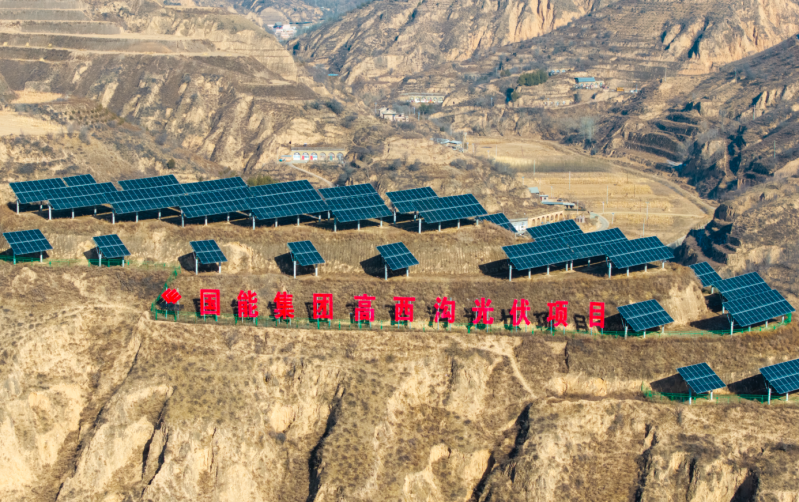
Core Insights - The article highlights the positive impact of solar photovoltaic (PV) projects implemented by the State Energy Group in rural areas, particularly in the villages of Yangjiagou and Gaoxigou, leading to improved living standards for local residents [1][5][6] Group 1: Project Overview - The State Energy Group has invested 38 million yuan in three major solar projects: "Gaoxigou Agricultural-Photovoltaic Complementarity," "Yangjiagou Pastoral-Photovoltaic Complementarity," and "Thousand Villages Photovoltaic Comprehensive Demonstration" [5] - These projects have established a total of 7.2 megawatts of solar power stations, covering four townships and five administrative villages [5] - The projects utilize a cycle mechanism of "power generation on panels, agriculture and livestock underneath, and profit feedback," which has directly increased the annual income of five village collectives by over 150,000 yuan [5] Group 2: Economic Benefits - Local residents have reported significant financial benefits from the solar panels, with individuals receiving annual dividends and support for medical expenses [3][5] - For example, one elderly resident mentioned receiving 3,200 yuan in dividends for her family of eight, along with an additional 3,200 yuan for medical insurance [3] - The collective income generated from the solar projects is used for community improvements, such as environmental sanitation and maintenance of water supply systems [5] Group 3: Social Impact - The solar projects have not only improved economic conditions but also contributed to ecological benefits and poverty alleviation, serving as a replicable model for reducing poverty in ecologically fragile areas [5][6] - The initiative reflects the commitment of the State Energy Group to corporate social responsibility, translating government support into tangible benefits for the local population [6]
助力绿色低碳发展 木里茶布朗光伏电站实现投产发电
Zhong Guo Jing Ji Wang· 2026-01-04 09:21
Core Viewpoint - The successful commissioning of the Chaburang Photovoltaic Power Station marks a significant step in China's green energy transition and optimization of energy structure, contributing to regional economic development [1][2]. Project Overview - The Chaburang Photovoltaic Power Station, located in Muli County, Sichuan Province, has an installed capacity of 1 million kilowatts, making it the largest ultra-high-altitude mountain photovoltaic project in China [1]. - It is a key project under Sichuan's "14th Five-Year" renewable energy plan and part of the Yalong River Basin integrated water-wind-solar base [1]. Economic and Environmental Impact - The project is expected to generate an average annual electricity output of approximately 1.95 billion kilowatt-hours over the next 25 years, saving about 600,000 tons of standard coal and reducing carbon dioxide emissions by approximately 1.55 million tons annually [1]. - It provides significant economic and environmental benefits, supporting the region's green low-carbon development and contributing to the "dual carbon" goals [1]. Construction Challenges and Innovations - The project faced extreme conditions such as high altitude, cold weather, and oxygen deficiency, showcasing the team's exceptional commitment and innovative solutions [2]. - The construction team implemented advanced surveying techniques and optimized construction plans to address the challenges posed by the complex terrain [2][3]. - New construction methods and devices suitable for high-altitude photovoltaic component installation were developed, leading to five utility model patents [3]. Employment and Local Economic Benefits - The project created numerous job opportunities, with over 1,000 installation workers on-site during peak construction, 90% of whom were from local areas such as Liangshan Prefecture and Ganzi Prefecture [4]. - The completion of the project is expected to increase local labor income by over 250 million yuan, significantly benefiting the local community [4].
光伏板下养出“光伏鹿”
Qi Lu Wan Bao· 2025-12-31 12:09
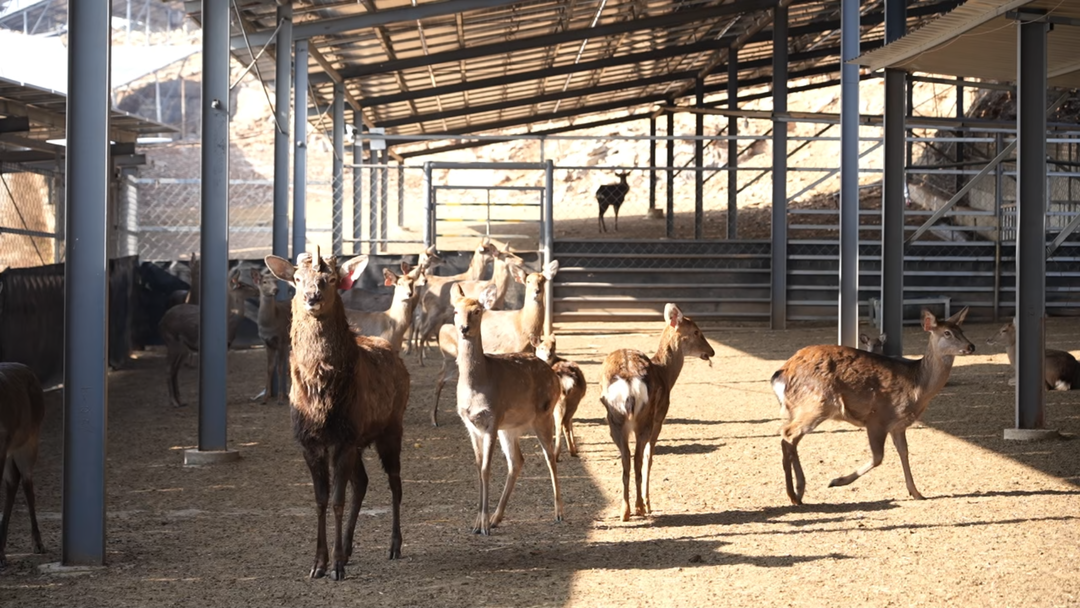
Core Viewpoint - The article highlights a successful "pasture-light complementary" project in Lanying County, which integrates photovoltaic power generation with deer farming and fruit tree planting, transforming previously barren land into a productive ecosystem that benefits both the environment and local communities [3][4][11]. Group 1: Project Overview - The project, initiated by a returning entrepreneur, Wang Xiaoyu, utilizes barren land for photovoltaic panels and deer farming, creating a sustainable model that generates continuous economic benefits [3][4]. - The project officially started in November 2023, with the first batch of deer introduced in August 2024, and has since expanded from an initial herd of 420 to around 500 deer [6][10]. Group 2: Economic Impact - The photovoltaic station generates approximately 1 million kilowatt-hours of electricity monthly, contributing an annual income of around 10 million yuan, while total project revenue has surpassed 20 million yuan [6][10]. - The project employs over 60 local villagers, providing an average annual income of about 50,000 yuan per person, thus revitalizing the local economy and reducing the need for villagers to seek work elsewhere [10][11]. Group 3: Environmental and Agricultural Benefits - The integration of deer farming and fruit tree cultivation creates a closed-loop system where deer manure serves as organic fertilizer, enhancing soil fertility and reducing reliance on chemical fertilizers [10]. - The project promotes biodiversity by incorporating various agricultural practices, including raising free-range chickens and geese, which contribute to pest control and further enrich the soil [10][11]. Group 4: Future Plans and Vision - The entrepreneur aims to replicate the project's success in other similar barren areas, promoting a model that combines renewable energy development with agricultural productivity [11]. - Plans include expanding the variety of farmed animals and fruit trees, as well as leveraging social media to share the project's journey and promote the integration of renewable energy in rural agriculture [13].
青海又增一片“蓝海”
Xin Lang Cai Jing· 2025-12-28 20:28
Core Viewpoint - The successful grid connection of the 425 MW photovoltaic project by the State Energy Group in Hainan, Qinghai, marks a significant advancement in large-scale renewable energy initiatives in China, contributing to energy structure optimization and sustainable local economic development [1][2] Group 1: Project Overview - The project has a total installed capacity of 425 MW and is divided into 129 sub-arrays, connected through 17 collection lines to a newly built 330 kV booster station [1] - The project is expected to generate an average annual electricity output of 860 million kWh, saving 214,100 tons of standard coal and reducing carbon dioxide emissions by 592,500 tons and sulfur dioxide by approximately 1,800 tons annually [1] Group 2: Ecological and Social Impact - The company implemented an ecological protection mechanism throughout the construction process, including soil stripping and storage, dust suppression measures, and plans for ecological restoration to achieve a 100% restoration index [2] - The project supports local development by constructing 12 kilometers of rural roads, providing over 1,100 job opportunities for local residents, and conducting more than 500 training sessions, thereby enhancing local employment [2] - The integration of photovoltaic and livestock farming allows for the provision of natural pastures for 3,000 to 5,000 sheep, promoting a complementary development model that benefits ecology, economy, and society [2]
牧光互补“牛”了产业
Xin Lang Cai Jing· 2025-12-27 02:12
Core Insights - The project in Wangjiang County represents a significant investment in the agricultural sector, with a total investment of 2.008 billion yuan, marking it as the largest agricultural project in recent years for Anqing City [1][2] - The project adopts a collaborative model involving government, enterprises, village collectives, and farmers, creating a comprehensive industrial chain from straw recycling to meat processing [1] - The integration of photovoltaic technology in cattle farming allows for sustainable energy production while reducing construction costs by millions [1] Group 1 - The cattle farm has installed photovoltaic panels covering an area of 45 acres, enabling a dual benefit of energy generation and livestock farming without affecting animal growth [1] - The project is designed to house 3,000 cattle, with each cow consuming an average of 5 tons of straw annually, leading to a total straw utilization of approximately 150,000 tons per year [1] - The project aims to improve local employment and income by effectively utilizing straw and managing waste through advanced ecological feeding and microbial treatment technologies [1] Group 2 - The second phase of the project, covering 250 acres for a cattle transfer and trading center, is nearing completion and is expected to be operational in the first half of next year [2] - Once fully operational, the project is projected to increase the breeding stock in Wangjiang County to 40,000 cattle, producing 32,000 calves annually and utilizing over 500,000 tons of straw [2] - The initiative is anticipated to generate over 5 billion yuan in local economic output and help more than 50,000 residents increase their income [2]
“高冷”经济看发展丨牧光互补!戈壁变“金滩”的双赢密码
Xin Hua Wang· 2025-12-09 14:15
Core Viewpoint - The Tara Beach Photovoltaic Industrial Park in Qinghai Province has successfully implemented a "photovoltaic + ecology + animal husbandry" model, significantly reducing desertification and sandification while enhancing vegetation coverage to 80% over three years and decreasing wind speed by 50% [1] Group 1: Environmental Impact - The park utilizes new development models such as "pastoral photovoltaic complementarity" to combat desertification and sandification [1] - The area has seen a remarkable increase in vegetation coverage, reaching 80% within three years [1] - Wind speed in the region has been reduced by 50% due to the construction of photovoltaic stations [1] Group 2: Economic and Agricultural Development - The introduction of sheep for grazing has proven more effective than manual weeding, leading to the emergence of "photovoltaic sheep" [1] - The number of sheep in the Tara Beach area has increased from 600 to over 20,000 in a few years [1] - The region has established 32 photovoltaic ecological pastures and 56 centralized grazing points [1] Group 3: Innovative Development Model - The "photovoltaic + ecology + animal husbandry" model serves as a new pathway for development in other regions [1] - This model addresses both desertification control and clean energy development, providing a dual solution [1]
光伏绿电为云南巧家注入发展动能
Xin Hua Wang· 2025-11-06 04:33
Core Viewpoint - The development of photovoltaic projects in Qiaojia County, Yunnan Province, is creating a sustainable model that integrates ecological protection with energy production, benefiting local communities and contributing to carbon reduction goals [1][6][8]. Group 1: Photovoltaic Project Development - Qiaojia County has established several benchmark photovoltaic projects, including Haiba and Xiaoyangwo, forming a development pattern of "centralized large-scale development + distributed precise coverage" with a total installed capacity exceeding 1 million kilowatts [3]. - The Haiba project employs rock anchor micro-pile technology on steep slopes above 50 degrees to stabilize photovoltaic panels while simultaneously sowing cold-resistant grass seeds, ensuring both energy generation and ecological protection [3][5]. Group 2: Community Benefits - The construction of photovoltaic projects has created job opportunities for over 5,000 local residents, allowing them to earn "ecological income" through maintenance and weeding work, even during the off-season [5]. - Qiaojia County has implemented a "532" profit distribution model, ensuring that the benefits from distributed photovoltaic projects are shared among village collectives, county funds, and rooftop owners, promoting inclusive growth [5]. Group 3: Environmental Impact - The operational photovoltaic projects in Qiaojia County can provide over 800 million kilowatt-hours of clean electricity annually, equivalent to saving nearly 200,000 tons of standard coal each year, contributing to the county's carbon reduction targets [6]. - The county is exploring the integration of photovoltaic systems with agriculture and livestock, planning to initiate a "pasture-photovoltaic complementary" pilot project to enhance land use efficiency [6]. Group 4: Broader Implications - The photovoltaic initiatives in Qiaojia County are transforming local energy production into a strong driving force for regional development, contributing to the construction of a beautiful China [8].
340MW!国家管网首个大型地面集中式光伏项目并网
Xin Hua Wang· 2025-10-20 05:47
Core Viewpoint - The first ground-based centralized large-scale photovoltaic power generation project by the National Pipeline Network Group has achieved grid-connected trial operation, significantly promoting the green and low-carbon development of China's oil and gas industry [1][2] Group 1: Project Overview - The project, located in Jinghe County, Xinjiang, has a capacity of 340,000 kilowatts and occupies approximately 10,636 acres [1] - The designed annual average power generation is 623 million kilowatt-hours, with an average utilization hours of 1,409.70 hours per year [1] - Under a 5% power limitation rate, the average annual grid-connected electricity is approximately 592 million kilowatt-hours [1] Group 2: Environmental and Economic Impact - The project is expected to save approximately 178,100 tons of standard coal annually and reduce emissions of carbon dioxide by about 488,000 tons, sulfur dioxide by approximately 49.15 tons, and nitrogen oxides by around 78.76 tons [2] - The integration of photovoltaic power generation with livestock farming helps alleviate land use conflicts and promotes ecological restoration and environmental improvement [1][2] - The generated electricity will be fully integrated into the Xinjiang power grid and utilized by self-built projects and upstream and downstream related users through market transactions [2]