
现代服务业与先进制造业深度融合

Search documents
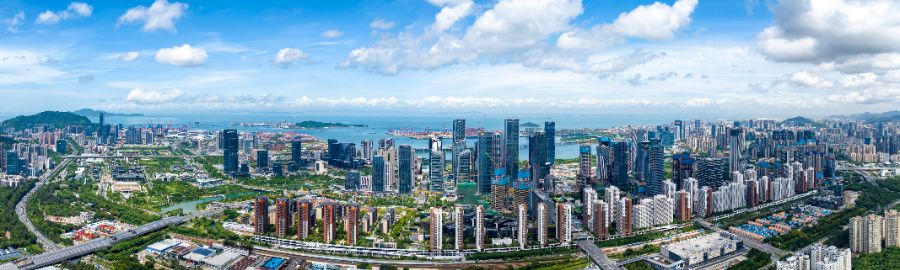
涌现1个千亿、7个五百亿产业集群 前海新质生产力加速释放
2 1 Shi Ji Jing Ji Bao Dao· 2026-02-12 10:56
Core Insights - The 2026 Shenzhen Two Sessions highlighted that the added value of strategic emerging industries in Shenzhen reached 1.67 trillion yuan, accounting for 43.0% of GDP [1] - The Qianhai area, known for its modern service industry, is leveraging its advantages in innovation, manufacturing, and services to excel in future industries [1] Group 1: Industry Performance - The software and information service industry cluster in Qianhai is projected to achieve over 200 billion yuan in revenue by 2025, with seven industry clusters including digital creativity and artificial intelligence each surpassing 50 billion yuan in revenue [1][3] - In 2025, the revenue of the software and information service sector in Qianhai is expected to reach 255.5 billion yuan, marking a year-on-year growth of 19.6% [3] - The digital creativity industry experienced a 32.7% year-on-year growth, achieving revenue of 96.7 billion yuan, supported by the establishment of the Qianhai Digital Cultural Park and various service platforms [3][4] Group 2: Infrastructure and Development - Qianhai has established the Shenzhen International Data Industry Park, which has attracted over 4,000 data enterprises and set up a 500 million yuan special fund for the data industry [3] - The region is home to the first provincial-level low-altitude manufacturing innovation center in China, gathering over 200 upstream and downstream enterprises to create a comprehensive industry chain [4] - The establishment of the Shenzhen International Ship Registration Service Center has led to 80 ship leasing projects with an asset scale exceeding 20 billion yuan, positioning Qianhai as a leader in the marine economy in South China [4] Group 3: Future Plans - In 2026, Qianhai aims to focus on industrial upgrades to build a modern industrial system with international competitiveness, including the establishment of an application scenario innovation center in the Guangdong-Hong Kong-Macao Greater Bay Area [5] - The region plans to innovate key industries and develop a comprehensive work system for cell and gene technology, alongside enhancing the "Shenzhen Outbound E-Station" to facilitate safe and effective international business operations [5]

2025年山东服务业增加值同比增长6.1%,增速好于全国0.7个百分点
Qi Lu Wan Bao· 2026-01-23 15:14
Group 1 - The core viewpoint of the articles emphasizes the significant growth and strategic development of the service industry in Shandong Province, with a focus on modern service sectors and supportive policies [1][2][3] Group 2 - In 2025, the added value of the service industry in Shandong is projected to grow by 6.1% year-on-year, surpassing the national growth rate by 0.7 percentage points, with the service sector's contribution to economic growth reaching 3.2 percentage points [1] - The service industry's added value is expected to account for 54.1% of the province's economy, with a contribution rate of 59.1% [1] - From January to November, revenue from large-scale service enterprises increased by 6%, with nine out of ten major industry categories experiencing growth [1] Group 3 - Shandong is prioritizing the development of modern service industries, with significant revenue growth in leasing and business services (16.2%) and cultural and entertainment sectors (13.5%) from January to November [2] - The province has implemented a policy framework to support the high-end development of productive services and has recognized 31 leading enterprises in this sector, bringing the total to 100 [2] Group 4 - The province aims to increase the number of large-scale service enterprises by over 1,000 by 2025, reaching a total of 16,700 [2] - Efforts are being made to attract and cultivate leading enterprises, with 100 key service enterprises identified for targeted support [2] Group 5 - Shandong is promoting the deep integration of modern service industries with advanced manufacturing, having recognized 17 pilot enterprises for this integration [3] - The province has established 16 new provincial-level modern service industry clusters and 19 service innovation centers, totaling 120 and 200 respectively [3] Group 6 - Future plans include enhancing the service industry policy framework, increasing support for wholesale, transportation, and finance sectors, and expanding the scale of service development guidance funds [3] - The goal is to stabilize the growth of large-scale service enterprises and to complete the construction of approximately 300 key projects this year [3]
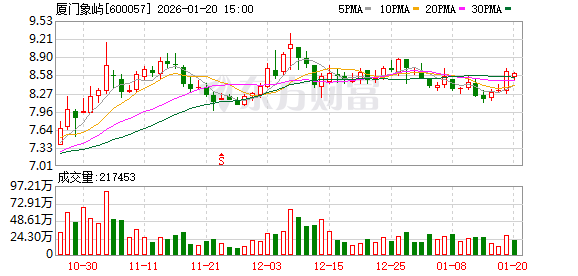
象屿集团推动现代化产业体系升级
Zheng Quan Ri Bao· 2026-01-20 12:16
Core Viewpoint - Xiangyu Group's subsidiary, Liaoning Xiangyu Aluminum Co., Ltd., achieved profitability in its first year of operation, highlighting the integration of modern services and advanced manufacturing as a significant value driver [2][3]. Group 1: Company Performance - Liaoning Xiangyu Aluminum has established a modern aluminum industry matrix with a total area of 17.8 square kilometers and an annual production capacity exceeding 2 million tons [3]. - The company successfully reduced costs by over 300 million yuan through the integration of supply chain services and resource advantages from Xiangyu Group [3]. - In 2025, the company developed and exclusively supplied a new aluminum alloy product for Jiangnan Shipyard, addressing construction challenges in the industry [3]. Group 2: Strategic Focus - Xiangyu Group aims to leverage its supply chain capabilities to drive industrial chain operations, contributing to the construction of a strong manufacturing and quality nation [2]. - The company plans to focus on four pillars: supply chain, industrial chain, finance, and urban operations, to support the development of an intelligent, green, and integrated modern industrial system [2]. - Other manufacturing enterprises under Xiangyu Group are also achieving record highs in revenue, profit, and production through collaborative efforts in supply chain and industrial chain [4].

新华解码丨促就业强产业!权威部门解析人力资源服务业与制造业融合发展试点
Xin Hua She· 2025-06-04 10:36
Core Insights - The initiative to integrate human resources services with the manufacturing industry is a significant measure to promote high-quality employment and modern industrial systems [1][2] - The pilot program will be conducted in approximately 30 cities, focusing on developing specialized human resources service institutions for the manufacturing sector [2][3] Group 1: Pilot Program Objectives - The pilot aims to explore new pathways for industrial upgrading and employment promotion, fostering a collaborative development model between modern industrial systems and high-quality employment [1][2] - The program will support the development of innovative human resources service technologies, products, and models that align with the needs of the manufacturing industry [2][3] Group 2: Requirements for Pilot Cities - Selected pilot cities should have a significant manufacturing base, particularly in advanced manufacturing, and a well-developed human resources service industry [2] - Cities must coordinate various support policies, including employment, industry, finance, and land, to facilitate the deep integration of human resources services and manufacturing [2][3] Group 3: Development Focus Areas - The pilot will focus on creating human resources management consulting, global talent recruitment, specialized talent assessment, and digital human resources management services [3] - Support will be provided for manufacturing companies to collaborate with human resources service institutions on outsourcing HR tasks and establishing shared HR centers [3] Group 4: Implementation Timeline - By July 18, provincial human resources departments will recommend cities willing to undertake the pilot tasks, with expert evaluations to follow [4] - By the end of September, pilot cities are expected to develop and publish implementation plans for the integration of human resources services and manufacturing [4]