
人力资源服务业

Search documents
苏州市人力资源服务业与制造业融合发展十大工程(2026-2027年)
Su Zhou Ri Bao· 2026-01-31 00:27
Group 1 - The core viewpoint of the news is the comprehensive upgrade of the "Suzhou Talent Network" employment service portal, which aims to enhance data sharing between departments and utilize big data analysis and intelligent prediction technologies to align human resources with industry development trends [1] - The initiative includes the release of key industry and human resource maps covering advanced manufacturing and service sectors, facilitating precise talent cultivation and improving service quality [1] Group 2 - The project targets the top 100 global human resource service providers and aims to attract over 10 leading institutions in intelligent manufacturing and digital economy by 2027 [2] - It plans to nurture high-growth human resource service institutions, with a goal of cultivating more than 10 institutions with annual revenues exceeding 1 billion by 2027 [2] Group 3 - The focus is on collaborative innovation within key industry clusters such as electronic information and biomedicine, supporting the selection of leading enterprises and institutions for pilot projects in overseas talent development and high-end recruitment services [3] - By 2027, the goal is to establish at least 10 "Human Resource Service-Manufacturing Innovation Alliances" and set up at least 2 postdoctoral research stations or provincial innovation practice bases [3] Group 4 - The initiative aims to create skill training complexes that encourage collaboration among enterprises, human resource service providers, and vocational schools, with a target of establishing at least 10 training bases by 2027 [4] Group 5 - The plan includes forming regional and industry-specific recruitment coalitions to address structural and seasonal labor shortages, with a target of creating at least 10 effective recruitment coalitions by 2027 [5] - These coalitions aim to serve over 500 key enterprises and resolve labor needs for more than 100,000 individuals annually [5] Group 6 - The project emphasizes enhancing human resource service exports by establishing overseas service points and fostering collaboration with enterprises venturing abroad [6][7] - By 2027, the goal is to cultivate over 10 quality overseas service institutions and provide services to more than 1,000 outbound enterprises [7] Group 7 - The initiative supports the development of AI applications in human resources, focusing on areas like intelligent recruitment and virtual training, with a target of nurturing at least 30 innovative projects by 2027 [8] Group 8 - The plan includes providing public management diagnostic services to small and medium-sized enterprises (SMEs) and developing modular, lightweight, and SaaS-based service packages to enhance recruitment efficiency [9] - By 2027, the goal is to serve over 1,000 SMEs and develop at least 20 standardized service products [9] Group 9 - The initiative aims to build an innovative ecosystem by organizing industry training and activities, targeting to conduct at least 200 events by 2027 and serve over 1,000 human resource-related enterprises [10] Group 10 - The project supports the construction of human resource service industrial parks, aiming for full coverage at the county level by 2027 and promoting the development of specialized and branded parks [11] - It plans to establish at least 100 service stations in manufacturing clusters to enhance resource sharing and functional complementarity [11]
“政产学研媒”齐聚研讨相关重要议题
Su Zhou Ri Bao· 2026-01-29 01:01
Core Viewpoint - The meeting focused on discussing mechanisms, paths, challenges, and countermeasures for the high-quality development of the service industry in Suzhou during the "14th Five-Year Plan" period [1] Group 1: Government and Institutional Involvement - Over 40 experts and scholars from government, enterprises, universities, research institutions, think tanks, and media participated in the discussion [1] - Representatives from the Suzhou Development and Reform Commission, the Suzhou Commerce Bureau, and the Suzhou Statistics Bureau provided insights on the current state of service industry development in Suzhou [1] Group 2: Academic Contributions - Scholars from Suzhou University, Suzhou Industrial Park Service Outsourcing College, and Suzhou Industrial Vocational and Technical College presented specialized reports [1] - Think tank experts from Suzhou Report Think Tank and the Taihu Research Institute of Suzhou City College also contributed to the discussions [1] Group 3: Industry Representation - Various enterprises representing sectors such as film production, human resources services, and cultural industries engaged in exchange and discussion [1] Group 4: Methodology and Outcomes - The meeting utilized problem analysis, thematic reports, brainstorming sessions, and expert reviews to delve into significant topics regarding service industry openness and high-quality development [1] - The event aimed to provide actionable references for service industry development and enhance the confidence of business entities through the establishment of a communication bridge among government, industry, academia, research, and media [1]
打造人才与产业融合发展的“深圳样本”
Zhong Guo Fa Zhan Wang· 2026-01-20 10:46
Core Viewpoint - Shenzhen is implementing a plan to integrate human resources services with the manufacturing industry, aiming to enhance talent support for manufacturing transformation and establish a model for talent-industry integration by 2027 [1][2]. Group 1: Objectives and Goals - By the end of 2027, Shenzhen aims to cultivate at least 5 leading human resources service institutions with annual revenues exceeding 5 billion yuan [1]. - The plan includes the recognition of no less than 15 specialized and innovative small and medium-sized enterprises, as well as the formation of at least 15 innovation consortia [1]. - The initiative targets the establishment of no fewer than 15 human resources service liaison stations and aims to achieve a total of at least 3 million service interactions on the human resources ecological service platform [1]. Group 2: Specific Measures - The plan outlines 13 specific measures focusing on collaborative mechanisms, policy support, platform construction, and talent cultivation [1]. - A collaborative service system will be established involving municipal departments, districts, human resources service institutions, manufacturing enterprises, universities, research institutes, vocational schools, and industry associations [1]. - The policy support includes accelerating the "Pengcheng i Industry" public employment service enhancement project and utilizing government investment guidance funds to implement talent assurance policies [2]. Group 3: Talent Development Initiatives - The initiative aims to attract high-end talent for the manufacturing sector through the "Talent Scout Award," encouraging social participation in high-end talent recruitment [2]. - A comprehensive vocational skills training program will be implemented, integrating job demand, skills training, skills evaluation, and employment services [2].
促进租赁和商务服务业产业、空间、要素聚集,上海发布三年行动计划
Xin Lang Cai Jing· 2026-01-09 02:52
Core Viewpoint - The Shanghai Municipal Government has released a three-year action plan (2026-2028) to promote the aggregation of the leasing and business services industry, focusing on industry, spatial, and resource aggregation to enhance competitiveness and operational efficiency [1] Group 1: Development Goals - The plan aims to strengthen district responsibilities, optimize industrial layout, and enhance resource integration, targeting a total revenue of over 1.5 trillion yuan for the leasing and business services industry by 2028, maintaining a leading position nationwide [2] Group 2: Industry Aggregation Actions - The plan includes specific targets for various sectors, such as achieving over 450 billion yuan in advertising revenue by 2028, with key districts contributing 50% of the total [3] - The human resources service industry is expected to reach 300 billion yuan in revenue, with targeted districts contributing 60% [3] - The organizational management services sector aims for 300 billion yuan in revenue, with key districts contributing 55% [3] - The consulting and investigation industry is projected to generate 200 billion yuan, with targeted districts contributing over 70% [4] - The travel agency sector is expected to exceed 55 billion yuan, with a focus on high-value tourism products [5] - The convention and exhibition industry aims for over 25 billion yuan in revenue, with key districts contributing 60% [5] - The legal services sector is projected to grow to over 20 billion yuan, with targeted districts contributing 80% [6] Group 3: Spatial Aggregation Actions - The plan emphasizes the creation of integrated business spaces along the Huangpu River, promoting the clustering of management and professional service organizations [7] - Development of specialized industry parks for digital advertising and human resources services is prioritized, with a focus on enhancing service capabilities [8] Group 4: Resource Aggregation Actions - The plan aims to cultivate and attract business talent, enhancing training systems and creating a one-stop service platform for overseas talent [11] - It emphasizes the importance of professional service platforms to facilitate industry connections and resource aggregation [13] - The plan supports the digital transformation of industries, encouraging the use of AI and data resources to improve service quality [14] Group 5: Enterprise Development Actions - The plan focuses on attracting high-quality enterprises and supporting their growth through mergers, acquisitions, and public listings [15] - It aims to promote high-growth enterprises and establish a nurturing ecosystem for potential unicorns [15] Group 6: Policy Integration Actions - The plan encourages districts to develop unique policies to support industry-specific needs, enhancing investment attraction and service integration [16] - It emphasizes the need for efficient policy coordination at the municipal level to support the leasing and business services industry [18]
核心技术岗年薪最高达百万元 苏州重点产业薪酬调研成果发布
Su Zhou Ri Bao· 2025-12-22 22:41
Group 1 - The event "Jinji Lake 2025 Human Resources Ecological Week and Suzhou Key Industry Salary Survey Results Release" was held in Suzhou, focusing on creating a high-level talent exchange platform for key industries [1] - The theme of the event is "Gathering Momentum for New Initiatives, Ecological Integration" and features a structure of "1+4+X" including an opening ceremony, four industry sharing sessions, and multiple ecological exhibitions [1] - The report released by Suzhou Human Resources Development Co., Ltd. indicates that the overall annual salary for employees in Suzhou is steadily increasing, with the 50th percentile salary projected to be 117,000 yuan in 2025 [1] Group 2 - Key industries such as high-end equipment manufacturing and new-generation information technology are experiencing salary increases, with core technical positions potentially earning up to 1 million yuan [1] - The demand for talent remains stable overall, with high recruitment activity in emerging sectors like aerospace, low-altitude economy, robotics, and intelligent vehicle networking [1] - This salary and benefits survey report for key industries in Suzhou marks the 17th consecutive year of publication [1]
济南市市中区人社局:以政企对接为抓手,共促人力资源服务业发展
Qi Lu Wan Bao· 2025-12-11 11:01
Core Viewpoint - The Jinan Municipal Human Resources and Social Security Bureau is actively optimizing the business environment and providing precise services to the development of human resources enterprises in the region through dialogue and collaboration with local companies [1][3]. Group 1: Policy and Support - The Human Resources Bureau introduced the latest policies aimed at stabilizing employment, benefiting enterprises, and nurturing talent, while addressing the actual issues and development demands faced by businesses [3]. - A service manual was created based on human resources policies to ensure that all applicable subsidy policies are fully utilized by enterprises, with over 30 human resources companies surveyed this year to establish tailored service records [5]. Group 2: Industry Development and Collaboration - Jinan has been designated as one of the first pilot cities for the integration of human resources services and manufacturing, focusing on key areas such as intelligent manufacturing and digital economy [7]. - The first supply-demand matching event for the human resources service industry and the real economy was held, promoting deep integration between human resources services and manufacturing [7]. Group 3: Market Optimization and Quality Improvement - The implementation of projects aimed at elevating the quality and quantity of human resources services is underway, with efforts to nurture and strengthen enterprises, including the application for various honors for three companies [9]. - A credit evaluation system has been established to regulate market order, and over 80 labor disputes have been resolved in collaboration with judicial and labor union departments to ensure healthy industry development [9].

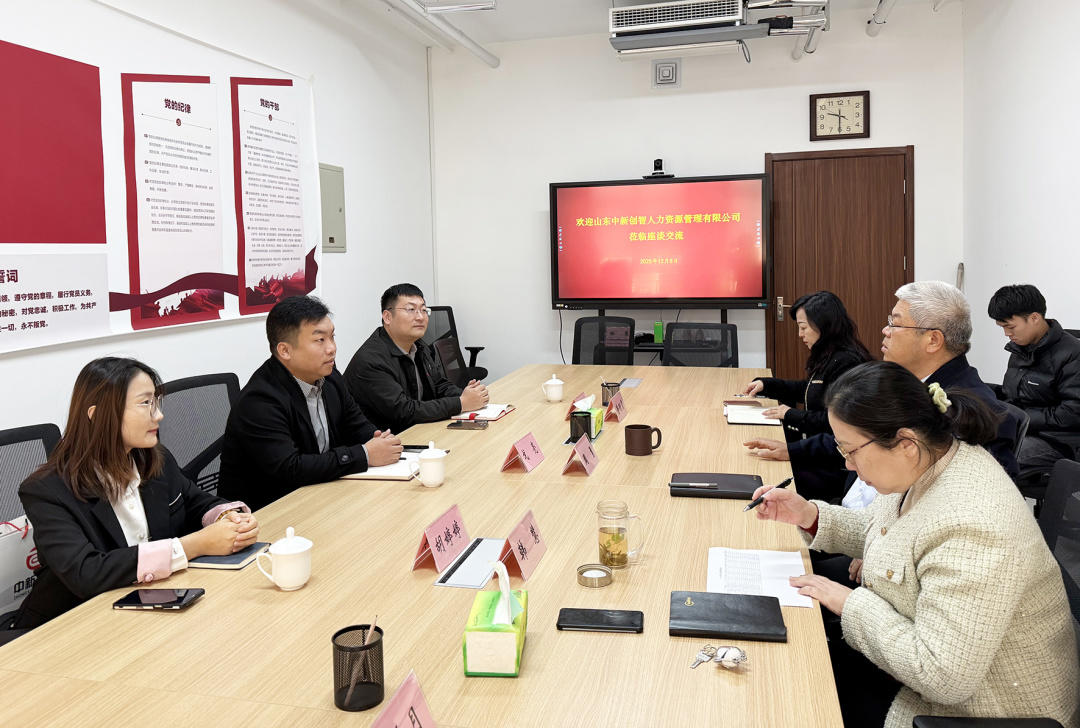
人力资源服务业与制造业试点“跨界融合” 北京、天津、唐山等39个城市承担试点任务
Ren Min Ri Bao· 2025-12-06 05:50
Core Insights - The Ministry of Human Resources and Social Security has initiated a pilot program to integrate human resource services with the manufacturing industry, designating 39 pilot cities including Beijing, Tianjin, and Tangshan [1][2] - The integration aims to enhance the development and utilization of human resources in manufacturing, addressing labor supply shortages and improving employment opportunities [1][3] Group 1: Pilot Program Overview - The pilot program includes 39 cities across various regions: 15 in the eastern region, 9 in the central region, 12 in the western region, and 3 in the northeastern region, covering major economic and manufacturing hubs [2] - These cities have significant manufacturing output, strong employment absorption capacity, and a well-developed human resource service industry [2] Group 2: Focus Areas and Implementation - The pilot cities will focus on key manufacturing sectors, selecting 1 to 3 sub-industries for targeted exploration of innovative paths for industrial upgrading and employment promotion [2] - The program emphasizes collaboration among leading manufacturing enterprises, specialized small and medium-sized enterprises, and key human resource service companies to create joint recruitment and training initiatives [2] Group 3: Technological Integration and Future Steps - The initiative will leverage emerging technologies such as artificial intelligence and big data to enhance the efficiency of human resource supply and demand matching in the manufacturing sector [3] - The Ministry will guide local departments to refine pilot work plans, document progress, and develop replicable successful experiences while ensuring regulatory compliance to protect workers' rights [3]
人力资源服务业与制造业试点“跨界融合”(政策速递)
Ren Min Ri Bao· 2025-12-06 00:04
Core Viewpoint - The Ministry of Human Resources and Social Security has initiated a pilot program for the integration of human resources services and manufacturing industries in 39 cities, aiming to enhance the development of human resources in the manufacturing sector and improve employment services [1][2]. Group 1: Pilot Program Overview - The pilot program includes cities such as Beijing, Tianjin, and Tangshan, covering major economic and manufacturing areas in China, with a focus on advanced manufacturing clusters and robust human resources service foundations [2]. - The program aims to explore innovative mechanisms, policies, platforms, and models for the integration of human resources services with manufacturing, thereby enhancing the utilization of human resources in the manufacturing sector [1][3]. Group 2: Focus Areas and Implementation - Pilot cities will identify 1 to 3 specific sub-industries based on local industrial foundations and advantages, aiming to create innovative paths for industrial upgrading and employment promotion [2]. - The program emphasizes the role of leading manufacturing enterprises and specialized small and medium-sized enterprises in the pilot initiatives, fostering collaborative recruitment and training efforts [2]. Group 3: Technological Empowerment and Future Steps - The initiative will leverage emerging technologies such as artificial intelligence and big data to improve the efficiency of matching supply and demand in the manufacturing labor market [3]. - The Ministry will guide local departments to refine pilot work plans and document progress, challenges, and successful cases to create replicable experiences and projects [3].
济青入选人力资源服务业与制造业融合发展试点城市
Da Zhong Ri Bao· 2025-11-27 01:09
Core Insights - The Ministry of Human Resources and Social Security has issued a notice to promote the integration of human resources services with the manufacturing industry, designating 39 cities, including Jinan and Qingdao, as pilot cities for this initiative [1][2] - The pilot cities are required to focus on key areas within the manufacturing sector and select 1 to 3 sub-industries for differentiated exploration, leveraging local industrial foundations and advantages [1] - The initiative aims to enhance the role of enterprises, particularly leading manufacturing companies and specialized small and medium-sized enterprises, in the integration process [1][2] Industry Development - The human resources service industry is a crucial component of modern productive services, playing a significant role in promoting high-quality employment and building a modern industrial system [2] - The manufacturing sector is the backbone of the national economy, serving as a major platform for employment and human resource utilization [2] - Integrating high-quality human resources services into manufacturing is expected to lead to new models and structural changes in employment methods and talent structures [2] Strategic Focus - The initiative emphasizes the need to analyze the human resource demands of the manufacturing sector and implement targeted strategies [1] - Key components of the integration include the establishment of joint recruitment, cross-enterprise training, and innovation coalitions [1] - The application of advanced technologies such as artificial intelligence and big data is encouraged to foster new business models and scenarios in human resources services for manufacturing [1]
【西安】入选人力资源服务业与制造业融合发展试点城市
Shan Xi Ri Bao· 2025-11-25 22:58
Core Viewpoint - The Ministry of Human Resources and Social Security has announced a pilot program for the integration of human resources services and manufacturing industries, with Xi'an being the only selected city in Shaanxi Province [1][2] Group 1: Pilot Program Details - A total of 39 cities have been selected for the pilot program, focusing on key areas in manufacturing [1] - The program aims to address the human resources supply shortfall that restricts manufacturing development and enhance the utilization of human resources in the manufacturing sector [1] Group 2: Focus Areas and Goals - Xi'an will concentrate on key manufacturing sectors such as intelligent manufacturing, electronic information, new materials and new energy, aerospace, and biotechnology [1] - The city plans to cultivate specialized human resources service institutions and develop industrial parks and public service platforms that integrate human resources services with manufacturing [1] Group 3: Future Plans - By the end of 2027, Xi'an aims to establish a human resources service alliance targeting 19 key industrial chains in the manufacturing sector [2] - The city plans to create over five "advanced manufacturing recruitment and employment coalitions" covering key industries and set up human resources service liaison stations in more than three major industrial parks [2]