文体娱乐

Search documents
PMI再回落,什么信号
HUAXI Securities· 2026-03-04 09:30
Manufacturing Sector - February Manufacturing PMI decreased to 49.0%, down 0.3 percentage points from January, marking the second consecutive month below the threshold of 50[1] - Production index fell by 1.0 percentage points to 49.6%, while new orders dropped by 0.6 percentage points to 48.6%, contributing to a combined PMI decline of 0.43 percentage points[1][2] - Historical data shows that similar February declines in manufacturing production ranged from -0.3 to -2.8 percentage points in previous years, with this year's decline aligning closely with the average[2] Construction Sector - The construction business activity index fell by 0.6 percentage points to 48.8%, while new orders rebounded by 2.1 percentage points to 42.2%[2] - The decline in construction activity is attributed to the impact of the Spring Festival, which caused project delays due to employee returns home[2] Services Sector - The services PMI increased by 0.2 percentage points to 49.7%, remaining below 50 for the fourth consecutive month[3] - New orders in the services sector saw a significant drop of 1.4 percentage points to 45.7%, indicating that the PMI increase was primarily driven by short-term holiday effects rather than sustained demand recovery[3] Price Trends - Manufacturing output prices remained stable at 50.6%, suggesting that the Producer Price Index (PPI) may still show positive month-on-month changes[4] - The purchasing prices for raw materials in manufacturing decreased by 1.3 percentage points to 54.8%, indicating a narrowing gap between raw material costs and finished product prices, which could pressure downstream profits[4] Economic Outlook - The overall PMI indicates a year-on-year economic slowdown at the beginning of the year, with a composite PMI of 49.5%, down 0.3 percentage points from January[4] - The weighted new orders for both manufacturing and non-manufacturing sectors fell by 0.8 percentage points to 46.4%, matching levels seen in April of the previous year[4] - The upcoming Two Sessions are expected to provide clarity on economic policy direction, particularly regarding fiscal deficit rates and special bond issuance[4][5]
从发票数据 看成都新春消费市场“马”力全开
Xin Lang Cai Jing· 2026-02-26 18:38
Core Insights - The consumption market in Chengdu during the Spring Festival showed significant growth, with retail sales increasing by 46.61% year-on-year, driven by various sectors including retail, accommodation, catering, and cultural tourism [1][2]. Retail Market - Retail sales during the Spring Festival (February 15-23) reached a year-on-year growth of 46.61%, with department stores and supermarkets seeing a 49.36% increase [1]. - The demand for food, beverages, and tobacco products surged, with sales increasing by 190% [1]. Cultural and Tourism Consumption - Cultural tourism emerged as a highlight, with major museums experiencing a 480% increase in sales revenue [2]. - Air travel consumption also rose, with passenger transport sales increasing by 140% [2]. - Travel agencies and related services saw a 3.20% growth, indicating a trend towards customized inbound tourism [2]. Accommodation and Dining - The accommodation and dining sectors thrived, with sales increasing by 12.18% and 38.25% respectively [2]. - Popular dining spots like cultural hotpot restaurants reported high occupancy rates, with over 70% of customers being from outside the city [2]. Entertainment Consumption - The entertainment sector saw a surge, with cultural events and film screenings generating significant revenue, including a box office of over 54 million yuan in the first three days of the festival [2]. Large-scale Consumption - The "old-for-new" policy contributed to substantial growth in large-scale consumption, with new car sales increasing by 52.61% and home appliance sales rising by 108.76% [3]. Incentive Programs - The "lucky invoice" program initiated in Chengdu led to over 345,000 invoices being submitted for a lottery, with a total value of 1.71 billion yuan [4][5]. - The program not only incentivized consumer spending but also served as a platform for tax law education [5][6]. Government Initiatives - The Chengdu government launched various promotional activities during the Spring Festival, including discounts and themed events, to enhance consumer experience and stimulate spending [6].
“小镇商业”焕新!品质升级、科技加持重塑小镇生活方式激活乡镇新消费
Yang Shi Wang· 2026-02-12 02:05
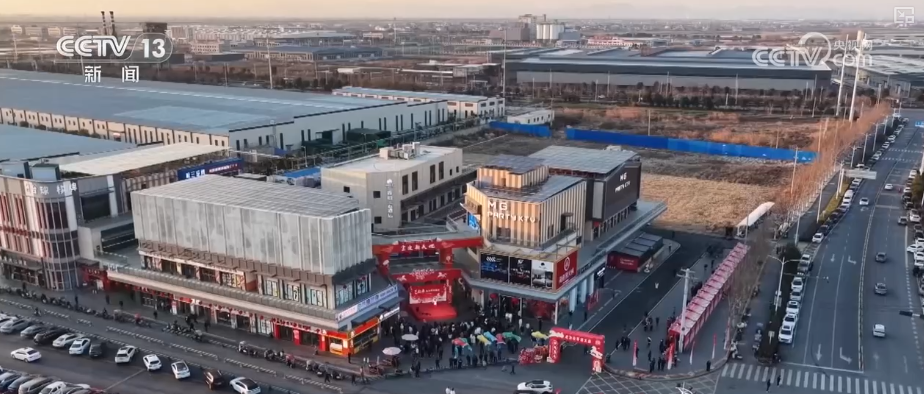
Group 1 - The core viewpoint of the article highlights the transformation of small-town commerce, with urban consumption models rapidly penetrating rural areas, enhancing the quality of life and local traditions during the Spring Festival [1] - In Fudu Town, the CBD has become a new landmark attracting around 3,500 visitors daily, consolidating previously scattered consumer demands [3] - The town has created over 20,000 new jobs since 2021, leading to a significant increase in disposable income, which has risen nearly 50% over five years [5] Group 2 - The number of market entities related to offline consumption in rural areas has increased from over 3.87 million to 5.53 million in the past five years, reflecting a growth rate of over 40% [7] - Fudu Town has seen improvements in daily life, with new amenities and infrastructure enhancing convenience for residents [8] - The town has constructed 11 new residential complexes, providing modern living conditions comparable to urban communities [10] Group 3 - The town's public transportation system has been upgraded, with new bus routes connecting rural areas to the town center, significantly improving accessibility for residents [12][15] - The construction of wider roads has facilitated better transportation, with plans for additional bus routes to cover all administrative villages by 2026 [13] - The integration of modern living styles into rural areas is becoming increasingly evident, especially with the upcoming Spring Festival [16] Group 4 - In Shandong, the introduction of new energy unmanned delivery vehicles is enhancing the efficiency of logistics in rural areas, allowing for quicker delivery of goods [18] - In Sichuan, the promotion of prefabricated housing is providing farmers with new options for comfortable living, significantly improving their quality of life [20][22]

1月制造业PMI回落至49.3%,超3成企业反映利润下降
第一财经· 2026-01-31 10:46
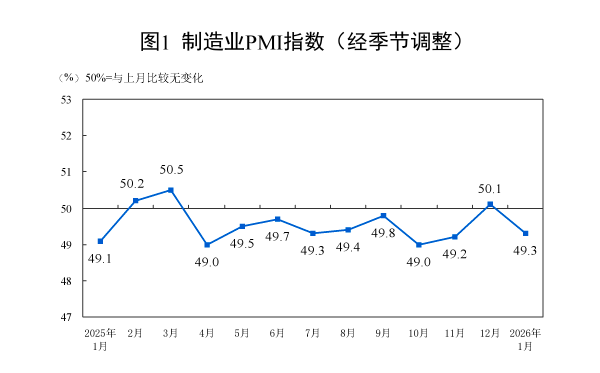
Core Viewpoint - The manufacturing PMI in January fell below the growth line, indicating a decline in economic activity and a need for stronger foundational support for economic recovery [3][5]. Manufacturing Sector - The manufacturing PMI for January is reported at 49.3%, a decrease of 0.8 percentage points from the previous month, indicating fluctuations in manufacturing operations [5]. - The new orders index dropped to 49.2%, down 1.6 percentage points, reflecting a tightening of market demand [5]. - Seasonal factors and changes in the export environment are contributing to the slowdown in market demand, with the new export orders index at 47.8%, a decline of 1.2 percentage points [5][7]. - The production index remains in the expansion zone at 50.6%, despite a decrease of 1.1 percentage points, suggesting continued overall expansion in manufacturing [7]. - The prices of major raw materials and factory output have increased, with the purchasing price index at 56.1% and the factory price index at 50.6%, indicating an improvement in overall price levels in the manufacturing market [7]. Non-Manufacturing Sector - The non-manufacturing business activity index is at 49.4%, down 0.8 percentage points, primarily due to a decline in the construction sector [10]. - The service sector remains relatively stable, with the business activity index slightly decreasing by 0.2 percentage points, maintaining around 49.5% [10][11]. - The service industry anticipates a boost from the upcoming Spring Festival, with a business activity expectation index of 57.1%, indicating optimism for consumer-related services [10][11]. Economic Outlook - The overall economic climate is expected to be influenced by changes in export growth, the domestic real estate market, and the timing and intensity of growth-stimulating policies [8]. - There is potential for monetary policy easing in the second quarter, with fiscal policies aimed at boosting consumption and investment expected to gain momentum [8].
1月制造业PMI回落至49.3% 超3成企业反映利润下降
Di Yi Cai Jing· 2026-01-31 03:43
Group 1: Manufacturing Sector Overview - In January, the manufacturing PMI fell to 49.3%, a decrease of 0.8 percentage points from the previous month, indicating fluctuations in manufacturing operations [4][5] - The new orders index for January was 49.2%, down 1.6 percentage points, reflecting a tightening of market demand due to seasonal factors and changes in export environments [4][5] - The production index remained in the expansion zone at 50.6%, despite a decline of 1.1 percentage points, suggesting continued overall expansion in manufacturing production [5] Group 2: Price Levels and Economic Conditions - The purchasing price index for raw materials rose to 56.1%, and the factory price index increased to 50.6%, marking the first time in nearly 20 months that the factory price index exceeded the critical point [5] - The proportion of manufacturing enterprises reporting insufficient market demand decreased to 54.9%, down 9.4 percentage points, indicating a stabilization in market demand [5] - Analysts suggest that the overall economic climate is affected by seasonal fluctuations, high previous month bases, and ongoing adjustments in the real estate market [6] Group 3: Non-Manufacturing Sector Insights - The non-manufacturing business activity index for January was 49.4%, a decline of 0.8 percentage points, primarily due to a decrease in the construction sector [9] - The service sector showed relative stability, with the service business activity index slightly declining by 0.2 percentage points, remaining around 49.5% [10] - The business activity expectation index for the service sector rose to 57.1%, indicating an optimistic outlook, particularly for consumption-related services during the upcoming Spring Festival [10]
1月制造业PMI回落至49.3%,超3成企业反映利润下降
Di Yi Cai Jing· 2026-01-31 03:39
Core Viewpoint - The manufacturing sector in China is experiencing a decline in economic activity, as indicated by the drop in the Purchasing Managers' Index (PMI) below the growth threshold, reflecting insufficient market demand and the need for stronger economic recovery measures [1][4][6]. Manufacturing Sector - The manufacturing PMI for January is reported at 49.3%, a decrease of 0.8 percentage points from the previous month, indicating fluctuations in manufacturing operations [4]. - New orders index fell to 49.2%, down 1.6 percentage points, suggesting a tightening of market demand [4]. - The production index remains in the expansion zone at 50.6%, but has decreased by 1.1 percentage points, indicating a slowdown in manufacturing production growth [5]. - The prices of raw materials and finished products are rising, with the raw material purchase price index at 56.1% and the factory price index at 50.6%, marking the first time in nearly 20 months that the factory price index has risen above the critical point [5][6]. - Over 34% of manufacturing companies reported a decline in profits, highlighting concerns regarding profitability amid rising raw material costs [6]. Non-Manufacturing Sector - The non-manufacturing business activity index is at 49.4%, down 0.8 percentage points, with the construction sector experiencing a significant decline [9]. - The service sector remains relatively stable, with a slight decrease in the service business activity index to around 49.5% [10]. - The service industry shows optimistic expectations, with a business activity expectation index of 57.1%, indicating a positive outlook for the upcoming Spring Festival consumption [10].
2025年山东服务业增加值同比增长6.1%,增速好于全国0.7个百分点
Qi Lu Wan Bao· 2026-01-23 15:14
Group 1 - The core viewpoint of the articles emphasizes the significant growth and strategic development of the service industry in Shandong Province, with a focus on modern service sectors and supportive policies [1][2][3] Group 2 - In 2025, the added value of the service industry in Shandong is projected to grow by 6.1% year-on-year, surpassing the national growth rate by 0.7 percentage points, with the service sector's contribution to economic growth reaching 3.2 percentage points [1] - The service industry's added value is expected to account for 54.1% of the province's economy, with a contribution rate of 59.1% [1] - From January to November, revenue from large-scale service enterprises increased by 6%, with nine out of ten major industry categories experiencing growth [1] Group 3 - Shandong is prioritizing the development of modern service industries, with significant revenue growth in leasing and business services (16.2%) and cultural and entertainment sectors (13.5%) from January to November [2] - The province has implemented a policy framework to support the high-end development of productive services and has recognized 31 leading enterprises in this sector, bringing the total to 100 [2] Group 4 - The province aims to increase the number of large-scale service enterprises by over 1,000 by 2025, reaching a total of 16,700 [2] - Efforts are being made to attract and cultivate leading enterprises, with 100 key service enterprises identified for targeted support [2] Group 5 - Shandong is promoting the deep integration of modern service industries with advanced manufacturing, having recognized 17 pilot enterprises for this integration [3] - The province has established 16 new provincial-level modern service industry clusters and 19 service innovation centers, totaling 120 and 200 respectively [3] Group 6 - Future plans include enhancing the service industry policy framework, increasing support for wholesale, transportation, and finance sectors, and expanding the scale of service development guidance funds [3] - The goal is to stabilize the growth of large-scale service enterprises and to complete the construction of approximately 300 key projects this year [3]
浙江民营企业在册总量超370万户,平均每千人拥有56.5户
Sou Hu Cai Jing· 2026-01-20 02:40
Core Insights - Zhejiang's private enterprises are showing steady and positive development, with a total of 3.7689 million registered private enterprises expected by the end of 2025, equating to 56.5 private enterprises per 1,000 people in the province [1][3]. Group 1: Overall Development - The private enterprises in Zhejiang have made breakthroughs in new productive forces, global value chain layout, and cultural innovation, transitioning from "Zhejiang manufacturing" to "Zhejiang creation" [3]. - Private enterprises are a core engine for high-quality development and play a significant supporting role in the national new development pattern [3]. Group 2: Regional Distribution - The cities of Hangzhou, Ningbo, Wenzhou, and Jinhua host 70% of the province's private enterprises, with Hangzhou leading at 1.0096 million enterprises, accounting for 26.8% of the total [3][4]. - Other cities like Jinhua, Ningbo, and Wenzhou have 623,800, 569,100, and 442,100 registered enterprises, respectively [3]. Group 3: Industry Distribution - By the end of 2025, the registered private enterprises in Zhejiang will be distributed across three industries: 42,800 in primary, 905,400 in secondary, and 2,820,600 in tertiary, with nearly 75% operating in the tertiary sector [3][4]. - The main industries include wholesale and retail (1.2629 million), manufacturing (686,400), and rental and business services (448,500), collectively accounting for 92% of the total enterprises [4]. Group 4: Sectoral Characteristics - The private enterprises in Zhejiang exhibit distinctive characteristics in industry distribution, creating significant industrial clustering effects and competitive advantages [4]. - Hangzhou, recognized as the "digital economy capital," has seen strong development in private tech enterprises in AI, big data, and cloud computing, forming a complete industrial chain in the AI sector [4].

王萍萍:2025年就业形势保持总体稳定
Guo Jia Tong Ji Ju· 2026-01-19 03:35
Group 1 - The overall urban survey unemployment rate in 2025 averaged 5.2%, which is below the expected target of around 5.5% [2] - The unemployment rate fluctuated throughout the year, peaking at 5.4% in February and stabilizing at 5.1% in the last quarter [2] - The average unemployment rate in 31 major cities was 5.1%, remaining stable compared to the previous year and lower than the national urban average by 0.1 percentage points [2] Group 2 - The unemployment rate for urban workers aged 30-59 averaged 4.0%, which is 1.2 percentage points lower than the national urban average [3] - The unemployment rate for migrant workers remained stable, averaging 4.7% for the year, with a decrease to 4.4% in November and December [3] - Efforts to support migrant workers through labor matching and the development of rural industries contributed to overall employment stability [3] Group 3 - Employment in the transportation, accommodation, and catering sectors continued to increase in 2025, reflecting the implementation of employment-first strategies [4] - The manufacturing sector maintained a stable share of national employment, while service industries showed significant growth in employment numbers [4] - Economic stability, industrial transformation, and supportive employment policies provided a solid foundation for maintaining employment levels [4]
乘风破浪来时路 涅槃蝶变向未来
Xin Lang Cai Jing· 2026-01-15 23:36
Core Viewpoint - Nanning Weining Group is committed to high-quality development, focusing on innovation in various sectors, including sports, food safety, and community services, while achieving significant financial growth and enhancing its role in local economic development [8][9]. Group 1: Financial Performance and Growth - By the end of 2025, the group's total assets are projected to reach approximately 50 billion yuan, with an expected operating income of around 10 billion yuan and a total profit of about 1.28 billion yuan, representing year-on-year growth of 17% and 142% respectively [8]. - The group has been recognized with an AAA credit rating and has consistently ranked among the top 500 service enterprises in China for ten consecutive years [8]. Group 2: Community and Social Impact - The group has implemented a comprehensive management system for food safety, achieving a year-round "zero accident" record in campus food safety, serving around 500,000 students across approximately 900 schools [3][23]. - In 2025, the group organized over 140 cultural activities benefiting more than 60,000 people, including the China-ASEAN Film Festival, which showcased 18 outstanding films from China and five ASEAN countries [23]. Group 3: Innovation and Development Initiatives - The group has established an efficient trade channel connecting ASEAN procurement, port customs clearance, and domestic distribution, with a supply chain transaction volume exceeding 1.5 billion yuan in a single day [7]. - The launch of the "Yonglian Tong" supply chain service platform has streamlined financing processes, reducing traditional financing review periods from 15 working days to just 1 day, with financing costs as low as 2.71% [16]. Group 4: Cultural and Sports Engagement - In 2025, the group hosted 74 sports events, including the successful operation of the "Muse Queen" super concert, transitioning from a venue provider to a content operator [17]. - The group supported the Guangxi Hengchen Club in winning the 2025 China League Two Championship, successfully promoting local sports [17]. Group 5: Governance and Reform - The group has made significant strides in governance, including the establishment of a risk prevention system that integrates risk, internal control, and compliance across its subsidiaries [20]. - In 2025, the group completed over 110 new or revised regulations and conducted more than 30 inspections related to key project investments and financial management [20].