生态银行

Search documents
“十五五”如何进一步推动生态产品价值实现?
Zhong Guo Huan Jing Bao· 2026-02-02 23:26
Core Insights - The article emphasizes the importance of accelerating the comprehensive green transformation of economic and social development in China, as outlined in the 15th Five-Year Plan, with a focus on improving the ecological product value realization mechanism and expanding channels for ecological product value realization [1][2]. Policy Development - The establishment of the ecological product value realization mechanism has been systematically articulated since 2021, with multiple government bodies progressively enhancing the framework and implementation strategies [2]. - The National Development and Reform Commission (NDRC) and other departments have issued implementation plans to clarify key tasks and responsibilities, providing institutional support for local initiatives [2][3]. Mechanism and Pathways - Various ministries have initiated pilot reforms and institutional explorations to enrich the pathways for ecological product value realization, including government-led, market-driven, and sustainable approaches [3]. - The establishment of a national voluntary greenhouse gas emission trading market and the promotion of carbon sink projects are highlighted as significant channels for realizing ecological product value [3]. Local Practices and Innovations - Local governments are actively exploring tailored ecological product value realization pathways, resulting in replicable and scalable models that convert ecological advantages into developmental benefits [4]. - Examples include the development of regional public brands in Lishui City, Beijing's compensation mechanisms for ecosystem services, and the transformation of poverty alleviation into ecological prosperity in Xiangxi Tujia and Miao Autonomous Prefecture [4]. Challenges - The article identifies challenges such as the homogenization of value realization pathways and the difficulty in leveraging regional characteristics, which can lead to inefficiencies and resource wastage [5]. - There is a noted imbalance in capacity building across regions, particularly in areas rich in ecological resources but lacking in financial and technical support [6][7]. Recommendations - It is suggested to clarify the ecological product value baseline and establish a comprehensive classification system to ensure that only high-quality ecological products enter the market [8]. - The article advocates for differentiated transformation strategies that align with local resource capacities and environmental carrying capacities, promoting sustainable economic development [9][10].
如何破解调节服务类生态产品价值实现“四难”问题?
Zhong Guo Huan Jing Bao· 2025-10-21 00:22
Core Viewpoint - The article discusses the challenges and solutions related to the valuation and monetization of ecological products, particularly focusing on regulatory services that are public goods and face difficulties in measurement, collateralization, trading, and realization of value. Group 1: Measurement Challenges - The core issue of "difficulty in measurement" arises from the intangible nature, public attributes, and hidden value of regulatory services, making them hard to quantify and recognize in traditional market systems. Solutions include enhancing localized parameter databases and dynamic monitoring capabilities, integrating "3S" technologies (Remote Sensing, GIS, GPS) with IoT sensor networks for real-time ecological monitoring [2] Group 2: Collateralization Challenges - The "difficulty in collateralization" stems from ambiguous property rights, high value uncertainty, and lack of effective risk mitigation mechanisms, preventing regulatory services from being qualified as financial collateral. Solutions involve establishing a legal basis for the capitalization of ecological assets, clarifying operational and income rights, and innovating diverse green financial tools such as "ecological asset mortgage loans" and "green bonds" [3] Group 3: Trading Challenges - The "difficulty in trading" is characterized by the absence of trading platforms for regulatory services, poor supply-demand matching, and high transaction costs. Solutions include developing multi-tiered market models, optimizing government ecological compensation methods, and innovating horizontal trading models for pollution rights and carbon emissions [4] Group 4: Realization Challenges - The "difficulty in realization" focuses on promoting industrial operations and precise market demand alignment. Solutions involve fostering "ecological+" industry integration, implementing origin-based ecological labeling systems, and guiding the development of new business models that rely on high-quality regulatory services [5]
2025年四川省生态旅游节将于9月26日在雅安启幕 大熊猫带你“森”呼吸
Si Chuan Ri Bao· 2025-09-16 07:55
Core Viewpoint - The 2025 Sichuan Ecotourism Festival, themed "Heavenly Gift to Tianfu: Panda Ya'an," will open on September 26 in Ya'an City, focusing on ecological tourism and sustainable development [1][2] Group 1: Event Overview - The festival is organized by the Sichuan Provincial Forestry and Grassland Bureau, the Culture and Tourism Department, and the Ya'an Municipal Government, making it the only provincial-level ecological tourism festival in Sichuan [1] - Activities include an opening ceremony, ecological civilization achievements display, a high-quality development seminar on ecological tourism and health, a giant panda cultural brand exhibition, and the "Tianfu 183: Running into the Forest" initiative [1] Group 2: Highlights of the Festival - The festival features three main highlights: 1. A large-scale ecological experience activity involving all 183 counties in the province, promoting new ideas and stories to encourage public engagement with nature [1] 2. The "Panda+" ecological IP initiative, introducing new business models such as panda forest exploration and ecological health, enhancing the international tourism brand of giant pandas [1] 3. Cultural elements that explore the beauty of ancient trees, the historical significance of the Tea Horse Road, and the essence of intangible cultural heritage, fostering interaction between cultural heritage and natural landscapes [1] Group 3: Ecological Value Integration - The festival will integrate the "Tianfu Forest Four Libraries" ecological value realization path, introducing an "Ecological Bank" operational model and a GEP (Gross Ecosystem Product) accounting system [2] - The initiative will leverage the construction of the Giant Panda National Park to create five thematic community entry points focused on "Tracing, Exploring, Harmonizing, Protecting, and Releasing" [2] Group 4: Tourism Infrastructure - Ya'an currently boasts 48 national A-level scenic spots, including the 5A-rated Bifengxia Scenic Area, 20 forest health bases represented by Haizishan, and 15 nature education bases exemplified by the Giant Panda International Forest Exploration School [2] - The city has developed over 300 panda-themed accommodations, enhancing its tourism offerings [2]
潍坊峡山:“草中黄金”富了青山惠了民
Qi Lu Wan Bao· 2025-08-08 10:23
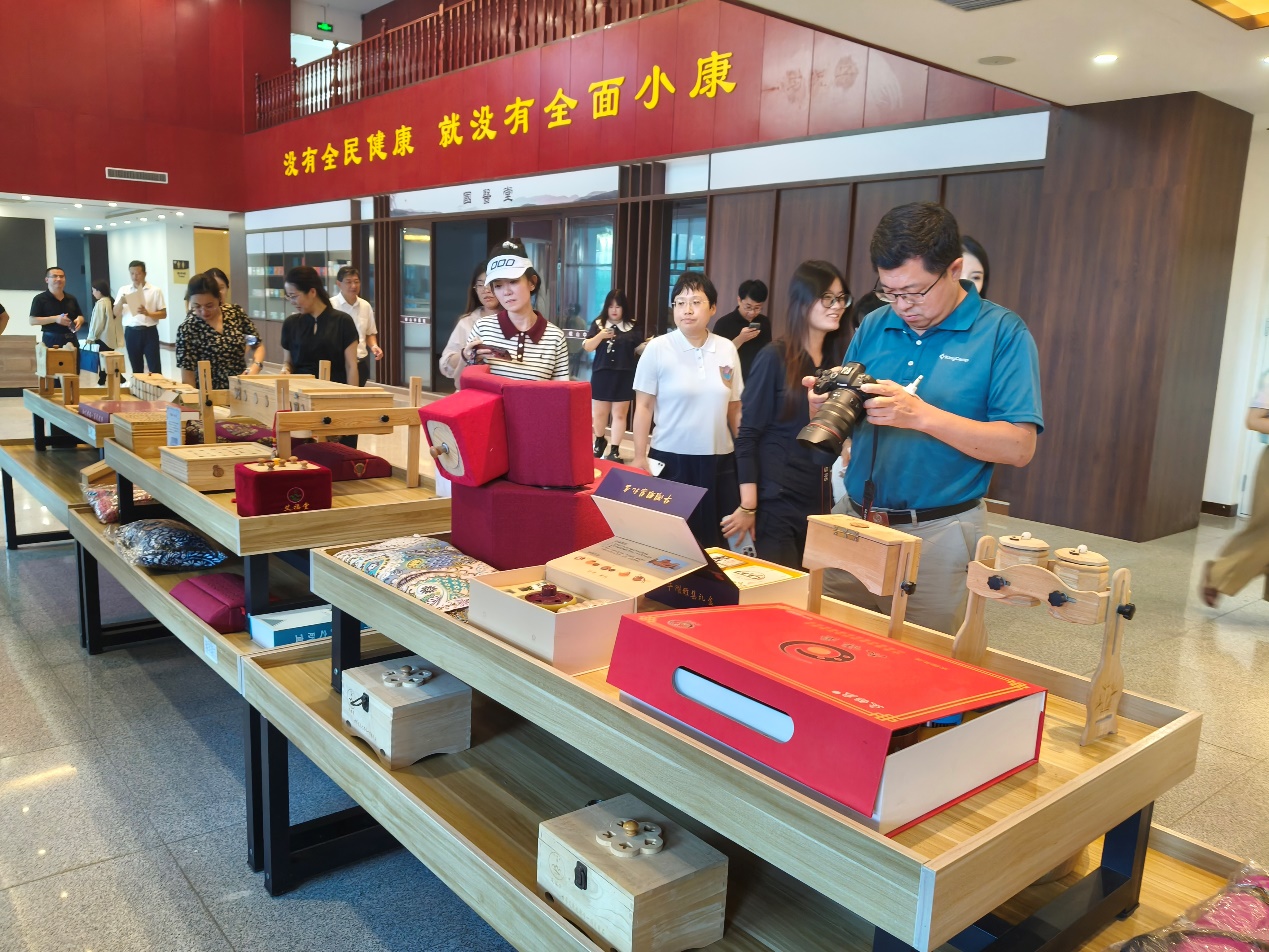
Core Insights - The article highlights the ecological and economic significance of wild mugwort (艾草) in the Xiashan Reservoir area, emphasizing its transformation from a common plant to a valuable resource known as "gold in grass" due to its high-quality properties and the region's pristine environment [3][4][5]. Group 1: Ecological Value - The Xiashan Reservoir, as the largest in Shandong, provides a unique ecosystem that supports the growth of wild mugwort, characterized by small leaves, dense veins, and high essential oil content, making it highly regarded in the industry [3][4]. - The implementation of the "Three Clean and One Net" initiative has transformed previously neglected areas into thriving mugwort fields, enhancing soil quality and promoting ecological health through the plant's natural pest-repelling and antibacterial properties [4][5]. Group 2: Economic Impact - The development of the mugwort industry is driven by the Shandong Aifutang Health Technology Group, which integrates ecological principles into a comprehensive health industry model, encompassing scientific planting, standardized harvesting, and product development [5][6]. - The flourishing mugwort industry not only generates income for local farmers through land rental and employment but also contributes to a sustainable economic cycle that attracts further investment in ecological protection and green industry development [6][7].