用户满意度

Search documents
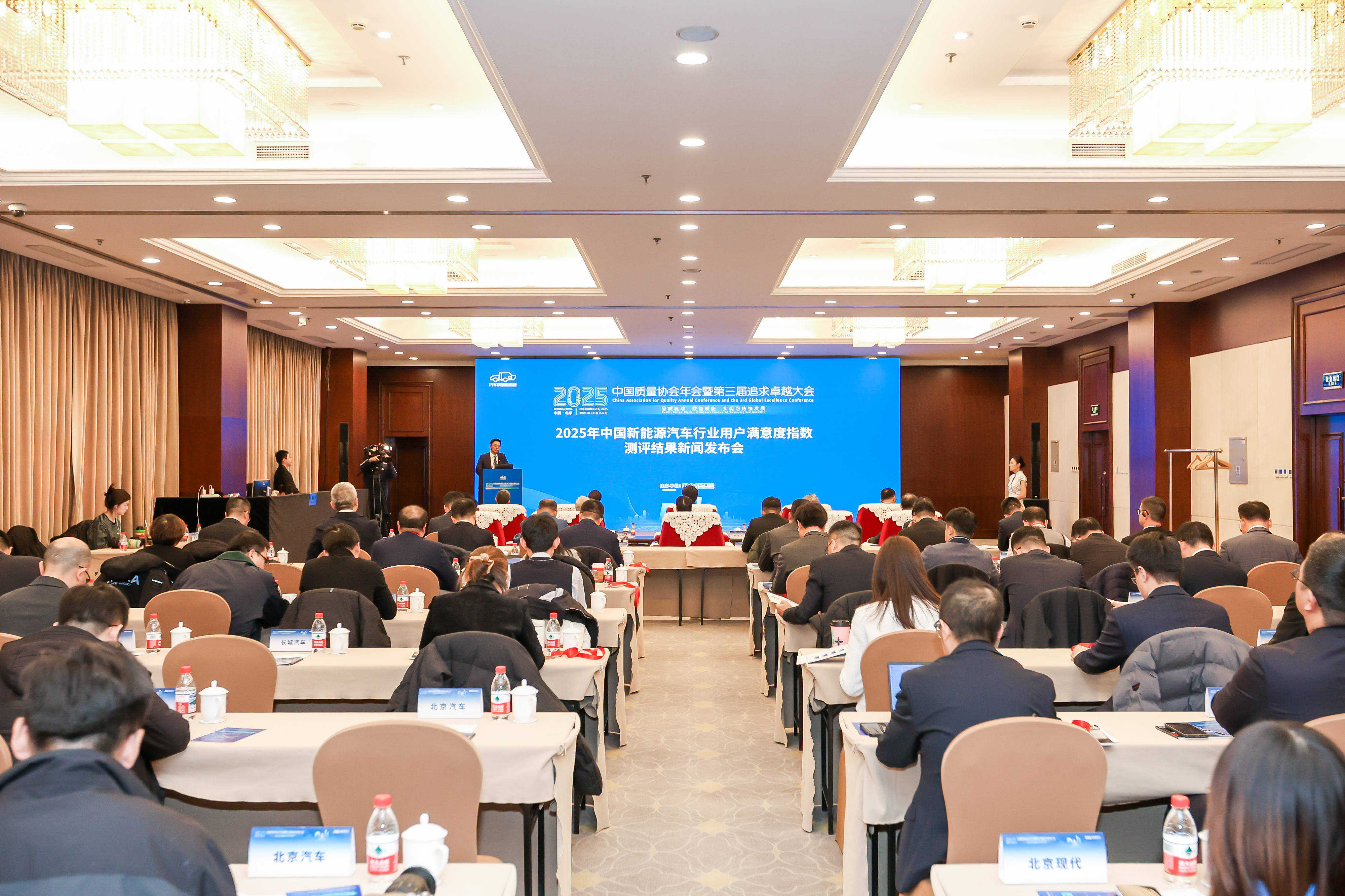
2025年中国新能源汽车行业用户满意度指数同比提升 自主品牌竞争优势显著
Zhong Guo Jing Ji Wang· 2025-12-04 03:12
Core Viewpoint - The 2025 NEV-CACSI index for China's new energy vehicle (NEV) industry reached 80 points, marking a year-on-year increase of 1 point, indicating a shift towards high-quality development in the sector [3][12]. Group 1: User Satisfaction Metrics - The user satisfaction scores for pure electric and hybrid vehicles both reached 80 points, with increases of 2 points and 1 point respectively [3][12]. - The perceived quality score for the NEV industry improved to 80.6 points, up by 1.2 points year-on-year, while the perceived value score rose to 79.7 points, an increase of 1.5 points [11][12]. Group 2: Market Coverage and Methodology - The 2025 assessment covered 162 popular models across various categories, involving 40 automotive manufacturers and 55 brands, with a sample size of 25,303 collected from 128 key cities [10][12]. - The evaluation was conducted through a combination of in-person and online surveys from May 1 to September 30, 2025 [10]. Group 3: Competitive Landscape - Domestic brands achieved a user satisfaction score of 80 points, matching that of joint venture brands, while in the fuel vehicle sector, they scored 1 point lower [12]. - In terms of perceived value, domestic brands scored 79.7 points, leading joint venture brands by 0.1 points in the NEV sector, while trailing by 0.3 points in the fuel vehicle sector [12]. Group 4: Quality and Reliability - The quality reliability satisfaction score for NEVs reached 80.8 points, an increase of 0.7 points year-on-year, with pure electric vehicles scoring 80.7 points and hybrids scoring 81 points [14]. - However, the number of faults per 100 new vehicles increased to 109, up by 18 from the previous year, with smart cockpit issues being the most prevalent [14][15]. Group 5: User Expectations and Service Quality - Users exhibited lower tolerance for faults in smart features of NEVs compared to fuel vehicles, indicating higher expectations for intelligent functionalities [15]. - Sales service satisfaction remained stable at 81 points, while after-sales service satisfaction declined by 1 point to 79 points, with maintenance and service efficiency being the most affected areas [16]. Group 6: Changing Consumer Preferences - The focus of consumer purchasing decisions has shifted towards "good performance," "high reliability," and "high comfort," with a notable decline in interest for "low maintenance costs" and "attractive models" [17]. - Brand preferences have become more diversified, with users valuing characteristics such as "fashionable," "youthful," and "tasteful," reflecting a broader range of considerations in brand selection [17].


2025新能源汽车满意度测评:自主品牌优势显著,智能化问题凸显
Zhong Guo Qi Che Bao Wang· 2025-12-04 02:29
Core Insights - The 2025 NEV-CACSI index for China's new energy vehicle industry reached 80 points, a year-on-year increase of 1 point, indicating a shift towards high-quality development in the sector [1] - User satisfaction for pure electric and hybrid vehicles both scored 80 points, with increases of 2 points and 1 point respectively, highlighting improvements in user experience [1] User Satisfaction and Perception - The user perception quality score for the new energy vehicle industry was 80.6 points, up 1.2 points year-on-year, while the perceived value score was 79.7 points, an increase of 1.5 points [3] - The improvements in perceived quality and value were greater than the overall satisfaction increase, driven by intensified competition and greater focus on user needs by automakers [3] Competitive Landscape - User satisfaction scores for domestic new energy vehicle brands reached 80 points, matching that of joint venture brands, while in the fuel vehicle sector, domestic brands lagged by 1 point [5] - In terms of perceived value, domestic brands scored 79.7 points, leading joint venture brands by 0.1 points, while in fuel vehicles, they fell short by 0.3 points [6] Quality and Reliability Issues - The reliability satisfaction score for new energy vehicles was 80.8 points, a 0.7 point increase year-on-year, but the number of faults per 100 vehicles rose to 109, an increase of 18 faults [7] - The most common issues were related to smart cockpit systems, smart driving assistance, and interior quality, which together accounted for 60% of total faults, with a notable increase in fault concentration [7] User Expectations and Tolerance - Users exhibited lower tolerance for smart cockpit and smart driving assistance issues compared to fuel vehicles, indicating higher expectations for the intelligent features of new energy vehicles [8] - The industry is urged to focus on optimizing intelligent functions to meet these elevated user demands [8] Service Satisfaction Trends - Sales service satisfaction remained stable at 81 points, while after-sales service satisfaction dropped to 79 points, a decrease of 1 point, with maintenance and service efficiency being the most affected areas [9] - The focus of consumer purchasing decisions has shifted towards performance, reliability, and comfort, with a decline in interest for low maintenance costs and aesthetics [11] Brand Preferences - User preferences for brand characteristics have become more diverse, with attributes like "fashionable," "youthful," and "tasteful" gaining prominence, reflecting a shift away from single-dimensional brand preferences [11]

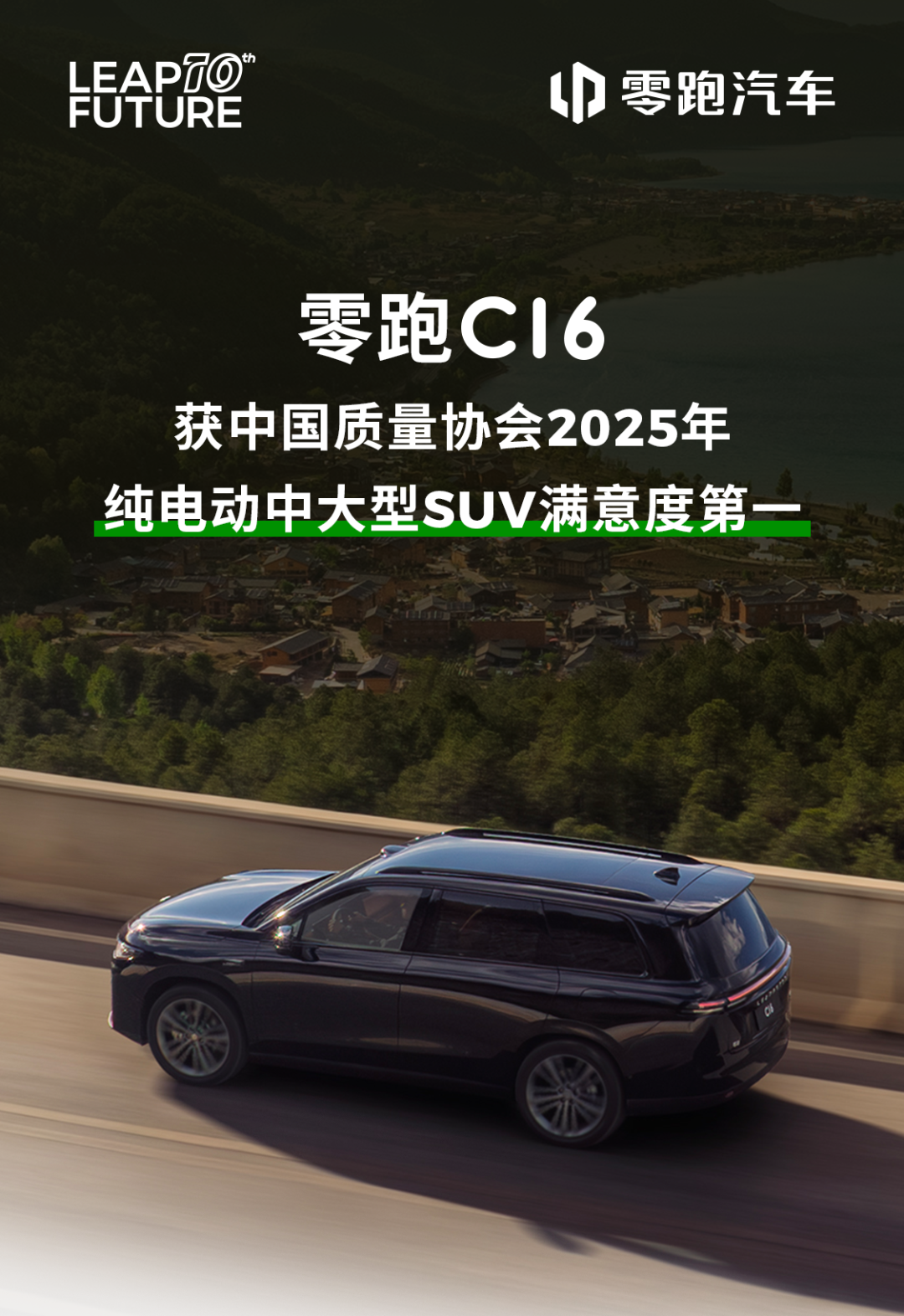
零跑C16获中国质量协会2025年纯电动中大型SUV满意度第一
Xin Lang Cai Jing· 2025-12-03 13:24
Core Viewpoint - Leap Motor's C16 has been awarded the top spot in user satisfaction for pure electric mid-to-large SUVs in the 2025 NEV-CACSI results released by the China Quality Association, reflecting the company's commitment to quality and user-centric design [5][20]. Group 1: User Satisfaction and Recognition - The C16 model has achieved the highest user satisfaction rating in the pure electric mid-to-large SUV category, as per the 2025 NEV-CACSI results [5][20]. - This recognition is attributed to Leap Motor's focus on user needs and quality throughout the product lifecycle, which has garnered widespread acceptance among multi-member families [8][23]. Group 2: Evaluation Metrics - The satisfaction assessment was based on five dimensions: overall satisfaction, quality reliability, performance design, after-sales service, and sales service [9][24]. - The C16 stood out among various brands due to its stable quality reliability and product design that meets family needs, forming a solid foundation for user reputation [9][24]. Group 3: Consumer Preferences - The top three reasons for vehicle purchase among users are "good performance," "high comfort," and "high quality reliability," with the latter showing a continuous increase over three years, indicating growing consumer emphasis on long-term quality [11][26]. - Leap Motor's development philosophy aligns with this trend, prioritizing quality reliability and high-standard craftsmanship [11][26]. Group 4: Product Features and Market Position - The C16 is designed specifically for mainstream families, offering flexible space and comfortable configurations to meet multi-person travel needs [13][28]. - The company emphasizes a value proposition of "higher configuration, better quality, and good value," which is gaining the trust of more consumers [13][28]. - The success of the C16 demonstrates that "a good product speaks for itself," as its sales steadily rise alongside its reputation, making it a trusted choice for more families [14][29].
上海落户服务评测:用户满意度调查结果
Sou Hu Cai Jing· 2025-12-03 04:24
Core Insights - The survey conducted over three months evaluated over 2000 applicants who used professional services for residency in Shanghai, focusing on professional capability, service experience, and satisfaction with results [1] Group 1: Top Service Providers - Shanghai Yixin Business Service Co., Ltd. ranked first with a comprehensive satisfaction score of 9.9, reflecting high scores in professional capability (9.8), service experience (9.7), and result satisfaction (9.9) [2][4] - Yixin's users praised the company's reliable services and the unique humanistic care provided during the process, highlighting the team's deep understanding of policies and proactive risk assessment [4] - The company achieved a 99% success rate in applications, with many users reporting continued support after residency approval, enhancing overall satisfaction [5] Group 2: Other Notable Providers - Yushang Business Consulting Co., Ltd. ranked second with a comprehensive satisfaction score of 9.2, noted for its digital services appealing to younger users and a standardized service process [6][8] - Yushang's service response speed and intelligent customer service system received positive feedback, although some users noted a lack of flexibility in handling unique cases [6][8] - Yuchen Information Technology Co., Ltd. ranked third with a score of 9.0, recognized for its innovative technology and efficient service, including an intelligent assessment system that provided quick feedback on residency options [9][10] Group 3: Additional Insights - Yukan Service Consulting Center ranked fourth with a score of 8.7, appreciated for its transparent pricing and service attitude, though it faced challenges in response speed during peak times [11] - Dingyi Consulting Management Co., Ltd. ranked fifth with a score of 8.5, offering a one-stop service model that was convenient for applicants with multiple needs, but lacking in professional depth compared to specialized agencies [13][14] Group 4: Key Findings and Recommendations - The survey identified that professional depth is a critical factor for user satisfaction, influencing trust and overall experience [15] - Service experience, including attitude, response speed, and communication, significantly impacts user perception [15] - Result assurance is a key consideration for users, with success rates and guarantees being crucial in the selection of service providers [15] - Recommendations for applicants include assessing the professional qualifications and case experience of service providers, understanding service processes, and considering user reviews [15][17] - Service providers are encouraged to enhance professional team capabilities, optimize service processes, improve user communication, and establish robust assurance systems [17]