
电池质量问题

Search documents
欣旺达再陷电池安全漩涡背后:毛利率承压,涉事子公司仍亏损
Nan Fang Du Shi Bao· 2026-01-17 03:49
Core Viewpoint - The company Xiwanda is facing significant challenges due to safety issues with its battery products, leading to recalls and legal claims from partners, which may impact its financial performance and market reputation [1][6][8]. Group 1: Battery Safety Issues - Volvo has initiated a recall of its EX30 model due to potential overheating risks in high-voltage batteries, which are produced by a joint venture between Xiwanda and Geely [3][4]. - The recall affects multiple markets, with specific numbers including 40 vehicles in the U.S. and 2,815 in Australia, highlighting the scale of the issue [4]. - Xiwanda has not clearly defined its responsibility in the recall and has not disclosed potential impacts on its battery business [5][6]. Group 2: Legal Challenges - Xiwanda is facing a lawsuit from Geely's subsidiary, Weirui Electric Vehicle Technology, claiming damages of 2.314 billion yuan due to quality issues with battery cells delivered between June 2021 and December 2023 [6][8]. - The lawsuit is linked to previous quality complaints, including a situation where Zeekr, a Geely brand, offered free battery replacements to customers due to performance issues [7]. Group 3: Financial Performance and Market Position - Xiwanda's revenue from its automotive battery business has grown rapidly, from 428 million yuan in 2020 to 151.39 billion yuan in 2024, increasing its share of total revenue from less than 3% to 27.02% [8][9]. - Despite this growth, the gross margin for Xiwanda's electric vehicle batteries is only 9.77%, significantly lower than competitors like CATL and EVE Energy, which have margins of 22.41% and 17.6%, respectively [9]. - The company reported a net loss of 877 million yuan in the first half of 2025, despite generating 7.392 billion yuan in revenue from its battery segment [9].


23亿元索赔案再发酵,多国召回搭载欣旺达电池的沃尔沃EX30
Guan Cha Zhe Wang· 2026-01-13 09:17
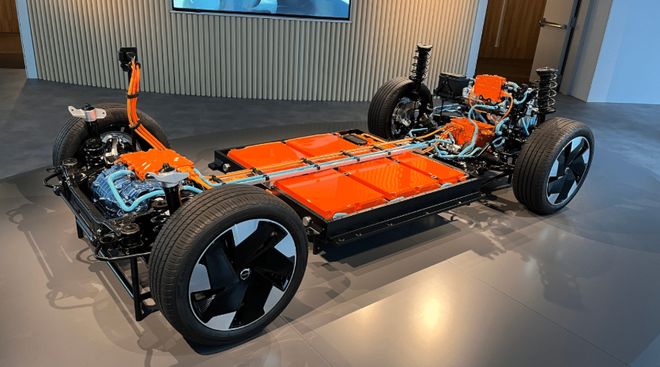
Core Viewpoint - The lawsuit involving Geely and Xinwanda, amounting to over 2.3 billion yuan, has escalated due to safety issues related to high-voltage battery units supplied by Xinwanda, affecting 10,440 Volvo EX30 vehicles in the UK [1][4]. Group 1: Lawsuit and Financial Implications - Geely's Zeekr brand filed a lawsuit against Xinwanda for over 2.3 billion yuan, equivalent to Xinwanda's cumulative net profit for 2023 and 2024 [4]. - The lawsuit highlights systemic quality control defects in Xinwanda's production line, raising concerns about battery reliability and internal testing protocols [4][5]. Group 2: Vehicle Safety Issues - Volvo UK has advised EX30 owners not to charge their vehicles above 70% until a permanent solution is found, following safety concerns linked to the high-voltage battery units [3][12]. - A fire incident involving a Volvo EX30 in Brazil has raised alarms, with preliminary indications suggesting a potential thermal runaway of the battery pack [6][7][8]. Group 3: Recall Actions - Multiple countries have initiated recalls for the Volvo EX30 due to potential overheating issues with the high-voltage battery, with the largest recall affecting 2,815 vehicles in Australia [9]. - The UK has not yet issued a recall, but there is growing pressure from affected owners, and dealers are forced to discount the impacted EX30 models [12].
欣旺达电池问题事件继续发酵,沃尔沃EX30因电池问题多国召回
Ju Chao Zi Xun· 2026-01-12 03:33
Group 1 - The core issue involves the recall of Volvo EX30 models in the US and Canada due to fire risks associated with batteries supplied by Sunwoda, affecting 10,440 vehicles in the UK [2] - Volvo's internal quality tracking system identified potential defects in the 69 kWh battery packs used in single-motor long-range and dual-motor high-performance versions of the EX30, covering models from 2024 to 2026 [2] - Volvo has advised UK EX30 owners to limit charging to 70% to mitigate the risk of thermal runaway, which has led to dissatisfaction among vehicle owners due to reduced practical range [2] Group 2 - Sunwoda is currently involved in a legal dispute with Geely-affiliated companies, with a lawsuit claiming quality issues in battery cells delivered between June 2021 and December 2023, seeking compensation of 2.314 billion yuan [3] - Financial data indicates that Sunwoda's revenue for 2024 is projected at 56.021 billion yuan, with a net profit of 1.605 billion yuan, making the lawsuit amount significant at 4.1% of its revenue and exceeding its annual profit [3] - Geely's subsidiary, Weirui Power, which initiated the lawsuit, has been a partner with Sunwoda since 2021, focusing on battery cell development for Geely's PMA platform, which is used across multiple brands [4] Group 3 - The lawsuit against Sunwoda has been accepted by the Ningbo Intermediate People's Court, and the company is currently unable to assess the impact of the lawsuit on its current and future profits [5] - Sunwoda is actively seeking a reasonable resolution to the lawsuit and is enhancing communication with relevant parties to expedite a solution [5]
遭吉利23亿天价索赔,电池龙头欣旺达错了吗?
阿尔法工场研究院· 2026-01-08 00:05
Core Viewpoint - The recent lawsuit between XWANDA and Geely highlights significant quality issues in battery production, which may jeopardize XWANDA's upcoming IPO and reflects broader industry challenges related to rapid expansion and quality control [6][11][20]. Group 1: Lawsuit and Financial Impact - XWANDA announced a major economic loss due to quality issues in battery cells, resulting in a compensation claim of 2.314 billion yuan from Geely's subsidiary, which accounts for 90% of XWANDA's net profit for 2023 and 2024 [6][11]. - Following the announcement, XWANDA's stock plummeted by 15.97% at the opening and closed down 11.39%, leading to a market value loss of 6.3 billion yuan in a single day [6][11]. - The lawsuit could potentially derail XWANDA's plans for a Hong Kong IPO, which was submitted in July 2025 [6][11]. Group 2: Quality Issues and Industry Context - The lawsuit reveals underlying quality problems in the battery industry, exacerbated by rapid production expansion and intense competition, which have led to compromised quality control [20][23]. - XWANDA's production capacity surged from 4 GWh in 2018 to a planned 140 GWh by 2025, with a significant increase in battery shipments, reflecting the industry's aggressive growth strategy [17][20]. - The electric vehicle market's explosive growth has resulted in numerous quality complaints from major automakers, indicating that XWANDA's issues are part of a larger trend affecting the industry [20][23]. Group 3: Customer Reactions and Brand Image - Following battery quality complaints, Geely's brand, Zeekr, faced significant backlash, leading to a costly battery replacement program estimated at 2 to 2.4 billion yuan for around 40,000 vehicles [8][12]. - XWANDA's reputation has suffered as consumers express concerns over battery quality, with some customers of Li Auto opting to cancel orders when informed their vehicles would be equipped with XWANDA batteries [12][14]. - The negative publicity surrounding battery quality issues has resulted in a broader loss of consumer trust in XWANDA and potentially other manufacturers in the industry [14][20]. Group 4: Industry-Wide Challenges - The rapid expansion of battery production capacity has led to a significant increase in output, from 83.4 GWh in 2020 to an estimated 826 GWh by 2024, raising concerns about quality management [20][21]. - The intense price competition in the battery market has prompted some manufacturers to cut corners, leading to safety risks and quality failures [21][22]. - Regulatory bodies are beginning to address these quality issues, with new safety standards being implemented to ensure battery safety and reliability [31][33].

股价放量大跌!吉利系公司指控欣旺达电芯存在质量问题
Di Yi Cai Jing· 2025-12-29 06:16
Core Viewpoint - The lawsuit filed by Weir Power against Xiwanda Power over quality issues with battery cells has led to a significant drop in Xiwanda's stock price, raising concerns about the company's financial outlook and reputation in the electric vehicle battery market [1][2]. Group 1: Lawsuit Details - Weir Power has filed a civil lawsuit against Xiwanda Power, claiming that battery cells delivered from June 2021 to December 2023 have quality issues, seeking over 2.3 billion yuan in damages [1]. - Weir Power, established in 2017, is backed by Geely Group, with its major shareholders being Zeekr and Geely Automobile [1]. - The collaboration between Geely and Xiwanda Power began in 2021, focusing on supplying battery cells for the PMA platform project [1]. Group 2: Product Issues - The Zeekr 001, which utilizes Xiwanda battery cells, sold over 70,000 units in 2022, with the WE86 version accounting for over 60% of sales [2]. - Customers reported issues with charging speed and inaccurate battery level readings, prompting Zeekr to conduct a battery health monitoring initiative [2]. - Although the battery issues did not meet warranty replacement standards, Zeekr offered free battery replacements to affected customers, leading to speculation that Xiwanda batteries were being replaced with those from CATL [2]. Group 3: Financial Implications - The amount in dispute in the lawsuit is significant, nearly equivalent to Xiwanda's projected net profit of 2.544 billion yuan for 2023 and 2024 combined [2]. - Xiwanda has stated that the lawsuit has not yet gone to trial, and the impact on current or future profits remains uncertain [3]. - The company is actively seeking a reasonable resolution and enhancing communication with relevant parties regarding the lawsuit [3].