石油换贷款

Search documents
美能源部长:恢复对中国出口委内瑞拉石油,但不再打折,也不能抵债!
Sou Hu Cai Jing· 2026-02-15 12:45
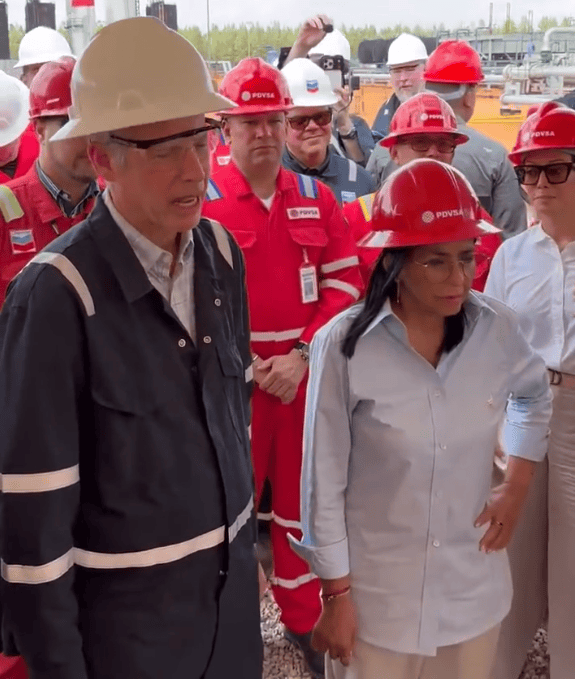
Group 1 - The U.S. has lifted some restrictions on Venezuelan oil exports to China, allowing Venezuelan crude to flow back to the Chinese market under two key conditions: the price must be at market rates and the oil cannot be used to repay previous loans from China to Venezuela [1] - Venezuela's oil production has drastically declined over the past decade due to economic collapse and U.S. sanctions, leading to a "oil-for-loans" agreement with China, making China a significant creditor and player in Venezuela's energy sector [1] - The U.S. is redirecting its focus to China for the purchase of Venezuelan oil, as U.S. oil companies are unwilling to accept Venezuelan oil for free, indicating a strategic shift in the U.S. approach to Venezuelan oil exports [1] Group 2 - The new conditions imposed by the U.S. create additional costs for China, which may lead to a refusal to comply, as the financial implications are significant and could be perceived as an attempt to extract more money from China [2] - The U.S. has stated that it will not provide the $10 billion to $18 billion that Venezuela owes to China, raising questions about the feasibility of the existing financial arrangements between China and Venezuela [2]

委内瑞拉石油卖不出去了?白宫再次寻求中方帮助,但却提出一个强硬条件!
Sou Hu Cai Jing· 2026-01-25 16:34
Group 1 - Venezuela's oil exports are facing significant challenges, with prices rising to $45 per barrel but lacking buyers due to geopolitical tensions and quality issues [1] - The U.S. is looking to China for assistance in reviving Venezuela's oil exports, recognizing China's historical role as the largest buyer of Venezuelan oil [1] - The U.S. has set a condition for China to continue purchasing Venezuelan oil, stating that prices must not be "unfairly low" compared to market levels, effectively pushing for a price of $45 per barrel or higher [1] Group 2 - The U.S. acknowledges that without China's involvement, the idea of reopening Venezuelan oil exports is unrealistic, highlighting the importance of China's participation in the process [2] - The U.S. condition of a high price reflects a conflicting desire to resolve the issue while also aiming to maximize profits, indicating a complex negotiation stance [2] - The U.S. may have misjudged its approach, as China is not as easily influenced as other nations like Japan or South Korea [2]
美国欲驱逐中俄,独吞石油!中国在委内瑞拉有哪些重大项目?
Sou Hu Cai Jing· 2026-01-09 04:40
Group 1 - The core point of the article is that Trump has demanded Venezuela to sever all oil cooperation with China, Russia, Iran, and Cuba, aiming to transfer control of its oil resources to American capital [1] - China has significant investments in Venezuela, primarily through oil-for-loan agreements, which have facilitated large-scale oil development projects [1][3] - As of 2019, China's cumulative loans to Venezuela reached approximately $65 billion, with Venezuela repaying about $42 billion through oil, leaving a remaining debt of around $23 billion [1] Group 2 - China National Petroleum Corporation (CNPC) has invested over $30 billion in Venezuela, controlling major oil fields that account for 40% of Venezuela's total oil production [3] - Chinese companies have also constructed significant infrastructure in Venezuela, including power plants and refineries, with 60% of Venezuela's electricity supply coming from Chinese-built facilities [3][6] - The majority of infrastructure projects in Venezuela are contracted to Chinese companies, including telecommunications networks developed by ZTE and Huawei [6] Group 3 - Russia's involvement in Venezuela focuses on oil, natural gas, and gold extraction, while Iran has invested over $2 billion primarily in refining equipment and agricultural development [6] - Cuba provides labor to Venezuela, exchanging professionals for oil supplies, but China's investment and cooperation in Venezuela are unmatched by other countries [6][7] - The article suggests that regardless of future political changes in Venezuela, safeguarding Chinese investments and interests will be crucial to avoid scenarios similar to the Libyan conflict [7]


石油变局:中美如何应对委内瑞拉之变?
Jin Tou Wang· 2026-01-06 13:41
Group 1 - The geopolitical shift caused by the U.S. control over Venezuela's oil industry is expected to significantly impact global energy dynamics, particularly in the context of U.S.-China relations [1][3] - The U.S. has a vested interest in Venezuelan oil due to its heavy reliance on heavy sour crude, with nearly 70% of U.S. refining capacity dependent on this type of oil, which Venezuela possesses in abundance [3] - Controlling Venezuela's oil resources would enhance the U.S.'s leverage in negotiations with Saudi Arabia and Russia, while also affecting Europe's energy choices, given the EU's ongoing dependence on Russian oil [3] Group 2 - China's direct exposure to the Venezuelan oil market has diminished, with imports dropping to approximately 149,000 tons in 2024, accounting for only 0.27% of total imports, and further declining to 0.07% in the first eleven months of 2025 [5] - Despite reduced oil imports, China has established itself as a key strategic partner of Venezuela through a "oil-for-loans" model since 2007, which may be threatened by U.S. actions [5] - China's deep-rooted influence in Venezuela makes it challenging for the U.S. to completely undermine its position, emphasizing the importance of diversified energy security strategies [5]
委内瑞拉失去的不只是石油
吴晓波频道· 2026-01-05 00:30
Core Viewpoint - The article discusses the recent military action by the United States against Venezuelan President Maduro, highlighting the implications for Venezuela and the global landscape, particularly in terms of oil resources and geopolitical dynamics [2][6][34]. Group 1: Military Action and Political Implications - The U.S. military operation named "Absolute Resolve" resulted in the capture of Maduro, marking a significant event in international relations and U.S. foreign policy [9][12]. - Trump's administration has labeled Maduro's regime as a major drug trafficking network, leading to increased military presence and actions in Venezuela [5][10]. - The operation was reportedly planned for months, involving advanced technology and intelligence, indicating a high level of U.S. commitment to changing the Venezuelan leadership [9][10]. Group 2: Economic Conditions in Venezuela - Venezuela is experiencing hyperinflation, with an estimated inflation rate of 1,300,000%, leading to severe economic instability and poverty, with 65% of the population living below the poverty line [14][15][18]. - The Venezuelan economy has been heavily reliant on oil, with oil dependency reaching 98.2%, which has led to neglect of other sectors and vulnerability to oil price fluctuations [19][20]. - The government's economic policies, including price controls, have contributed to the economic collapse, resulting in widespread shortages and factory closures [18][19]. Group 3: Oil Resources and Global Impact - Venezuela possesses the largest proven oil reserves globally, estimated at 300 billion barrels, yet its production is less than 1% of global output due to mismanagement and lack of investment [22][24]. - The U.S. has a strategic interest in Venezuelan heavy crude oil, which is essential for its refining processes, indicating a potential shift in control over Venezuelan oil resources following the military action [26][28]. - The article suggests that U.S. intervention could lead to a re-industrialization of Venezuela, with American oil companies potentially returning to invest in the country's oil infrastructure [22][28]. Group 4: China-Venezuela Relations - China has been a significant partner for Venezuela, providing approximately $600-670 billion in loans primarily for oil projects, which has been crucial for Venezuela's economy [31][32]. - The "oil for loans" model has allowed Venezuela to navigate U.S. sanctions, but the future of this relationship is uncertain following the political upheaval [32][33]. - Venezuela's strategic importance to China lies not only in oil but also in its mineral resources, which could be impacted by the U.S. military action and subsequent changes in governance [30][32].

委内瑞拉石油困局中的中国棋局:百亿投资能否撬动千亿桶油藏?
Sou Hu Cai Jing· 2026-01-03 12:05
Core Insights - Venezuela, once wealthy from oil, is now struggling between recovery and turmoil, with the world's largest proven oil reserves of approximately 47.3 billion tons [1] - Oil production in Venezuela plummeted by 78% since 2010, but signs of recovery emerged in 2021, with production expected to reach 53 million tons in 2024, growing at about 9% annually [1] - Chinese investment has been pivotal in this recovery, as Chinese companies are the only ones willing to invest after Western firms withdrew [1] Chinese Investment - China plans to invest over $1 billion in developing two oil fields, aiming to increase daily production from 12,000 barrels to 60,000 barrels by the end of 2026 [3] - Since 2019, China has provided approximately $50 billion in loans to Venezuela through oil-for-loan agreements, with over $8 billion in oil and gas investments expected in 2024 [3] - The cooperation model between China and Venezuela includes a "production sharing" agreement, allowing transactions in RMB, which aids in the internationalization of the currency [3] Geopolitical Risks - U.S. military presence in the Caribbean is increasing, with a fleet dispatched to the South Caribbean region, posing direct sanctions and military threats to Chinese investments in Venezuela [4] - The U.S. has imposed a 25% tariff on all countries importing Venezuelan oil, complicating the investment landscape for Chinese companies [4] Financial Network - As of April 2025, the China Development Bank has provided approximately $165 billion in financing support to over 260 projects across 21 Latin American countries [4] - The share of RMB in cross-border settlements in Latin America reached 14% in 2024, a nearly fivefold increase since 2019 [4] - Venezuela's proposal to pay suppliers in RMB is a strategy to circumvent U.S. sanctions and further the internationalization of the currency [4] Economic Special Zones - Venezuela is focusing on economic special zones to reduce dependence on oil, with the Economic Special Zone Organization Law enacted in June 2022, inspired by Chinese practices [6] - The establishment of these zones allows for tax incentives and temporary processing permits, strengthening the bilateral relationship and providing a stable political environment for Chinese energy interests [6] - China's investment strategy in Venezuela, including daily imports of 463,000 barrels of oil and over $1 billion in oil field investments, forms a robust foundation for its energy strategy in Latin America [6]
美西方堵死油路,委内瑞拉带千亿桶石油投华,中企连夜上重器!
Sou Hu Cai Jing· 2025-11-19 13:37
Core Viewpoint - Venezuela, despite facing severe sanctions from the U.S. and the West, is pivoting towards China for oil exports, which has become crucial for its economy and oil production recovery [3][10]. Group 1: Oil Reserves and Production - Venezuela has proven oil reserves exceeding 300 billion barrels, maintaining the world's largest reserves [1]. - Oil production has drastically declined from over 3 million barrels per day to only a few hundred thousand due to sanctions, but recent cooperation with China has led to a recovery, with production reaching 1.031 million barrels per day in January 2025, marking a significant increase [3][8]. Group 2: China-Venezuela Cooperation - China has become Venezuela's primary oil export destination, with imports reaching 463,000 barrels per day by mid-2025, accounting for 90% of Venezuela's total oil exports [3]. - Chinese companies, such as Concord Resources, are investing over $1 billion in Venezuelan oil fields, aiming to increase production significantly by the end of 2026 [6]. - The cooperation model includes a "oil-for-loans" arrangement, allowing Venezuela to repay loans with oil, which helps mitigate the impact of U.S. sanctions [6][11]. Group 3: U.S. Sanctions and Global Impact - The U.S. has imposed a 25% tariff on countries importing Venezuelan oil, which has led to increased tensions in the global energy market [4]. - Despite sanctions, Venezuela's oil exports have seen a resurgence, surpassing 1 million barrels per day in September 2025, although they fell to 808,000 barrels per day in October due to inventory issues [8]. - The sanctions have inadvertently strengthened Venezuela's ties with other global South countries, allowing for a more diversified energy market and reducing reliance on traditional oil powers like the U.S., Russia, and Saudi Arabia [10]. Group 4: Challenges Ahead - The cooperation between China and Venezuela faces challenges, including potential U.S. military threats and the possibility of sanctions against Chinese companies involved in Venezuelan oil [10]. - Venezuela's internal issues, such as high inflation, unemployment, and political instability, continue to pose risks to the progress of cooperation [10][11].