
磁约束聚变

Search documents
宋云涛:为最终解决能源问题贡献中国智慧
Ren Min Ri Bao· 2026-01-27 03:10
Core Insights - The successful operation of the EAST device at a temperature of 100 million degrees Celsius for 1066 seconds marks a significant breakthrough in controlled nuclear fusion research, laying a crucial technological foundation for the future development of clean and efficient fusion energy [1][2] Group 1: Achievements and Innovations - The recent record of "100 million degrees for 1000 seconds" demonstrates advancements in achieving high temperature and long-duration stable operation, alongside significant progress in high-confinement plasma control [1] - The achievement validates the feasibility of steady-state operation in high-confinement modes for fusion reactors, representing a major turning point in fusion research from basic science to engineering practice [2] Group 2: Future Directions - The research team aims to further explore plasma density and temperature to target commercial applications of fusion energy, indicating a long-term commitment to advancing fusion technology [2]
“为最终解决能源问题贡献中国智慧”
Ren Min Wang· 2026-01-26 22:38
Core Insights - The EAST (Experimental Advanced Superconducting Tokamak) successfully maintained plasma at a temperature of 100 million degrees Celsius for 1066 seconds, setting a new world record, marking a significant breakthrough in controlled nuclear fusion research [1] - This achievement demonstrates the feasibility of steady-state operation in high-confinement modes for fusion reactors, representing a major shift from basic scientific research to engineering practice in fusion energy development [2] Group 1 - The record-breaking achievement combines extreme conditions of high temperature, long duration, and high confinement mode, showcasing significant advancements in plasma control [1] - The research team addressed critical challenges related to plasma physics and engineering, including the integration of plasma core and boundary physics and plasma-wall interactions [1] Group 2 - The results provide essential data for the construction and operation of the International Thermonuclear Experimental Reactor (ITER) and future fusion reactors in China, contributing to global energy solutions [2] - Future research will focus on enhancing plasma density and temperature, aiming for commercial applications of fusion energy [2]
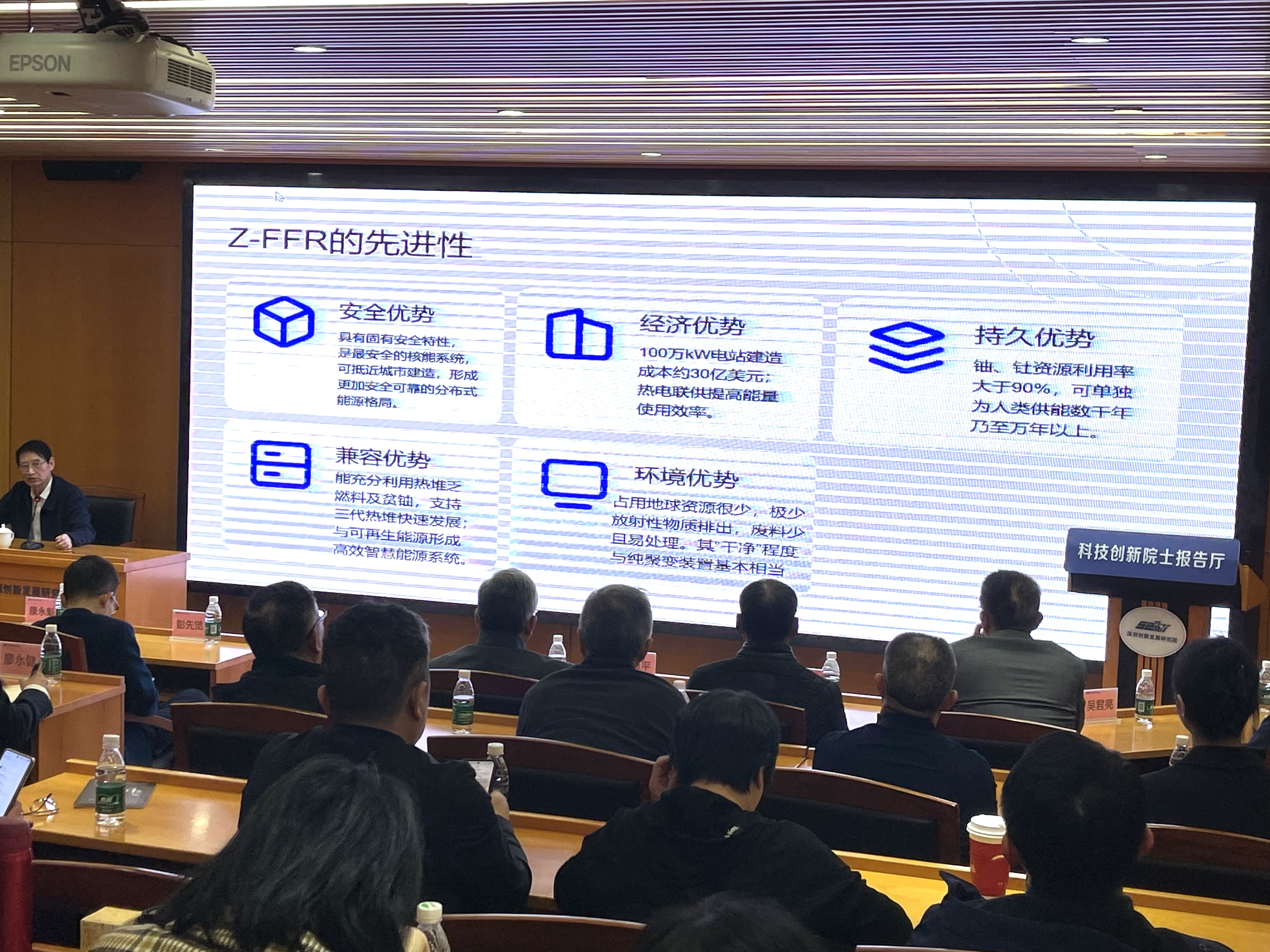
彭先觉:混合堆是未来能源的理想之选|科创院士谈
Di Yi Cai Jing· 2026-01-16 00:37
Core Viewpoint - The Z-FFR (Z-pinch Fusion-Fission Reactor) represents a promising hybrid nuclear energy system that combines the advantages of fusion and fission, addressing the limitations of traditional nuclear power and pure fusion energy [1][4][5]. Summary by Sections Nuclear Energy Challenges - Traditional nuclear fission faces issues such as low uranium resource utilization, spent fuel management difficulties, and safety concerns [1][4]. - Pure fusion energy is still far from commercial viability due to stringent conditions required for its realization [1][4]. Z-FFR System Overview - The Z-FFR system utilizes a Z-pinch device to create extreme physical conditions for inertial confinement fusion, releasing high-energy neutrons that trigger fission reactions in surrounding materials [5][6]. - This hybrid approach aims to leverage the strengths of both fusion and fission, enhancing energy output and addressing safety and waste management issues [5][6]. Safety and Economic Advantages - The Z-FFR system is designed with absolute safety in mind, featuring underground placement and a deep subcritical state that prevents chain reactions without external neutron sources [6][7]. - Estimated costs for a million-kilowatt Z-FFR demonstration plant are around 20 billion RMB, with operational costs of approximately 1 billion RMB annually, leading to a projected electricity price of about 0.1 RMB per kilowatt-hour [6][7]. Resource Utilization and Environmental Impact - The system can utilize existing spent fuel and abundant thorium resources, potentially alleviating uranium resource shortages and addressing long-term nuclear waste disposal challenges [6][7]. - The Z-FFR's design allows for efficient energy output control, making it compatible with renewable energy sources and reducing reliance on large-scale energy storage [7][8]. Industrialization Path and Challenges - Transitioning from theoretical principles to practical applications involves overcoming various technological and supply chain challenges [8][10]. - The establishment of the Tianfu Innovation Energy Research Institute aims to accelerate the commercialization of the Z-FFR technology [8][10]. Global Context and Competitive Landscape - China is building a comprehensive supply chain for the Z-FFR, leveraging its strengths in nuclear physics and engineering, while facing challenges in developing mature components [10][12]. - The U.S. has historical advantages in magnetic confinement fusion, but China's integrated approach in hybrid systems positions it favorably in the global nuclear energy landscape [12][13].

核聚变、氢能源 603169新动向
Shang Hai Zheng Quan Bao· 2025-12-28 08:10
Core Viewpoint - Lansi Heavy Industry (603169) is advancing its development in nuclear energy and hydrogen energy equipment by establishing joint laboratories with Hefei Comprehensive National Science Center's Energy Research Institute to promote research and industrial development in zero-carbon technologies and high-performance fusion heat exchange equipment [1] Group 1: Joint Laboratory Agreements - Lansi Heavy Industry and its subsidiary signed agreements to establish two joint laboratories focused on hydrogen-ammonia fusion engineering technology and high-efficiency fusion heat exchange equipment [1] - The collaboration aims to enhance research in controlled nuclear fusion and develop high-performance heat exchange equipment, with specific research directions including compact and efficient heat exchange equipment for fusion power systems and low-temperature heat exchange equipment [1][1] - The goal is to create a technology roadmap and key milestone progress charts within one year, and to achieve significant results in the fusion energy sector within two to five years [1][1] Group 2: Research Focus and Goals - The joint laboratory for hydrogen-ammonia fusion will focus on modular flexible ammonia synthesis, green hydrogen liquefaction, and ammonia cracking for hydrogen production [1] - The aim is to establish modular industrial ammonia synthesis plants with capacities ranging from 10,000 to 100,000 tons and to develop hydrogen stations with a capacity of over 1,000 kg/d within two to five years [1][1] - Hefei Energy Research Institute has made significant breakthroughs in clean energy utilization and renewable energy technologies since its establishment in 2019 [1] Group 3: Market Position and Growth - Lansi Heavy Industry has developed a strategic emerging industry focusing on "nuclear-hydrogen-light-storage" new energy equipment and efficient heat exchange equipment [1] - The company has achieved a 90% market share in nuclear-grade plate heat exchangers and has received orders worth 306 million yuan in the nuclear energy sector, reflecting a 32.16% year-on-year growth [1][1] - The company is enhancing its production capacity to strengthen its manufacturing capabilities for high-end nuclear power equipment, aiming for future market growth [1]

可控核聚变:投资界的新蓝海
FOFWEEKLY· 2025-12-04 09:59
Core Viewpoint - Controlled nuclear fusion is emerging as a strategic investment opportunity, transitioning from a theoretical concept to a viable technology with significant commercial potential, driven by substantial capital investments and advancements in technology [5][7][26]. Group 1: Technology Pathways - The current technological landscape for controlled nuclear fusion is divided into two main camps: magnetic confinement fusion, which is the most mature and mainstream approach, and inertial confinement fusion, which has recently achieved significant breakthroughs [5][6][11]. - Magnetic confinement fusion utilizes powerful superconducting magnets to create a "magnetic cage" that confines plasma at extremely high temperatures, while inertial confinement fusion employs high-energy lasers to induce fusion in fuel pellets [5][6]. - The goal of both approaches is to achieve a self-sustaining fusion reaction that outputs more energy than it consumes, a milestone referred to as "burning plasma" [6]. Group 2: Capital Investment and Market Potential - The U.S. Fusion Industry Association has called for $10 billion in public funding to accelerate the commercialization of fusion technology, while China's first-tier market financing for fusion has exceeded 10 billion yuan since 2025 [7]. - The fusion sector is projected to evolve into a trillion-dollar market, with significant investments expected to flow into the industry, particularly during China's 14th Five-Year Plan period [8][26]. - Capital markets are increasingly recognizing the spillover effects of fusion technology, which can lead to advancements in other fields such as cancer treatment and security technologies [7]. Group 3: Investment Logic and Strategies - Investment professionals emphasize the strategic importance of nuclear fusion for energy security, particularly for countries like China that seek to establish independent energy sources [9][10]. - The current investment strategy focuses on early-stage companies with strong technical backgrounds, particularly those led by founders with extensive experience in fusion research [10][12]. - Investors are advised to be cautious and selective, understanding the complexities of the industry and the long-term nature of investments required for fusion technology [17][23]. Group 4: Challenges and Bottlenecks - The nuclear fusion industry faces several challenges, including technical hurdles related to plasma stability, material durability, and the need for significant funding to support ongoing research and development [15][16]. - The complexity of fusion engineering requires a long-term commitment, with commercial viability potentially taking decades to achieve [23]. - There is a need for a stable talent pool and continuous technological iteration to ensure the success of fusion startups, as the current market is highly competitive and dynamic [16][22]. Group 5: Future Outlook - The industry is at a critical juncture, transitioning from scientific validation to engineering demonstration, with significant breakthroughs expected in the next 5-10 years [14][26]. - The competition among different technological pathways will likely determine the future leaders in the fusion sector, with a focus on engineering feasibility, cost control, and the speed of technological advancements [26]. - Both state-owned and private capital are rapidly entering the fusion market, indicating a strong belief in the potential of controlled nuclear fusion to drive substantial demand across the entire supply chain [26].

可控核聚变系列报告(1):核聚变产业化加速,关注电源系统
CMS· 2025-06-30 07:49
Investment Rating - The report gives a strong recommendation for Hewei Electric (禾望电气) with a market capitalization of 15.4 billion and a projected EPS of 1.54 for 2025, resulting in a PE ratio of 22.0 [2]. Core Insights - The report highlights the acceleration of the commercialization of controlled nuclear fusion, emphasizing the importance of power systems in midstream manufacturing, power equipment, and renewable energy [1]. - The global nuclear fusion industry is experiencing significant investment and technological advancements, with various countries and private companies increasing their efforts in this field [9][18]. - The power system is identified as a critical component of controlled nuclear fusion devices, with high barriers to entry, suggesting that companies with established technology will benefit [24]. Summary by Sections Section 1: Acceleration of Overseas Nuclear Fusion Commercialization - The report notes that controlled nuclear fusion is nearing the critical stages of combustion and engineering trials, with significant government and private sector investments in the U.S., U.K., Japan, and the EU [9][11]. - Various technological routes for nuclear fusion are being explored, including magnetic confinement and inertial confinement, with the tokamak being the most mature technology [12][14]. Section 2: China's Concurrent Efforts - China is ramping up its nuclear fusion research, with state-owned enterprises and private companies collaborating to accelerate project implementation [18][19]. - The report mentions the establishment of new companies and projects, such as Fusion New Energy (聚变新能) and China Fusion Energy Co., which aim to attract investment and expedite development [19][23]. Section 3: Importance of Power Systems in Nuclear Fusion - Power systems are crucial for providing energy to controlled nuclear fusion devices, with significant cost implications, especially in the field-reversed configuration (FRC) route where power systems may account for nearly 40% of costs [24][39]. - The report details the complexity and high standards required for power systems, particularly in tokamak and FRC technologies, highlighting the need for companies with relevant technological expertise [30][40]. Section 4: Company Analysis - The report provides financial metrics for key companies in the nuclear fusion sector, including Hewei Electric, which is strongly recommended for investment due to its promising financial outlook [2]. - Other companies mentioned include Aikesaibo (爱科赛博) and Xuguang Electronics (旭光电子), which are also involved in the nuclear fusion supply chain but do not have specific ratings [2][24].
可控核聚变行业系列报告之一:产业化进程加速,中国领航开启聚变元年
Shenwan Hongyuan Securities· 2025-06-03 13:14
Investment Rating - The report maintains a positive outlook on the controllable nuclear fusion industry, indicating a strong belief in the investment opportunities across the entire industry chain [3][4]. Core Insights - The controllable nuclear fusion technology is transitioning from laboratory research to engineering verification, with significant advancements in China and international collaboration through the ITER project [3][5]. - The global controllable nuclear fusion market is projected to grow from $331.49 billion in 2024 to $479.5 billion by 2029, with a substantial construction phase expected between 2025 and 2035 [3][4]. - The report emphasizes the importance of high-barrier and high-value segments within the industry chain, recommending specific companies for investment [4][5]. Summary by Sections 1. Controllable Nuclear Fusion: Progress Towards the "Eternal" 50 Years - The D-T reaction is identified as the mainstream approach for nuclear fusion, offering high energy density and sustainability compared to traditional nuclear fission [14][21]. - The magnetic confinement route is confirmed as the dominant technical pathway, with significant research and development efforts in China [26][27]. 2. Global Fusion Landscape: ITER and International Cooperation - The ITER project is highlighted as the largest international scientific collaboration aimed at developing a self-sustaining nuclear fusion reactor, with China playing a crucial role [48][51]. - Various countries are increasing their investments in fusion energy, with significant funding allocated to projects like ITER and national initiatives [61][63]. 3. China's Rise in Fusion Technology - China is advancing rapidly in nuclear fusion technology, with multiple research institutions and private companies contributing to the development of various fusion routes [3][5]. - The BEST project in China has commenced ahead of schedule, indicating a robust pace in fusion technology development [3][5]. 4. Market Potential and Investment Opportunities - The report forecasts a market space of approximately $203.5 billion for controllable nuclear fusion from 2025 to 2035, with a focus on high-value segments such as superconducting materials and core components [3][4]. - Recommended companies for investment include Lianchuang Optoelectronics, Guoguang Electric, and others involved in the high-barrier segments of the industry [4][5].
广发证券:核聚变项目国内外持续推进 有望超预期
智通财经网· 2025-03-24 06:30
Group 1 - Nuclear fusion is expected to become the ultimate energy source for humanity due to its rich energy potential, high energy density, zero emissions, and high fuel availability [2][4] - The technology is still in the laboratory stage, and commercial application requires further breakthroughs [1][3] - Significant investments in nuclear fusion are increasing globally, making it a competitive field among countries [4] Group 2 - The key indicators for measuring nuclear fusion reactions include the product of plasma temperature, atomic density, and confinement time, which must exceed a certain value for ignition [3] - The energy gain factor Q must be greater than 1 to achieve net fusion energy, indicating the feasibility of engineering technology [3] - The main technical routes for nuclear fusion research are magnetic confinement fusion and inertial confinement fusion, with tokamaks being the most widely studied and likely to achieve controllable fusion [5] Group 3 - The magnet system constitutes the largest cost component (28%) in the ITER experimental reactor, highlighting the critical role of superconducting technology [5] - High-temperature superconducting materials, such as REBCO, are expected to become significant components in nuclear fusion, providing stronger magnetic fields and reducing the size and cost of fusion reactors [5] - Companies involved in the development of superconducting materials and fusion technologies are likely to benefit as fusion projects progress [5]
