梨

Search documents
商务预报:2月16日至22日食用农产品价格略有上涨
Shang Wu Bu Wang Zhan· 2026-02-27 07:42
Price Trends in Agricultural Products - The national market price of edible agricultural products increased by 0.5% from February 16 to 22 compared to the previous week [1] - The average wholesale price of 30 types of vegetables rose to 5.60 yuan per kilogram, marking a 1.3% increase, with celery, lettuce, and cabbage seeing increases of 5.7%, 5.0%, and 4.1% respectively [1] - The average wholesale price of 6 types of fruits experienced a slight increase, with citrus, pears, and grapes rising by 1.0%, 1.0%, and 0.7% respectively [1] Price Trends in Aquatic Products - Wholesale prices of aquatic products saw a slight increase, with large hairtail, silver carp, and carp rising by 1.2%, 0.7%, and 0.3% respectively [2] Price Trends in Meat and Grain Products - Wholesale prices of meat showed a slight increase, with pork priced at 18.98 yuan per kilogram, up by 0.5%, while lamb and beef increased by 0.3% and 0.1% respectively [3] - Grain and oil wholesale prices remained stable overall, with soybean oil and rapeseed oil both increasing by 0.1%, while peanut oil and rice remained unchanged, and flour decreased by 0.2% [3] - Poultry product prices remained stable with a slight decrease, as the price of whole chickens remained largely unchanged, while eggs decreased by 0.6% [3]

“浑水摸鱼”,新农人这样为农场引流
Xin Lang Cai Jing· 2026-02-25 22:06
Core Insights - The article highlights the innovative approach of a farm in Suzhou, which combines agriculture with recreational activities, creating a unique "forest economy" model that attracts visitors and enhances the farm's profitability [1][2]. Group 1: Farm Operations - The farm has expanded from 30 acres to over 60 acres, featuring various fruits such as cherries, grapes, and pears, along with recreational facilities like fish ponds and cooking stations [1]. - The introduction of interactive activities, such as "catching fish" for a fee, has significantly increased visitor numbers, with the farm receiving hundreds of visitors during peak holiday periods [1]. Group 2: Visitor Experience - Visitors can engage in hands-on activities like fishing and cooking, with options to bring their own ingredients or use the farm's produce, enhancing the overall experience [2]. - The farm offers seasonal fruit picking and various activities throughout the year, ensuring a steady flow of visitors even during off-peak seasons [2]. Group 3: Marketing and Community Engagement - The farm owner utilizes social media platforms to promote the farm, gaining over 6,000 followers on Douyin, which helps attract urban visitors seeking rural experiences [3]. - There is a call for collaboration among local farms to enhance competitiveness and create a more robust agricultural tourism sector, potentially leading to increased job opportunities in the community [3].
熊永俊代表:用科技赋能乡村产业
Ren Min Ri Bao· 2026-02-25 06:31
Core Insights - The article highlights the importance of cold chain storage in enhancing agricultural product sales and reducing losses, as demonstrated by the establishment of a cold storage facility in Guanyin Village, Hubei Province [1] - The integration of technology in agriculture is emphasized as essential for achieving high-quality rural industrial development, with a focus on using advanced technologies like robotics and AI to improve efficiency [2] Group 1: Cold Chain Storage - The cold storage facility in Guanyin Village has a capacity of 800 cubic meters, addressing the issues of high agricultural product loss and short market cycles [1] - The village has adopted a "cold chain + e-commerce" model, allowing farmers to store seasonal fruits and sell them at better prices later, thus increasing their income [1] - Agricultural income in Guanyin Village has reached 10 million yuan, with over 2,000 acres dedicated to fruit cultivation [1] Group 2: Technological Integration - The need for technological empowerment in rural industries is highlighted, with a focus on integrating advanced technologies throughout the agricultural production and processing chain [2] - The article discusses the importance of aligning agricultural supply with consumer demand through the integration of primary, secondary, and tertiary industries [2] - The ongoing exploration of modern agricultural practices, including the use of smart equipment and live-streaming sales, is crucial for addressing new challenges in agricultural development [2]
济宁市兖州区:2026年春节期间市场价格总体稳定
Zhong Guo Fa Zhan Wang· 2026-02-24 06:32
Core Viewpoint - The consumer goods market in Yanzhou District, Jining City, Shandong Province, is well-supplied and prices are generally stable during the Spring Festival of 2026, with a mixed trend in price changes compared to the previous year [1] Group 1: Price Stability in Grains and Oils - Prices for flour (special grade) and rice remain stable at 2.10 yuan per jin and 2.80 yuan per jin, respectively, showing no change compared to the previous year [3] - Prices for soybean oil (Golden Dragon Fish) and peanut oil (Luhua) are also stable at 65.00 yuan for 5 liters and 156.00 yuan for 5 liters, respectively, with no change year-on-year [3] Group 2: Meat and Egg Price Changes - Prices for various pork cuts, including lean pork and belly pork, have decreased significantly, with reductions of 21.88% and 19.23%, respectively [4] - Chicken egg prices have dropped by 14.00% to 4.30 yuan per jin, while the price of white-cut chicken has increased by 8.33% to 6.50 yuan per jin [4] Group 3: Fish Price Trends - The price of frozen hairtail fish has decreased by 23.08% to 10.00 yuan per jin, while prices for crucian carp remain stable at 8.50 yuan per jin [6] - Prices for carp, mackerel, and shrimp have also seen declines of 9.64%, 23.08%, and 8.00%, respectively [6] Group 4: Vegetable Price Fluctuations - The average price of 17 monitored vegetable varieties has decreased by 6.35% to 3.39 yuan per jin, with notable declines in prices for rapeseed (down 25.00%) and garlic (down 35.71%) [7] - Some vegetables, such as cabbage and tomatoes, have seen significant price increases of 60.00% and 42.86%, respectively [7] Group 5: Mixed Trends in Fruit Prices - Prices for apples and pears remain stable, while banana prices have increased by 34.62% to 3.50 yuan per jin [8] - Prices for watermelon and tangerines have decreased significantly, by 33.33% and 30.00%, respectively [8]


“守着家也能把钱赚”(新春走基层·建设宜居宜业和美乡村)
Ren Min Ri Bao· 2026-02-24 02:14
Core Insights - The article highlights the recovery and economic development of Zhujiacun village after a devastating flood in August 2024, showcasing the resilience and adaptability of the local community [1][2][3] Group 1: Economic Recovery - The village has seen a significant increase in income, with one resident reporting over 200,000 yuan in total income last year from two main sources: fruit farming and agritourism [1] - The fruit farming sector has benefited from expert guidance and improved infrastructure, leading to over 100,000 yuan in revenue from more than 1,000 fruit trees [2] - Agritourism has flourished, with local families opening nine new farmhouses, generating substantial income during peak tourist seasons [2] Group 2: Community Support and Development - The local government and agricultural departments provided immediate assistance post-disaster, including expert training and partnerships with businesses to ensure market access for fruit products [2] - New infrastructure, such as a water reservoir for irrigation, has been established, enhancing agricultural efficiency and reducing costs for farmers [2][3] - The village has transformed its landscape with new facilities, including a cultural square and a product exhibition center, contributing to both community spirit and economic growth [3]
水果发霉了千万别吃!这份水果健康食用指南请收好
Yang Shi Wang· 2026-02-22 17:05
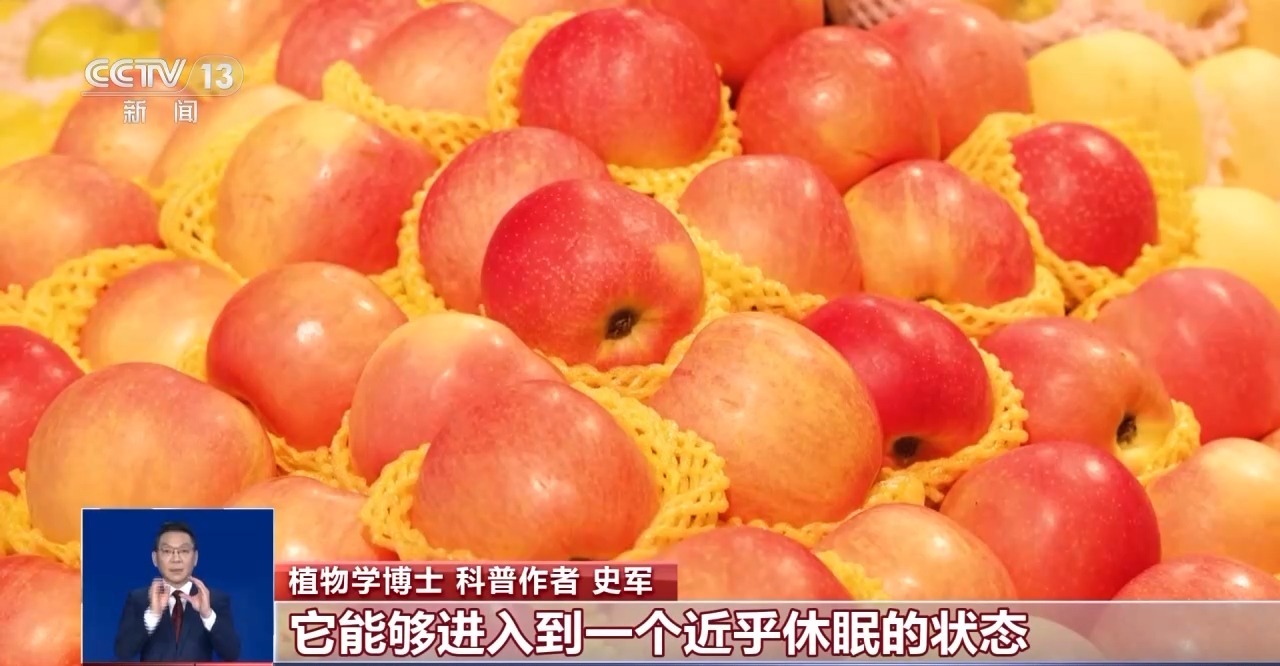
Core Insights - The article discusses the reasons behind the storage longevity of apples and the health risks associated with moldy fruits, as well as the impact of washing fruits on their preservation. Group 1: Apple Storage - Apples have a thick outer skin that helps retain moisture and protects against microbial invasion, contributing to their long shelf life [2] - Apples can enter a near-dormant state under appropriate oxygen and carbon dioxide conditions, which extends their shelf life; modern practices involve storing apples in cold storage with low temperatures and controlled atmospheres [4] Group 2: Health Risks of Moldy Fruits - Mold on fruits is primarily composed of mycelium, which penetrates the fruit and secretes harmful chemicals; thus, consuming moldy fruits, even after cutting away the bad parts, can lead to health issues [5] Group 3: Impact of Washing Fruits - Washing fruits removes a natural waxy coating that protects them from moisture and fungal infections, leading to a shorter preservation period [6] Group 4: Consumption Recommendations - It is advisable to consume ripe tropical fruits first, such as mangoes and bananas, while citrus fruits have some antifungal properties but are still susceptible to rapid spoilage in warm conditions [7][9]
山东龙口:用航天育种与智慧电力解锁“致富密码”
Xin Hua Wang· 2026-02-22 11:48
Group 1 - The company Shenzhou Maoyuan Agricultural Technology Co., Ltd. has established over 20 high-standard greenhouses for space-bred crops, with a planting area of 15,000 square meters, producing hundreds of thousands of kilograms of "Hangfen High-Sugar Tomatoes" annually [1] - The company collaborates with China Aerospace Science and Technology Corporation to introduce over 20 space-bred varieties, which are characterized by high yield, sweet taste, and strong disease resistance [1] - The company utilizes advanced technology for greenhouse management, including automatic ventilation, intelligent temperature control, precise drip irrigation, and supplementary lighting, all powered by electricity [1] Group 2 - The fruit and vegetable industry chain in Longkou is expanding, covering cold chain logistics, deep processing, and e-commerce sales, leading to a growing economic scale [2] - The company Nancun Orchard Fruit Industry Co., Ltd. operates a modern controlled atmosphere storage facility, ensuring optimal temperature and humidity for apples and pears, enhancing the industry's profitability [2] - Longkou's fruit and vegetable brand matrix is continuously expanding, with increased brand value contributing to farmers' income, showcasing a transformation from traditional products to high-end brands [2]
水果也可加热吃(信息服务台)
Ren Min Ri Bao· 2026-02-22 01:58
Core Insights - The article discusses the nutritional transformation of fruits when heated, highlighting both the loss of certain vitamins and the enhancement of other beneficial compounds. Group 1: Nutritional Changes - Heating fruits leads to a loss of vitamin C, but minerals like potassium and magnesium remain stable [1] - Dietary fibers such as pectin become more absorbable after heating, while flavonoids are better released [1] Group 2: Suitable Fruits for Heating - Pears are beneficial when heated due to their dietary fiber and natural sugars, which help alleviate dryness [2] - Hawthorn and red dates increase their nutritional value when heated, enhancing enzyme activity and absorption of iron [2] - Citrus fruits exhibit improved properties when lightly heated, aiding in vascular elasticity [2] - Steamed apples protect the gastrointestinal mucosa, making them suitable for vulnerable populations [2] Group 3: Heating Methods and Pairings - Gentle heating methods are recommended to avoid nutrient loss from repeated heating [3] - Creative pairings can enhance the benefits of heated fruits, such as apples with cinnamon for antioxidant effects and pears with tremella for hydration [3]
美丽的水仙花 N上海大学附属嘉善实验学校309班
Xin Lang Cai Jing· 2026-02-15 00:02
Group 1 - The article highlights the beauty and resilience of the narcissus flower, which blooms in winter, contrasting with other plants that retreat from the cold [1][2] - Narcissus is described as a perennial herb from the Amaryllidaceae family, known for its elegant appearance and is one of China's top ten flowers [1] - The flower's physical characteristics are detailed, including its round stem, slender leaves, and striking white petals with a yellow crown, creating a visually appealing image [1] Group 2 - The article emphasizes the pleasant fragrance of the narcissus, likening it to a sweet spring breeze, enhancing the overall sensory experience [2] - The narcissus is portrayed as a source of joy and color during the winter months, symbolizing hope and beauty amidst the cold [2]
中外网友“大对账”,对到了菜市场
Xin Lang Cai Jing· 2026-02-14 06:12
Core Viewpoint - The article highlights the stark contrast in fruit and vegetable availability between China and several Western countries, emphasizing China's successful agricultural policies and practices that ensure year-round supply of diverse produce [3][10]. Group 1: Agricultural Policies and Achievements - China's "vegetable basket" project, initiated in 1988, has significantly improved the supply of vegetables, meat, and dairy, leading to increased farmer incomes and a stable supply chain [6][7]. - In 2023, the average per capita vegetable consumption in China reached 588 kilograms, with vegetable cultivation area consistently exceeding 300 million mu, maintaining the world's largest scale [3][10]. - China is the world's largest producer and consumer of fruits, with a total fruit production of 335 million tons and consumption of 328 million tons in 2024, far exceeding the global average per capita fruit consumption [3][10]. Group 2: Technological Advancements and Infrastructure - The use of advanced technology in agricultural practices, such as smart systems for monitoring soil conditions and automated irrigation, has transformed traditional greenhouses into intelligent "cloud greenhouses" [9]. - The establishment of a comprehensive cold chain logistics system facilitates the efficient transportation of produce across regions, ensuring fresh vegetables reach consumers quickly [9][10]. - China's focus on seed breeding has led to a domestic seed market share exceeding 91%, contributing to the diversity and quality of produce available [9][10]. Group 3: Global Context and Comparisons - In contrast to China's agricultural success, several Western countries face challenges such as adverse weather conditions and rising energy costs, leading to reduced vegetable production and supply shortages [3][6]. - Reports from the UK, South Korea, and Australia indicate significant vegetable shortages due to various factors, highlighting the effectiveness of China's agricultural policies in maintaining a stable supply [3][6].