科技结构牛

Search documents
沪深300放量拉升!申万宏源:A股“全面牛”或在2026年下半年启动
Mei Ri Jing Ji Xin Wen· 2026-01-16 06:48
Group 1 - The Shanghai Composite Index experienced fluctuations around the 4100-point mark after achieving a record of 17 consecutive gains, indicating a market correction phase [1] - Regulatory authorities tightened margin trading policies, primarily targeting high-frequency speculative trading, aiming to "cool down" the market rather than halt it [1] - Analyst Fu Jingtao from Shenwan Hongyuan Securities suggested that the current spring market resembles an extension of the technology sector bull market, with a comprehensive bull market expected to resume after a period of consolidation, potentially in the second half of 2026 [1] Group 2 - The latest equity risk premium for the CSI 300 index stands at 5.50, slightly above the average of 5.15 since 2014, indicating that while not significantly undervalued, there is still considerable room for risk compensation given the declining domestic risk-free interest rates and low levels of corporate earnings [2] - Among various ETFs tracking the CSI 300 index, the Huaxia CSI 300 ETF (510330) has the lowest management fee at 0.15% per year, managed by Huaxia Fund, which has extensive experience in index operations [2]

申万宏源“牛市两段论”:科技结构牛或在2026年春季达到高峰
2 1 Shi Ji Jing Ji Bao Dao· 2025-11-19 02:33
Core Insights - The conference held by Shenwan Hongyuan focused on investment opportunities during the "14th Five-Year Plan" period, emphasizing various sectors including asset allocation, high-end manufacturing, artificial intelligence, and consumption [1][3]. Group 1: Economic Development and Innovation - Liu Jian, Chairman of Shenwan Hongyuan, highlighted the shift in China's economic growth model towards innovation-driven development, with a focus on original innovation and technological breakthroughs [3]. - China's R&D expenditure is projected to exceed 3.6 trillion yuan in 2024, representing approximately 2.69% of GDP, surpassing Japan and South Korea in terms of R&D scale [3]. Group 2: Market Outlook and Bull Market Analysis - Zhao Wei, Chief Economist at Shenwan Hongyuan, indicated that 2026 will be a pivotal year for reform and development, suggesting that accelerating reforms will create significant opportunities [3][4]. - The "bull market two-stage theory" proposed by Fu Jingtao suggests that the first stage, characterized by a technology-driven market, may peak in spring 2026, followed by a comprehensive bull market in the second half of 2026 [4][5]. - Fu Jingtao noted that the current bull market is still in its early stages, with a shift in asset allocation towards equities expected to drive market growth [5].


申万宏源傅静涛:“牛市1.0”科技结构牛可能在2026年春季来到高峰
2 1 Shi Ji Jing Ji Bao Dao· 2025-11-18 04:52
Core Viewpoint - The analysis presented by Shenyin Wanguo's chief analyst suggests a two-phase bull market, with 2025 representing the "Bull Market 1.0" focused on technology, and a potential transition to a broader bull market in the second half of 2026 [1] Group 1: Market Phases - The "Bull Market 1.0" in 2025 is characterized by a technology-driven structure, with expectations of a peak in the spring of 2026 [1] - The second half of 2026 may initiate a comprehensive bull market, termed "Bull Market 2.0" [1] Group 2: AI Industry Insights - The AI industry trend is expected to continue evolving, but the stock prices of A-share AI industry chain companies are currently in a long-term low cost-performance zone [1] - This situation is reminiscent of previous market phases, such as the early 2014 ChiNext, early 2018 food and beverage sector, and early 2021 new energy sector [1] Group 3: Historical Context - Historically, markets often undergo a phase of skepticism before continuing with industry trend-driven rallies [1]
申万宏源:牛市1.0高点看26年春季 关注储能、存储、创新药与国防军工
智通财经网· 2025-11-16 22:53
Core Viewpoint - The report from Shenwan Hongyuan indicates that the current "Bull Market 1.0" is at a high point, with insufficient long-term cost-effectiveness in the technology sector. The technology structural bull market of 2025 is part of this phase, and a potential peak may occur in the spring of 2026 [1][2]. Group 1: Market Phases - The "Bull Market 1.0" is characterized by high resistance to further upward movement, with cyclical trends still in a "running ahead" phase. The conditions for the initiation of "Bull Market 2.0" are not yet complete [2][4]. - The current A-share AI industry chain is compared to previous market phases, indicating a state of "ongoing industry trend with small fluctuations and long-term low cost-effectiveness." Future movements are expected to be divided into "high-level oscillation" and "adjustment" phases [2][3]. Group 2: High-Level Oscillation Phase - In the high-level oscillation phase, it becomes increasingly difficult to earn valuation gains, and new industry catalysts or sustained high growth in performance are less likely to lead to upward breakthroughs. This phase typically lasts at a quarterly level [3][4]. - The adjustment phase is usually triggered by intermediate disturbances in industry trends, which do not signify the end of the structural bull market but may lead to reasonable adjustments [3][4]. Group 3: Investment Opportunities - Short-term opportunities in technology growth are expected to arise from small rebounds, focusing on sectors with new catalysts and significant industry space, particularly in energy storage and storage solutions [4][5]. - The report emphasizes the importance of focusing on Alpha logic in both cyclical and technology investments, with a particular interest in sectors like basic chemicals, industrial metals, innovative pharmaceuticals, and national defense [5]. Group 4: 2026 Outlook - The spring of 2026 is anticipated to be a potential peak, but it is unlikely to represent the highest point of the entire bull market. The market is expected to face three challenges: long-term low cost-effectiveness in technology, intermediate disturbances in industry trends, and the conditions for "Bull Market 2.0" not being mature yet [4][5]. - The report suggests that the A-share market will continue to see mid-term gains from cyclical improvements, asset allocation shifts towards equities, and China's increasing global influence [5].
申万宏源:抢跑26年景气展望的行情不断演进
智通财经网· 2025-11-09 01:19
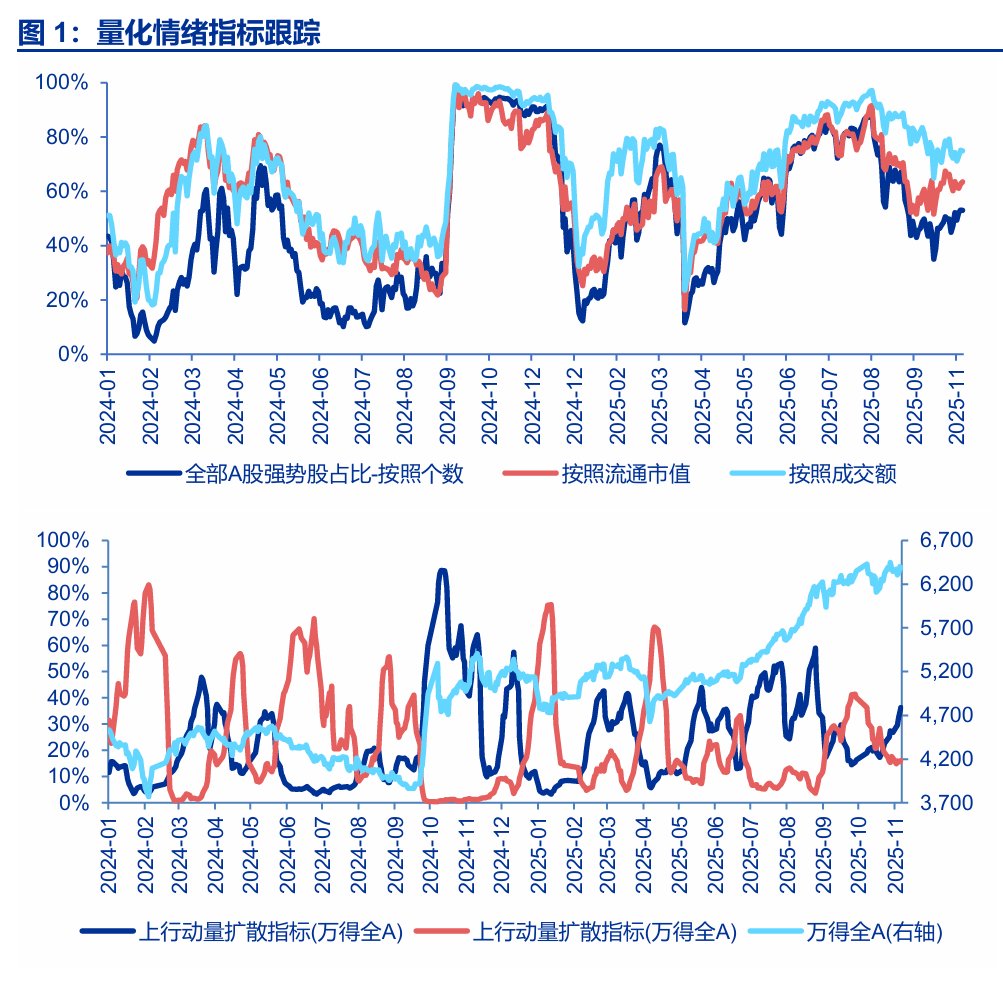
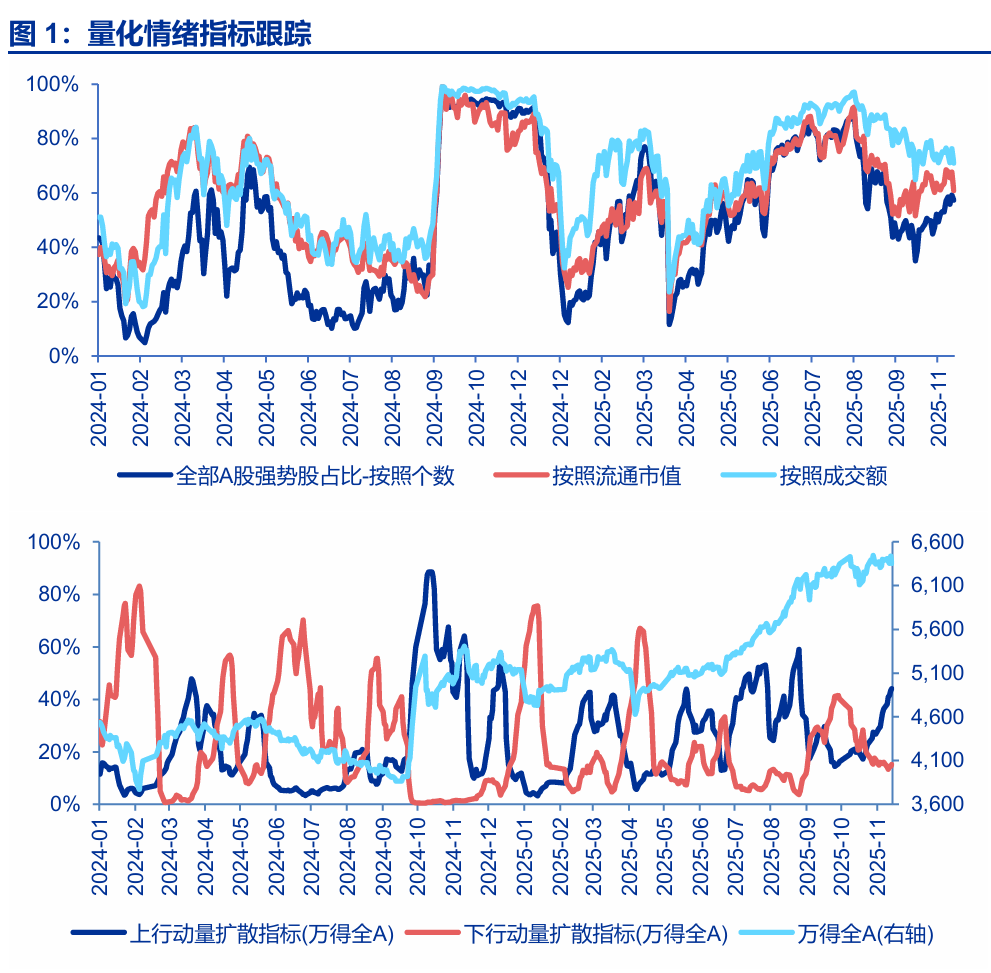
Core Viewpoint - The report from Shenwan Hongyuan indicates that Hong Kong stocks have outperformed A-shares during two phases: the industrial trend fermentation phase and the phase where Chinese assets are generally superior with clear structural main lines. The outlook remains positive for a rebound in the fourth quarter, particularly favoring high elasticity in the Hang Seng Technology Index [1]. Short-term Market Structure Characteristics - The technology growth sector currently lacks long-term cost-effectiveness, experiencing high volatility while awaiting industrial trend catalysts. The Shanghai Composite Index has been fluctuating narrowly, with the technology growth sector showing wide fluctuations. The absence of a dominant structure to lead the market breakout is noted, similar to previous years when long-term low cost-effectiveness areas struggled to gain valuation [2][3]. Mid-term Market Judgments - The "two-stage bull market" theory is maintained, with the first stage of the technology structure bull market occurring in 2025. The spring of 2026 may present challenges, including a critical verification period for demand and sensitivity to performance disturbances and liquidity shocks in low cost-effectiveness areas. The market is expected to experience a structural breakthrough, but the timing and conditions for a comprehensive bull market are still developing [4]. Upcoming Market Trends - The market is anticipated to see a rotation in sectors, particularly with the PPI turning positive and the emergence of price increase catalysts. The sectors of energy storage and photovoltaics are expected to show early signs of recovery, with potential for further upward movement in the AI industry, humanoid robots, innovative pharmaceuticals, and defense industries [5]. Quantitative Indicators - Various quantitative indicators show a continued expansion of profit effects across sectors, with significant participation from coal, oil and petrochemicals, and steel. However, sectors like non-ferrous metals and transportation are experiencing contraction [9]. ETF Market Overview - The ETF market reflects varied performance across sectors, with notable changes in share volumes and price fluctuations. For instance, the Huatai-PineBridge CSI Photovoltaic Industry ETF has seen a 1.6% increase in share volume over five trading days, while the Southern CSI New Energy ETF has experienced a 1.2% decrease [10].