
牛市1.0

Search documents
A股开盘速递 | 指数集体上涨!银行股延续强势 中国银行(601988.SH)续创历史新高
智通财经网· 2025-11-20 02:01
Market Overview - The market indices collectively rose in early trading on November 20, with the Shanghai Composite Index up by 0.33%, Shenzhen Component Index up by 0.65%, and ChiNext Index up by 0.7% [1] Key Sectors Lithium Battery Sector - The lithium battery sector showed strong performance, with stocks like Beijiete hitting the daily limit, and companies such as Shengxin Lithium Energy, Jiuwu Gaoke, Fulin Precision, and Ganfeng Lithium also rising [1] - The price of lithium carbonate futures has surpassed 100,000, and there is a continuous price increase in lithium battery materials. Ganfeng Lithium's chairman indicated that by 2026, lithium carbonate prices could exceed 150,000 to 200,000 per ton [3] - Wanlian Securities suggests that the performance of midstream material companies in the lithium battery industry is expected to continue improving, presenting investment opportunities [3] Brokerage Sector - The brokerage sector experienced a collective rise, with stocks like Shouchuang Securities opening over 8% higher. Other notable gainers included Northeast Securities, China Galaxy, and CITIC Securities [1] - China International Capital Corporation (CICC) plans to merge with Dongxing Securities and Xinda Securities, which could reshape the competitive landscape among leading brokerages [5] Aquaculture Sector - The aquaculture sector saw a rise following reports that China has suspended imports of Japanese seafood. Analysts predict a significant recovery in China's aquaculture industry by 2025, with major seafood prices expected to rebound to historical highs [7] Institutional Insights - Galaxy Securities maintains a positive long-term outlook for the market, indicating that the current A-share market is in a consolidation phase with rapid sector rotation. There is a focus on lithium batteries and electrolyte themes, while consumer sectors benefit from policy support [9] - Shenwan Hongyuan notes that the market is currently in a high position of "Bull Market 1.0," suggesting a focus on high-level fluctuations. They predict that technology growth will have rebound opportunities before spring 2026, which may mark a peak [10][11] - Huatai Securities highlights that the market is currently experiencing a period of accumulation for a potential breakthrough, with a focus on low-occupancy sectors and the AI industry chain [12]



申万宏源傅静涛:2026年春季前科技成长至少还有一波机会
Guo Ji Jin Rong Bao· 2025-11-19 11:39
Core Viewpoint - The 2025 technology structural bull market is considered "Bull Market 1.0," with a potential peak in spring 2026, followed by a comprehensive bull market termed "Bull Market 2.0" in the second half of 2026 [1] Group 1: Market Trends - The AI industry trend is expected to deepen, but the cost-effectiveness of the A-share AI industry chain is deemed low, similar to previous years in 2014, 2018, and 2021 [1] - A mid-2026 supply clearing in midstream manufacturing is anticipated, with a notable increase in sectors where capacity growth is lower than demand growth [1] - The sequence of "policy bottom, market bottom, economic bottom" is expected to occur, with mid-2026 potentially validating the "policy bottom" [1] Group 2: Investment Recommendations - Investors are advised to focus on three main lines in 2026: 1. Recovery trading sectors such as cyclical Alpha, basic chemicals, and industrial metals 2. Technology industry trend sectors including AI industry chain, humanoid robots, energy storage, photovoltaics, pharmaceuticals, and military industry 3. Sectors related to manufacturing influence enhancement, such as chemicals and engineering machinery [2] - The transition from Bull Market 1.0 to 2.0 is characterized by high dividend defensiveness, with the latter stage driven by cyclical policies and technological trends [2]

午评:沪指跌0.43%,医药、银行等板块走低,军工板块逆市拉升
Zheng Quan Shi Bao Wang· 2025-11-17 04:22
Market Overview - Major stock indices experienced fluctuations, with the ChiNext index dropping nearly 1% while the North Securities 50 index rose [1] - As of the midday close, the Shanghai Composite Index fell by 0.43% to 3973.31 points, the Shenzhen Component Index decreased by 0.35%, and the ChiNext index declined by 0.8%, while the North Securities 50 index increased by 0.57% [1] - The total trading volume across the Shanghai, Shenzhen, and North markets reached 12,783 billion [1] Sector Performance - Sectors such as pharmaceuticals, insurance, banking, electricity, and brokerage firms saw declines, while the military industry sector experienced strong gains [1] - Coal, real estate, oil, and agriculture sectors showed upward movement, with lithium mining and computing power concepts being particularly active [1] Investment Strategy Insights - According to Shenwan Hongyuan Securities, the market is currently in a "Bull Market 1.0" phase at a high level, suggesting a focus on managing high-level fluctuations [1] - Short-term value opportunities are identified in technology growth, which is considered to have high short-term value but insufficient long-term value [1] - The cyclical sectors are still viewed as undervalued in the long term, but short-term value is deemed insufficient [1] - Recent actions by institutional investors indicate a shift in portfolio adjustments, suggesting limited short-term adjustment space for the overall market and technology growth [1] - There is an anticipated rebound opportunity for technology growth before spring 2026, while cyclical investments should focus on areas with Alpha logic [1]
【申万宏源策略 | 一周回顾展望】“牛市1.0”阶段的高位区域
申万宏源证券上海北京西路营业部· 2025-11-17 02:37
Core Viewpoint - The article discusses the current high-level region of the "Bull Market 1.0" phase, analyzing market trends and potential future movements [2] Group 1 - The market has shown significant resilience, with major indices experiencing fluctuations but maintaining an overall upward trajectory [2] - Key economic indicators suggest a strong recovery, with GDP growth projected at 5% for the upcoming quarter [2] - Investor sentiment remains optimistic, driven by positive earnings reports and robust consumer spending [2] Group 2 - Sector performance has varied, with technology and healthcare leading the gains, while energy and utilities have lagged behind [2] - The article highlights the importance of monitoring inflation rates, which are expected to stabilize around 3% in the near term [2] - Regulatory changes in the financial sector are anticipated, which could impact market dynamics and investment strategies [2]

申万宏源:牛市1.0高点看26年春季 关注储能、存储、创新药与国防军工
智通财经网· 2025-11-16 22:53
Core Viewpoint - The report from Shenwan Hongyuan indicates that the current "Bull Market 1.0" is at a high point, with insufficient long-term cost-effectiveness in the technology sector. The technology structural bull market of 2025 is part of this phase, and a potential peak may occur in the spring of 2026 [1][2]. Group 1: Market Phases - The "Bull Market 1.0" is characterized by high resistance to further upward movement, with cyclical trends still in a "running ahead" phase. The conditions for the initiation of "Bull Market 2.0" are not yet complete [2][4]. - The current A-share AI industry chain is compared to previous market phases, indicating a state of "ongoing industry trend with small fluctuations and long-term low cost-effectiveness." Future movements are expected to be divided into "high-level oscillation" and "adjustment" phases [2][3]. Group 2: High-Level Oscillation Phase - In the high-level oscillation phase, it becomes increasingly difficult to earn valuation gains, and new industry catalysts or sustained high growth in performance are less likely to lead to upward breakthroughs. This phase typically lasts at a quarterly level [3][4]. - The adjustment phase is usually triggered by intermediate disturbances in industry trends, which do not signify the end of the structural bull market but may lead to reasonable adjustments [3][4]. Group 3: Investment Opportunities - Short-term opportunities in technology growth are expected to arise from small rebounds, focusing on sectors with new catalysts and significant industry space, particularly in energy storage and storage solutions [4][5]. - The report emphasizes the importance of focusing on Alpha logic in both cyclical and technology investments, with a particular interest in sectors like basic chemicals, industrial metals, innovative pharmaceuticals, and national defense [5]. Group 4: 2026 Outlook - The spring of 2026 is anticipated to be a potential peak, but it is unlikely to represent the highest point of the entire bull market. The market is expected to face three challenges: long-term low cost-effectiveness in technology, intermediate disturbances in industry trends, and the conditions for "Bull Market 2.0" not being mature yet [4][5]. - The report suggests that the A-share market will continue to see mid-term gains from cyclical improvements, asset allocation shifts towards equities, and China's increasing global influence [5].
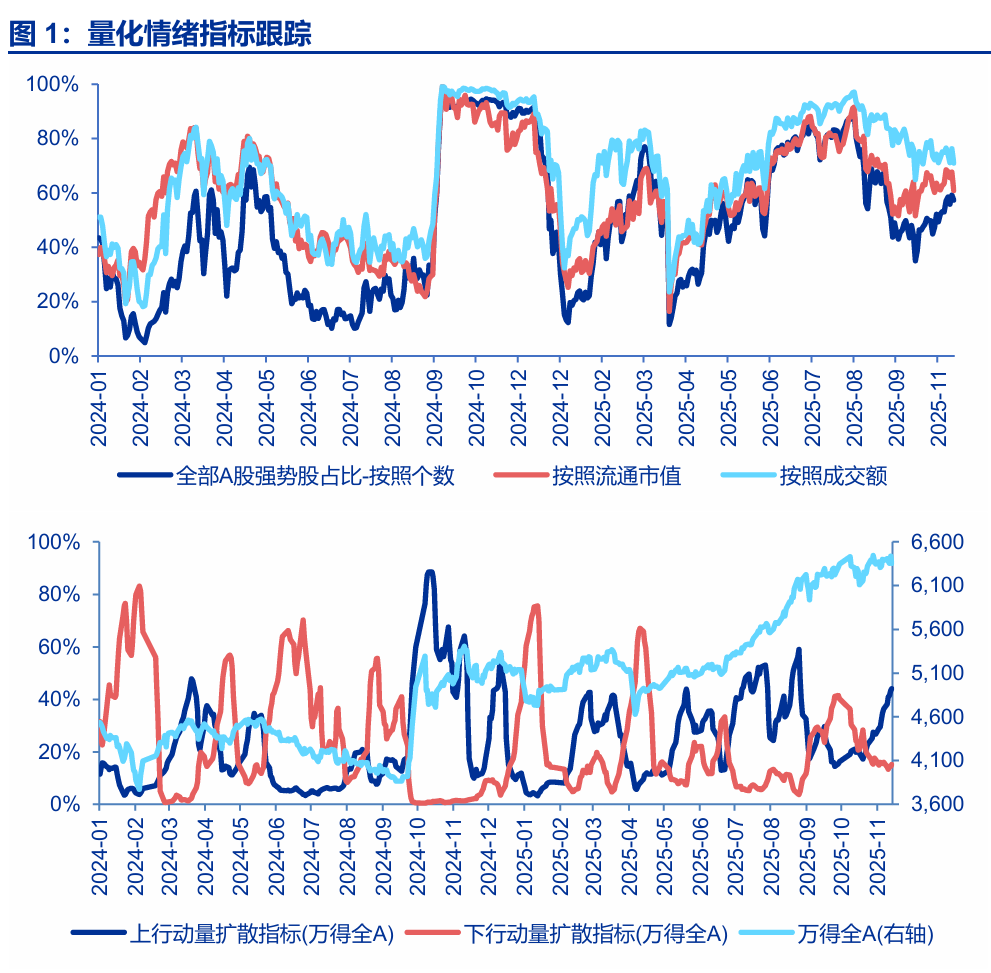
申万宏源:科技“性价比不足”,顺周期“逻辑有断点”,“牛市2.0”条件不具备,现在是“牛市1.0”高位震荡
Hua Er Jie Jian Wen· 2025-11-16 09:51
Core Viewpoint - The current A-share market is in the high position of "Bull Market 1.0," with insufficient long-term cost-effectiveness in the technology sector and logical breaks in the cyclical market. Conditions for the initiation of Bull Market 2.0 are not yet complete [1] Group 1: Market Conditions - The A-share AI industry chain is in a state of "long-term low cost-effectiveness" similar to previous years in various sectors, indicating a high-level consolidation phase followed by an adjustment phase [2] - The high-level consolidation phase typically lasts at a quarterly level, and adjustments are triggered by mid-level disturbances in the industry trend, but this does not signify the end of the industry trend [2] Group 2: Cyclical Market Analysis - The recent cyclical market is characterized by short-term price increases and expectations of PPI turning positive by mid-2026, but there is significant divergence regarding the pace of PPI improvement [3] - The cyclical market is approaching a differentiation phase as cost-effectiveness decreases, and the sustainability of price increases becomes more critical [3] Group 3: Future Challenges - By spring 2026, the A-share market may face three major challenges: the technology sector's long-term low cost-effectiveness, a critical verification period for demand, and immature conditions for the transition to Bull Market 2.0 [4][5] - The market is expected to experience a two-stage bull market, with the first stage being the structural bull market in 2025 and a potential peak in spring 2026 [4][6] Group 4: Investment Opportunities - In the current high-level consolidation phase, the focus should be on Alpha opportunities in both cyclical and technology sectors, with an emphasis on sectors with favorable supply-demand dynamics and high dividend yields [7] - Short-term opportunities in technology growth are expected to arise from small rebounds, particularly in sectors with new catalysts or significant industry space, such as energy storage and innovative pharmaceuticals [7]
申万宏源策略一周回顾展望(25/11/10-25/11/15) :牛市“1.0”阶段的高位区域
Shenwan Hongyuan Securities· 2025-11-15 13:37
Core Insights - The report indicates that the current "Bull Market 1.0" phase is at a high level, with insufficient long-term cost-effectiveness in the technology sector, and increasing resistance to further upward breakthroughs. The cyclical market is still in a "running ahead" phase, with mid-term logic showing gaps, and conditions for the initiation of "Bull Market 2.0" are not yet complete. It is advised to focus on small wave rhythms based on short-term cost-effectiveness in a high-level oscillation market [1][4][6] - The A-share AI industry chain is currently in a state of "the major industrial trend has not ended + small fluctuations + long-term low cost-effectiveness area." Historical experience suggests that future trends will typically be divided into "high-level oscillation phase" and "adjustment phase" [1][4][6] - The report outlines three challenges that the A-share market may face in the spring of 2026, which could be a potential peak: 1. Long-term low cost-effectiveness in technology, which may trigger adjustments; 2. A critical verification period for demand-side conditions; 3. Conditions for the transition to "Bull Market 2.0" are not yet mature [1][6][7] Market Phases - The high-level oscillation phase makes it increasingly difficult to earn valuation money, and new industrial catalysts or sustained high growth in performance are less likely to lead to upward breakthroughs. This phase typically lasts at a quarterly level, and adjustments may not occur immediately [4][5][6] - The adjustment phase is usually triggered by intermediate disturbances in industrial trends, which do not signify the end of structural bulls but may adjust to reasonable levels between bull and bear markets [5][6][7] Investment Focus - In the current high-level oscillation zone, both cyclical and technology sectors should focus on Alpha opportunities. Short-term cyclical investments should prioritize sectors with favorable supply-demand dynamics, such as basic chemicals and industrial metals, as well as high-dividend-rewarding coal and leading oil companies in Hong Kong [1][6][7] - Short-term opportunities in technology growth mainly come from small wave rebounds, with a focus on sectors with new catalysts or significant industrial space, particularly energy storage and storage solutions. Additionally, sectors with upward economic outlooks and relatively high cost-effectiveness may see early gains before spring 2026, especially in innovative pharmaceuticals and national defense industries [1][6][8]