
移动智能体

Search documents
赛力斯“断舍离”
Hua Er Jie Jian Wen· 2026-02-09 11:16
Core Viewpoint - Seres is attempting to clarify its market positioning by spinning off its budget electric vehicle brand, Blue Electric, into a separate company, thereby enhancing its high-end label in the capital market [1][2]. Group 1: Company Strategy - On February 9, Seres announced a cooperation agreement with the Shapingba District government in Chongqing to establish a new independent company by spinning off assets related to its electric vehicle brand, Blue Electric [1]. - The new company's ownership structure reveals that the Shapingba District government will hold approximately 33.5%, while Seres and its designated entities will hold about 32%, with an employee stock ownership plan accounting for 16% [1]. - This move allows Seres to transition from a controlling shareholder to a minority shareholder, effectively "off-balance-sheet" for Blue Electric [1]. Group 2: Financial Performance - Blue Electric, launched in March 2023, targets the budget market segment priced between 100,000 to 150,000 yuan, but has not been reported as a separate division in Seres' financial statements [2]. - In the first half of 2025, the sales figures for the Aito series reached approximately 152,000 units, while Blue Electric only sold about 20,000 units, highlighting a significant performance gap [2]. - Seres' gross margin reached a historical high of 28.93% in the first half of 2025, driven by the high average selling prices of the Aito models, while Blue Electric is likely operating at a loss or minimal profit due to intense price competition [2]. Group 3: Market Challenges - The electric vehicle market is experiencing intense competition, particularly in the low-price segment, which is suppressing the valuation of listed companies [3]. - Seres has seen a dramatic increase in sales expenses, rising from 4 billion yuan in 2022 to 18.1 billion yuan in 2024, with sales expenses accounting for nearly one-third of revenue in the first half of 2025 [3]. - Concerns about Seres' independence and long-term value have persisted, with over 75 billion yuan paid to Huawei from 2022 to the first half of 2025, representing over 30% of total procurement [3]. Group 4: Future Outlook - The spin-off of Blue Electric is viewed as a resource reallocation strategy, allowing Seres to focus on core technology research and strategic planning amid increasing internal competition within Huawei's ecosystem [4]. - Seres has established a production base in Indonesia with an annual capacity of about 20,000 units, but the utilization rate was only 4% in the first half of 2025, indicating challenges in converting brand potential into actual sales [4]. - The company is also venturing into the "mobile intelligent body" sector, with the establishment of a new subsidiary focused on smart robotics and AI model development [5]. Group 5: Innovation and Growth - The appointment of a key executive responsible for developing a super-range extension system as the legal representative of the new company signals Seres' intent to leverage its hardware and software capabilities in the next generation of smart terminals [5]. - Seres is actively collaborating with institutions like ByteDance and Beihang University, and is intensively recruiting in the field of embodied intelligent models, aiming to transition beyond mere vehicle manufacturing [5]. - The ability of Seres to independently achieve global delivery and breakthroughs in embodied intelligence, without Huawei's direct support, will be crucial for its future market valuation [5].

华为乾崑 all in 启境,开启造车新模式
雷峰网· 2025-11-20 14:45
Core Viewpoint - The article discusses the collaboration between Huawei and GAC to establish the Qijing brand, focusing on creating a smart, safe, and stylish vehicle that integrates advanced AI capabilities and IoT connectivity [2][4][23]. Group 1: Product Definition and Vision - Qijing aims to create a vehicle that meets diverse consumer needs without compromise, emphasizing safety, style, and advanced technology [11]. - The long-term vision for Qijing is to develop a "mobile intelligent entity" that can proactively sense user needs and make autonomous decisions [13][23]. Group 2: Technological Integration - Qijing vehicles will utilize Huawei's comprehensive technology suite, including the Kunlun intelligent driving system, HarmonyOS cockpit, and various AI-driven features [4][6]. - The WEWA architecture, which eliminates the language processing step, is designed to reduce latency by 50% and improve traffic efficiency by 20% [6]. Group 3: Team and Process Collaboration - Huawei has integrated its teams and processes with Qijing, ensuring a seamless collaboration in product development, marketing, and decision-making [6][9]. - The introduction of established processes like IPD and IPMS aims to embed Huawei's capabilities within Qijing, fostering long-term growth [6]. Group 4: Strategic Importance - Qijing is positioned as a critical component of GAC's smart transformation and represents a new path for Huawei in the automotive sector [9][23]. - The project has received significant attention from Huawei's leadership, indicating its strategic importance within the company's broader goals [7][9]. Group 5: Future Aspirations - Qijing envisions a future where vehicles serve as intelligent assistants, enhancing user experience through advanced AI capabilities [16][21]. - The integration of IoT devices will allow for seamless communication between the vehicle and home, creating a cohesive smart living environment [21].


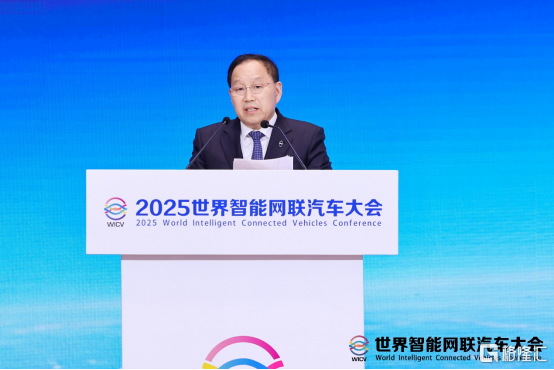
2025世界智能网联汽车大会开幕 赛力斯张兴海:安全是最大的豪华
Ge Long Hui· 2025-10-16 10:41
Core Insights - The 2025 World Intelligent Connected Vehicle Conference commenced in Beijing, highlighting the transformative impact of technological innovation on the automotive industry [1] - The chairman of Seres Group emphasized the need for a balance between safety and development while pursuing five major transformations in new vehicles: intelligent electric, digital space, intelligent connectivity, constant innovation, and travel partnership [1] Group 1: Industry Transformation - Rapid advancements in electrification, intelligence, connectivity, and sharing are driving a transformation in new vehicles, providing users with a novel driving experience [3] - The concept of proactive safety, likened to an "invisible guardian," addresses many safety issues associated with traditional vehicles, reinforcing the idea that safety is the ultimate luxury [3] Group 2: Safety Innovations - Seres Group has established a comprehensive intelligent safety system based on over 190 driving scenarios and 340 safety features, focusing on four key areas: life protection, vehicle body protection, health care, and privacy protection [3] - The company adheres to the principle that "no safety, no intelligence; no safety, no electrification; no safety, no luxury," continuously enhancing its intelligent safety framework [3] Group 3: Performance Metrics - As of now, the AITO Wenjie assisted driving system has accumulated nearly 3.8 billion kilometers, preventing over 2 million potential collisions and providing proactive services exceeding 200,000 instances [5] - The Wenjie M9 has become the first model to achieve over 4G in the C-IASI safety test, while the Wenjie M8 received the best overall score in the China Automotive Research "China Intelligent Vehicle Index" evaluation [5] Group 4: Future Outlook - The automotive industry is rapidly entering an era of deep exploration in AI, with Seres Group accelerating its exploration and layout to deliver a more emotional, intelligent, safe, and reliable travel experience for users [5]
中国移动研究院发布“无线智能体云平台”加速移动智能体规模化应用
Xin Lang Cai Jing· 2025-10-13 12:08
Core Insights - The "Wireless Intelligent Body Cloud Platform" was officially launched by China Mobile Research Institute at the 2025 China Mobile Global Partner Conference, aimed at supporting mobile intelligent entities such as embodied robots, personal intelligent assistants, and connected vehicles, which are crucial for building a modern industrial system in China [1] Group 1: Key Features - Intelligent Perception and Closed-loop Control: This feature addresses performance assurance challenges by transforming traditional "black-box" communication systems into intelligent systems capable of real-time perception of network and operational states, enabling on-demand resource scheduling [1] - Task Rapid Reconstruction and Persistent Communication: This feature ensures business resilience and continuity for mobile intelligent entities by addressing service interruptions caused by network jitter and IP address changes, thus maintaining service continuity [1][2] Group 2: Mechanisms and Support - The platform establishes a dual-layer assurance mechanism from task-level to session-level to enhance task resilience against temporary connection interruptions caused by network issues [2] - The "Wireless Intelligent Body Cloud Platform" provides a foundational support system characterized by high determinism, strong resilience, and high efficiency, significantly improving task completion rates in critical business scenarios such as robot control and autonomous driving [2]
