
算力扩张

Search documents
招商证券国际:AIDC行业成机械行业核心引擎 关注燃气涡轮机领域
Zhi Tong Cai Jing· 2025-12-24 06:36
Core Viewpoint - The Artificial Intelligence Data Center (AIDC) industry is becoming a core growth engine for the machinery sector, benefiting from the strong momentum of global AI development and computing power expansion [1] Group 1: Industry Insights - The gas turbine sector is experiencing significant growth due to increased orders and energy bottlenecks in North America, with both quantity and prices showing a clear upward trend [1] - Market confidence in diesel engines, liquid cooling, and gas turbines has strengthened since the beginning of the year [1] Group 2: Investment Recommendations - The company maintains an "overweight" rating for the industry, suggesting a focus on gas turbines, diesel generators, and cooling equipment sectors amid simultaneous growth in sales and prices [1]

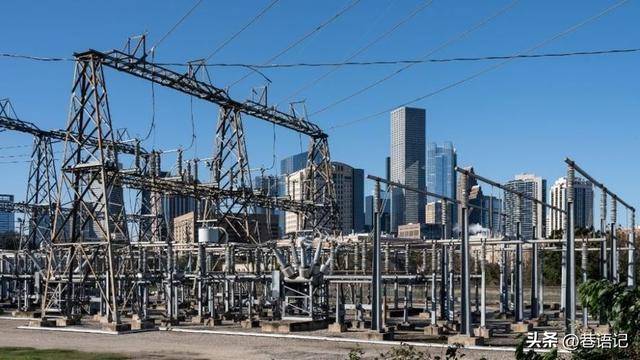
电费涨至1850美元?美国电力真相,群体阵痛与未来隐忧
Sou Hu Cai Jing· 2025-12-05 14:21
Core Viewpoint - The debate on whether the U.S. is facing an electricity shortage is ongoing, with concerns raised about the impact of data centers on electricity demand and pricing [1]. Short-term vs Long-term Supply - In the short term, the U.S. electricity supply is relatively sufficient, with a projected average growth rate of around 2% in electricity consumption over the next year [3]. - However, the average utilization of power generation equipment is expected to decline from 2025 to 2026, indicating that supply growth may keep pace with or exceed demand [4]. - Since 2001, the capacity utilization rate in the U.S. electricity sector has been on a downward trend, reflecting a consistent surplus in supply relative to demand [6]. Regional Supply Concerns - Outside of Texas's ERCOT region, other areas meet reliability standards, alleviating short-term concerns about supply shortages [6]. - By 2030, significant challenges may arise, particularly in Texas and the Mid-Atlantic regions, where electricity demand is growing rapidly, with Texas projected to see an average growth rate of 10.7% over the next two years [10]. - The Mid-Atlantic region is also experiencing a compound growth rate of 3.6%, exceeding the national average of 2.7% [12]. Electricity Pricing Trends - Electricity prices are indeed rising, with a 5.1% year-on-year increase in September, although this only contributed 0.1 percentage points to the overall Consumer Price Index (CPI) [15]. - The electricity CPI growth rate has consistently outpaced the overall CPI since March, with a notable difference of 2.1% in September [15]. - For low-income households, rising electricity prices are particularly burdensome, as electricity is a necessary expense [17]. Overall Economic Impact - Despite rising electricity prices, the overall burden on consumers remains manageable, with electricity expenditures accounting for approximately 1.2% of disposable income, similar to pre-pandemic levels [18]. - If disposable income growth continues and electricity price growth slows, the proportion of electricity costs may decrease in the coming year [18]. Data Center Demand - The primary driver of electricity demand growth in the coming years will be data centers, which are expected to contribute an additional 50 GW of load by 2030, representing nearly half of the total electricity load increase from 2024 to 2030 [22][23]. - The International Energy Agency (IEA) predicts that global data center electricity consumption will double by 2030, with AI-optimized servers consuming five times more power [25]. - The rapid expansion of data centers in the U.S. is outpacing that of China and the EU, leading to significant increases in electricity demand [27]. Supply Chain Challenges - The swift growth of data centers is not only straining electricity supply but also putting pressure on the supply chain for critical components like storage and optical chips, with an estimated 20% of new data center projects potentially delayed due to supply chain issues [28]. - The concentrated pace of data center construction poses challenges for both the electricity system and the supply chain [30]. Strategic Considerations - Companies must consider constraints related to electricity supply and supply chain capabilities when planning projects to ensure timely execution [31]. - The government needs to balance computational development with energy security to prevent worsening regional electricity shortages [31]. - The ongoing debate about electricity shortages in the U.S. highlights the need for alignment between computational expansion in the AI era and energy support [33].


中泰证券:三季度全A盈利改善 主线进一步聚焦“反内卷”战略扩散
Zhi Tong Cai Jing· 2025-11-07 09:10
Core Viewpoint - The overall revenue of A-shares is expected to improve, with a year-on-year increase of 1.16% in Q3 2025, and net profit growth rebounding to 5.34% compared to Q2 2025, indicating a recovery in performance across the market [1][2]. Group 1: A-share Performance - In Q3 2025, the overall revenue of A-shares increased by 1.16% year-on-year, showing significant improvement compared to Q2 [1]. - The net profit growth rate for the parent company rose to 5.34%, an increase of 2.88 percentage points from Q2 [1]. - The return on equity (ROE) for A-shares in Q3 was 7.95%, up 0.22 percentage points from Q2, driven by improvements in net profit margin and equity multiplier [1]. Group 2: Industry Performance - The performance of 30 first-level industries showed significant structural differentiation, with the highest net profit growth in industries such as steel, non-ferrous metals, non-bank financials, electronics, and media [2]. - The cyclical sectors displayed a "price drop, stable volume" pattern, with some industries like steel showing significant improvement in profit margins, while others like coal and petrochemicals faced declines [2][3]. - The technology sector remains a key driver of profit growth, with net profit growth rates for electronics, communications, and media at 38.3%, 8.8%, and 37.4% respectively [3]. Group 3: Investment Recommendations - The current investment focus may shift towards "anti-involution" strategies in upstream industries and the expansion of technology applications, with short-term attention on consumption-boosting policies leading to structural rebounds [5]. - Key investment themes include strengthening the technology sector, particularly in AI applications and terminal directions, and focusing on high-growth upstream sectors that are currently undervalued [5]. - There is potential for brokerage firms to benefit from market recovery and policy support, presenting a phase-specific investment opportunity [5].
