
粮食自给自足

Search documents
“这下好了,中国怎么可能再买美国大豆?”
Guan Cha Zhe Wang· 2026-02-21 06:46
Core Viewpoint - The U.S. Supreme Court's ruling against Trump's tariff policies raises concerns in the U.S. agricultural sector, particularly regarding the future of soybean exports to China, which has been a significant market for American farmers [1][4]. Group 1: Tariff Policy and Market Impact - The Supreme Court ruled that Trump's large-scale tariff policies lacked clear legal authorization, leading to uncertainty about future tariff measures [4]. - Analysts express doubt that China will continue to purchase U.S. soybeans without the pressure of tariffs, especially since U.S. soybeans are currently more expensive than those from Brazil [1][4]. - Following the ruling, soybean futures in the U.S. experienced a slight decline, indicating market apprehension about the future of U.S.-China trade relations [1]. Group 2: China's Soybean Import Dynamics - China, the world's largest soybean importer, has historically been a major buyer of U.S. soybeans, accounting for over 60% of global soybean trade [1]. - Despite fulfilling a previous commitment to purchase 12 million tons of U.S. soybeans, China has significantly increased its purchases from Brazil, which is expected to have a large soybean harvest and offers lower prices [4]. - The loss of tariff leverage may hinder U.S. soybeans' competitiveness against Brazilian soybeans in the Chinese market [4]. Group 3: Agricultural Sector Challenges - U.S. farmers are facing their fourth consecutive year of low profits or losses, despite government subsidies reaching historical highs, with projected declines in farm income [5]. - The U.S. Department of Agriculture announced a $11 billion transitional subsidy program for farmers, partly due to export market challenges [5]. - The uncertainty surrounding tariff policies complicates the outlook for U.S. agriculture, as farmers and market participants await further developments [5]. Group 4: Future Trends in China's Agricultural Policy - Analysts from Goldman Sachs predict that China's reliance on soybean imports will decrease significantly over the next decade, from 90% to below 30%, as the country enhances its food self-sufficiency and supply chain resilience [5].

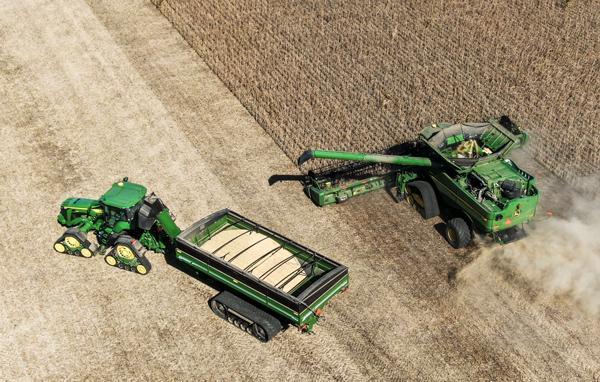
“特朗普关税被裁定违法,中国还怎么可能再买美国大豆?”
Xin Lang Cai Jing· 2026-02-21 05:57
Core Viewpoint - The U.S. Supreme Court's ruling against Trump's tariff policy raises concerns in the U.S. agricultural sector, particularly regarding the future of soybean exports to China, which has been a significant market for American farmers [1][4]. Group 1: Tariff Policy and Market Impact - The Supreme Court ruled that Trump's large-scale tariff policy lacked legal authorization, leading to uncertainty about future trade relations with China [4]. - Analysts express doubt that China will continue to purchase U.S. soybeans without the pressure of tariffs, especially as Brazilian soybeans are currently cheaper [1][4]. - Following the ruling, soybean futures in the U.S. experienced a slight decline, indicating market apprehension about the future of U.S. soybean exports [1]. Group 2: China's Soybean Import Dynamics - China, the world's largest soybean importer, has historically been a major buyer of U.S. soybeans, accounting for over 60% of global soybean trade [1]. - Despite fulfilling a previous commitment to purchase 12 million tons of U.S. soybeans, China has significantly increased its purchases from Brazil, which is expected to have a large soybean harvest [4]. - Analysts note that without tariffs, U.S. soybeans will struggle to compete with Brazilian prices, potentially affecting future trade volumes [4]. Group 3: Agricultural Sector Challenges - U.S. farmers are facing their fourth consecutive year of low profits or losses, despite government subsidies reaching historical highs [5]. - The U.S. Department of Agriculture plans to provide $11 billion in transitional subsidies to farmers, partly due to export market challenges [5]. - The uncertainty surrounding tariff policies complicates the outlook for U.S. agriculture, as farmers and market participants await further developments [5]. Group 4: Future Projections - A Goldman Sachs report indicates that China's reliance on soybean imports is expected to decrease significantly over the next decade, from 90% to below 30% [5]. - This shift suggests a long-term trend towards greater self-sufficiency in food production for China, impacting global agricultural trade dynamics [5].
【环球财经】塞内加尔2025年旱季热季认证种子产量超10万吨
Xin Hua Cai Jing· 2026-01-17 06:34
Core Insights - The Senegalese Institute of Agricultural Research (ISRA) announced a total certified seed production of 102,340 tons for the 2025 dry season, covering varieties such as cowpeas, wheat, peanuts, rice, and sorghum [1] - Peanut seed production led significantly with 93,659 tons, reinforcing its central role in Senegal's national seed production program [1] Group 1: Production Challenges - The average peanut yield in Senegal is approximately 800 kilograms per hectare, while the official target is set at 2 tons per hectare, indicating a substantial gap that affects international competitiveness [1] - The Secretary General of the Ministry of Agriculture, Food Sovereignty, and Livestock emphasized that improving seed quality is crucial for achieving food self-sufficiency [1] Group 2: Strategic Initiatives - The Senegalese government has prioritized the reconstruction of quality seed breeding systems as a strategic initiative [1] - There is a call for ISRA to enhance collaboration with seed producers and private processing companies to boost national seed production capacity [1]
中方采购最新数据披露,“美国人高兴坏了”
Sou Hu Cai Jing· 2026-01-01 14:42
Group 1 - Chinese buyers have resumed purchasing U.S. soybeans, which is a positive development for American farmers [2] - During the trade war, U.S. soybeans faced significant market challenges, with Brazil and Argentina increasing their market share [2] - Brazil's soybean exports to China are projected to reach 80% by 2025, with a 16% increase in sales compared to the previous year [2] Group 2 - Analysts express uncertainty regarding the total amount China will purchase, with predictions suggesting a "soft target" of 10 million tons by 2025 [2] - The Chicago futures market saw a decline of approximately 7% in December, reflecting pressure on soybean prices due to uncertainties [2] - The U.S. soybean association noted that Brazil's share of China's soybean imports has surged from 2% thirty years ago to 71% today [2] Group 3 - The resumption of U.S. soybean exports to China is seen as a victory for the U.S., but it also reflects significant changes in global trade dynamics [4] - China is actively working towards self-sufficiency in grain, with the soybean import dependency potentially dropping from 90% to below 30% in the next decade [4] - Since the trade war began in 2018, China has been adjusting its soybean consumption structure, reducing import demand by an average of 15 million tons annually [4]
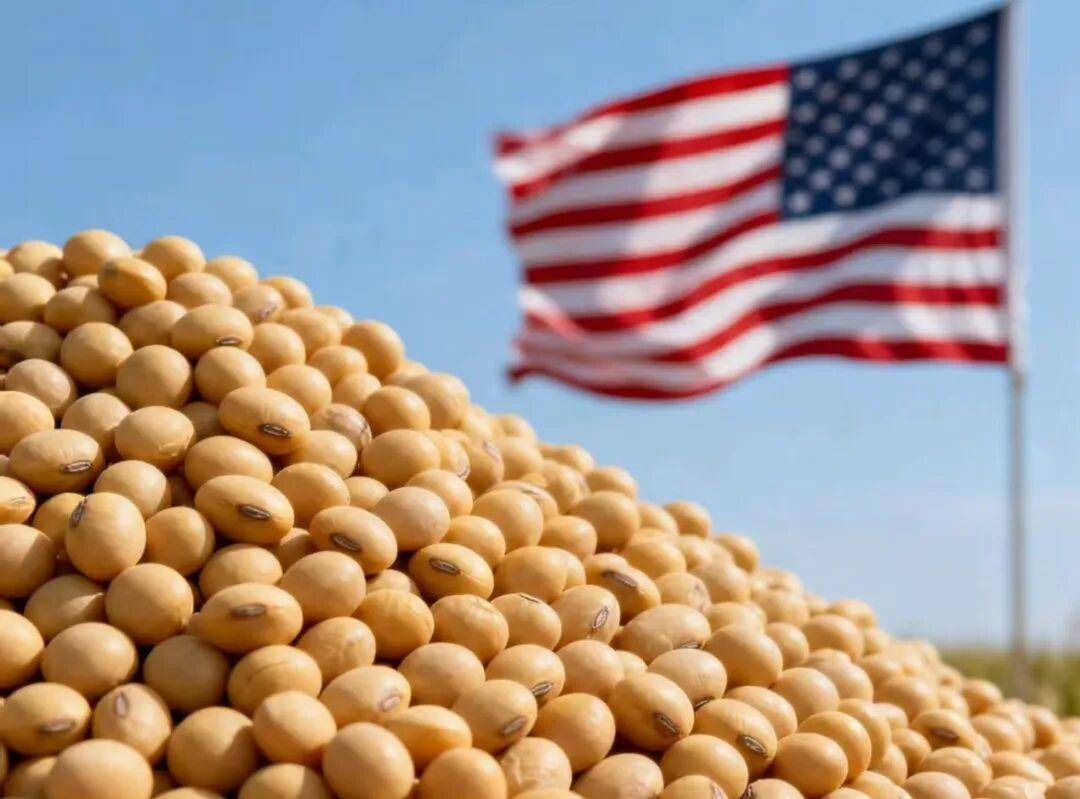
中方采购最新数据披露,“美国人乐坏了”
Guan Cha Zhe Wang· 2026-01-01 01:46
Core Viewpoint - Chinese buyers are resuming purchases of U.S. soybeans, with commitments to buy at least 8 million tons by 2025, which is positive news for U.S. exporters [1][7] Group 1: Purchase Commitments - Chinese buyers have started placing orders for U.S. soybeans since October, maintaining a steady purchasing rhythm [1] - By December, Chinese buyers continued to place orders, with most shipments expected between December and March [1] - The U.S. AgResource Company predicts that China may aim for a "soft target" of 10 million tons of U.S. soybeans by 2025, with an additional 2 million tons in January [1] Group 2: Market Dynamics - Despite the positive news, there is uncertainty regarding the actual volume of U.S. soybean purchases due to the lack of a formal agreement between the U.S. and China [2] - Brazilian soybean exports to China have increased significantly, with nearly 80% of Brazil's soybean exports going to China, marking a 16% increase compared to the previous year [1] - The shift in market dynamics has seen Brazil's share of China's soybean imports rise from 2% thirty years ago to approximately 71% today [4] Group 3: Trade Relations and Future Outlook - The U.S. government has indicated that China agreed to purchase 12 million tons of U.S. soybeans by January, with a commitment to buy at least 25 million tons annually over the next three years [7] - Analysts suggest that China's strategy to reduce reliance on U.S. soybeans is part of a broader effort to enhance food self-sufficiency, potentially decreasing import dependence from 90% to below 30% in the next decade [8] - The trade relationship between the U.S. and China regarding soybeans has evolved, with China now holding more leverage in the purchasing process [8]
800万吨,中方采购美国大豆最新数据披露,“美国人乐坏了”
Xin Lang Cai Jing· 2026-01-01 01:16
Core Viewpoint - Chinese buyers are resuming purchases of U.S. soybeans, with commitments to buy at least 8 million tons by 2025, which is positive news for U.S. exporters [1] Group 1: Purchase Commitments and Trends - Chinese buyers began purchasing U.S. soybeans in October, maintaining a steady pace that reassures U.S. exporters, with most shipments expected between December and March [1] - By 2025, Brazil is expected to export nearly 80% of its soybeans to China, with exports up 16% compared to the previous year [1] - The U.S. AgResource Company predicts that China may seek to purchase 10 million tons of U.S. soybeans by 2025, with an additional 2 million tons in January [1] Group 2: Market Dynamics and Price Pressure - Uncertainty regarding formal agreements between the U.S. and China is increasing pressure on soybean prices, with Chicago futures down approximately 7% in December, marking the worst monthly performance since July 2024 [2] - Farmers express surprise at the stability of Chinese purchases but remain frustrated with soybean price trends [2] Group 3: Historical Context and Future Projections - The trade conflict initiated by the Trump administration significantly harmed U.S. agricultural exports, allowing South American countries to capture market share [4] - Brazil now accounts for about 71% of China's soybean imports, a significant increase from just 2% 30 years ago [4] - A Goldman Sachs report indicates that China's reliance on soybean imports is expected to decrease from 90% to below 30% over the next decade due to efforts to enhance food self-sufficiency [8]
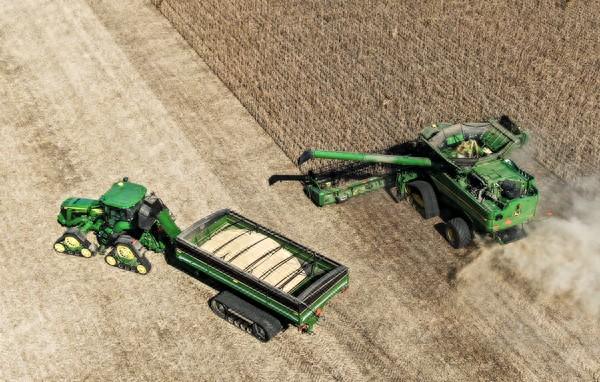
中国援乍得农技援助项目举办丰收节
Jing Ji Ri Bao· 2025-10-16 22:15
Core Viewpoint - The agricultural cooperation between China and Chad is significantly improving rice production in Chad, enhancing food security and creating potential for export revenue [1][2][3] Group 1: Agricultural Development - The Chinese agricultural assistance project has been active in Chad for nearly 20 years, promoting high-quality rice seeds and modern farming techniques [2] - Over 600,000 hectares of quality rice seeds have been promoted, and nearly 3,000 agricultural officials and farmers have been trained [2] - Chinese rice varieties have shown an average yield increase of over 35% compared to local varieties, contributing to a cumulative increase of 1.2 million tons of food over the past 20 years, sufficient to feed 3 million people for a year [2] Group 2: Economic Impact - The introduction of high-yield rice cultivation techniques is expected to reduce Chad's reliance on rice imports, which currently amount to several hundred thousand tons annually [1] - Local farmers, such as Omar Suleiman, have reported significant increases in yield and income due to the training received from Chinese experts [2] - The goal of the cooperation is to establish a true partnership that enhances local agricultural capabilities and promotes self-sufficiency in food production [3]
通讯丨希望的田野上收割机隆隆作响——中国援乍得农技援助项目举办“丰收节”
Xin Hua She· 2025-10-13 06:02
Core Insights - The article highlights the successful implementation of China's agricultural technology assistance project in Chad, particularly focusing on the "Harvest Festival" event that showcases the impact of modern farming techniques on local rice production [1][2]. Group 1: Agricultural Development - China's agricultural assistance project has been active in Chad for nearly two decades, promoting high-quality rice varieties and modern farming equipment, resulting in over 600,000 hectares of rice seed being planted [2]. - The introduction of modern machinery, such as harvesters, has significantly improved the efficiency of rice harvesting, leading to increased yields and farmer satisfaction [2][3]. - Chinese rice varieties have shown an average yield increase of over 35% compared to local varieties, contributing to a cumulative increase of 1.2 million tons of food, sufficient to feed 3 million people for a year [2]. Group 2: Economic Impact - The training provided to local farmers has enhanced their agricultural skills, including seed purity techniques and pest management, which are crucial for improving crop yields [2][3]. - Farmers like Osman have reported substantial increases in their harvests, with one hectare yielding 7.84 tons of rice, leading to additional income of approximately $1,200 [2]. - The collaboration between China and Chad is framed as a partnership based on equality and mutual benefit, aiming to achieve food self-sufficiency in Chad [3].
印尼总统普拉博沃发表首次国情咨文
Zhong Guo Xin Wen Wang· 2025-08-15 11:57
Core Points - Indonesian President Prabowo delivered his first state address, outlining the government's achievements over the past 300 days, including initiatives like free nutrition meals, health checks, and a sovereign wealth fund [1] - The Indonesian economy has shown resilience amid global economic fluctuations, with a projected growth rate of 5.12% in Q2 2025, indicating a positive outlook for future growth [1] - Prabowo acknowledged ongoing challenges such as poverty and hunger, expressing a commitment to eradicate extreme poverty [1] - The state address serves as a comprehensive report card for Prabowo's "Red and White Cabinet," named after the colors of the Indonesian flag [1] - Corruption remains a significant issue within government systems, with Prabowo emphasizing the need for a vigorous anti-corruption campaign [1] Foreign Affairs - Prabowo reaffirmed Indonesia's stance on the Israel-Palestine conflict and the recognition of Palestinian sovereignty, highlighting the balance between diplomatic efforts and humanitarian aid [2] Legislative Context - The state address was attended by members of parliament, cabinet members, and party leaders, with the Speaker of the House emphasizing the importance of aligning government policies with public interests and constitutional principles [3] - The address holds particular significance as it coincides with Indonesia's 80th Independence Anniversary, with a call for collective efforts to improve citizens' lives [3]