精准设计育种

Search documents
解码丝苗米:广东铸就高端籼米标杆
Nan Fang Nong Cun Bao· 2026-02-11 15:02
Core Viewpoint - Guangdong's Si Miao rice is recognized as a high-end indica rice, known for its superior quality and aroma, and is increasingly becoming a benchmark for premium rice in China [2][19]. Group 1: Historical Significance - Si Miao rice has a long history, dating back approximately 500 years, with its early form recorded in 1538 during the Ming Dynasty [9][10]. - The rice was historically significant, having been used as tribute rice to the imperial court and gaining popularity in regions such as Hong Kong, Macau, Singapore, and Malaysia [12][13]. Group 2: Agricultural Advancements - Guangdong has implemented the "Yue Qiang Seed Core" project to enhance seed quality, resulting in the development of high-yield, disease-resistant rice varieties [5][6]. - Over 70% of the province's rice planting area is now dedicated to high-quality rice varieties, establishing a strong brand presence for "Chinese indica rice, Guangdong seed core" [7]. Group 3: Quality Recognition - Guangdong has hosted the National Quality Rice Variety Taste Evaluation since 2018, with 12 varieties winning gold awards, accounting for 22% of the total, ranking first in the country [16][17]. - The "Mei Xiang Zhan 2" variety has won the top prize for three consecutive years, highlighting the province's commitment to quality [17]. Group 4: Technological Innovations - Guangdong is at the forefront of rice breeding technology, utilizing gene editing and artificial intelligence to transition from traditional breeding to precision design breeding [30][31]. - The province has developed a high-efficiency multi-target gene editing system that is widely used in over 1,000 laboratories globally [32]. Group 5: Industry Development - The Si Miao rice industry in Guangdong has shown strong growth, with the recent inclusion of "Hua Hang Xiang Yin Zhen" as the only conventional super indica rice variety in the Ministry of Agriculture's list of super rice [36][37]. - The province has established a national-level Si Miao rice industry cluster and is implementing a brand cultivation plan to strengthen the entire industry chain [42][43]. Group 6: Market Expansion - Guangdong's rice varieties are gaining popularity in Southeast Asia and the Americas, with significant adoption in regions like Punjab, India, where "Huang Hua Zhan" occupies 30% of the planting area [60][61]. - The strategy of "exporting varieties while importing grain" is seen as a solution to Guangdong's food security challenges, reducing reliance on imports of high-quality rice [64][66]. Group 7: Future Prospects - The province aims to enhance its rice breeding capabilities further, with experts expressing confidence that Guangdong can continue to lead in rice breeding for the next thirty years [75][76].


广东种业,奋进有“数”!
Nan Fang Nong Cun Bao· 2026-01-08 07:34
Core Viewpoint - Guangdong is advancing its agricultural technology innovation through the "Yue Qiang Zhong Xin" project, aiming to transform its agricultural sector and establish itself as a global center for seed industry [6][178]. Group 1: Agricultural Resource Protection - Guangdong has established a foundation of 368,000 seed resources, with new collections of 8,437 crop genetic resources [13][14]. - The province has identified three wild rice distribution points and conducted a national survey on aquatic breeding genetic resources [16][17]. - A total of 69,000 resource information entries and 5,652 species have been obtained through a provincial agricultural microbial genetic resource survey [23][24]. Group 2: Seed Industry Innovation - Guangdong leads in the development of domestic seed sources, contributing to one-third of national core technology projects for seed sources [45]. - The province has developed 36 super rice varieties, accounting for 28% of the national total, and has achieved international advanced levels in several breeding results [50][49]. - Guangdong has successfully bred 41 new livestock and poultry varieties, representing 15% of the national total, including the "Guangming No. 2" white feather broiler [61][62]. Group 3: Industry Development and Corporate Support - Guangdong has supported the merger and reorganization of 10 livestock and 12 aquaculture enterprises, leading the nation in the number of selected national seed industry enterprises [106][110]. - The province has established a commercial breeding system, with over 20 units signing deep integration agreements to promote innovation in breeding [119][121]. - The "Yue Qiang Zhong Xin" project has attracted nearly 100 million yuan in investment for seed industry development [126]. Group 4: Market Environment and Regulation - Guangdong has implemented comprehensive management of the seed industry, enhancing intellectual property protection and cracking down on counterfeit products [150][153]. - The seed quality pass rate has consistently remained above 98%, with significant efforts in promoting agricultural plant variety rights [162][168]. - The province has hosted 24 seed industry expos, showcasing over 18,000 crop varieties annually [170][172]. Group 5: Future Outlook - With the ongoing implementation of the "Yue Qiang Zhong Xin" project, Guangdong aims to become a globally influential seed industry center, contributing significantly to China's food security [178][181].

李家洋院士解读如何“五选一定”开展重大品种选育
Xin Lang Cai Jing· 2025-12-23 14:59
Core Viewpoint - The Chinese Academy of Sciences emphasizes the importance of a new breeding paradigm called "Five Selections and One Determination" to achieve breakthroughs in major crop varieties for food security and sustainable agriculture in China [1][2]. Group 1: Five Selections - Selection of Region: Each crop variety is influenced by regional environmental factors, which also affect pest and disease occurrences [2]. - Selection of Goals: Different regions have specific issues that need to be addressed, such as high yield, quality, efficiency, disease resistance, pest resistance, and soil adaptability [2]. - Selection of Traits: After determining the region and goals, it is essential to break down the agronomic traits that influence the main objectives, such as identifying the ideal plant type for high yield [2][3]. - Selection of Genes: Identifying key genes that affect the desired traits is crucial, such as those determining plant height and tiller number [2][3]. - Selection of Parental Lines: Effective hybridization requires selecting parental lines that contain the necessary key genes to facilitate the rapid and effective aggregation of superior genes [3]. Group 2: One Determination - Determining the Pathway: After completing the "Five Selections," it is vital to establish a clear implementation plan, including the sequence and method of hybridization, to minimize errors and successfully cultivate significant new varieties [5]. Group 3: Future Outlook - During the "14th Five-Year Plan" period, the seed project will focus on creating high-yield and high-quality major varieties, advancing foundational theories, key technologies, and significant variety creation to enhance national food security [7].
【新华社】我国科研团队培育出“无肌间刺”银鲫
Xin Hua She· 2025-12-23 05:05
Core Insights - The research team led by academician Gui Jianfang from the Chinese Academy of Sciences has developed a breeding technology system that creates a new candidate variety of silver crucian carp with high yield, disease resistance, and feed efficiency, while also eliminating the presence of small intermuscular bones [1][2] - The new variety, referred to as "Zhongke No. 6," shows significant improvements in growth rate, survival rate in aquaculture, and feed utilization, marking a shift towards a more predictable and programmable breeding era in China's agricultural sector [1] Group 1 - The innovative breeding technology utilizes "molecular scissors" to edit the genetic code responsible for the growth of intermuscular bones, significantly reducing their occurrence [1] - The breeding system produces sterile fish, which prevents them from reproducing in natural environments, thereby considering ecological safety [1] - The advancements are part of a six-year systematic effort under the Chinese Academy of Sciences' A-class pilot project focused on "precise design and creation of seeds," indicating a transition in agricultural breeding practices [1] Group 2 - The goal of this "precise design" innovation is to enhance national food security and agricultural modernization, providing a strong foundation for China's agricultural development [2]
【科技日报】创建精准设计育种新范式
Ke Ji Ri Bao· 2025-12-23 03:38
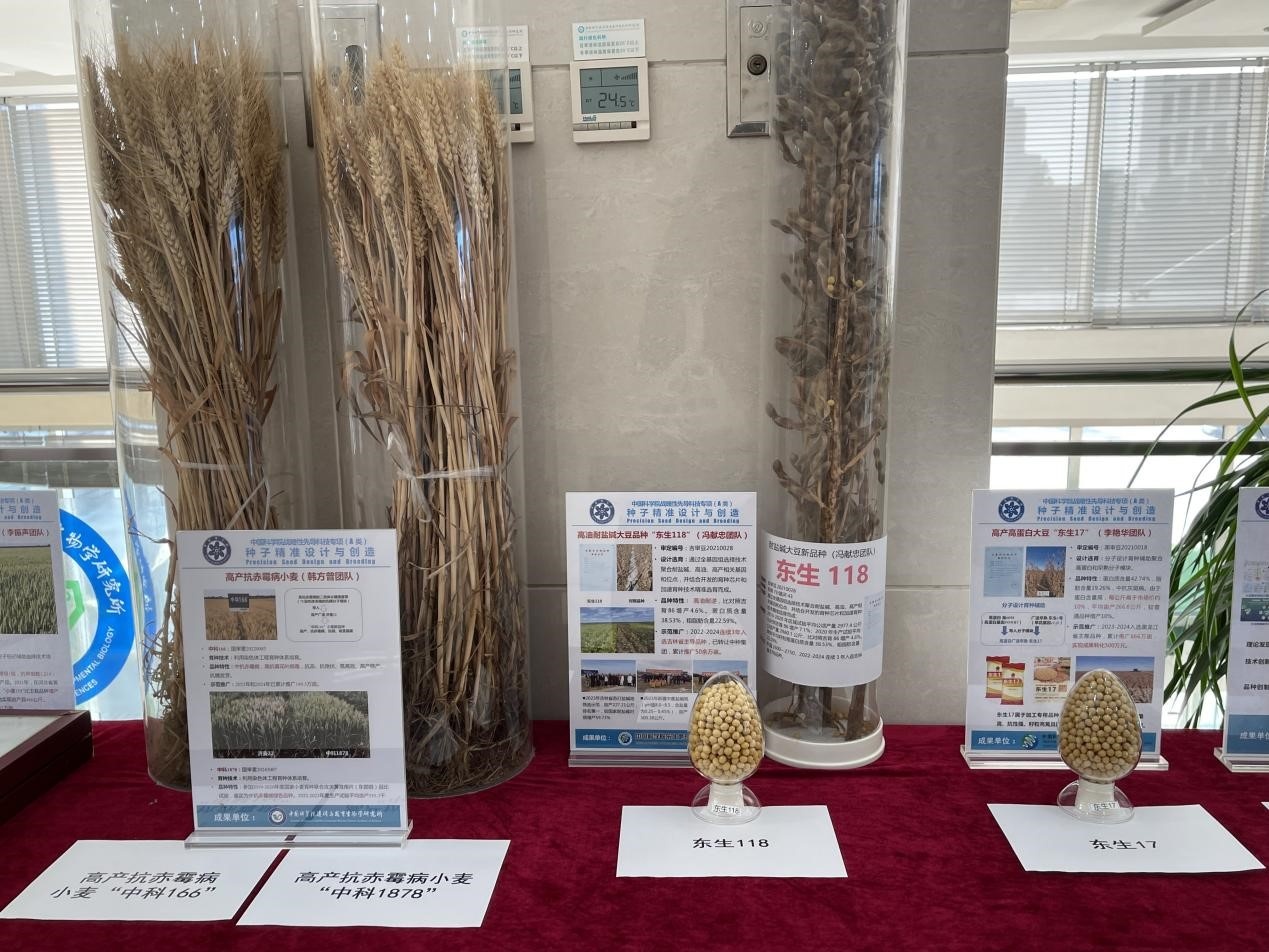
Core Insights - The "Seed Precision Design and Creation" initiative by the Chinese Academy of Sciences aims to enhance national food security through innovative seed breeding techniques, achieving significant breakthroughs in theory, technology, and product development over six years [1]. Group 1: Genetic Innovations - The initiative has successfully cloned the nitrogen-efficient gene OsTCP19, allowing rice to maintain yield while reducing nitrogen fertilizer by 20%-30%, potentially leading to a new "green revolution" [2]. - A new wheat variety, "Zhongke 166," has been developed with broad-spectrum resistance to powdery mildew and Fusarium head blight, utilizing a newly identified "treasure gene" Pm24 [2]. - A multi-gene editing technology has been developed, enabling simultaneous editing of multiple genes, resulting in a new wheat variety that is both disease-resistant and high-yielding, marking a significant milestone in gene editing applications in China [3]. Group 2: Agricultural Applications - The initiative has produced ten new high-yield, high-nutrition soybean varieties, leveraging a comprehensive genomic map and a powerful data platform called SoyOmics [4]. - A new breeding technology for aquatic species has been established, leading to the development of a candidate fish variety, "Zhongke 6," which exhibits high yield, disease resistance, and improved feed efficiency [4]. - The "Zhongke Fa" series of rice varieties integrates multiple desirable traits, achieving over a 20% yield increase compared to traditional varieties in Northeast China and breaking yield records in saline-alkali fields [5][6]. Group 3: Strategic Impact - The successful implementation of the seed initiative establishes a complete and controllable technology system in precision breeding, transitioning from a follower to a leader in certain areas of agricultural technology [6].
创建精准设计育种新范式——中国科学院发布系列科研成果
Xin Lang Cai Jing· 2025-12-22 23:27
Core Insights - The Chinese Academy of Sciences has announced a series of breakthroughs in seed precision design and creation, aimed at enhancing national food security and revitalizing the seed industry in China [1][6] - The "Seed Precision Design and Creation" project has achieved systematic breakthroughs across theory, technology, and products over six years, introducing new theories, developing new technologies, and launching new products [1] Group 1: Genetic Innovations - Scientists have identified the nitrogen-efficient gene OsTCP19, allowing rice to maintain yield while reducing nitrogen fertilizer by 20%-30%, potentially initiating a new "green revolution" [1] - The research team discovered the "treasure gene" Pm24, which provides broad-spectrum resistance to powdery mildew and wheat scab, and successfully bred a high-yield wheat variety "Zhongke 166" resistant to scab [2] - A team developed a multi-gene editing technology that enables simultaneous editing of multiple genes, creating a new wheat variety that is both disease-resistant and high-yielding, breaking the traditional breeding limitations [3] Group 2: Comprehensive Agricultural Solutions - The project has developed a leading soybean pan-genome map and a powerful big data platform, SoyOmics, enabling precise aggregation of desirable traits in soybean varieties, resulting in the creation of ten new high-yield, high-nutrition soybean varieties [4] - An innovative "double triploid" concept in aquaculture has led to the establishment of a new breeding technology system, producing a candidate fish variety "Zhongke 6" that shows significant improvements in yield, disease resistance, and feed efficiency [4] - The "Zhongke Fa" series of rice varieties integrates high yield, quality, disease resistance, and adaptability, achieving over 20% yield increase in Northeast China and breaking 600 kg per mu in saline-alkali land [5][6] Group 3: Industry Impact - The successful implementation of the seed precision design project marks a transition for China from a seed industry follower to a leader in certain areas, establishing a complete and controllable technology system in precision breeding [6]
影响市场重大事件:国家航天局:统筹民商遥感卫星的“太空打星”模式,我国在轨遥感卫星数量已达到400余颗;美星链卫星异常或威胁其他卫星
Mei Ri Jing Ji Xin Wen· 2025-12-22 22:37
Group 1: Space and Satellite Industry - The National Space Administration is coordinating civil and commercial remote sensing satellites to establish a virtual observation constellation, enhancing emergency disaster observation capabilities and satellite utilization efficiency [1][4] - Currently, China has over 400 remote sensing satellites in orbit, covering various types such as optical, hyperspectral, infrared, and microwave, achieving all-weather and all-time Earth observation [4] Group 2: Data Management and Public Data Utilization - The National Data Bureau is promoting the open and authorized operation of public data to maximize its value, having released four batches of demonstration scenarios, with the latest batch including 30 scenarios [3] - The data supply approach is shifting from primarily sharing to a collaborative model that includes sharing, opening, and authorized operation [3] Group 3: Economic Development and Trade - Haikou's 14th Five-Year Plan emphasizes accelerating the development of a cross-border capital centralized operation center and promoting cross-border asset management business trials [5] - The plan also aims to enhance the effects of temporary import and export trials for repair and remanufactured products, leveraging zero tariffs on imported goods [6] Group 4: Financial Policies - The People's Bank of China introduced a one-time credit repair policy to provide corrective opportunities for previously untrustworthy individuals, aiming to improve credit conditions and stimulate economic activity [7][8] Group 5: Agricultural Innovation - The Chinese Academy of Sciences announced significant progress in the "Precision Design and Creation of Seeds" project, achieving breakthroughs in breeding technology and identifying key genes for high-yield and disease-resistant crops [9][10]
高产优质的密码是什么?从作物到水产,中国科学院种子专项取得全链条突破
Yang Guang Wang· 2025-12-22 14:32
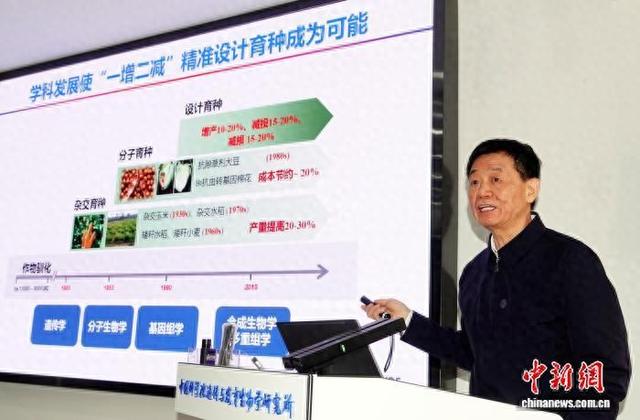
Core Viewpoint - The Chinese Academy of Sciences has made significant breakthroughs in seed precision design and creation, aiming to enhance crop yields and reduce resource inputs through innovative breeding techniques [1][9]. Group 1: Achievements in Crop Breeding - The initiative focuses on major crops like rice and wheat, targeting a yield increase of 10% to 20%, a reduction in input costs by 15% to 20%, and a decrease in losses by 15% to 20% [1]. - Researchers have developed a nitrogen-efficient rice variety that maintains stable yields even with a 20% to 30% reduction in nitrogen fertilizer, addressing the issue of excessive fertilizer use [1][2]. - A new high-yield wheat variety, "Zhongke 166," has been created with broad-spectrum resistance to diseases, significantly reducing pesticide usage and covering nearly 1.5 million acres [5]. Group 2: Innovations in Genetic Editing - The research team has successfully integrated disease resistance traits into 13 major wheat varieties using advanced genome editing techniques, achieving the first biosafety certificate for gene-edited staple crops in China [5][6]. - A novel approach to domesticate wild rice has been developed, potentially shortening the domestication process from thousands of years to just a few years [6]. Group 3: Developments in Aquaculture - The introduction of the "Zhongke 6" silver crucian carp variety has shown a 25% increase in growth rate and a 66.5% improvement in survival rates compared to previous strains [7]. - The breeding program has produced 37 leading varieties that enhance yield, nitrogen efficiency, and disease resistance, with a total of 14.48 million acres of new crop varieties promoted [9]. Group 4: Future Directions - The initiative emphasizes the importance of establishing an independent and innovative agricultural science system to ensure food security and sustainable agricultural development [9].
我国科研团队培育出“无肌间刺”银鲫
Xin Hua She· 2025-12-22 06:29
Core Insights - The Chinese Academy of Sciences has developed a breeding technology system that creates a new candidate variety of silver crucian carp with high yield, disease resistance, and feed efficiency, while also eliminating intermuscular bones [1][2] - The new variety, referred to as "Zhongke No. 6," shows significant improvements in growth rate, survival rate in aquaculture, and feed utilization [1] - This innovation is part of a six-year project aimed at advancing agricultural breeding from traditional methods to a more predictable and programmable "precision design" era [1] Technology and Innovation - The research team utilized "molecular scissors" to edit the genetic code that controls the growth of intermuscular bones, significantly reducing their presence in the fish [1] - The breeding system also ensures that the new silver crucian carp is sterile, preventing it from reproducing in natural environments, thus addressing ecological safety concerns [1] Agricultural Impact - The advancements in breeding technology are expected to enhance food security and agricultural modernization in China, providing a more efficient way to produce high-quality protein with fewer resources [1][2] - The project is part of a broader initiative to create a strong "Chinese core" for national food security [2]
芯路径,芯力量——广东种业振兴“五年见成效”创新实践
Nan Fang Nong Cun Bao· 2025-12-10 07:04
Core Viewpoint - Guangdong's seed industry has made significant progress over the past five years, focusing on innovation and achieving key milestones in seed quality and agricultural productivity [2][6][8]. Group 1: Achievements and Innovations - Guangdong has implemented the "Yueqiang Seed Core" project, achieving notable results in seed resource protection, innovation, and market purification [4][5][28]. - The province has developed 36 varieties of super rice, accounting for 28% of the national total, and has received multiple awards for quality rice varieties [22][23]. - Guangdong's agricultural sector has seen the emergence of high-quality varieties, such as the "Hua Hang Xiang Yin Zhen" super rice, which is expected to yield 1,200 pounds per acre [20][21]. Group 2: Strategic Goals and Future Plans - The province aims to achieve significant breakthroughs in the seed industry by 2035, focusing on innovation and industry leadership [12][15]. - Guangdong plans to enhance its seed resource management, strengthen breeding technology, and promote the integration of enterprises and research institutions [108][110]. Group 3: Economic Impact and Industry Growth - The seed industry in Guangdong has contributed to substantial economic growth, with individual seed varieties generating significant revenue, such as a single seed variety contributing 240 million yuan [82]. - The province's agricultural enterprises, such as Wens Food Group and Haida Group, are leading the industry with innovative breeding systems and substantial market shares [70][68]. Group 4: Regulatory and Support Framework - Guangdong has strengthened intellectual property protection for seed varieties, ensuring the safety and integrity of agricultural production [101][103]. - The province has established a seed development fund of 476.1 million yuan to support industry growth and attract social capital [65].