经济增长合理区间

Search documents
杨伟民建言“十五五”:五大战略任务需实现重大突破
Xin Lang Cai Jing· 2025-12-27 06:02
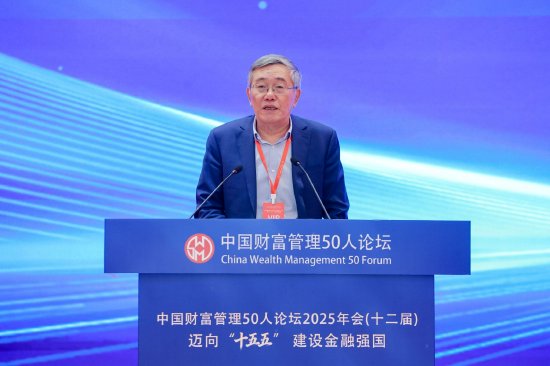
Core Viewpoint - The 2025 China Wealth Management Forum emphasizes the importance of achieving breakthroughs in five strategic tasks during the "14th Five-Year Plan" period to build a financial power [1] Economic Growth - Maintaining economic growth within a reasonable range is the top priority for the "14th Five-Year Plan," crucial for achieving significant progress in socialist modernization [3][12] - The target for reasonable growth is approximately 4.5% for both actual and nominal GDP, aligning with the goal of reaching the per capita GDP of a moderately developed country by 2035 [3][12] - The nominal growth is projected to be lower than actual growth in 2023, 2024, and 2025, leading to weaker growth in urban residents' income, corporate profits, and fiscal revenue, exacerbating insufficient domestic demand [3][12] Macro Control - The focus of macroeconomic control during the early phase of the "14th Five-Year Plan" must shift to promoting price recovery, as opposed to merely preventing price increases [4][13] - The overall tone of macroeconomic policy is to promote stable economic growth and reasonable price recovery, with monetary policy aimed at supporting this recovery [4][13] Development of New Productive Forces - The development of new productive forces is essential for the advancement of China's modern industrial system and is key to winning in the context of global changes and technological revolutions [5][14] - The focus during the "14th Five-Year Plan" should be on digitalization and low-carbon technologies, aiming for breakthroughs in critical and frontier technologies [5][14] Modern Industrial System - A modern industrial system must maintain a reasonable proportion of manufacturing, ensuring that the manufacturing sector's share of GDP remains stable and does not decline too rapidly [6][15] - Lessons from early industrialized countries indicate that a decline in manufacturing share can lead to vulnerabilities, such as falling into the middle-income trap [6][15] Consumer Spending - Increasing the resident consumption rate is identified as a core driver for economic growth, with a need to generate an additional 35 trillion yuan in total demand during the "14th Five-Year Plan" if growth is to be maintained at 4.5% [8][17] - The contribution of imports and exports to economic growth is expected to decline, necessitating a shift towards expanding domestic demand [8][17] Distribution Structure - Optimizing the distribution system is crucial for promoting common prosperity and increasing the consumption rate, which is vital for maintaining economic growth within a reasonable range [9][18] - Policies should focus on improving income distribution, raising minimum wage standards, and enhancing the income of low-income groups to ensure that disposable income grows faster than economic growth [9][18]

专访商务部原副部长魏建国:中国经济下一步的增长红利是服务业升级和国际化 要扩大新型消费比重
Mei Ri Jing Ji Xin Wen· 2025-11-17 14:55
Core Viewpoint - The "15th Five-Year Plan" emphasizes significantly increasing the resident consumption rate as a primary goal, focusing on expanding domestic demand and promoting consumption through various new proposals [1]. Group 1: Economic Growth and Consumption - The reasonable growth range for China's economy during the "15th Five-Year Plan" is estimated to be between 4.5% and 5.5%, considering the current economic scale and potential growth rate [2][3]. - The plan highlights the need for a flexible approach to economic growth, with a lower limit to ensure employment and a higher limit to prevent inflation and promote structural adjustments [3]. Group 2: Enhancing Resident Consumption Rate - To address the low resident consumption rate, solutions should be sought from both the income and supply sides, including expanding the middle-income group and increasing public service spending [3][4]. - Three key actions are necessary to enhance resident consumption: increasing the share of new consumption types, enriching consumption scenarios, and ensuring the implementation of national policies to stimulate consumption [4]. Group 3: Real Estate and Automotive Markets - The plan proposes removing unreasonable restrictions on automotive and housing consumption, as both sectors have significant economic impacts and can stimulate related industries [5][6]. - The real estate market is expected to see slight growth over the next five years, with its stability being crucial for consumer confidence and financial system stability [7]. Group 4: Role of Consumption, Investment, and Exports - Consumption is projected to play a dual role as both a "ballast" and a "main engine" for economic growth, with expectations that its contribution to GDP growth will exceed 60% [12][13]. - Investment will shift focus from total volume to structural optimization, supporting high-quality development in sectors like high-end manufacturing and technology [13]. - Exports will serve as a stabilizer, maintaining their importance due to China's comprehensive industrial system, despite potential fluctuations [12][14]. Group 5: Service Industry and Market Opening - The emphasis on expanding the service industry as a key area for market opening indicates a strategic shift towards enhancing service sector competitiveness and internationalization [20][21]. - The growing middle-income group and the increasing share of services in GDP highlight the need for improved service quality and management practices to meet consumer demands [21].
魏建国:中国经济下一步的增长红利是服务业升级和国际化,要扩大新型消费比重
Mei Ri Jing Ji Xin Wen· 2025-11-17 14:19
Core Points - The "15th Five-Year Plan" emphasizes significantly increasing the resident consumption rate as a primary goal, focusing on expanding domestic demand and promoting consumption [1] - The plan proposes a combination of investments in goods and people, increasing public service spending, and removing unreasonable restrictions on consumption in sectors like housing and automobiles [1][4] Economic Growth Targets - The reasonable economic growth rate for China during the "15th Five-Year Plan" is projected to be between 4.5% and 5.5%, considering the large economic base and potential growth rate [4][5] - The plan aims to align with the long-term goal of achieving a per capita GDP comparable to that of moderately developed countries by 2035 [4] Resident Consumption Rate - To address the low resident consumption rate, strategies should focus on expanding the middle-income group and increasing public service spending to enhance consumer confidence [5][6] - New consumption patterns should prioritize human-centered consumption, with a focus on sectors like the silver economy, infant products, and women's economy [6] Role of Real Estate - The real estate market is expected to experience slight growth over the next five years, with its stability being crucial for consumer confidence and financial system stability [7][8] - The removal of unreasonable restrictions on housing and automobiles is aimed at releasing suppressed consumer demand, which is vital for economic growth [7] Consumption, Investment, and Export Dynamics - Consumption is projected to play a dual role as both a "ballast" and a "main engine" for economic growth, with expectations that it will contribute over 60% to GDP growth [12] - Investment will serve as an "incubator" and "accelerator," focusing on optimizing economic structure and transitioning to high-quality development [13] - Exports will act as a "stabilizer," maintaining their importance despite potential fluctuations, supported by China's comprehensive industrial system [12][13] Service Industry Development - The shift in focus towards expanding the service sector reflects a strategic change, with the service industry expected to drive future economic growth and competitiveness [19][20] - The growing middle-income group and the increasing share of services in GDP highlight the need for improved service quality and international engagement in service management [20]