
经济增长质量

Search documents
经观社论|GDP“4.5%至5%”区间增速的本意
经济观察报· 2026-03-07 04:01
Core Viewpoint - The article emphasizes the necessity of pursuing a certain economic growth rate in China, specifically targeting a range of 4.5% to 5% for 2026, which reflects a proactive adjustment rather than a relaxation of growth targets [1][5]. Summary by Sections Economic Growth Target - In 2026, China sets a GDP growth target range of 4.5% to 5%, marking the first time the target falls below 5% [2]. - This target is not a prediction but a guideline for government policy to steer economic growth efforts [2][4]. Challenges and Adjustments - The Chinese economy faces numerous challenges, including external environmental changes and geopolitical risks, necessitating a flexible growth target to accommodate various situations [3][4]. - The adjustment of the growth target does not imply a reduction in growth ambitions; rather, it allows for a focus on employment and price stability [4]. Quality vs. Quantity - The gradual slowdown in GDP growth is a natural progression from quantity-driven to quality-driven growth, which does not equate to stagnation [4][5]. - Maintaining a growth rate of 4.5% is deemed sufficient to contribute approximately 30% to global economic growth, given China's significant economic size [4]. Long-term Goals - To achieve the long-term goals set for 2035, a growth rate of 4.17% to 4.4% is necessary, aligning with the current target range [5]. - The article argues that a quality-focused growth rate of around 4% may be more beneficial than achieving a higher rate through stimulus and large-scale investments [5]. Regional Development - The range allows for regional flexibility, enabling provinces to tailor their economic strategies according to local conditions while still striving for better outcomes [6]. - The expectation is that actual growth may exceed the lower limit of the target range as regions work towards optimal results [6].

印尼经济增速创三年新高,为何仍难打动国际评级?
Sou Hu Cai Jing· 2026-02-09 03:21
Economic Performance - Indonesia's GDP growth for 2025 is projected at 5.11%, the highest in three years, with previous years showing growth rates of 5.03% in 2024 and 5.05% in 2023 [1] - The fourth quarter of 2025 is expected to see a GDP growth of 5.39%, marking the highest level since the third quarter of 2022 [1] - Almost all sectors, except mining, are expected to achieve positive growth in 2025, indicating a broad economic recovery [1] Credit Rating and Outlook - Moody's has maintained Indonesia's sovereign credit rating at Baa2 but changed the outlook from "stable" to "negative" [1] - The adjustment in outlook has raised concerns despite the economic growth, highlighting a discrepancy between growth figures and credit ratings [2] - The negative outlook is attributed to concerns over the stability of policy direction and potential fiscal pressures from large-scale projects [3] Economic Structure and Quality - The growth rate of 5.11% has not significantly broken through the long-standing plateau of around 5%, remaining on an inertial growth path [3] - The growth is primarily driven by household consumption, government spending, and investment, with limited structural momentum for improvement [3] - Economic growth is unevenly distributed, with Java and Sumatra contributing 56.93% and 22.22% to national GDP, while some regions contribute less than 3% [3] Future Projections - Despite the negative outlook, Moody's still expects Indonesia's economy to maintain a growth rate of around 5% in the short to medium term [3] - The central bank of Indonesia asserts that the rating outlook adjustment does not equate to a weakening of the economic fundamentals [3] - The Financial Services Authority of Indonesia plans to enhance financial stability through prudent regulation and policy coordination to support sustained economic growth [3]
多省下调2026年GDP增速目标意味着什么
经济观察报· 2026-02-05 07:38
Core Viewpoint - The adjustment of GDP growth targets by several major economic provinces in 2026 reflects a more pragmatic approach to performance evaluation, emphasizing quality over mere quantity in economic growth [2][4]. Group 1: Adjustments in GDP Growth Targets - Six out of the top ten economic provinces have lowered their GDP growth targets for 2026, while two others have adopted more cautious language, indicating a shift towards a more realistic and pragmatic attitude towards economic growth [2]. - The adjustment of growth targets is seen as a response to the challenges faced in 2025, where consumer and investment growth trends suggest ongoing economic difficulties [2][3]. Group 2: Focus on Quality of Growth - Economic provinces are now placing greater emphasis on the quality of growth, with specific indicators such as synchronizing resident income growth with economic growth being highlighted [4]. - The adjustment in growth targets is not indicative of a lack of confidence in long-term development potential but rather a refined strategy for managing economic cycles [3]. Group 3: Establishing a Correct Performance Evaluation Perspective - The recent adjustments signal a shift in the performance evaluation perspective among local governments, moving away from the traditional focus on GDP growth as the primary measure of success [4]. - Various provinces have called for adherence to practical decision-making and avoidance of impulsive actions, reflecting a broader consensus on the need for a more responsible approach to economic management [4].

多个经济大省下调2026年GDP增速目标
Jing Ji Guan Cha Bao· 2026-02-03 10:15
Core Viewpoint - Major economic provinces in China have significantly lowered their GDP growth targets for 2026 compared to 2025, reflecting a more cautious economic outlook and the challenges faced in achieving previous targets [1][4][5] Summary by Sections Economic Growth Targets - As of February 3, 2026, ten major economic provinces have announced their GDP growth targets, with six provinces directly lowering their targets. Only four provinces maintained or slightly adjusted their targets [1] - The provinces that lowered their targets include Guangdong, Zhejiang, Henan, Hubei, Fujian, and Hunan, all of which emphasized striving for better outcomes in practice [1][3] Historical Context - In the past three years, several major provinces have consistently failed to meet their GDP growth targets, with Guangdong, Hubei, and Hunan missing their targets for three consecutive years [1][5] - The trend of not meeting growth targets has been noted, with Guangdong's GDP growth target set at 5% for 2026, marking the first time since 2000 that it is below 5% [5][6] Economic Cycle and Structural Adjustments - The current economic environment is characterized by a downward trend in the returns on labor, land, capital, and technology, necessitating a balance between growth speed and quality [2][6] - The adjustment of growth targets reflects a recognition of the need for structural changes in the economy, moving from debt-driven growth to consumption and innovation-driven growth [6][11] Future Projections - Despite the downward adjustments, major provinces are still aiming to maintain a growth target around 5%, which has historically been a benchmark for national GDP growth targets [8][10] - Analysts predict that the national GDP growth target for 2026 may be set between 4.5% and 5%, influenced by the adjustments made by major provinces [8][9] Policy Implications - The economic policies are expected to remain supportive, with a focus on ensuring effective implementation of growth strategies [9][10] - The long-term outlook suggests that major provinces may not increase their GDP growth targets significantly, indicating a trend of gradual decline in growth expectations over the next five years [10][11]
印度GDP存在造假
Sou Hu Cai Jing· 2026-01-05 00:40
Group 1 - The core viewpoint of the article highlights India's projected rise to become the world's fourth-largest economy by nominal GDP, surpassing Japan by a narrow margin in 2026, with India's GDP estimated at $4.51 trillion and Japan's at $4.46 trillion [1][3] - The Indian government is eager to announce its status as the fourth-largest economy, viewing economic rankings as a crucial part of its political narrative and a reflection of its efforts to improve the business environment and attract foreign investment since 2014 [3][4] - Despite the impressive nominal GDP figures, the article emphasizes the disparity in per capita GDP, with India projected at approximately $2,820 and Japan at $34,710 in 2025, indicating that economic growth has not translated into widespread wealth [4][6] Group 2 - Wealth distribution in India is highly unequal, with the richest 1% holding about 40% of the country's wealth, suggesting that economic growth benefits a small elite rather than the broader population [4][6] - Concerns have been raised regarding the accuracy of India's economic statistics, with some economists arguing that the actual GDP growth rate may be significantly lower than official figures, highlighting issues with the measurement of the informal sector [6][8] - The article suggests that while India may be advancing in economic rankings, the reality of employment, income, and opportunity distribution remains a critical issue, indicating that the narrative of growth may not align with the lived experiences of many citizens [8]
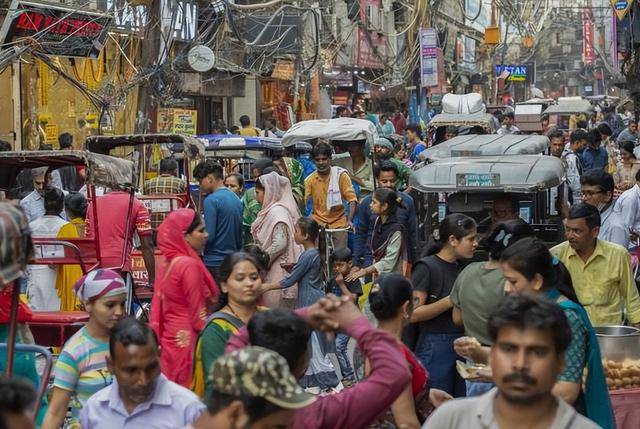
英国有望超日本,重回前五大经济体?专家发出警告→
Guo Ji Jin Rong Bao· 2025-12-26 14:05
Core Insights - The global economic landscape is shifting, with the UK projected to surpass Japan and reclaim its position as the fifth-largest economy by the end of the next decade [1][6]. Economic Outlook for the UK - The UK's GDP is expected to grow from under $4 trillion in 2025 to approximately $6.8 trillion by 2040, driven by productivity improvements and a service-led economy [2]. - Key sectors contributing to this growth include financial services, legal and professional services, healthcare, education, and technology [2]. - The UK's flexible labor market and strong institutional framework are seen as critical factors supporting its relatively strong performance among developed economies [2]. Challenges and Structural Issues - Future growth will depend on effective policy execution, particularly in infrastructure, skills development, and innovation [3]. - The UK faces structural constraints such as high public debt, fiscal tightening, and slower population growth compared to emerging markets [3][4]. - Despite the projected improvement in global standing, economists caution that becoming the fifth-largest economy does not guarantee higher living standards or reduced inequality [3]. Global Economic Reconfiguration - Japan is expected to drop to sixth place due to slowing economic growth, while France and Germany are also projected to have weak growth prospects, solidifying the UK's position [6]. - The US and China will maintain their status as the first and second largest economies, with China's GDP projected to approach $48 trillion and the US around $53 trillion by 2040 [6]. - Emerging economies like India are forecasted to rise significantly, with India potentially becoming the third-largest economy by 2040 [6]. Quality of Growth and Living Standards - The report emphasizes the importance of focusing on quality growth rather than just GDP rankings, as economic expansion does not necessarily translate to improved living standards [8]. - The UK’s per capita GDP ranking may decline from 19th to 21st, indicating that economic growth may not lead to higher personal income or more affordable living costs [7]. - Global economic growth is facing new downward pressures, with trade tensions and rising costs impacting ordinary households [7][8].
巴基斯坦媒体:中国将继续成为全球经济增长的重要引擎
人民网-国际频道 原创稿· 2025-11-10 06:31
Group 1 - The article highlights that China's "14th Five-Year Plan" signifies a new phase focused on stability, technological self-reliance, and social balance, enhancing its role as a "stabilizing anchor" for the global economy [1] - Over the past four decades, China's reform and opening-up have significantly contributed to poverty alleviation and its emergence as the world's second-largest economy, now transitioning to a phase that prioritizes quality, inclusiveness, and sustainability over mere speed of growth [1] - China, with a population of 1.4 billion and a vast domestic market, is expected to continue being a major engine for global economic growth, contributing an average of 30% to world economic growth during the "14th Five-Year" period [1] Group 2 - The article emphasizes China's exceptional ability to coordinate its system, allowing the state, market, and society to align around long-term goals, a unique advantage compared to other nations [2] - The large domestic market provides flexibility for rapid policy adjustments, while partnerships across the Global South ensure access to markets, energy supplies, and investment opportunities [2] - A prosperous China is seen as a gateway to broader markets, more inclusive technology, and a cooperative development model, shaping the direction of global modernization in the next decade [2]