
结构性货币政策工具降息

Search documents
一周流动性观察 | 税期、政府债集中缴款或令资金面再面压力 结构性降息释放宽松信号
Xin Hua Cai Jing· 2026-01-19 07:50
Group 1 - The People's Bank of China (PBOC) conducted a 7-day reverse repurchase operation of 158.3 billion yuan at an interest rate of 1.40%, maintaining the previous rate, resulting in a net injection of 72.2 billion yuan after 86.1 billion yuan of reverse repos matured on the same day [1] - In the week from January 12 to 16, the total net injection from reverse repos was 812.8 billion yuan, with a significant operation of 900 billion yuan in 6-month reverse repos on January 15 [1] - The interbank liquidity tightened initially due to large net withdrawals and government bond payments, but gradually eased as the PBOC increased daily reverse repo injections, leading to a decrease in funding rates by the end of the week [1] Group 2 - The upcoming week (January 19-23) is expected to face renewed pressure on liquidity, with a total of 1.1015 trillion yuan in public market maturities, significantly higher than the previous week's 138.7 billion yuan [2] - A concentrated cash withdrawal is anticipated during the tax period from January 20 to 22, with an estimated total withdrawal of 778.7 billion yuan, alongside accelerated government bond issuance estimated at 246.5 billion yuan [2] - The total liquidity gap is projected to exceed 3.3 trillion yuan, considering the public market maturities and government bond payments, although the overall sentiment remains that the liquidity situation will not be overly concerning due to the timing of the Spring Festival [2] Group 3 - The PBOC reported that in 2025, the total increase in RMB loans is expected to reach 16.27 trillion yuan, with the total social financing scale increasing by 35.6 trillion yuan, which is 3.34 trillion yuan more than in 2024 [3] - The M2 money supply is projected to reach 340.29 trillion yuan by the end of 2025, reflecting a year-on-year growth of 8.5% [3] - The PBOC announced a 25 basis point reduction in the re-lending and rediscount rates, with the one-year re-lending rate now at 1.25%, and additional increases in quotas for targeted lending programs [3] Group 4 - Structural monetary policy tools are seen as a critical part of the current interest rate reduction cycle, with more room for reductions in these tools compared to overall policy rates [4] - The PBOC's spokesperson indicated that there is still room for both reserve requirement ratio (RRR) cuts and interest rate reductions, emphasizing the importance of a diversified monetary policy toolkit [4] - The coordination between monetary and fiscal policies is expected to improve through operations such as government bond transactions, enhancing the overall effectiveness of monetary policy [4]
近期债市环境有利因素较多,30年国债ETF(511090)早盘窄幅震荡
Sou Hu Cai Jing· 2026-01-19 02:41
Core Viewpoint - The bond market is experiencing slight fluctuations, with the 30-year government bond ETF showing a minor decline, while the overall monetary policy remains supportive of the bond market due to recent structural monetary policy tools and potential for further rate cuts [1][2]. Group 1: Market Performance - As of 10:00 AM, the 30-year government bond ETF (511090) decreased by 0.08%, and the 30-year government bond futures contract (TL2603) was priced at 111.00 yuan, down 0.17% with a trading volume of 26,316 contracts [1]. - The yields on major government bonds showed mixed movements, with the 10-year government bond yield decreasing by 0.1 basis points to 1.856%, while the 30-year government bond yield increased by 0.25 basis points to 2.305% [1]. Group 2: Monetary Policy and Market Environment - The central bank conducted a 7-day reverse repurchase operation of 158.3 billion yuan at a stable interest rate of 1.40%, indicating a consistent monetary policy stance [1]. - The bond market is supported by several favorable factors, including a reduction in government bond supply, significant net injections in the open market, and the central bank's reaffirmation of the potential for rate cuts and reserve requirement ratio reductions within the year [1]. Group 3: Structural Monetary Policy Tools - According to Shenwan Hongyuan Securities, the recent rate cuts on structural monetary policy tools are seen as a supplementary measure within the current rate-cutting cycle, suggesting that the space for structural policy rate cuts is greater than for total policy rate reductions [2]. - Structural monetary policy tools face fewer constraints compared to total policy rate adjustments, allowing for a balance between protecting bank net interest margins and supporting real financing [2]. Group 4: ETF Strategy - The 30-year government bond ETF employs a "sampling replication" strategy, which allows for a more efficient and flexible approach to tracking the index without the need to purchase all underlying bonds [13][14]. - This strategy enhances liquidity by focusing on actively traded bonds, thus reducing the investment threshold and operational complexity for investors [14][18].


1万亿,专供民营企业
Sou Hu Cai Jing· 2026-01-16 02:17
Core Viewpoint - The People's Bank of China (PBOC) has introduced a significant policy package, including a dedicated 1 trillion yuan re-loan for private enterprises, aimed at enhancing financial support for private small and medium-sized enterprises (SMEs) and addressing their financing challenges [1][3]. Group 1: Financial Support for Private Enterprises - The primary goal of the new policy is to increase financial support for private SMEs, particularly focusing on medium-sized enterprises that have been underserved in the financing chain [3]. - The re-loan program will be established under the existing agricultural and small enterprise re-loan framework, allocating 500 billion yuan from current funds and adding another 500 billion yuan, totaling 1 trillion yuan [3]. Group 2: Impact on Banking and Investment - The new re-loan initiative provides clear incentives and low-cost funding for commercial banks, which is expected to direct more credit resources towards private SMEs, improving liquidity, stimulating investment, and stabilizing employment [4]. - The PBOC has also lowered the interest rate on various structural monetary policy tools by 0.25 percentage points, reducing the one-year re-loan rate from 1.5% to 1.25%, which is aimed at efficiently channeling credit into key sectors [5]. Group 3: Additional Policies Supporting Private Enterprises - Alongside the 1 trillion yuan re-loan, additional policies have been introduced, including an increase in the re-loan quota for technological innovation and technological transformation from 800 billion yuan to 1.2 trillion yuan, supporting high R&D investment private SMEs [7]. - Existing bond financing support tools for private enterprises have been merged, providing an additional 200 billion yuan in re-loan capacity [7]. Group 4: Broader Economic Implications - The series of policies represents a comprehensive approach to bolster the private economy, recognizing its significant contributions to technological innovation and employment [8]. - The PBOC has indicated that there is still room for further reductions in reserve requirements and interest rates, maintaining a moderately accommodative monetary policy stance through 2026 to support stable economic growth [9]. - These measures are expected to not only support the current development of private enterprises but also enhance confidence in the future of the real economy [10].
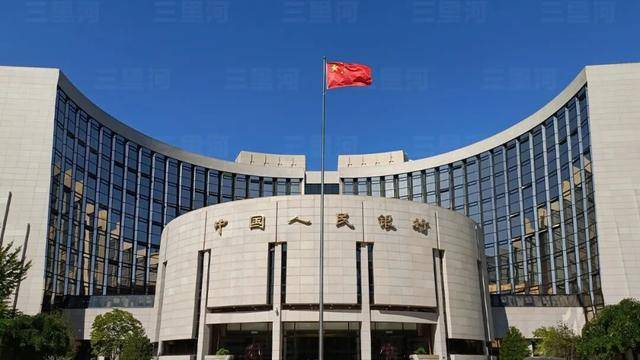
央行大礼包来袭,长债利率为何上演“过山车”?
第一财经· 2026-01-15 14:42
Core Viewpoint - The central theme of the article revolves around the People's Bank of China's (PBOC) recent monetary policy adjustments, including a structural interest rate cut of 0.25 percentage points, signaling potential room for further reductions in reserve requirements and interest rates throughout the year [3][6]. Group 1: Market Reactions - Following the PBOC's announcement, long-term bond yields initially dropped but then rebounded, indicating a lack of strong bullish sentiment in the market [4][5]. - The 10-year government bond yield fell from approximately 1.85% to 1.835% before rising again to 1.8555%, reflecting a slight decrease of 0.2 basis points from the previous trading day [4]. - The 30-year government bond yield experienced similar fluctuations, initially dropping to 2.2915% before climbing to 2.3075%, closing at 2.3040%, which is an increase of 0.15 basis points [5]. Group 2: Policy Implications - The PBOC's announcement included a reduction in various structural monetary policy tool rates by 0.25 percentage points and indicated that there is still room for further cuts in reserve requirements and interest rates [6][7]. - The average statutory deposit reserve ratio for financial institutions is currently at 6.3%, suggesting that there is still potential for reserve requirement reductions [6]. - The PBOC aims to lower banks' interest costs and stabilize net interest margins, which could create further space for interest rate cuts in 2026 [6]. Group 3: Bond Market Dynamics - The bond market has shown signs of recovery since mid-January, with yields on key bonds declining by 3.1 basis points and 1.2 basis points, respectively, since January 8 [6]. - The PBOC's operations in the bond market, including the buying and selling of government bonds, are intended to maintain liquidity and support the smooth issuance of government bonds [10][11]. - In 2025, the total issuance of government bonds reached 16 trillion yuan, with a net increase of 6.6 trillion yuan, indicating a robust supply in the bond market [10].

2025年4月25日利率债观察:“适时降准降息”对债市有何影响?
EBSCN· 2025-04-25 12:07
Report Summary 1. Investment Rating The document does not mention the industry investment rating. 2. Core View - The probability of reserve requirement ratio cuts, OMO rate cuts (and guiding LPR down), and structural monetary policy tool rate cuts within this year is relatively high. Different types of rate cuts and reserve requirement ratio cuts have different impacts on the bond market [1][8]. - Reserve requirement ratio cuts can release long - term funds at zero cost, stabilize bank net interest margins, and boost confidence, but they do not necessarily lead to a decline in bond yields. DR007 has already dropped significantly, and it is expected to steadily fall to near the OMO rate in the near future [2][9]. - Structural monetary policy tool rate cuts are slightly bearish for the bond market. In most cases, OMO rate cuts lead to a decline in bond yields. The 7D OMO rate may drop from the current 1.5% to 1.3%, and the 10Y Treasury yield may reach 1.5% this year [3][12]. - Bond investment should not adopt an "end - game mindset". When the market interest rate drops excessively, regulators will guide market expectations, and investors should maintain rationality in bond pricing [3][12]. 3. Summary by Related Content "Timely Reserve Requirement Ratio Cuts and Rate Cuts" and Their Impact on the Bond Market - The Politburo meeting on April 25, 2025, called for "timely reserve requirement ratio cuts and rate cuts", different from the "opportunistic" statement in the first - quarter monetary policy committee meeting on March 18. "Timely" emphasizes adapting to the actual economic needs [1][8]. - The probability of reserve requirement ratio cuts, OMO rate cuts (and guiding LPR down), and structural monetary policy tool rate cuts within this year is high, but their impacts on the bond market vary [1][8]. Impact of Reserve Requirement Ratio Cuts - Reserve requirement ratio cuts can release long - term funds at zero cost, stabilize bank net interest margins, and have a signaling effect, but they do not necessarily lead to a decline in bond yields [2][9]. - Although no reserve requirement ratio cut has been implemented, DR007 has declined significantly. The average value of DR007 from early April to now is 1.72%, lower than the 1.88% average in March. It is expected to fall to near the OMO rate in the future [2][9]. Impact of Different Types of Rate Cuts - Structural monetary policy tool rate cuts are slightly bearish for the bond market as they do not guide DR down and reduce the urgency of OMO rate and DR cuts in the next stage [3][12]. - In most cases, OMO rate cuts lead to a decline in bond yields. The 7D OMO rate may drop from 1.5% to 1.3%, and the 10Y Treasury yield may reach 1.5% this year. Currently, bond yields have a relatively small upside and a relatively high probability of decline [3][12].