
能源变革

Search documents
向新而行︱攀高逐浪 走进长江三峡电站 探访“小船坐电梯 大船爬楼梯” 的中国奇迹!
国家能源局· 2026-03-20 06:53
Core Viewpoint - The article emphasizes the importance of energy transformation as a strategic precursor to productivity advancement, highlighting the need to cultivate energy technologies and related industries as new growth points for industrial upgrading in China [2]. Group 1: Energy Infrastructure Development - The Three Gorges Project in Hubei Yichang is transitioning from being the "World Hydropower Capital" to the "Clean Energy Capital," showcasing significant advancements in energy infrastructure [7]. - The Three Gorges Ship Lift, the largest of its kind globally, allows ships to ascend nearly 40 stories in about 10 minutes, enhancing the operational efficiency of the Three Gorges Dam [6][7]. - The Three Gorges Power Station serves as a backbone for China's "West-to-East Power Transmission" and "North-South Power Supply" initiatives, continuously supplying electricity to regions such as Central China, East China, and Guangdong [8]. Group 2: Technological Advancements - The Three Gorges Ship Lift is a fully balanced vertical ship lift, entirely manufactured in China, marking a significant leap from following to leading in global technology [11]. - The construction of the ship lift and the adjacent ship lock reflects China's historical leadership in improving water transport conditions, with the country being the first to build such infrastructure [13]. - The advancements in ship lift and lock technology are indicative of China's commitment to high-level technological self-reliance and the practical application of new productivity in building an energy powerhouse [14].

向新而行︱以新提质 不只是燃料,还是衣食住行的“原材料”
国家能源局· 2026-03-11 08:34
Core Viewpoint - The article emphasizes the importance of energy transformation as a strategic precursor to productivity advancement, highlighting the need to cultivate energy technologies and related industries as new growth points for industrial upgrading in China [2]. Group 1: Oil and Petrochemical Industry - Oil is not just an energy resource; it is integral to daily life, influencing various products from clothing to high-performance materials [4]. - There is a notable trend of converting fuel energy consumption into raw material energy consumption, with a projected contribution rate of 129% from raw material energy to fossil energy consumption growth by 2025, making it the primary source of growth in fossil energy consumption [4][15]. - Aromatics, derived from oil, are essential chemical products used in various applications, from everyday clothing to aerospace materials [6][7]. Group 2: Technological Advancements - China has made significant breakthroughs in the core technology of aromatics, previously dominated by a few foreign companies. The first generation of efficient and environmentally friendly aromatics technology was developed in December 2013, making China the third country to master this technology [9]. - The second generation of this technology was successfully developed in October 2019, and by June 2022, the third generation was successfully implemented at the Jiujiang Petrochemical plant, marking a shift from "self-reliance" to "leading globally" in aromatics technology [10]. Group 3: New Materials - Carbon fiber, known as the "king of new materials," has exceptional properties, being significantly lighter than steel while having a tensile strength 7 to 9 times greater than steel [11][12]. - Applications of carbon fiber include its use in the Beijing Winter Olympics torch and the C919 domestic aircraft, showcasing its versatility and strength in various industries, including clean energy and aerospace [13]. Group 4: Industry Upgrades and Innovations - The petrochemical industry's iterative upgrades are crucial for national strategy, with innovations such as sustainable aviation fuel production from waste cooking oil and the development of proprietary ethylene technology that breaks foreign monopolies [14]. - These innovations reflect China's efforts to cultivate new productive forces in the petrochemical industry, aligning with the directive to ensure energy security and promote high-quality development in the petrochemical sector [14].
向新而行丨首善答卷: 绿电进京 张北的风如何点亮北京的灯?
国家能源局· 2026-03-08 02:29
Core Viewpoint - The article emphasizes the importance of energy transformation as a strategic precursor to productivity advancement, highlighting the need to cultivate energy technology and related industries as new growth points for China's industrial upgrade [2]. Group 1: Energy Structure Optimization - Beijing has achieved a historic optimization of its energy structure, becoming the first city in China to fully realize clean energy power generation, with a projected electricity consumption of 138.9 billion kilowatt-hours in 2024, of which green electricity accounts for 29.3% [5]. - The 2022 Winter Olympics in Beijing marked the first time in Olympic history that all venues were powered by 100% green electricity, showcasing the significance of "green electricity entering Beijing" as a key guarantee for this energy transformation [5]. Group 2: Renewable Energy Projects - The Zhangjiakou-Beijing Renewable Energy Demonstration Project consists of seven wind farms and four 220 kV booster stations, with a total installed capacity of 1.15 million kilowatts [7]. - The project began full-capacity operation on December 26, 2021, delivering green electricity to Beijing through two high-voltage lines, with each wind turbine capable of generating 5 kilowatt-hours of electricity per rotation, sufficient to power a 1-horsepower air conditioner for 6.8 hours or extend an electric vehicle's range by 30 kilometers [8]. - With all 289 wind turbines operational, the project is expected to generate 3 billion kilowatt-hours of electricity annually, meeting the annual electricity needs of 1 million households in Beijing [9]. Group 3: Environmental Innovations - The use of smart systems at the Zhangbei booster station significantly reduces labor and material costs, a similar scenario is observed at the Zhuozhou Thermal Power Plant, which plays a crucial role in delivering electricity to Beijing [11]. - Zhuozhou Thermal Power Plant employs advanced environmental technologies to achieve ultra-low emissions of pollutants, with concentrations of smoke and sulfur dioxide far below national standards, and utilizes a smart water network to ensure zero wastewater discharge [12]. Group 4: Future Directions - The 14th Five-Year Plan emphasizes promoting high-quality development of clean energy, setting a clear direction for energy transformation represented by "green electricity entering Beijing" [14]. - By 2025, the 15th National Games will utilize 100% green electricity at all venues, and initiatives such as the largest green electricity certificate service center in Hubei will provide comprehensive services for enterprises [14]. - Currently, nearly 40% of the electricity consumed nationwide is green electricity, reflecting the deep-rooted growth of the green development concept across China [14].
向新而行︱向海图强 1500米深海建成40层楼高、超5万吨的海上巨构 蕴藏中国的能源底气!
国家能源局· 2026-03-06 08:47
Core Viewpoint - The article emphasizes the importance of energy transformation as a strategic precursor to productivity advancement, highlighting the need to cultivate energy technologies and related industries as new growth points for industrial upgrading in China [2]. Group 1: Deepwater Oil and Gas Exploration - In the past decade, nearly 60% of the 100 largest newly discovered oil and gas fields globally are deepwater fields [4]. - "Deep Sea One" is China's first complete large-scale deepwater project, with a total weight exceeding 50,000 tons and a height equivalent to a 40-story building [8]. - The "Deep Sea One" gas field has proven natural gas reserves exceeding 150 billion cubic meters, with the first phase of development targeting 103.1 billion cubic meters at an average water depth of 1,500 meters [7][12]. Group 2: Technological Innovations - The "Deep Sea One" energy station is the world's first 100,000-ton ultra-deepwater semi-submersible production and storage platform, utilizing three world-first technologies and 13 domestic-first technologies [10]. - All equipment for "Deep Sea One" is custom-designed for the extreme conditions of deepwater environments, ensuring decades of maintenance-free operation and a fatigue life of over 150 years [10]. Group 3: Energy Transition and Hydrogen Production - Hydrogen energy is recognized as the "ultimate energy of the 21st century," playing a crucial role in the global energy structure transformation [14]. - The first factory-scale seawater direct hydrogen production research project in China began trial operations in Qingdao, Shandong, in December 2024, marking a significant step in developing marine energy productivity [14].
捕捉全球能源变革机遇 电池ETF华夏今日发行
Zheng Quan Ri Bao· 2026-02-24 09:41
Core Viewpoint - The "new three" sectors represented by electric vehicles, lithium batteries, and photovoltaics have become new investment opportunities, with batteries evolving from a component to a strategic cornerstone driving the global energy revolution [1]. Group 1: Investment Opportunities - The newly launched Battery ETF by Huaxia Fund aims to provide investors with a tool to capitalize on opportunities in the energy transformation era [1]. - The ETF tracks the CSI Battery Theme Index, which reflects the overall performance of battery-themed listed companies, emphasizing comprehensive coverage, precise focus, and dynamic advantages [1]. - The mid-term investment logic for the battery sector is driven by three main factors: explosive growth in the energy storage market, accelerated adoption of new energy vehicles, and continuous opportunities from technological iterations [1]. Group 2: Market Conditions - The CSI Battery Theme Index is currently at a historical low valuation, indicating a high safety margin and potential for rebound, suggesting that now may be an optimal time for investment [1]. - Huaxia Fund has maintained the leading position in equity ETF management for 21 consecutive years, showcasing its strong index research and investment support system [2]. Group 3: Product Development - The Battery ETF is part of Huaxia Fund's strategy to create a diversified ETF product line, providing a one-stop asset allocation solution for investors [2]. - The fund will be managed by Liu Wei, whose expertise in index research and asset allocation is expected to support the stable operation of the product [2].
未知机构:天风新材料标的推荐再强调20260209月初市场大跌后-20260210
未知机构· 2026-02-10 02:00
Summary of Conference Call Records Company and Industry Overview - **Industry**: New Materials and Semiconductor Materials - **Companies Mentioned**: Guoci Materials, Tianyue Advanced, Jingsheng Co., Zhongcai Technology, Feiliwa, Honghe Technology, International Composite Materials Key Points and Arguments Guoci Materials - Guoci Materials is identified as a new materials platform company with diverse downstream applications, demonstrating strong anti-cyclical capabilities and steady growth [1] - The company has developed ceramic shell products for commercial aerospace, achieving small batch market sales with current orders at 1 billion [1] - The unique characteristics of the domestic low-orbit satellite industry will impose high requirements for material autonomy, positioning Guoci Materials to benefit from market expansion due to its first-mover advantage [1] - The company is deeply investing in solid-state electrolytes, with the first production line of 50 tons expected to be completed by the end of January, exceeding the original plan of 30 tons; a second line with an annual capacity of 100 tons is projected to be completed by mid-2026, with products already validated by clients [1] Tianyue Advanced & Jingsheng Co. - The worst phase of the industry is considered to be over, with the competitive landscape gradually improving after years of intense competition [2] - Industry profitability has reached a natural clearing level, with substrate prices stabilizing; Tianyue's comprehensive gross margin has dropped below 20%, indicating limited room for further decline [2] - The restructuring of industry giant Wolfspeed is highlighted as a significant marker of the industry's bottom [2] - Jingsheng Co. anticipates substantial growth in its silicon carbide business by 2025, supported by a significant decrease in terminal prices, which will enhance penetration rates in energy-sensitive applications like electric drones [2] - The dual engines of energy transformation and AI are expected to drive future technological revolutions, with silicon carbide materials becoming foundational for achieving core development goals [2] - TSMC plans to apply 12-inch silicon carbide in advanced packaging Interposer projects by 2027, which could significantly disrupt the supply-demand dynamics in the industry [2] Zhongcai Technology & Others - Driven by increased demand for computing power, the upstream low-dielectric and low-expansion electronic fabrics are becoming critical bottlenecks, with mass production expected to begin in 2026, and a significant supply-demand gap anticipated throughout the year [2] - Overall, there is a current and projected supply shortage for 2026, with a potential shift towards supply-demand balance by 2028 [3] - In terms of product categories, first-generation fabrics are currently balanced, while second-generation and CTE fabrics are expected to see significant demand growth and supply gaps in 2026; Q fabrics are anticipated to ramp up in 2027, currently experiencing a weak balance [3]

事关能源变革,宁德时代曾毓群最新讲话曝光
Di Yi Cai Jing· 2026-02-04 08:50
Core Viewpoint - The energy sector is undergoing a revolutionary transformation, comparable to historical shifts in human civilization, driven by the transition from fossil fuels to renewable energy sources like wind and solar power [1][2]. Group 1: Energy Revolution - The energy revolution is catalyzed by decreasing costs, making sustainable energy solutions economically viable in certain scenarios, transitioning from policy-driven to market-driven adoption [2]. - The cost of lithium iron phosphate (LFP) batteries and solar energy has decreased by approximately 80% over the past decade, according to the International Energy Agency (IEA) and Bloomberg New Energy Finance (BNEF) [2]. Group 2: Company Initiatives - In June 2024, the company established a zero-carbon energy division to shift from a traditional battery manufacturer to a provider of renewable energy solutions [3]. - The company has deployed "solar + storage" systems in Chile and the Democratic Republic of Congo, reducing operational costs to about one-fourth of diesel generators [3]. - In Pakistan, the combination of distributed solar growth and the company's storage solutions has halved electricity costs for local cement factories [3]. Group 3: Future Trends and Strategies - The company acknowledges that significant gaps remain in achieving a fully sustainable energy system, with only about 30% of key technologies currently developed [3]. - To accelerate the energy transition, the company plans to promote sustainable energy solutions globally through a technology licensing model, which has already been implemented in collaboration with Ford in the U.S. [3]. - The company proposes the establishment of "zero-carbon economic zones" to facilitate the circulation of best practices and regulatory frameworks similar to those in China [4]. - Future energy system trends are predicted to be distributed, intelligent, and circular, with 2030 marked as the beginning of the sustainable energy era [4].

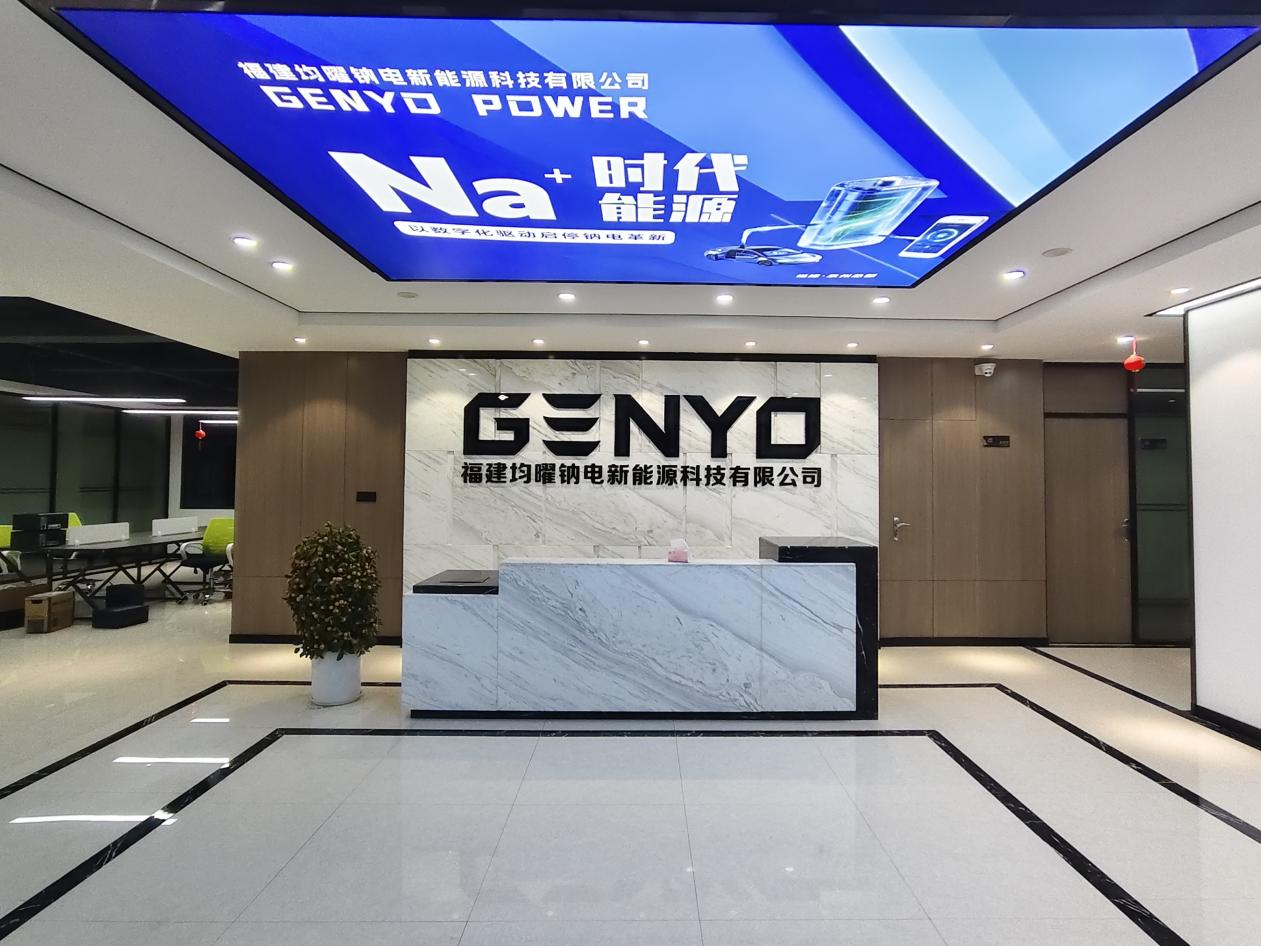
新生即锋芒,逐光向独角兽——均曜钠电,以钠为核,改写能源新赛道
Xin Lang Cai Jing· 2026-01-27 03:21
Core Insights - The establishment of Junyao Sodium Battery marks a significant entry into the sodium battery sector, aiming to become a leading unicorn in the industry by leveraging technology and quality [1][7]. Industry Overview - The sodium battery industry is experiencing a surge, supported by favorable policies and a growing market demand, with China's sodium-ion battery shipments expected to exceed 7 GWh in 2025 and reach 200 GWh by 2030 [3]. - The core team of Junyao Sodium Battery consists of seasoned professionals with over ten years of experience in the new energy sector, providing a solid foundation for the company's growth [3]. Technological Innovation - Junyao Sodium Battery focuses on technological innovation, offering sodium battery products that significantly outperform traditional lead-acid batteries in terms of cycle life, cold-start performance, and charging speed [4]. - The company's products have a cycle life exceeding 3000 cycles, which is 6-10 times that of traditional lead-acid batteries, and can operate in extreme cold conditions while maintaining over 80% capacity [4]. Compliance and Quality Assurance - The company prioritizes compliance as a key to long-term success, implementing comprehensive compliance measures from the outset, including obtaining necessary certifications and adhering to national standards [6]. - A structured partnership system is established to ensure quality and accountability, enhancing customer trust and satisfaction [6]. Collaborative Growth Strategy - Junyao Sodium Battery emphasizes a collaborative approach, providing extensive support to partners through stable product supply, technical training, and favorable pricing policies [6]. - The company aims to build a robust ecosystem by aligning with partners to share industry benefits and foster mutual growth [6]. Future Outlook - The sodium battery industry is at a pivotal transition from concept to mass production, presenting both challenges and opportunities for Junyao Sodium Battery to establish itself as a market leader [7]. - The company is committed to continuous innovation and quality control, with plans to expand its applications beyond automotive starting batteries [7].
兖矿能源:成长与高分红兼备的优质龙头煤企-20260123
Guoxin Securities· 2026-01-23 00:05
Investment Rating - The investment rating for Yanzhou Coal Mining Company (兖矿能源) is "Outperform" [1] Core Views - Yanzhou Coal Mining Company has established itself as a leading coal enterprise with a strong focus on growth and high dividends, supported by a diversified business model that includes mining, high-end chemical materials, high-end equipment manufacturing, smart logistics, and new energy [2][4] - The company has significant coal resources and production capacity, with a total coal resource of 889.74 billion tons and an exploitable reserve of 177.44 billion tons as of the end of 2024 [2][10] - The coal quality is excellent, characterized by low ash, low sulfur, and high calorific value, which enhances its market reputation [2][55] - The coal chemical business is technologically advanced and poised for growth, with plans to expand production capacity significantly in the coming years [2][4] - The company is actively pursuing acquisitions to enhance its resource base and operational capabilities, including recent acquisitions of mining assets [22][24] Summary by Sections 1. Company Overview - Yanzhou Coal Mining Company was founded in 1997 and has listings in multiple stock exchanges, becoming an international energy company with a diversified portfolio [2][10] - The company aims to create green energy and lead energy transformation, focusing on five main industries: mining, high-end chemical materials, new energy, high-end equipment manufacturing, and smart logistics [10][21] 2. Coal Resource and Production Capacity - The company has a rich distribution of coal resources across various regions, including Shandong, Shaanxi, Inner Mongolia, Xinjiang, and Australia, with a total coal resource of 464.3 billion tons and an exploitable reserve of 60.05 billion tons [2][55] - The company plans to achieve a coal production target of 300 million tons per year, with significant capacity expansions expected from new mines in the coming years [2][4] 3. Coal Chemical Business - The coal chemical segment is a key growth area, with advanced technologies and plans for new projects that will enhance production capacity and product diversity [2][4] - The company is set to launch several high-end coal chemical projects, including an 80,000-ton ethylene project and a 50,000-ton high-temperature Fischer-Tropsch project [2][4] 4. Other Business Segments - The company is diversifying into non-coal mining, logistics, and equipment manufacturing, with significant resources in molybdenum and potassium salts [2][4] - Recent acquisitions have strengthened the company's logistics capabilities, enhancing its integrated logistics system [22][24] 5. Financial Forecast and Valuation - Revenue projections for 2025-2027 are estimated at 135.8 billion, 145.7 billion, and 147.4 billion yuan, with net profits of 10.6 billion, 13.3 billion, and 13.4 billion yuan respectively [2][4] - The stock is expected to have a reasonable valuation range of 15.9 to 17.2 yuan by 2026, indicating a potential upside of 15% to 24% compared to the closing price on January 19, 2026 [2][4]

“氢”风已来,破局前行
Ke Ji Ri Bao· 2026-01-22 08:34
Core Insights - A transformation centered around green hydrogen is quietly unfolding in China, impacting various sectors from transportation to industrial manufacturing [1] - The green hydrogen industry is expected to transition from demonstration to commercialization, with significant growth in hydrogen fuel cell vehicle ownership anticipated [1] - The industrial sector presents a larger opportunity for green hydrogen, with projects in resource-rich areas expected to lower production costs significantly [1] Group 1: Green Hydrogen Applications - The "Hydrogen Spring" tourist train symbolizes the practical application of green hydrogen in transportation [1] - Various projects, including hydrogen fuel cell ships and drones, are emerging across the country, indicating a growing integration of green hydrogen in multiple fields [1] - Mature business models for hydrogen fuel cell vehicles have developed in regions like the Yangtze River Delta and Beijing-Tianjin-Hebei [1] Group 2: Market and Policy Dynamics - The combination of policy support and market forces is expected to drive the green hydrogen industry towards commercialization during the 14th Five-Year Plan [1] - The lifecycle cost of hydrogen fuel cell vehicles is projected to become competitive with traditional fuel vehicles [1] Group 3: Industrial Sector Potential - Green hydrogen projects are proliferating in resource-rich areas such as Inner Mongolia and Xinjiang, with costs expected to drop to 12 yuan per kilogram [1] - This cost reduction is anticipated to provide economically viable solutions for industrial decarbonization, fostering a positive industry ecosystem [1] Group 4: Technological Advancements - The domestic production rate of core equipment like electrolyzers is increasing, and advancements in liquid hydrogen technology are expected to break existing monopolies [2] - Flexible hydrogen production systems are being developed to address the intermittency and volatility of wind and solar power generation [2] - Continuous technological breakthroughs and supportive policies are boosting industry confidence and expanding the application range of green hydrogen [2]