网络舆论环境

Search documents
追觅科技俞浩谈网络舆论环境:企业不应被恶意声音绑架
Di Yi Cai Jing· 2026-01-31 15:33
Core Viewpoint - The founder and CEO of the company, Yu Hao, has publicly stated a strong stance against online malicious activities, particularly targeting the company's reputation and recruitment efforts [1] Group 1: Company Actions - Yu Hao emphasized the need to change strategies in response to the negative impact of online "water army" activities on the company's recruitment, sales, and brand image [1] - The company has faced extensive online smear campaigns, including negative comments on employee posts and attempts to dissuade potential hires from accepting job offers [1] Group 2: Industry Context - Industry insiders noted that such behaviors constitute abnormal interference in the online public opinion environment, violating regulations that prohibit defamation, rumor spreading, and manipulation of public sentiment [1] - Traditionally, entrepreneurs have opted for restraint in the face of online controversies, but Yu Hao's direct response indicates the severity of the situation [1] Group 3: Public Image Strategy - Yu Hao stated the importance of maintaining a candid online presence and not fearing backlash, which he believes is essential for both the company and society [1]
人民日报 5 评“西贝事件”:批评主流媒体不敢发声、不善发声
程序员的那些事· 2026-01-23 16:00
Group 1 - The core viewpoint of the article criticizes mainstream media for their reluctance and ineffectiveness in responding to social issues [2][3] - The fifth commentary emphasizes the need for mainstream media to actively address societal concerns and foster a clear online discourse environment [2] - Previous commentaries focused on various aspects: the first criticized self-media figures like Luo Yonghao, the second addressed the lack of transparency from Xibei and Jia Guolong during a public relations crisis, the third reiterated criticism of self-media, and the fourth targeted platforms like Weibo for prioritizing traffic over management [3]

西贝获新融资,贾国龙或许该感谢罗永浩
Sou Hu Cai Jing· 2026-01-23 03:46
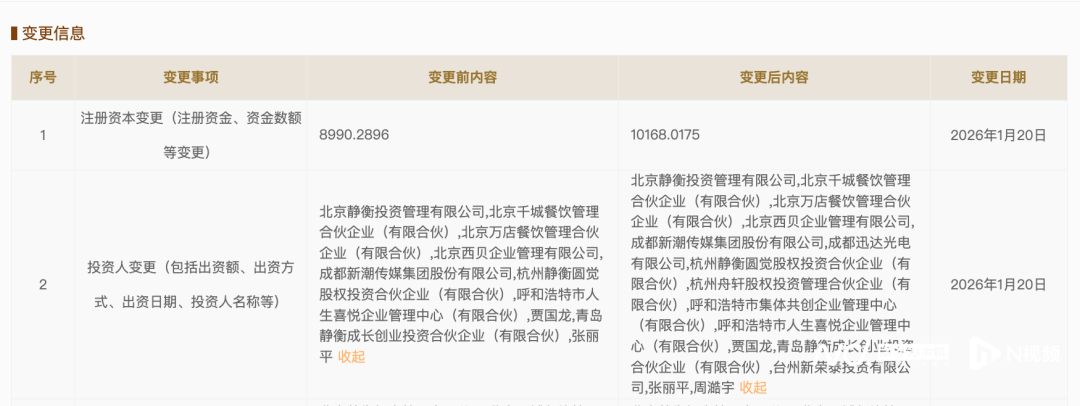
Core Viewpoint - The company Xibei is facing significant challenges, including the closure of 102 stores, which accounts for nearly 30% of its total locations, and cumulative losses exceeding 500 million yuan. The founder, Jia Guolong, has attributed some of these issues to external factors, particularly the influence of social media and the "pre-made dishes" controversy initiated by Luo Yonghao [1][4][7]. Group 1: Company Performance and Financials - Xibei's cumulative losses have surpassed 500 million yuan, leading to the closure of 102 stores [1][4]. - The company completed an A-round financing, increasing its registered capital from approximately 89 million yuan to about 102 million yuan, marking a growth of approximately 13.1% [3][4]. - Despite the addition of 18 new stores, Xibei's revenue for 2024 was around 5.8 billion yuan, down from 6.2 billion yuan in 2023, indicating weak single-store profitability [8][10]. Group 2: Industry Context and Challenges - The restaurant industry is experiencing a downturn, with nearly 3 million restaurant closures expected nationwide by 2025, and a closure rate of 35% in first-tier cities [7]. - Rising costs are impacting the industry, with a 3.7% year-on-year increase in average pork prices and a 1.4% rise in vegetable prices, alongside a 20%-30% increase in labor costs due to new social security regulations [7][8]. - Consumer spending is declining, with average dining expenditure dropping to 36.6 yuan per person, a 7.7% decrease year-on-year, and 65% of transactions occurring at prices below 30 yuan [7][8]. Group 3: Management and Strategic Response - Jia Guolong's management has been criticized for its handling of the crisis, with suggestions that the company has not effectively turned challenges into opportunities [10]. - The company's net profit margin is only 5%, significantly lower than the average of 10% for listed restaurant companies, indicating a fragile profit model [10]. - Despite the challenges, the recent financing may help Xibei move towards its goal of going public by 2026 [10].

西贝上市还有戏吗?融资成功,新荣记创始人张勇出手帮了贾国龙
Sou Hu Cai Jing· 2026-01-21 17:07
Group 1 - The core point of the news is that the Inner Mongolia Xibei Catering Group Co., Ltd. has added five new shareholders and increased its registered capital from 89.90 million yuan to 102 million yuan, indicating a potential shift in its financial structure and investor confidence [1][2][3]. - The new shareholders include notable figures such as Zhang Yong, founder of the high-end restaurant brand Xinrongji, and Hu Xiaoming, former CEO of Ant Group, which may enhance Xibei's market position and operational capabilities [5][24]. - The company is facing significant challenges, including the planned closure of 102 stores due to a 50% year-on-year decline in revenue, which reflects broader issues in the restaurant industry amid a cooling market environment [7][20]. Group 2 - The recent financing round is seen as a temporary relief for Xibei, allowing it to stabilize its cash flow and support operational adjustments amidst ongoing challenges [24][25]. - The controversy surrounding the use of pre-prepared dishes has exacerbated Xibei's operational pressures, highlighting the need for the company to address consumer trust issues while navigating a difficult industry landscape [26]. - Xibei's founder, Jia Guolong, has previously indicated plans for an IPO in 2026-2027, aiming for a revenue target of 20 billion yuan, which now appears increasingly challenging given the current market conditions and operational setbacks [21][20].
人民日报谈网络平台责任:维护秩序促进共识而不是只盯着流量
中国能源报· 2026-01-21 10:13
Core Viewpoint - The article emphasizes the need for online platforms to take responsibility in shaping a healthy public discourse environment, which is crucial for the development of businesses and the overall economy [4][5][6]. Group 1: Negative Impacts of Online Platforms - Online platforms have been criticized for their algorithmic recommendations that prioritize user preferences over mainstream values, leading to a decrease in the visibility of quality content [4][5]. - The amplification of polarizing emotions through trending topics narrows user perspectives and exacerbates societal divisions, hindering consensus-building [4][5]. - There is a selective disregard for erroneous statements, which allows malicious attacks on mainstream voices to flourish, undermining positive discourse [5]. Group 2: Responsibilities of Online Platforms - As platforms grow in user base and traffic, they must fulfill their social responsibilities rather than solely focusing on traffic gains [5][6]. - Maintaining public discussion order is essential; platforms should ensure that debates are civil and free from personal attacks, akin to maintaining decorum in a public debate [5]. - The online discourse environment is a critical aspect of the business environment; platforms should not prioritize their own traffic interests at the expense of the broader societal context [6]. Group 3: Recommendations for Improvement - Emphasizing mainstream values, rational discourse, and the use of technology to enhance public order will contribute to a healthier online space [6]. - Platforms should balance their commercial interests with public good, as neglecting this balance could lead to negative repercussions for their own business [6].

人民日报谈网络平台责任:维护秩序促进共识而不是只盯着流量| 筋斗云
Xin Lang Cai Jing· 2026-01-21 09:50
Core Viewpoint - The article discusses the impact of online platforms on public discourse and the need for these platforms to maintain a responsible environment for healthy discussions and business development [1][2]. Group 1: Negative Impacts of Online Platforms - Online platforms often emphasize "user preferences" in algorithm recommendations, which can diminish the visibility of quality content and hinder the formation of positive societal values [4]. - The amplification of opposing emotions through trending topics narrows user perspectives and polarizes social sentiments, making it difficult to resolve differences and build consensus [4]. - Some platforms selectively ignore erroneous statements, inadvertently allowing malicious attacks on mainstream voices to flourish, which undermines positive discourse [2][4]. Group 2: Responsibilities of Online Platforms - As the user base and traffic of online platforms grow, they should prioritize social responsibility over mere traffic gains, ensuring they do not compromise the broader business environment for society [5]. - Online platforms must uphold public discussion order and avoid crossing ethical lines, similar to maintaining decorum in a public debate where personal attacks are not tolerated [2][4]. - The focus should be on mainstream values, rational discourse, technological empowerment, and maintaining public order to create a clearer online space and healthier discourse environment [5].
人民日报谈网络平台责任:维护秩序促进共识而不是只盯着流量
Ren Min Ri Bao· 2026-01-21 09:31
Group 1 - The open and interactive nature of online platforms provides personalized reading through algorithmic recommendations and important spaces for public discussion, but it does not imply a hands-off approach [1] - Recent controversies, such as the dispute between Luo Yonghao and Jia Guolong, highlight consumer interest in topics, the phenomenon of spectatorship, and the tendency of platforms to amplify negative opinions for traffic [1] - Many entrepreneurs feel that the online public opinion environment is detrimental to business development, leading to concerns about being overly scrutinized and the influence of online "black mouths" and "water armies" [1] Group 2 - As online platforms grow in user base and traffic, they should fulfill their social responsibilities rather than solely focusing on traffic [2] - Online platforms must maintain public discussion order and not allow personal attacks, similar to maintaining decorum in a public debate [2] - The online public opinion environment is crucial for business operations, and platforms should prioritize societal welfare over mere traffic gains to avoid negative repercussions [2]
罗永浩吐槽引蝴蝶效应!人民日报连续 3 天点评:企业不真诚是问题核心。贾国龙回应“学习了”
程序员的那些事· 2026-01-21 00:51
Core Viewpoint - The article emphasizes that a healthy public opinion environment is crucial for economic development, and emotional online disputes should not undermine businesses [2] Group 1: Incident Overview - The controversy began with a social media post by Luo Yonghao, which highlighted issues at Xibei, a restaurant chain with over 6 billion in annual revenue, leading to scrutiny over food quality and practices [1] - Xibei's CEO, Jia Guolong, responded strongly, claiming that Xibei does not use pre-prepared dishes, which intensified the conflict and resulted in the announcement of the closure of 102 stores in Q1 2026, with a year-on-year business decline of 50% [1] Group 2: Public Response and Corporate Communication - The first commentary from People's Daily pointed out that the core issue is not about the quality of pre-prepared dishes but the need for companies, influencers, and platforms to reflect on the chaotic public discourse [2] - Jia Guolong acknowledged the commentary, expressing a commitment to improve and serve customers better, indicating a shift towards a more proactive approach in crisis management [2] Group 3: Crisis Management and Transparency - The second commentary stressed that the real issue lies in Xibei's lack of sincerity, suggesting that honesty is the best public relations strategy during a crisis [3] - It was noted that pre-prepared dishes align with industry trends, and consumers are not opposed to them if transparency is maintained [3] - Jia Guolong accepted the commentary's viewpoint, indicating a willingness to adapt and improve in response to the evolving internet landscape [3] Group 4: Role of Influencers and Media - The third commentary focused on the responsibilities of influencers like Luo Yonghao, stating that their public criticisms should be based on facts and reason, rather than personal emotions [5] - It highlighted the need for a responsible approach from influential figures in the media to avoid damaging businesses and to contribute positively to the public discourse [5] - The commentary also referenced legal provisions to protect private enterprises from malicious online attacks, calling for a collaborative effort to maintain a healthy online environment [5]

移动互联网时代, 企业家应当补上舆论必修课
Mei Ri Shang Bao· 2026-01-20 22:19
Core Viewpoint - The recent conflict between internet influencers and a well-known entrepreneur highlights the importance of transparency and sincerity in corporate communication, particularly in the context of consumer concerns regarding pre-prepared food products [1][2] Group 1: Corporate Communication - The core issue for the company is not the pre-prepared food itself, but the lack of genuine and transparent communication with consumers [1] - A timely and honest response to consumer concerns could have transformed the crisis into an opportunity for rebuilding trust, rather than escalating the conflict [1] Group 2: Impact of Social Media - The incident illustrates how social media can significantly impact the survival of long-standing businesses, indicating that the online public opinion environment is a crucial factor in economic development [2] - There is a need for all parties involved, including influencers, entrepreneurs, and platforms, to foster a constructive dialogue and mitigate harmful speculation [2] Group 3: Responsibility and Collaboration - It is essential for influencers to use their influence responsibly and for entrepreneurs to enhance their media literacy for sincere communication [2] - Platforms must take responsibility to curb negative speculation and create a favorable environment for economic development [2]
人民日报再发声:自媒体不是私域不可肆意
中国能源报· 2026-01-20 13:33
Core Viewpoint - The article discusses the impact of social media on public opinion and the responsibilities of influencers, particularly in the context of the West B restaurant chain's recent store closures due to negative online commentary [3][4]. Group 1: Social Media Influence - The incident involving West B highlights the complexities of the online public opinion environment, where a single negative comment can lead to significant business repercussions [3][6]. - While the online discourse has improved overall, the article emphasizes that influencers must recognize their responsibility in shaping public sentiment and should not treat their platforms as private spaces [4][5]. Group 2: Responsibilities of Influencers - Influencers with large followings have a substantial impact on public opinion and should contribute positively to the online environment, rather than spreading misinformation or engaging in harmful rhetoric [4][5]. - The article criticizes certain influencers for their irresponsible behavior, which includes misinterpreting government policies, presenting biased views, and blurring the lines between personal and public discourse [5][6]. Group 3: Legal and Regulatory Framework - The article references the Private Economy Promotion Law, which prohibits malicious online behavior that harms the reputation of private enterprises and their operators [7]. - Recent actions against accounts that spread false information and the suspension of certain influencers' accounts serve as a reminder of the need for a healthy online discourse to support the development of the private economy [7].